 CryptoChain Blog

Introduction to DAO Philanthropy in 2026
Decentralized autonomous organizations have fundamentally reshaped charitable giving by merging blockchain transparency with community governance. In 2026, DAOs routinely allocate portions of their treasuries to high-impact causes such as reforestation, education access, and medical aid. These organizations issue NFT rewards to donors, creating lasting digital representations of contributions that often include governance rights or exclusive benefits. The integration of blockchain oracles ensures that real-world impact data flows directly into smart contracts, providing verifiable accountability that traditional philanthropy rarely achieves.
Donors benefit from immutable records of their support while participating in on-chain decisions about future allocations. This model reduces administrative overhead and builds trust through public ledgers. As adoption grows, understanding the specific mechanics behind successful projects becomes essential for creators and participants alike.
Case Study 1: GreenChain DAO and Reforestation NFTs
GreenChain DAO directs treasury funds toward global tree-planting initiatives. Each donor mints an NFT that encodes metadata about the exact planting location, species, and projected carbon sequestration. Oracle feeds from satellite imagery providers update growth metrics weekly, automatically adjusting token attributes as trees mature. The governance token requires staking for voting power, and quadratic voting prevents large holders from dominating outcomes. Proposals typically need a 60 percent quorum and pass only after a seven-day discussion period on the DAO forum.
Impact metrics tracked include total hectares restored and verified carbon credits issued. Community members review oracle data before approving subsequent funding tranches. This structure has supported the planting of tens of thousands of trees while maintaining full on-chain visibility of every transaction and vote.
Case Study 2: EduDAO and Scholarship NFTs
EduDAO focuses on expanding educational opportunities in underserved regions. NFT rewards function as digital certificates that grant donors ongoing access to student progress reports and virtual alumni events. Treasury releases occur in milestone-based tranches verified by oracles connected to school attendance and performance databases. Governance combines off-chain signaling through Snapshot with on-chain execution for final treasury movements, allowing broader participation without high gas costs during initial discussions.
Examples from 2026 show scholarships awarded to over 1,200 students across three continents. Token mechanics include tiered NFTs where larger donations unlock additional voting weight on recipient selection. This approach encourages sustained engagement rather than one-time giving.
Case Study 3: HealthLink DAO and Medical Aid NFTs
HealthLink DAO channels resources to medical supply deliveries in crisis-affected areas. Donors receive NFTs that serve as keys to future governance participation on aid prioritization. Multi-signature wallets protect treasury funds until community votes and oracle confirmations of delivery are both satisfied. Oracles sourced from established health monitoring networks provide tamper-resistant proof of supply arrival and distribution.
The project emphasizes rapid response capabilities, with governance cycles designed to approve emergency allocations within 48 hours when quorum thresholds are met. Impact metrics include number of beneficiaries reached and supply utilization rates reported back through the oracle network.
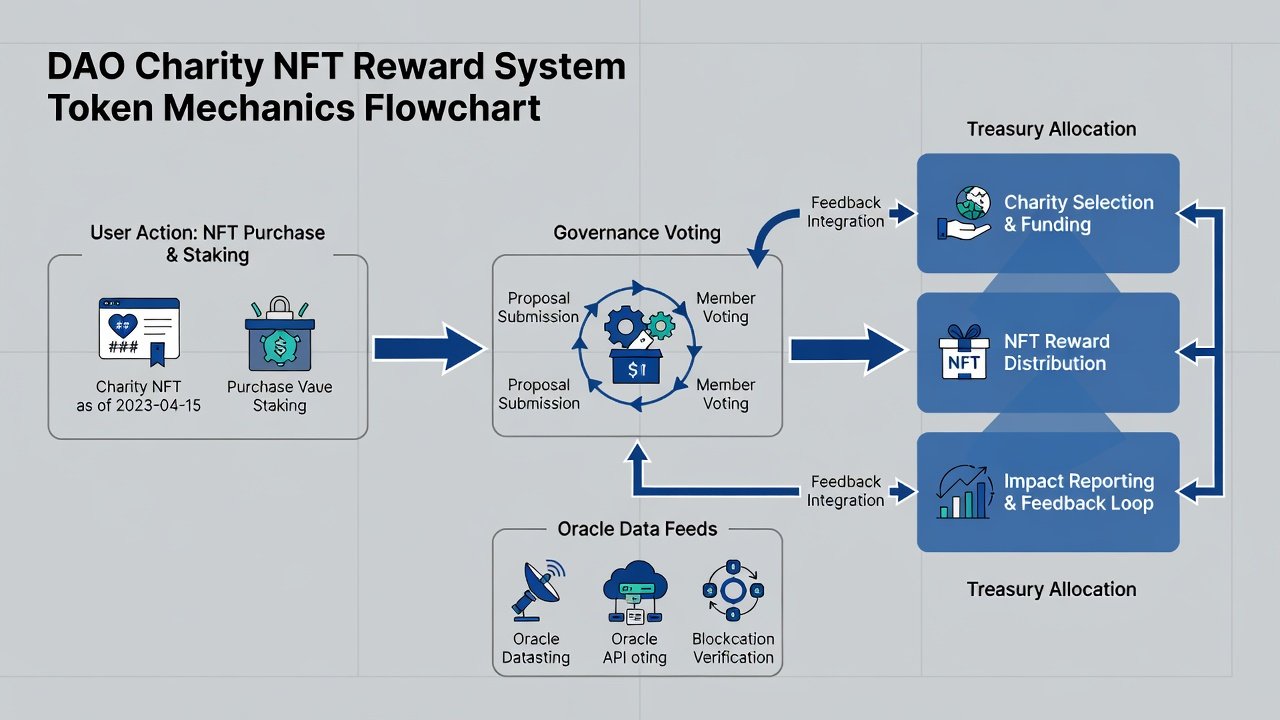
Comparison of Reward Structures Across Projects
GreenChain rewards emphasize environmental data integration and staking incentives that compound over time. EduDAO structures focus on milestone verification and community network access, creating ongoing value beyond the initial donation. HealthLink prioritizes delivery confirmation and multi-signature security to handle high-stakes scenarios. Across all three, NFT utilities reduce donor attrition by offering tangible, evolving benefits while preserving transparent funding flows recorded on public blockchains.
Step-by-Step Guide for Setting Up a Similar DAO Treasury Allocation
- Establish the DAO using established frameworks such as those provided on Ethereum or Aragon-based templates, ensuring clear rules for membership and proposal submission from the outset.
- Define treasury allocation parameters in the smart contract code, including percentage caps for charitable causes and required approval thresholds.
- Integrate reliable oracle solutions like those from Chainlink to pull verified external data on project outcomes.
- Deploy NFT smart contracts with multiple tiers that scale rewards according to contribution size and include metadata standards for future updates.
- Configure governance tools that support both off-chain signaling and on-chain execution to balance accessibility with security.
- Conduct thorough smart contract audits and run simulation votes to identify edge cases before live deployment.
- Launch public dashboards that display real-time metrics on treasury balances, votes cast, and oracle-updated impact data.
- Iterate based on early engagement analytics by adjusting voting periods or reward structures as needed.
Practical Pitfalls Including Regulatory Risks and Low Engagement
Regulatory uncertainty remains a primary concern as jurisdictions develop new frameworks for DAOs and NFTs. Participants should monitor guidance from financial authorities and consider legal structures that limit liability. Low engagement frequently arises from overly complex interfaces; successful projects simplify voting through mobile-friendly applications and provide clear onboarding tutorials. Additional risks include oracle manipulation or temporary data outages, which can be mitigated by using multiple independent data sources and fallback mechanisms. Smart contract vulnerabilities require repeated audits, while token distribution imbalances can be addressed through vesting schedules and caps on individual holdings.
Impact Metrics Tracked via Blockchain Oracles
Modern implementations rely on decentralized oracles to bridge off-chain realities with on-chain logic. Metrics range from environmental indicators such as verified tree survival rates to social outcomes like graduation statistics. These data points trigger automated actions including additional NFT minting or treasury releases, ensuring accountability without centralized intermediaries.
FAQ
How do NFT rewards benefit donors beyond recognition?
They often provide governance participation, exclusive updates, and sometimes revenue-sharing features tied to project success.
What role do oracles play in ensuring accurate impact reporting?
Oracles supply tamper-resistant external data that smart contracts use to validate milestones and release funds accordingly.
Are there tax implications when receiving NFT rewards from DAO donations?
Tax treatment differs by jurisdiction and may classify NFTs as taxable events; professional advice is strongly recommended.
How can creators prevent low voter turnout in governance?
Simplifying interfaces, offering educational content, and providing small incentives for participation have proven effective in multiple 2026 projects.
What happens if an oracle feed fails during a funding cycle?
Well-designed systems include redundant oracles and manual override options subject to multi-signature approval to maintain continuity.
Conclusion
The 2026 examples of DAO charity initiatives demonstrate how NFT rewards and oracle-driven metrics can create more transparent and engaging philanthropic systems. By examining token mechanics, governance processes, and practical implementation steps, both creators and donors can contribute to models that deliver measurable real-world results while fostering long-term community involvement.


No comments yet. Be the first!