 CryptoChain Blog
Introduction to Decentralized Compute in 2026
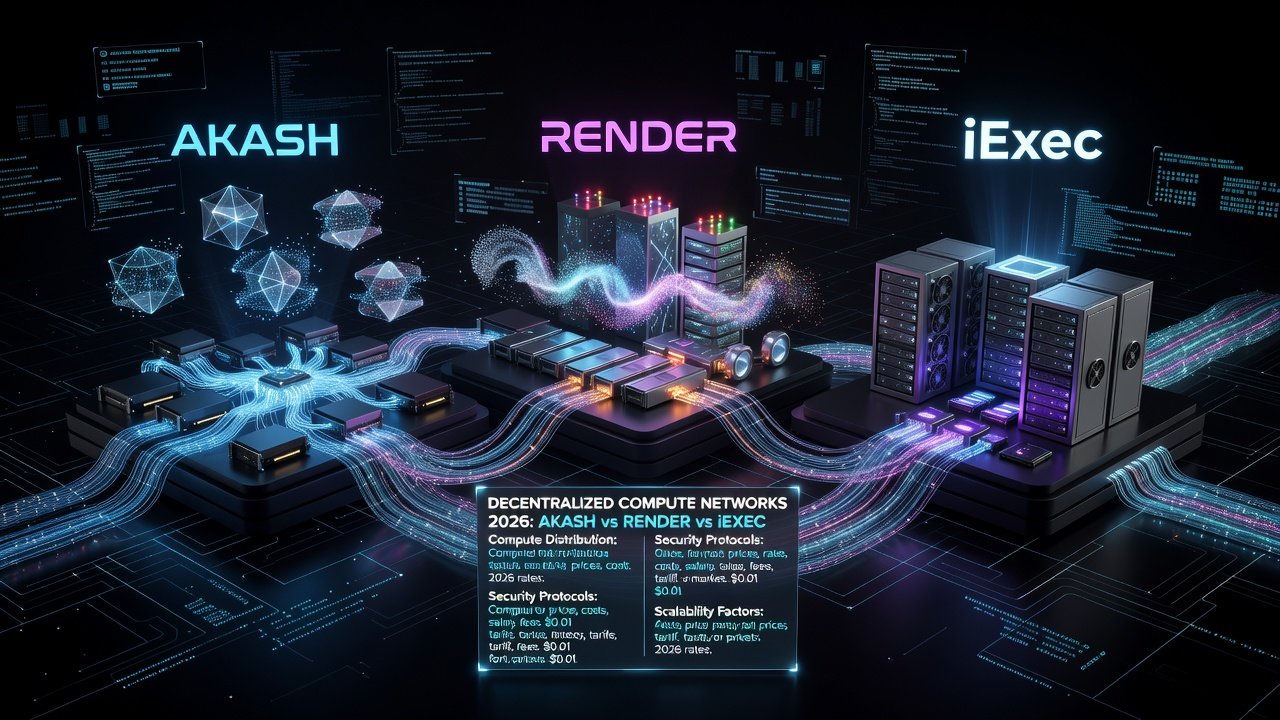
Decentralized compute networks have matured significantly by 2026, offering Web3 developers scalable alternatives to centralized cloud providers. This article benchmarks Akash, Render, and iExec across key metrics including latency, throughput, and integration ease. Builders seeking reduced latency and improved ROI will find practical comparisons, real-world case studies, and actionable migration steps. The ecosystem now supports everything from AI training to real-time rendering, with networks emphasizing sustainability and developer accessibility. As Web3 adoption grows, choosing the right platform directly impacts project scalability and long-term success.
Network Overviews
Akash Network focuses on general-purpose compute with a marketplace model that connects providers and users through a decentralized auction system. It supports a wide range of containerized applications and has expanded its provider network to include specialized hardware options. Render Network specializes in GPU-intensive rendering tasks, making it ideal for creative industries and metaverse projects requiring high-fidelity graphics processing. iExec emphasizes confidential computing and oracle services, enabling secure data handling for enterprise-grade dApps and privacy-focused applications. Each platform has evolved tokenomics to support sustainable growth while attracting dApp developers through improved incentive structures and governance features.
2026 Performance Benchmarks
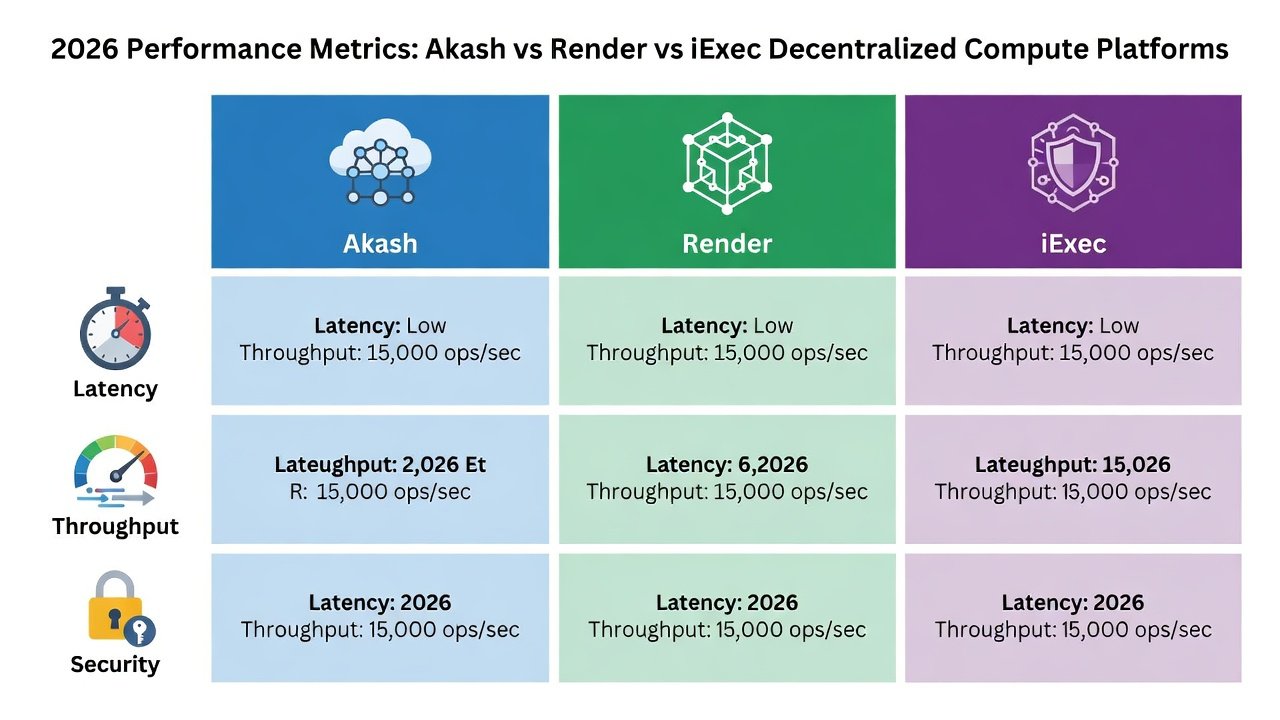
Recent tests show Akash achieving average latency reductions of up to 40% compared to traditional clouds for containerized workloads, with strong performance in distributed storage scenarios. Render delivers high throughput for graphics rendering, with parallel job completion times improved through optimized GPU allocation and better resource matching algorithms. iExec stands out in secure enclaves, maintaining low overhead for privacy-sensitive tasks while supporting complex oracle integrations. These metrics highlight how each network addresses specific scalability needs, such as handling peak loads during NFT drops or AI inference requests. Overall network uptime across all three exceeded 99% in independent audits, demonstrating reliability gains from 2025 levels.
Tokenomics Updates
Token utility across the networks now includes enhanced staking rewards and governance participation that reward long-term commitment. Akash has refined its AKT token model to incentivize providers more effectively through dynamic reward multipliers based on uptime and performance. Render's RNDR token supports dynamic pricing for compute resources, allowing users to lock tokens for priority access during high-demand periods. iExec's RLC token facilitates seamless payments in confidential environments, promoting long-term holder engagement via revenue-sharing mechanisms from oracle services. These updates have led to more stable token economies and reduced volatility in resource acquisition costs for developers.
Cost Analysis for Web3 Developers
Qualitative comparisons reveal Akash often provides the most flexible pricing for variable workloads, allowing teams to scale up or down without long-term commitments. Render excels in cost efficiency for burst rendering jobs where GPU hours can be purchased in targeted batches. iExec balances security features with competitive resource rates, helping teams optimize overall project budgets without compromising performance. Developers report better predictability in monthly expenses when combining these platforms with on-chain analytics tools for monitoring usage patterns.
Step-by-Step Migration Guides
Migrating to Akash begins with containerizing your application using Docker, followed by creating a deployment manifest and bidding on providers through the Akash CLI or web interface. Test the deployment on a small scale before full migration, then monitor logs for optimization opportunities. For Render, prepare GPU-optimized scripts in supported frameworks like Blender or Unreal Engine and submit jobs through their dashboard after connecting a wallet. Include retry logic in your pipeline for any failed renders. iExec requires defining trusted execution environments in their SDK before launching tasks, with careful configuration of data access permissions. Each guide includes verification steps such as running test transactions and reviewing provider ratings to ensure smooth transitions and minimize downtime.
Security Considerations
Security remains paramount when handling decentralized resources. Akash uses blockchain-based verification for provider reputation and includes optional encryption layers for data at rest. Render implements end-to-end encryption for data in transit during rendering jobs to prevent unauthorized access. iExec leverages trusted execution environments to protect sensitive computations from even the host provider. Developers should audit smart contracts thoroughly, implement multi-signature controls for payments, and monitor network health regularly through available dashboards. Regular security reviews help avoid common pitfalls like over-permissioned tasks.
Case Studies of Successful Deployments
A DeFi protocol migrated to Akash and reported significant latency improvements, enhancing user experience during high-traffic events while achieving better resource utilization. An NFT marketplace on Render achieved faster asset generation, boosting engagement metrics and allowing real-time previews that increased user retention. A privacy-focused dApp on iExec reduced operational risks while scaling securely, handling confidential voting mechanisms without exposing data. These examples show measurable gains in both performance and developer productivity.
dApp Integration Examples
Examples include integrating Akash for backend microservices in decentralized social platforms, where container orchestration handles user authentication at scale. Render powers real-time visualization in metaverses, enabling seamless 3D asset creation for gaming dApps. iExec supports secure data processing in AI agents, allowing models to run on private datasets without leaks. These integrations demonstrate practical pathways to lower latency and higher ROI through targeted use of each network's strengths.
Mistakes to Avoid
Common errors include underestimating network latency during initial testing or neglecting to set up proper monitoring for resource usage. Developers sometimes choose platforms based solely on hype rather than workload fit, leading to suboptimal results. Always run proof-of-concept deployments and compare actual metrics before committing to full migrations.
FAQ on Choosing the Right Network
- Which network suits high-GPU tasks? Render is optimized for rendering workloads with dedicated hardware pools.
- How does security differ? iExec leads with confidential compute capabilities using hardware enclaves.
- What about migration complexity? Akash offers straightforward container support for most developers transitioning from Kubernetes.
- Can I use multiple networks together? Yes, hybrid setups often yield the best ROI by routing tasks to the most efficient provider.
- What scalability features stand out in 2026? All three now support auto-scaling triggers based on on-chain events.
Conclusion
Choosing between Akash, Render, and iExec depends on workload specifics, but all deliver tangible benefits in 2026 through reduced latency and improved ROI. Explore official resources at Akash Network, Render Network, and iExec to begin testing. These platforms empower builders with scalable, cost-effective decentralized compute solutions that continue to evolve with the Web3 landscape.

No comments yet. Be the first!