 CryptoChain Blog
Introduction to Web3 Philanthropy in 2026
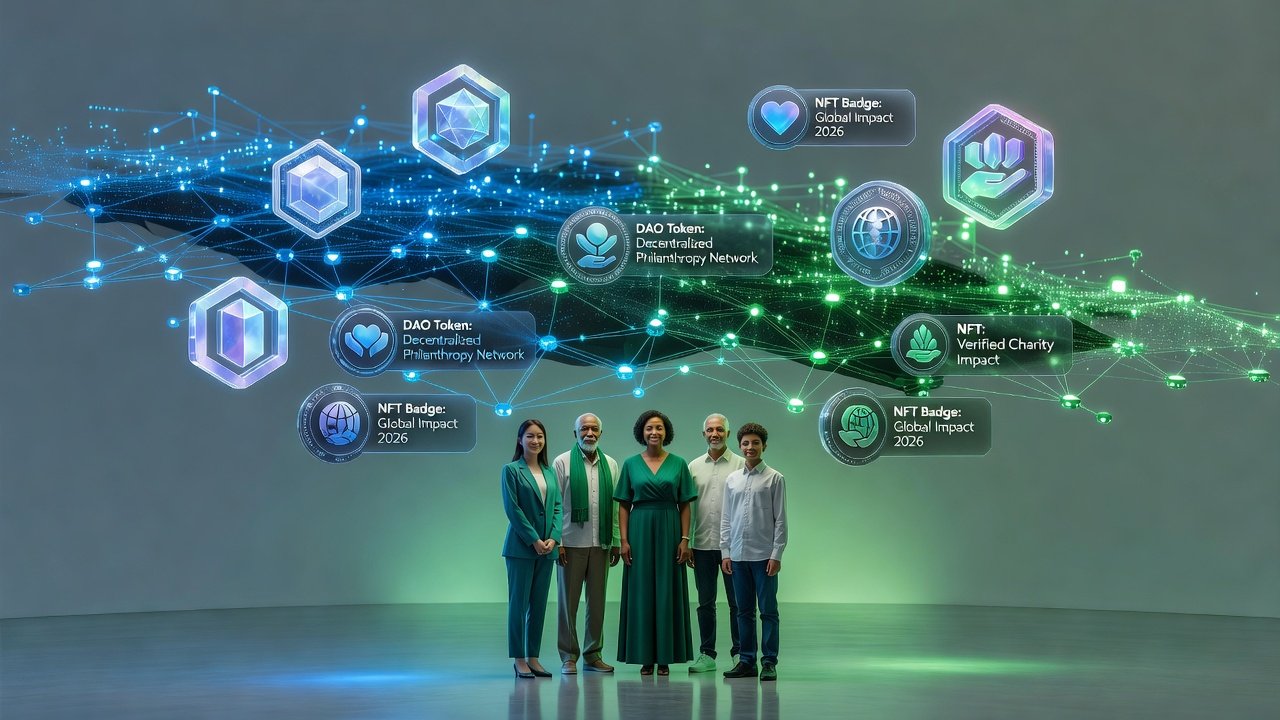
Web3 philanthropy has evolved rapidly by 2026, leveraging decentralized autonomous organizations (DAOs) and non-fungible tokens (NFTs) to create transparent, community-driven funding models. Unlike traditional charity, these systems use blockchain for verifiable impact and incentivized participation. This approach empowers global communities to direct funds without intermediaries, fostering greater accountability through immutable ledgers. In this article we examine three successful projects in depth, break down their token mechanics and governance structures, and provide actionable guidance for creators looking to launch similar initiatives. Readers will find practical details on framework selection, NFT tier design, regulatory considerations, and retention tactics that have proven effective in real deployments.
Case Study 1: GreenChain DAO – Reforestation Funding
GreenChain DAO focuses on global reforestation efforts and has become a benchmark for environmental Web3 philanthropy. Token mechanics involve a governance token called GREEN that holders stake to vote on project proposals. Staking rewards are distributed from a portion of carbon credit sales, creating a self-sustaining loop. In 2026 the DAO allocated funds to plant over 2.5 million trees across three continents, verified through satellite data and on-chain proofs stored on IPFS. Governance uses quadratic voting to prevent whale dominance, ensuring smaller holders retain meaningful influence. Quarterly reports are published on-chain with detailed breakdowns of fund allocation and ecological outcomes. Impact metrics include a 40 percent increase in verified carbon sequestration compared to 2025 baselines, alongside partnerships with local NGOs for on-the-ground monitoring. The project demonstrates how token incentives can align long-term environmental goals with community participation.
Ethereum.org provides foundational resources on DAO governance that GreenChain adapted for its quadratic voting implementation.
Case Study 2: HealthAccess NFT Initiative
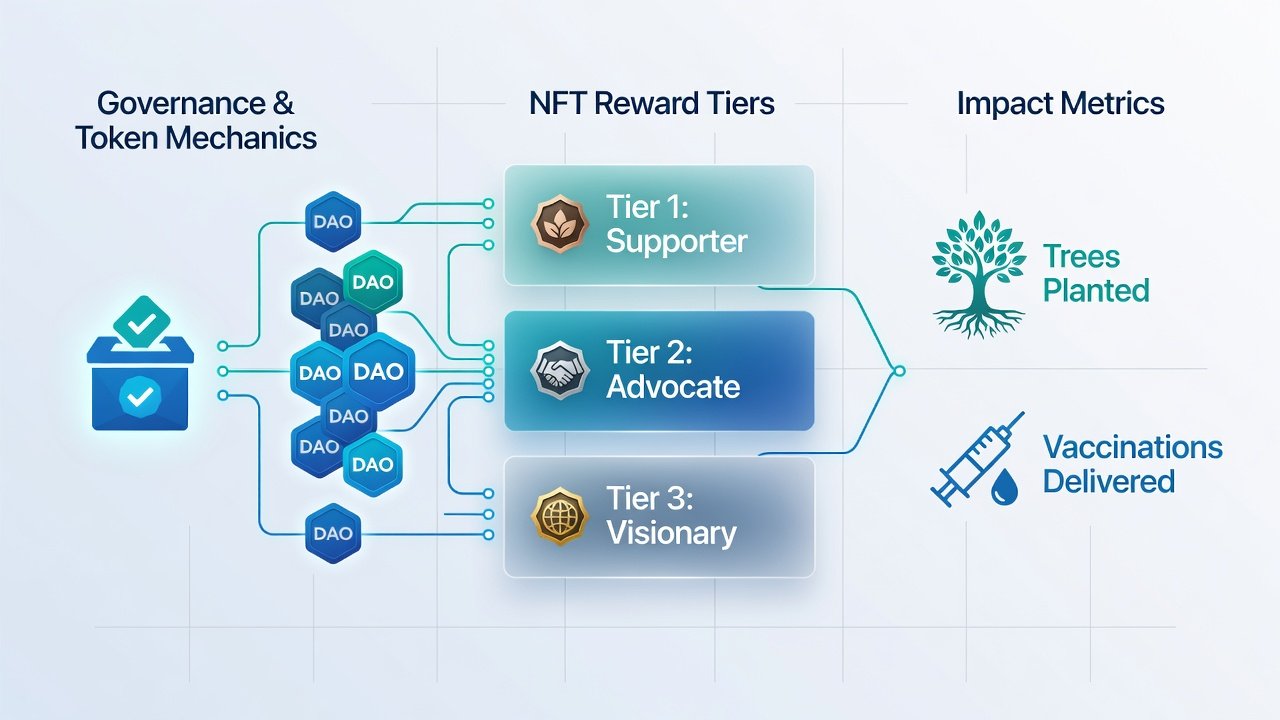
This project partners with medical NGOs to fund vaccine distribution in underserved regions and has scaled significantly in 2026. Donors receive tiered NFTs that unlock exclusive updates, virtual town halls with field doctors, and limited-edition digital art commemorating each campaign. Token mechanics include a utility token called HEALTH that facilitates micro-donations automatically converted to stablecoins for grantees, reducing volatility risks. Governance is managed via a multisig council elected annually by token holders, with proposals requiring a minimum quorum of 15 percent participation. Measurable impact reached 180,000 vaccinations as of mid-2026, tracked through independent audits and cross-referenced with public health databases. The initiative also introduced soulbound NFTs that cannot be transferred, ensuring donor recognition remains permanent and tied to verified contributions.
World Health Organization data informed the vaccination targets and verification standards used by HealthAccess.
Case Study 3: EducationDAO with NFT Rewards
EducationDAO supports scholarships in emerging markets and emphasizes long-term educational outcomes. NFT rewards include soulbound tokens representing donor milestones, with secondary-market royalties automatically routed back to scholarship pools. Token mechanics feature a governance token that delegates voting power to education experts elected by the community. Governance relies on a delegated proof-of-stake model combined with off-chain forums for discussion before on-chain votes. Impact metrics show 12,000 students funded, with 85 percent graduation rates reported through partner universities and verified via academic credential oracles. The DAO publishes annual transparency reports detailing disbursement timelines and student success stories, building sustained donor confidence.
UNESCO education statistics helped shape EducationDAO’s outcome tracking methodology.
Understanding DAO Frameworks and Selection Criteria
Creators evaluating DAO frameworks should compare options such as Aragon for customizable on-chain voting, DAOstack for reputation-based systems, and Snapshot for gas-efficient off-chain polling. Key decision factors include treasury security requirements, need for on-chain execution of fund transfers, and compatibility with legal wrappers like Swiss associations or Cayman foundations. Teams with limited technical resources often begin with Snapshot integrated with Gnosis Safe for treasury control, then migrate to fully on-chain solutions once community size justifies the complexity. Auditing community size and technical expertise before deployment prevents governance deadlocks and security vulnerabilities.
Setting Up NFT Reward Tiers
- Define tiers based on donation size with unique utility such as access to detailed impact reports, private Discord channels, or annual virtual events with beneficiaries.
- Implement royalty splits on secondary sales so a percentage of every resale continues funding the cause indefinitely.
- Ensure metadata includes verifiable impact links, timestamps, and audit hashes for maximum transparency.
- Test all smart contracts extensively on testnets and conduct third-party audits before mainnet launch.
- Offer progressive utility that increases with tier level, encouraging larger initial contributions while rewarding long-term holders.
Token Mechanics and Governance Structures Explained
Effective token mechanics balance incentives for donors, holders, and grantees. Governance tokens typically grant voting rights proportional to stake, while utility tokens handle day-to-day transactions with built-in conversion to stable assets. Hybrid models that combine both token types reduce volatility and maintain engagement. Governance structures range from simple token-weighted voting to more sophisticated quadratic or conviction voting systems that mitigate concentration of power. Clear proposal templates, minimum quorum thresholds, and time-locked execution windows further strengthen decision-making integrity.
Measuring Impact Metrics in Web3 Philanthropy
Quantifiable metrics are essential for credibility. Projects should combine on-chain data such as fund flows and NFT mint counts with off-chain verification from satellite imagery, health registries, or academic records. Regular third-party audits and public dashboards allow stakeholders to track progress in real time. Successful initiatives publish both quantitative results and qualitative stories that humanize the impact.
Common Pitfalls and Regulatory Gray Areas
Regulatory uncertainty around securities classification and charitable status remains a primary challenge. Engage legal experts familiar with DAO structures in your primary jurisdictions early in the process. Additional pitfalls include over-promising token utility, neglecting smart-contract security, and failing to communicate impact clearly. Mitigation strategies involve conservative legal opinions, phased rollouts, and continuous community education.
Community Retention Strategies
Long-term retention depends on consistent value delivery. Regular NFT airdrops tied to milestone achievements, transparent impact dashboards updated monthly, and opportunities for direct interaction with beneficiaries keep members engaged. Avoiding hype cycles and focusing on verifiable results builds lasting trust and organic growth through word-of-mouth referrals.
FAQ
How do DAOs ensure fund transparency? Through public ledgers, automated reporting bots, and independent third-party audits published on-chain.
Are NFT rewards taxable? Tax treatment varies by jurisdiction; always consult local authorities and consider structuring rewards as non-transferable soulbound tokens where possible.
What is the minimum viable community size for launching a DAO? Most successful projects begin with at least 500 active members to ensure meaningful governance participation.
Launch Checklist
- Define clear mission statement and detailed tokenomics model.
- Choose and test governance tools against projected community scale.
- Design NFT tiers with meaningful utility and royalty mechanics.
- Secure comprehensive legal review covering multiple jurisdictions.
- Build onboarding materials including video tutorials and FAQ resources.
- Establish impact measurement protocols with external verification partners.
- Plan phased rollout with testnet phase before mainnet treasury deployment.
- Create retention calendar with regular updates and community events.
Conclusion
Web3 philanthropy in 2026 demonstrates that DAOs and NFTs can deliver measurable social impact when designed with robust mechanics and transparent governance. By studying the examples above and following the practical guidance provided, creators can launch initiatives that combine financial innovation with genuine humanitarian outcomes.
No comments yet. Be the first!