 CryptoChain Blog

Introduction to Web3 AR dApps in 2026
The convergence of augmented reality and Web3 technologies is creating persistent, decentralized immersive experiences that blend the physical world with blockchain-verified digital assets. Developers are building dApps that allow users to overlay NFTs, virtual objects, and interactive elements onto real environments while ensuring true ownership through decentralized ledgers. This comprehensive guide delivers practical entry points for developers, covering decentralized AR marketplaces, NFT overlay integration techniques, cross-chain tooling strategies, and secure wallet connections that support persistent virtual assets across sessions and devices.
In 2026, advancements in AR hardware such as lightweight headsets and enhanced smartphone sensors enable low-latency blockchain calls without disrupting immersion. Developers must address core challenges including network scalability for real-time updates, gas-efficient smart contracts, and intuitive user onboarding to achieve mainstream adoption. This article expands on high-engagement trends by providing step-by-step technical guidance, real-world code examples, platform comparisons, and mitigation strategies drawn from emerging 2026 projects.
Selecting Compatible AR Frameworks for Blockchain Integration
Framework selection determines how seamlessly your AR dApp can interact with blockchain networks. Web-based options like AR.js combined with Three.js offer lightweight browser deployment ideal for quick prototyping and broad accessibility. For more complex 3D modeling and native performance, Unity paired with WebXR support provides deeper integration capabilities, allowing direct calls to smart contracts from within AR scenes.
Key evaluation criteria include device compatibility, rendering performance, and existing libraries for wallet or token interactions. AR.js excels in web environments where users access experiences without downloads, but may require additional plugins for advanced NFT metadata parsing. Unity offers superior spatial mapping and physics simulation, making it preferable for persistent asset anchoring in multi-user scenarios. Cross-reference documentation from authoritative sources such as the Mozilla Developer Network for WebXR API standards before committing to a stack.
Additional frameworks worth evaluating include A-Frame for declarative HTML-based AR and React Native with AR libraries for hybrid mobile apps. Always test early prototypes on target hardware to confirm blockchain transaction speeds do not introduce visual lag.
Implementing Wallet Connections and Cross-Chain Tooling
Wallet connectivity forms the backbone of user-owned persistent assets. Begin by integrating providers such as ethers.js for Ethereum-compatible chains or Solana web3.js for alternative ecosystems. Users connect via MetaMask, WalletConnect, or Phantom to sign transactions that mint, transfer, or update AR NFTs in real time.
Cross-chain tooling is essential for broader asset reach. Implement bridges using established protocols to move tokens or NFTs between networks without centralized custodians. Practical steps include initializing the wallet provider, requesting account access, detecting the active chain, and routing calls through bridge contracts for asset migration. For example, a user could acquire an AR-ready NFT on Ethereum and bridge it to a lower-fee chain for frequent interactions.
Sample initialization code:
const provider = new ethers.providers.Web3Provider(window.ethereum);
await provider.send("eth_requestAccounts", []);
const signer = provider.getSigner();
const network = await provider.getNetwork();
console.log("Connected to chain:", network.chainId);
Handle reconnection logic and error states gracefully to maintain immersion. Test thoroughly with testnets before mainnet deployment.
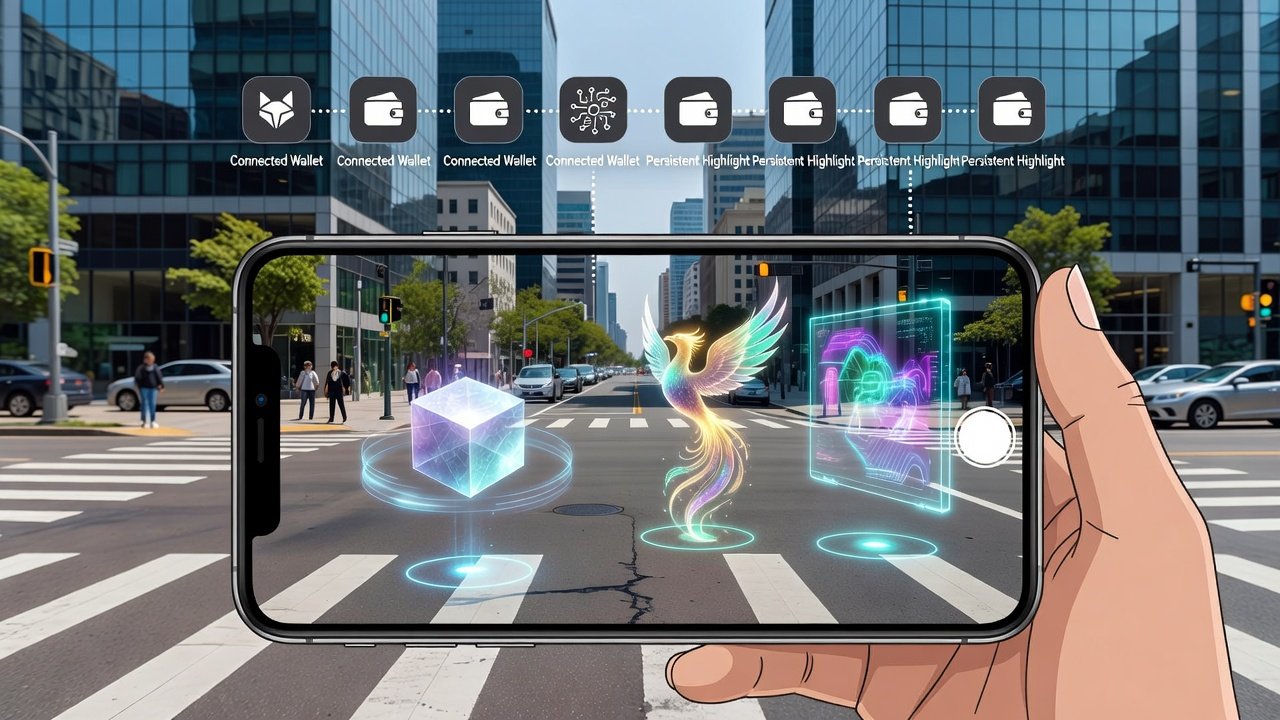
Decentralized AR Marketplaces and NFT Overlay Integration
Decentralized marketplaces serve as discovery and trading hubs for AR-compatible NFTs. Integrate marketplace APIs or smart contract events to allow users to browse, purchase, and instantly load 3D models into their AR view. Standards such as ERC-721 extended with spatial metadata enable overlays that respect real-world geometry through plane detection and anchor systems.
Implementation involves fetching token URI data, decoding 3D assets via IPFS gateways, and positioning models using device sensors. Persistent storage of user placements can be achieved by recording anchor coordinates and ownership proofs on-chain. This creates shared experiences where multiple users see the same NFT overlays in consistent locations.
Consider marketplace fees and royalty structures during integration to ensure creator incentives remain viable. Explore Ethereum Foundation resources for updated NFT standards and best practices around metadata schemas.
Token Incentives for User-Generated Content
Token incentives accelerate community-driven growth by rewarding users who contribute AR models, experiences, or spatial data. Design smart contracts that distribute governance or utility tokens upon successful minting of UGC, with additional rewards based on engagement metrics like views or interactions.
Practical mechanisms include staking requirements to promote quality submissions and slashing conditions for spam. A typical flow: creators upload 3D assets, the contract validates uniqueness via hashing, mints an NFT, and allocates tokens proportionally. This model has proven effective in sustaining active ecosystems where users feel ownership over the platform's evolution.
Real Case Studies from 2026 Projects
Examining live 2026 deployments reveals effective patterns. One Ethereum-based AR gallery project uses wallet-connected overlays for museum-style NFT exhibitions, achieving high retention through social sharing features and cross-chain support for international users. Another initiative on Solana-focused AR games rewards players with tokens for building virtual structures that persist across sessions, utilizing layer-2 scaling to keep interactions responsive.
These cases underscore the importance of simplified onboarding flows and hybrid on-chain/off-chain data architectures. Lessons include rigorous testing of anchor stability and proactive community governance to resolve disputes over asset placements.
Platform Comparisons and Additional Code Examples
- AR.js versus Unity: AR.js for rapid web deployment and minimal setup; Unity for polished native experiences and advanced physics.
- Wallet libraries: ethers.js for flexible Ethereum tooling; @solana/web3.js for high-throughput chains.
- Storage solutions: IPFS for decentralized asset hosting combined with Arweave for permanent availability.
Additional snippet for NFT metadata loading:
async function loadARAsset(tokenId) {
  const contract = new ethers.Contract(address, abi, signer);
  const uri = await contract.tokenURI(tokenId);
  const metadata = await fetch(uri).then(res => res.json());
  // Render 3D model in AR scene
}
Common Pitfalls and Mitigation Steps
Developers frequently encounter high transaction costs that break immersion; mitigate by batching operations and prioritizing layer-2 networks. Latency from chain queries can be reduced through caching and optimistic UI updates. Onboarding friction is addressed by offering gasless meta-transactions and clear visual tutorials. Security risks around wallet signatures require strict input validation and user confirmation prompts before any on-chain action.
Security Considerations and Best Practices
Protect user assets by auditing all smart contracts and implementing multi-signature options for high-value NFTs. Use secure random number generation for any procedural AR elements and encrypt sensitive session data. Regular penetration testing of the full stack, including AR rendering pipelines, prevents exploits that could compromise ownership proofs.
Testing, Deployment, and Scalability Strategies
Comprehensive testing covers unit tests for contracts, integration tests across devices, and load testing for concurrent AR users. Deploy via CI/CD pipelines that include automated audits. For scalability, combine layer-2 solutions with decentralized storage like IPFS referenced at ipfs.tech to handle growing asset libraries without central bottlenecks.
FAQ on Scalability and User Onboarding
How do you handle scalability in Web3 AR? Leverage layer-2 networks, state channels, and efficient data storage solutions like IPFS for assets while keeping critical ownership data on-chain.
What onboarding tips work best? Provide gasless entry points, guided wallet setup tutorials, and progressive feature unlocks to reduce initial friction for new users.
Are cross-chain tools reliable in 2026? Yes, matured bridges with proven security audits now ensure secure and fast asset transfers across major ecosystems.
How to ensure persistent assets across devices? Store anchor coordinates and metadata hashes on-chain so any compatible client can reconstruct the AR scene identically.
Conclusion
Building Web3 AR dApps in 2026 demands careful orchestration of AR rendering, blockchain interactions, and incentive design. By mastering framework selection, wallet integration, NFT overlays, and community incentives while learning from real deployments, developers can deliver compelling decentralized experiences. Continue exploring official documentation from the Ethereum Foundation and related standards bodies to stay current with evolving tooling and security practices.
No comments yet. Be the first!