 CryptoChain Blog
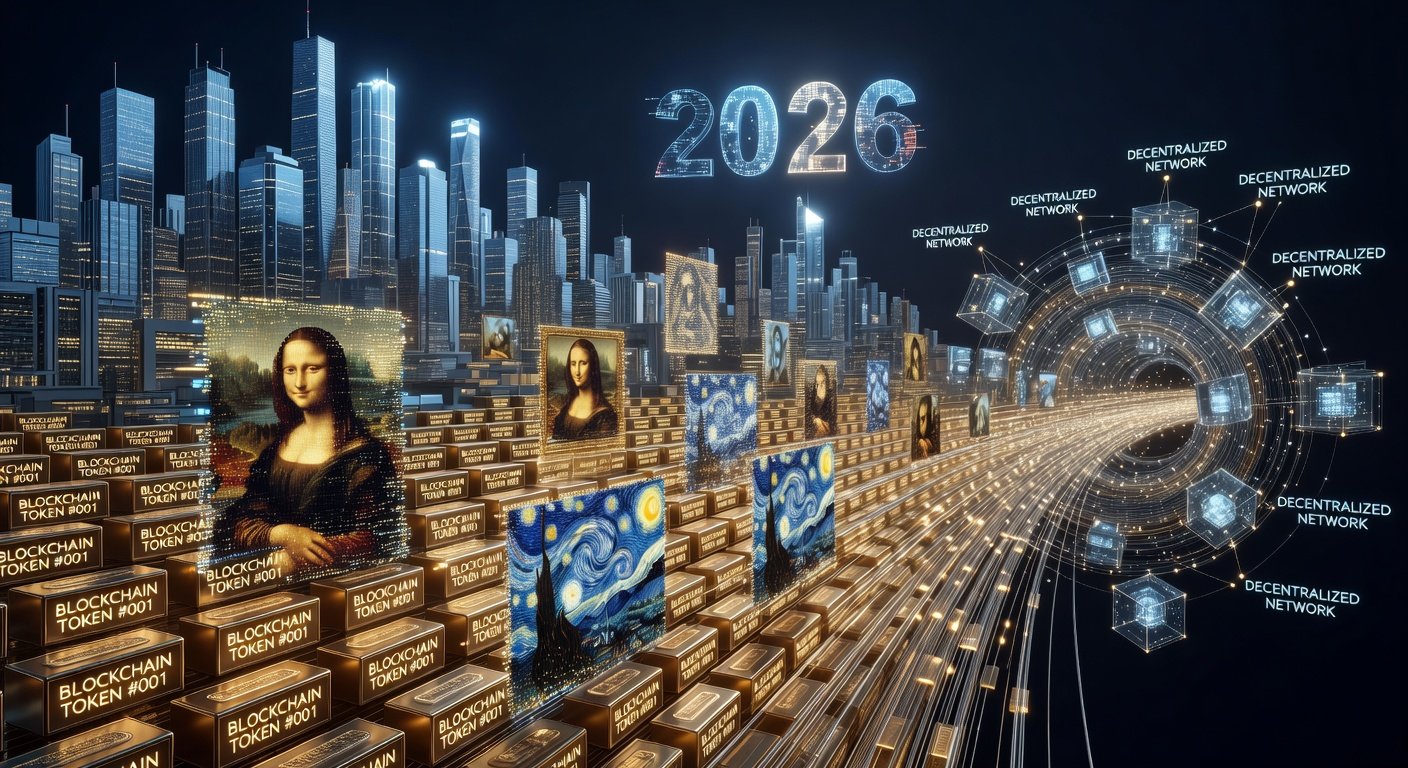
What Are Real World Assets (RWAs) in Web3?
Real World Assets (RWAs) represent a groundbreaking shift in the blockchain space, bridging the gap between tangible physical assets and the digital realm of Web3. In essence, RWAs involve tokenizing real-world items like real estate, fine art, commodities, and even intellectual property on blockchain networks. This process converts ownership rights into digital tokens, typically ERC-20 or ERC-721 standards on Ethereum or compatible chains.
By 2026, RWAs are poised to dominate Web3 trends, with projections estimating the market to surpass $10 trillion in tokenized value, according to reports from major financial analysts. This revolution stems from blockchain's ability to provide immutable records, transparency, and global accessibility, transforming illiquid assets into tradable digital instruments.
The core appeal lies in tokenization: a legal and technical process where an asset's value is represented by blockchain tokens. For instance, a $1 million property can be divided into 1,000 tokens, each worth $1,000, allowing retail investors to participate without buying the entire asset.
Why RWAs Are the Hottest Web3 Trend for 2026
Several macroeconomic and technological factors are fueling the RWA boom. Post-2024 crypto winters and regulatory clarity in the EU and US have paved the way for institutional adoption. Traditional Finance (TradFi) giants like BlackRock and JPMorgan are experimenting with tokenized funds, signaling a convergence of DeFi and CeFi.
Key drivers include:
- Increased Liquidity: Assets like real estate, historically locked for years, can now be traded 24/7 on decentralized exchanges (DEXs).
- Fractional Ownership: Democratizes access, enabling small investors to own slices of high-value assets.
- Transparency and Security: Blockchain ledgers prevent fraud, with smart contracts automating dividends and governance.
- Yield Generation: Tokenized treasuries and bonds offer stable APYs, attracting risk-averse capital.
Market data from DeFiLlama shows RWA TVL exploding from $2 billion in 2024 to over $50 billion by mid-2025, with 2026 forecasts doubling that figure.
Leading Platforms Powering the RWA Revolution
Web3's RWA ecosystem thrives on specialized protocols. Two standouts are Ondo Finance and Centrifuge.
Ondo Finance: Tokenized Treasuries and Beyond
Ondo specializes in bringing US Treasuries and high-grade bonds on-chain. Their OUSG token, backed by BlackRock's BUIDL fund, offers yields around 5% with full redeemability. By 2026, Ondo aims to tokenize $100 billion in assets, integrating seamlessly with Ethereum and Solana.
Users can stake OUSG for yields, trade on DEXs like Uniswap, or use it as collateral in lending protocols. This model exemplifies TradFi-Web3 fusion, with partnerships ensuring compliance via KYC/AML.
Centrifuge: Unlocking Private Credit and Real Assets
Centrifuge focuses on undercollateralized real-world credit, tokenizing invoices, real estate, and commodities. Their Tinlake pools allow investors to fund real businesses, earning yields from 8-15%. Built on Polkadot for scalability, Centrifuge has deployed over $300 million in RWAs by 2025.
Both platforms leverage oracles like Chainlink for off-chain price feeds, ensuring token values mirror real-world counterparts.
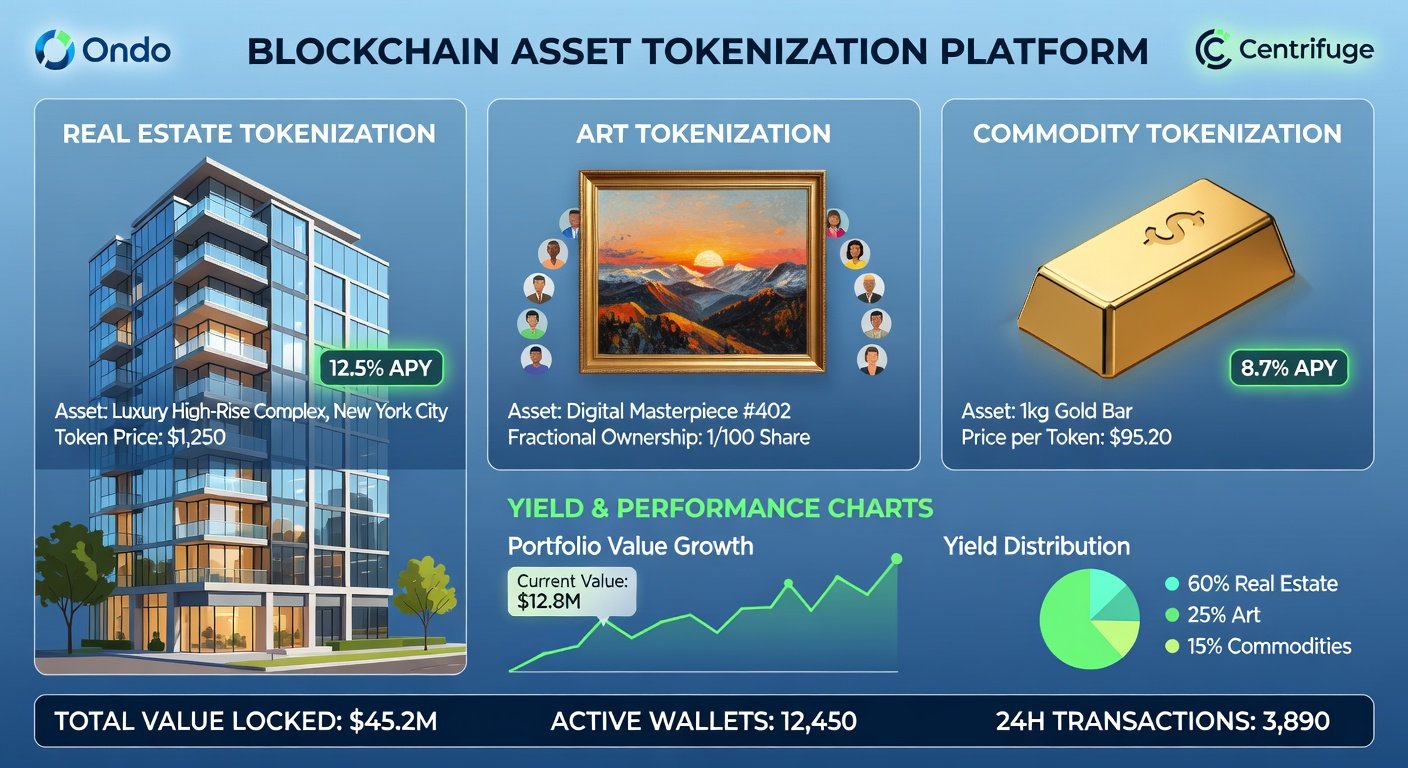
Tokenization in Action: Real Estate, Art, and Commodities
Real Estate Tokenization
Real estate leads RWA adoption, with platforms like RealT and Propy tokenizing properties worldwide. A Manhattan apartment might be fractionalized into 10,000 tokens, each generating rental yields via automated smart contracts. Benefits include global investor pools and instant liquidity—sell your stake anytime without realtor fees.
Case study: In 2025, a Dubai skyscraper was tokenized on Ethereum, raising $50 million from 5,000 investors in days, outperforming traditional REITs.
Art and Collectibles
Fine art, long an illiquid market, sees tokenization via platforms like Masterworks or fractional.art. A Picasso painting valued at $100 million becomes 100,000 tokens at $1,000 each. Blockchain provenance verifies authenticity, reducing forgery risks.
By 2026, expect NFT-RWA hybrids where physical art ships to vaults, with tokens traded on OpenSea.
Commodities: Gold, Oil, and Carbon Credits
Commodities like gold (PAXG) or oil futures are tokenized for hedging. Paxos' PAXG, backed 1:1 by physical gold, trades with minimal premiums. Carbon credits on KlimaDAO enable green investments, aligning with ESG trends.
Market Growth Predictions for 2026
Analysts from Boston Consulting Group predict RWAs hitting $16 trillion by 2030, with 2026 as the inflection point at $4-5 trillion. Drivers: Regulatory greenlights (e.g., EU MiCA), institutional inflows ($1 trillion+ from pensions), and layer-2 scaling (Arbitrum, Optimism reducing fees).
TVL breakdowns:
- Fixed Income (Treasuries): 40%
- Real Estate: 25%
- Private Credit: 20%
- Commodities/Equities: 15%
Challenges like oracle risks and legal harmonization persist, but solutions like zero-knowledge proofs are emerging.
Case Studies: Successful RWA Deployments
BlackRock's BUIDL Fund: Launched in 2024 on Ethereum, this $500 million tokenized treasury fund (as of 2025) integrates with Ondo, offering daily settlements and 5% yields. It proves institutional viability.
Centrifuge's Trade Finance Pool: A $20 million pool for African exporters tokenized invoices, providing instant liquidity and 12% yields to investors—driving SME growth in emerging markets.
RealT's US Housing: Over 200 properties tokenized, with 10%+ annual returns from rents distributed on-chain, attracting 50,000+ holders.
These cases showcase yields beating traditional savings (2-3%) while mitigating downturns via diversification.
How to Get Started with RWAs in 2026: Practical Steps
Entering the RWA space is straightforward:
- Choose a Wallet: MetaMask or Rabby for Ethereum compatibility.
- Select Platforms: Start with Ondo or Centrifuge via their apps.
- Fund and KYC: Deposit USDC; complete verification for compliant pools.
- Invest and Monitor: Buy tokens, track via Dune Analytics dashboards.
- Harvest Yields: Claim via auto-compounding or manual.
Mistakes to Avoid:
- Ignoring oracle risks—stick to audited protocols.
- Overleveraging—RWAs offer stability, not moonshots.
- Neglecting taxes—track basis with tools like Koinly.
For advanced users, integrate RWAs into DeFi strategies: collateralize OUSG on Aave for leveraged yields.
Challenges and the Road Ahead
Despite hype, hurdles remain: regulatory fragmentation (SEC vs. CFTC debates), scalability (high gas fees), and off-chain risks (custodian defaults). Solutions include multi-chain deployments and insured vaults from firms like Copper.
Looking to 2026, expect Bitcoin layer-2s like Stacks enabling BTC-backed RWAs, and AI-oracles enhancing pricing accuracy. Coverage from CoinDesk highlights pilot programs with central banks tokenizing reserves.
Conclusion: RWAs Ushering Web3 into Mainstream
The RWA revolution in 2026 isn't just a trend—it's the catalyst for Web3's mass adoption. By unlocking trillions in dormant capital, tokenization creates a more inclusive, efficient financial system. Whether you're a yield hunter, property enthusiast, or TradFi refugee, RWAs offer unparalleled opportunities. Stay informed, start small, and position yourself at the forefront of this seismic shift.

No comments yet. Be the first!