 CryptoChain Blog

Unlocking the Future of Web3 with Interoperability
The decentralized web, or Web3, promises a borderless digital economy where blockchain networks communicate effortlessly. However, siloed blockchains have long hindered this vision. Enter emerging interoperability solutions: advanced cross-chain bridges and layer-zero protocols. These innovations are revolutionizing asset transfers, dApp connectivity, and overall Web3 adoption. By 2026, projects leveraging these technologies are projected to bridge trillions in value, paving the way for mass mainstream use.
Interoperability refers to the ability of disparate blockchain ecosystems to exchange data, assets, and functionality seamlessly. Traditional blockchains like Ethereum and Bitcoin operate in isolation, creating liquidity fragmentation and user friction. Cross-chain bridges act as secure tunnels between chains, while layer-zero protocols provide an omniscient underlayer for universal communication. Together, they form the backbone of a truly interconnected Web3.
Advanced Cross-Chain Bridges: The Gateways to Multi-Chain Worlds
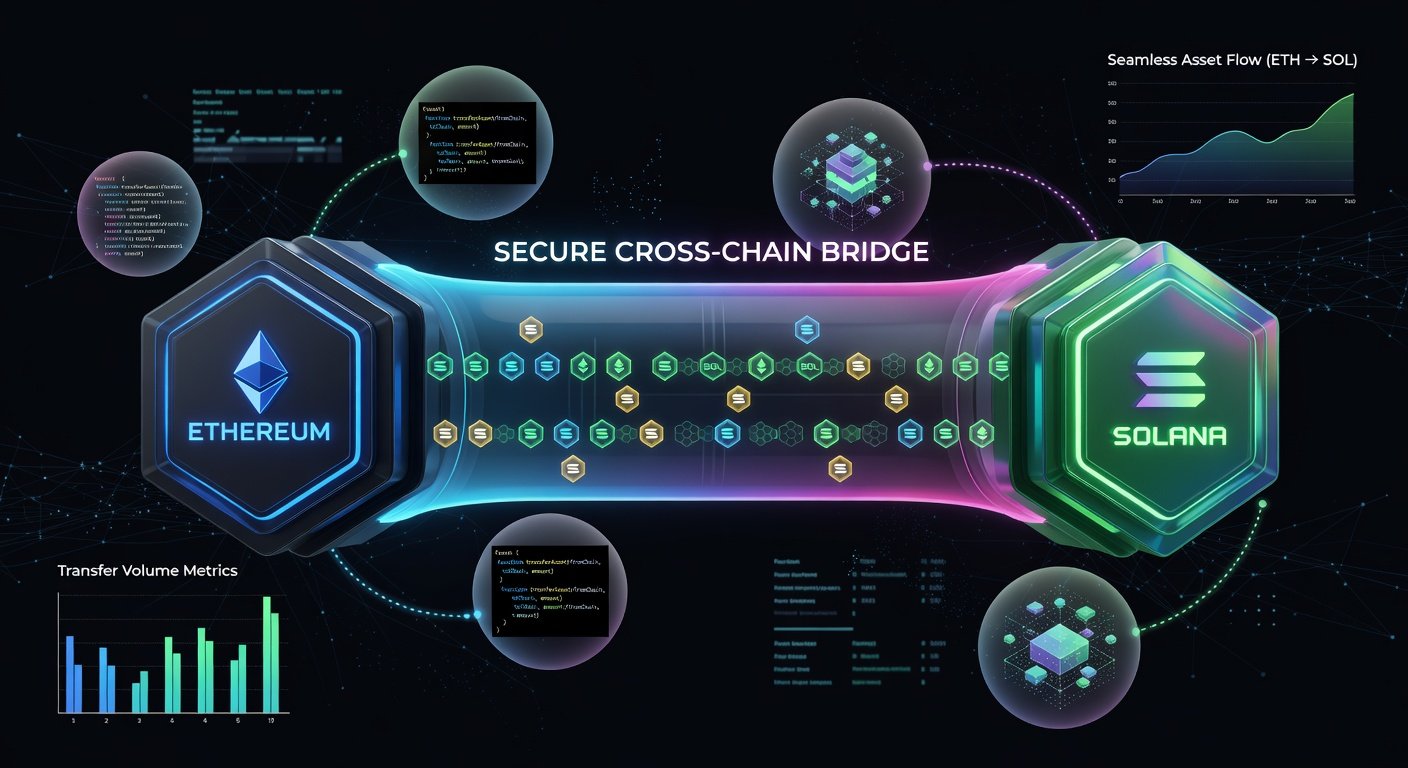
Cross-chain bridges have evolved from simple wrapped token transfers to sophisticated, trust-minimized systems. Early bridges like the Wrapped Bitcoin (WBTC) bridge suffered hacks, eroding trust. Modern iterations employ zero-knowledge proofs (ZK), optimistic verification, and multi-signature schemes for enhanced security.
Key advancements include:
- Light Client Verification: Bridges verify block headers on the destination chain without full nodes, reducing centralization risks.
- Atomic Swaps: Peer-to-peer exchanges using Hash Time-Locked Contracts (HTLCs) for trustless trades.
- Liquidity Pools: Decentralized reserves that facilitate instant swaps, minimizing slippage.
These bridges enable seamless asset transfers, such as moving ETH from Ethereum to Solana or BNB from Binance Smart Chain to Polygon. Users can now HODL assets across ecosystems without selling, unlocking composability.
Real-World Examples from 2026 Projects
By 2026, bridges like Axelar and Wormhole are scaling to handle enterprise-grade volumes. Axelar, with its programmable interoperability SDK, powers cross-chain dApps for DeFi protocols. Imagine lending USDC on Aave (Ethereum) and redeeming it on Avalanche instantly.
Another standout is the Polkadot relay chain, which uses parachains for native interoperability. Projects like Moonbeam bridge EVM compatibility, allowing Ethereum dApps to run on Polkadot with sub-second finality.
Layer-Zero Protocols: The Omnichain Foundation
Layer-zero protocols sit beneath layer-1 blockchains, providing a permissionless messaging layer for arbitrary data transfer. Unlike bridges focused on assets, layer-zero enables full dApp portability—smart contracts calling across chains natively.
LayerZero, a pioneer, uses ultra-light nodes (ULNs) and decentralized verifiers (DVNs) for oracle-free messaging. Its v2 upgrade in 2025 introduced omnichain fungible tokens (OFTs), standardizing cross-chain ERC-20s. Developers deploy once, and tokens flow everywhere.
- Endpoint Abstraction: Single smart contract endpoints handle all chains.
- Permissionless Expansion: Anyone adds support for new blockchains.
- Gas Abstraction: Users pay in native tokens, auto-wrapped on arrival.
This shifts Web3 from chain-specific to chain-agnostic development. For instance, a NFT marketplace could mint on Ethereum, trade on Solana, and stake on Cosmos without wrappers.
2026 Layer-Zero Innovations
Projections for 2026 highlight Hyperlane and Across Protocol integrations. Hyperlane's modular security stacks let protocols choose verifiers per message type. Meanwhile, LayerZero partnerships with Cosmos SDK chains enable IBC (Inter-Blockchain Communication) extensions to EVMs.
Cosmos' IBC, often called layer-zero adjacent, connects over 100 sovereign chains. By 2026, its v2 with packet forwarding will rival Ethereum's rollups for throughput.
Seamless Asset Transfers and dApp Connectivity
These solutions supercharge user experience. Asset transfers now take seconds, not hours, with near-zero fees via optimistic mechanisms. dApp connectivity allows composability at scale: a DEX on Arbitrum pulling liquidity from Optimism pools, settled on Base.
Developers benefit from unified tooling. Standards like Chain Abstraction hide complexities—wallets like MetaMask could manage 100+ chains as one. This reduces UX barriers, crucial for mass adoption.
- Unified Liquidity: TVL fragments less; users tap global pools.
- Cross-Chain Governance: DAOs vote across ecosystems.
- Omnichain Applications: Games with assets playable anywhere.
Security remains paramount. Post-2022 bridge exploits ($2B+ lost), audited protocols with economic incentives dominate. Bug bounties and insurance funds like Nexus Mutual cover risks.
Predicting Impact on Web3 Trends and Mass Adoption
By 2026, interoperability will drive Web3's inflection point. Analysts predict $10T cross-chain volume, rivaling TradFi rails. Trends include:
- Superchains: Ethereum L2s converging via shared bridges.
- Real-World Assets (RWAs): Tokenized treasuries flowing between regulated chains.
- SocialFi and Gaming: Omnichain identities and economies.
Mass adoption hinges on mobile-first UX. Imagine on-ramping fiat to any chain via Stripe integrations, then swapping seamlessly. Institutions like BlackRock will custody multi-chain portfolios, legitimizing crypto.
Challenges persist: quantum threats demand post-quantum crypto, and regulation could fragment further. Yet, with Cosmos and Polkadot ecosystems maturing, interoperability cements Web3's resilience.
The Road Ahead: A Unified Decentralized Web
Cross-chain bridges and layer-zero protocols aren't just technical feats—they're the glue for Web3's grand vision. From DeFi yields optimized across 50 chains to NFTs living eternally in multi-verse economies, these innovations unlock exponential utility. As 2026 projects deploy at scale, expect Web3 to leap from niche to necessity, onboarding billions. Stay tuned; the interconnected future is here.

No comments yet. Be the first!