 CryptoChain Blog
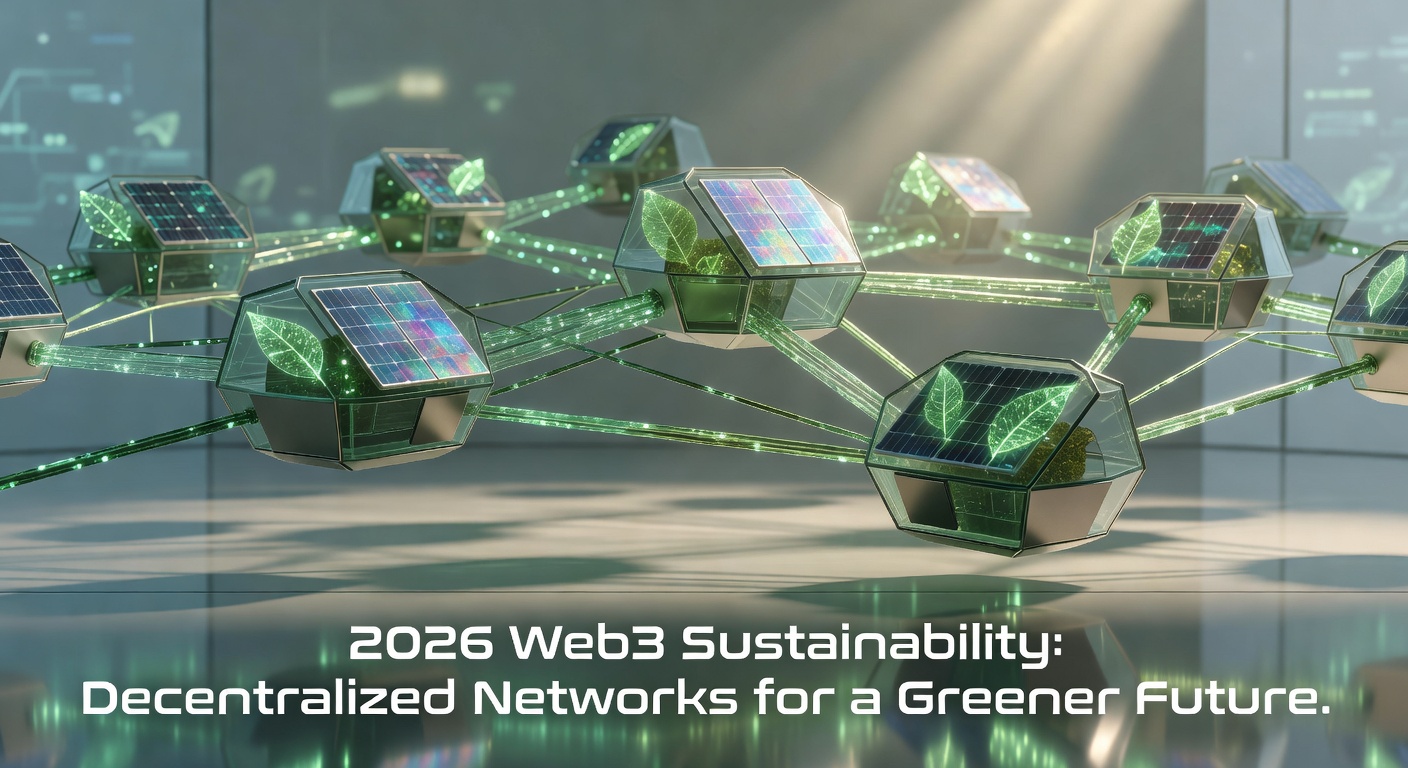
Introduction to Sustainable Web3 in 2026
The decentralized web continues to evolve rapidly, and sustainability has emerged as a core priority across the industry. As blockchain networks expand globally, developers, enterprises, and individual participants are actively prioritizing innovations that reduce energy consumption while preserving the core principles of security, transparency, and scalability. This important shift directly addresses mounting concerns about the carbon footprint associated with older proof-of-work systems and helps align Web3 development with international climate objectives and corporate responsibility standards.
In this comprehensive guide, we examine practical eco-friendly technologies that are shaping the future of the decentralized web. Readers will discover detailed comparisons between protocols, multiple real-world case studies, expanded discussions of emerging tools, and clear actionable guidance for implementing sustainable practices in both development and business contexts. The goal is to provide depth and decision-useful information rather than surface-level overviews.
Understanding Web3's Environmental Challenges
Early blockchain protocols relied heavily on energy-intensive mining operations that required specialized hardware running continuously. Proof-of-work mechanisms validate transactions through competitive computational processes, resulting in substantial electricity consumption and associated greenhouse gas emissions. Over time, the cumulative impact of these systems drew scrutiny from environmental groups, regulators, and users alike. However, the Web3 industry has responded proactively with a range of alternatives designed to maintain decentralization and security without the excessive power demands of legacy approaches. Transitioning to greener models enables projects to meet evolving regulatory expectations while appealing to environmentally conscious participants and investors.
Beyond energy use, additional challenges include electronic waste from outdated mining equipment and the geographic concentration of operations in regions with carbon-heavy power grids. Addressing these issues requires holistic strategies that consider the full lifecycle of network infrastructure.
Energy-Efficient Consensus Mechanisms
Modern protocols increasingly favor proof-of-stake and its numerous variants. These systems validate transactions based primarily on the amount of tokens staked rather than raw computational power, which slashes overall energy requirements by significant margins. Other notable innovations include proof-of-authority models suited for permissioned enterprise networks and hybrid consensus approaches that intelligently combine multiple validation methods to achieve optimal efficiency and resilience. Documentation from leading organizations such as the Ethereum Foundation provides extensive technical details on how these upgrades support long-term network scalability and sustainability.
Key Benefits of Proof-of-Stake
- Substantially reduced electricity consumption compared to traditional proof-of-work systems
- Lower hardware requirements for validators, enabling broader participation
- Enhanced network security achieved through aligned economic incentives
- Improved accessibility for smaller participants and community members
- Greater flexibility for future upgrades and governance changes
Emerging Variants and Hybrids
Additional mechanisms such as proof-of-space and proof-of-time are gaining traction in niche applications. These alternatives leverage storage capacity or temporal commitments instead of continuous computation. Hybrid models allow networks to dynamically adjust validation methods based on load or environmental conditions, offering further optimization opportunities.
Real-World Case Studies of Low-Carbon Projects
Several established and emerging platforms demonstrate successful sustainable implementations at scale. One prominent example involves layer-2 scaling solutions that batch multiple transactions off the main chain, thereby minimizing on-chain computational activity and associated energy use. Another involves fully carbon-negative blockchains that integrate verified reforestation and renewable energy partnerships to offset any residual emissions while maintaining high throughput. Additional projects focus on decentralized climate data marketplaces that reward participants for contributing verified environmental metrics. These diverse examples illustrate that environmental responsibility can successfully coexist with strong performance, security, and widespread user adoption.
Further case studies highlight enterprise-grade deployments where companies have migrated internal supply-chain tracking systems to sustainable ledgers, achieving both operational efficiency gains and measurable reductions in reported emissions. Such migrations often involve close collaboration with specialized auditing firms to ensure transparent reporting.
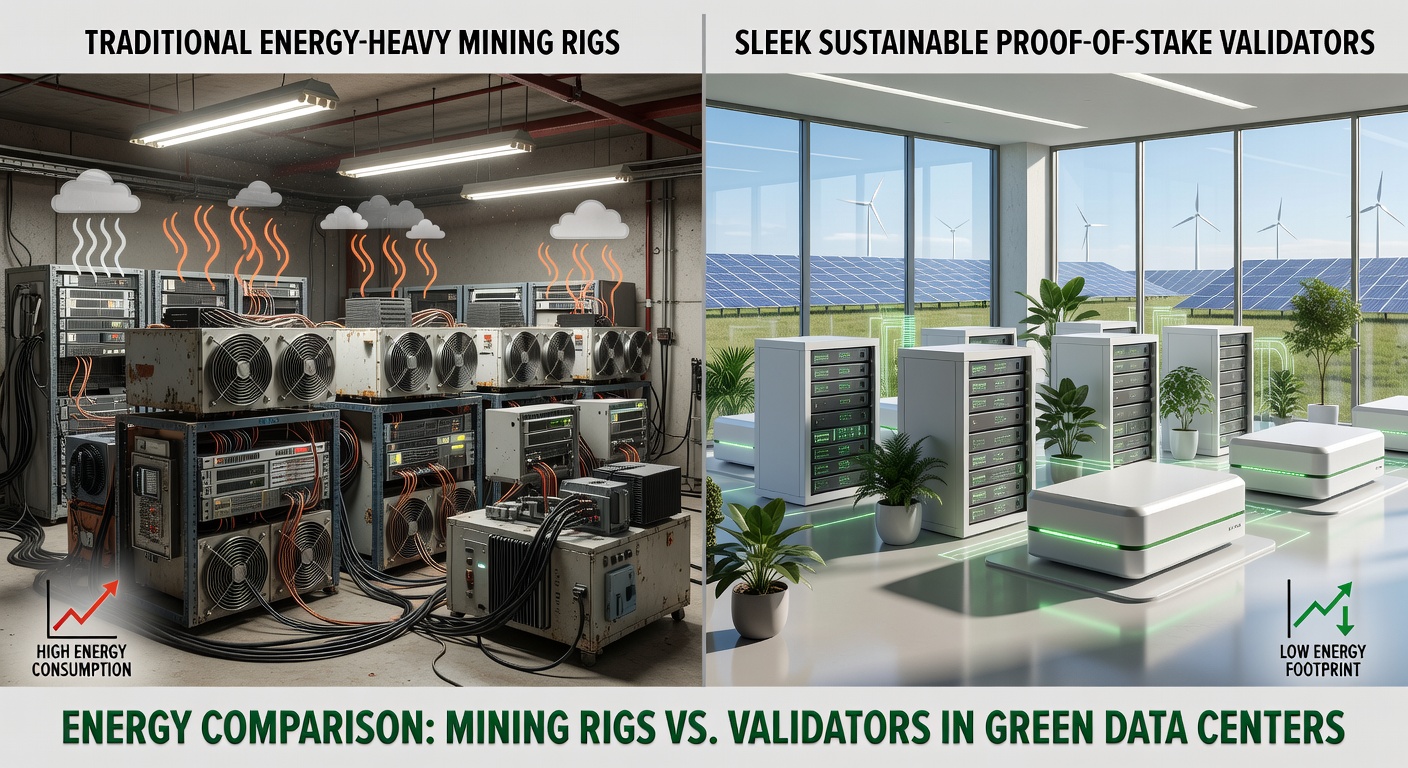
Comparisons Between Traditional and Sustainable Protocols
Traditional proof-of-work networks frequently encounter criticism due to their high resource intensity and slower transaction finality under heavy load. In contrast, sustainable alternatives routinely achieve consensus with dramatically lower overhead while delivering comparable or superior security properties. Quantitative metrics such as transactions processed per unit of energy reveal clear differences, with proof-of-stake and hybrid systems consistently leading by wide margins. Developers and organizations evaluating protocol options should carefully weigh both security guarantees and environmental performance indicators when selecting a foundational layer for new applications.
Additional comparison factors include hardware accessibility, geographic distribution of validators, and ease of participating in network governance. Sustainable protocols often excel across these dimensions, promoting greater decentralization over time.
Actionable Steps for Developers and Businesses
Successfully adopting green practices begins with a thorough audit of current infrastructure and energy usage patterns. The next phase typically involves migrating to efficient consensus layers or strategically integrating layer-2 solutions that reduce base-layer load. Businesses benefit from prioritizing platforms that publish transparent sustainability reports and from actively participating in governance proposals that allocate resources toward eco-friendly initiatives. Training internal teams on carbon accounting methodologies and available monitoring tools ensures ongoing compliance and continuous improvement across projects.
Practical Checklist for Implementation
- Conduct detailed assessments of existing energy usage across all nodes, validators, and supporting infrastructure
- Evaluate and test migration paths to proof-of-stake or equivalent low-impact consensus mechanisms
- Establish partnerships with verified carbon-offset providers that meet international third-party standards
- Deploy real-time emissions monitoring dashboards integrated with existing analytics platforms
- Engage community and stakeholder governance processes to develop and fund sustainability roadmaps
- Document progress through regular public reports to build trust and attract aligned partners
Examples from Leading Platforms
Prominent ecosystems have embedded sustainability directly into their long-term technical roadmaps. Certain networks now offer staking reward structures explicitly tied to verified use of renewable energy sources by validators. Others actively support decentralized applications focused on climate data verification, carbon credit trading, and environmental impact tracking. These real-world examples serve as practical blueprints for new entrants seeking to build responsibly from day one. Resources available from the World Economic Forum provide valuable additional context regarding global blockchain sustainability initiatives and collaborative frameworks.
Future Outlook and Recommended Resources
Looking ahead, continued innovation in areas such as zero-knowledge proofs and decentralized oracle networks promises further efficiency gains. Organizations are encouraged to explore open-source tooling for emissions tracking and to join industry working groups focused on standardized sustainability metrics. Staying informed through reputable technical documentation and cross-sector collaborations will help maintain competitive advantage in the evolving landscape.
Conclusion
Sustainable Web3 innovations represent both an ethical imperative and a significant competitive advantage in the maturing decentralized ecosystem. By embracing energy-efficient mechanisms, studying successful case studies in depth, and following structured adoption steps, stakeholders across the spectrum can contribute to a decentralized web that delivers robust functionality without compromising planetary health or future generations.
FAQ
What is Web3's typical carbon footprint today?
Modern sustainable networks have achieved dramatic reductions in emissions relative to legacy proof-of-work systems, although precise measurements vary according to network scale, validator energy sources, and specific protocol design choices.
How does the decentralized web benefit from widespread adoption of green protocols?
Green protocols attract larger and more diverse user bases, lower long-term operational costs for participants, and better align with emerging environmental regulations, thereby supporting sustained growth and mainstream integration.
Can small development teams realistically implement sustainable Web3 solutions?
Absolutely. A wide range of open-source tools, modular layer-2 frameworks, and community-supported documentation make it feasible for teams of any size to launch low-impact projects without requiring expensive specialized infrastructure or dedicated sustainability experts.
What role do layer-2 solutions play in reducing environmental impact?
Layer-2 solutions process the majority of transactions off the primary chain and periodically settle batches on the base layer, substantially decreasing the frequency and energy cost of on-chain operations while preserving security guarantees.
Are there standardized ways to measure and report Web3 sustainability metrics?
Industry groups are actively developing common frameworks that combine on-chain data with verified energy source information, enabling consistent reporting and comparison across different networks and applications.


No comments yet. Be the first!