 CryptoChain Blog

Introduction to Web3 Privacy in 2026
The decentralized web continues to mature in 2026, placing privacy at the forefront of technological advancement. Users are increasingly aware of how centralized platforms harvest personal data for profit, leading to widespread demand for alternatives that prioritize confidentiality and user control. Web3 privacy innovations address these concerns by leveraging blockchain technology, advanced cryptography, and decentralized architectures to protect information in ways that traditional web models simply cannot match. This shift empowers individuals to interact online without exposing sensitive details to intermediaries or hackers.
Centralized systems often suffer from single points of failure, making them prime targets for data breaches that affect millions. In contrast, Web3 distributes data across networks, reducing risks through cryptographic guarantees rather than trust in corporations. This article delves deeply into emerging trends such as zero-knowledge proofs, decentralized identity solutions, and privacy-preserving smart contracts. Readers will find detailed explanations, real-world case studies, practical integration steps for developers, comparisons with existing tools, and answers to common questions about security in the decentralized space.
Zero-Knowledge Proofs: Enabling Verification Without Exposure
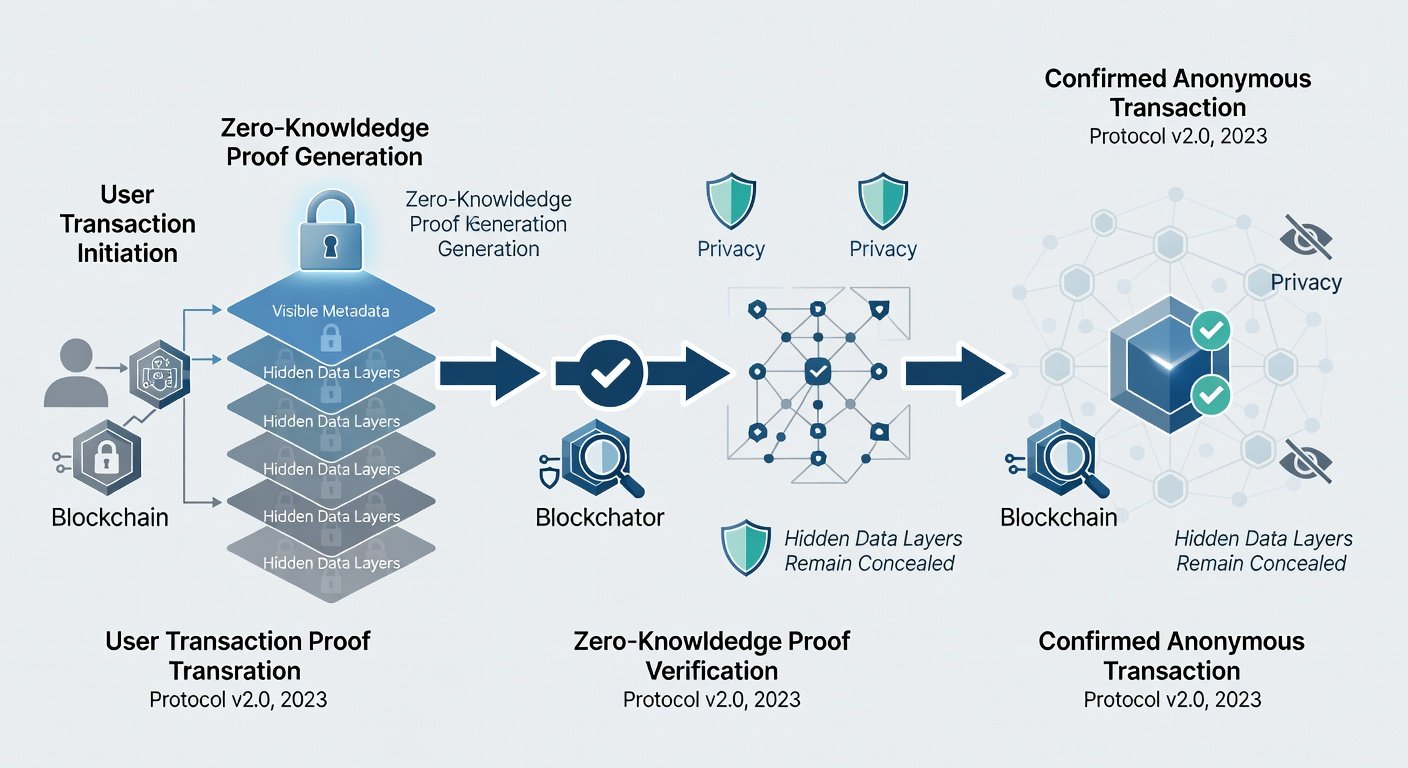
Zero-knowledge proofs represent one of the most powerful tools in the Web3 privacy toolkit. These cryptographic protocols allow one party to prove the truth of a statement to another without revealing any additional information beyond the validity of the claim itself. In 2026, implementations like zk-SNARKs and zk-STARKs are widely adopted for private transactions on public blockchains, ensuring that details such as transaction amounts, sender identities, and receiver addresses remain hidden while still allowing network consensus.
Consider a practical example in decentralized finance: a user wants to borrow funds against collateral without disclosing their exact asset holdings. A zero-knowledge proof can verify that the collateral meets the required threshold without exposing wallet balances. This capability extends to voting systems, supply chain tracking, and compliance checks where verification is essential but full transparency is undesirable. Developers benefit from mature libraries including Circom for circuit design and Halo2 for efficient proof generation. These tools integrate seamlessly with layer-2 scaling solutions, delivering both privacy and high transaction speeds that rival centralized alternatives.
The advantages over older privacy methods are clear. Traditional encryption often requires revealing keys for verification, creating potential leaks. Zero-knowledge approaches eliminate this need entirely, fostering greater trust in public networks. As adoption grows, ongoing research focuses on reducing proof sizes and verification times to make these technologies accessible even on resource-constrained devices.
Decentralized Identity Solutions for User Sovereignty
Decentralized identity solutions shift ownership of personal information back to individuals through standards-based technologies. Decentralized identifiers (DIDs) combined with verifiable credentials allow users to create and manage digital identities without relying on centralized authorities like governments or corporations. In 2026, these systems support selective disclosure, enabling users to share only specific attributes—such as proof of age or residency—while keeping other details private.
Integration typically occurs through self-sovereign identity wallets that store credentials securely on user devices or encrypted networks. For instance, a job applicant could present a verified credential confirming their degree without revealing their full educational history or personal contact details. This approach contrasts sharply with traditional username-password systems or OAuth logins that funnel data through third-party providers prone to surveillance and breaches. W3C standards provide the foundational specifications that ensure interoperability across platforms and applications.
Real-world benefits include reduced identity theft risks and improved compliance with privacy regulations. Organizations adopting these solutions report higher user engagement because participants feel more in control. Challenges remain around usability and widespread adoption, but educational resources and developer toolkits are accelerating progress.
Privacy-Preserving Smart Contracts in Action
Privacy-preserving smart contracts extend confidentiality to programmable logic on blockchains. By incorporating techniques such as homomorphic encryption, secure multi-party computation, and zero-knowledge circuits, these contracts can process sensitive inputs and produce outputs without exposing underlying data. On networks like Ethereum, developers now deploy confidential DeFi protocols where trading strategies, loan terms, and user balances stay hidden from public view.
Ethereum documentation highlights emerging patterns that combine these methods with layer-2 rollups for efficiency. A concrete example involves a private auction smart contract: bidders submit encrypted offers, the contract verifies the highest valid bid using zero-knowledge proofs, and only the winner is revealed at settlement. This prevents front-running and information leakage common in transparent environments.
Implementation requires careful consideration of gas costs and computational overhead. Developers often start with frameworks like Aztec or Penumbra that abstract much of the complexity. As 2026 progresses, more networks are adding native support for encrypted state, lowering barriers for broader adoption across gaming, supply chain, and healthcare applications.
Case Studies Demonstrating Real Impact
Several projects illustrate the maturity of these innovations. Aztec Protocol has enabled fully private transactions and shielded DeFi interactions on Ethereum, processing significant volumes while maintaining complete confidentiality for participants. Secret Network offers a dedicated privacy-focused blockchain where smart contracts execute in trusted execution environments, supporting applications from private NFTs to confidential data marketplaces.
Another compelling case comes from Polygon’s zkEVM implementations, which combine scalability with optional privacy layers for enterprise clients handling regulated data. In one deployment, a supply chain platform used zero-knowledge proofs to verify product authenticity without exposing supplier details or pricing information. These examples show measurable improvements in user trust and regulatory compliance compared to earlier transparent blockchain systems.
Success factors include strong community governance, rigorous security audits, and iterative development based on user feedback. Organizations evaluating similar solutions should review public audit reports and testnet performance metrics before mainnet deployment.
Practical Steps for Developers to Integrate Privacy Features
Developers seeking to add privacy capabilities should follow a structured approach. Begin by conducting a thorough audit of current smart contracts to identify exposed variables and data flows. Next, prototype zero-knowledge circuits using accessible tools like Circom or Noir to test basic private functions on local environments.
- Choose a compatible network or layer-2 solution that supports privacy primitives and review recent protocol updates for 2026 compatibility.
- Incorporate decentralized identity libraries such as DIDKit to handle verifiable credentials within your application.
- Implement privacy-preserving logic incrementally, starting with non-critical features to measure performance impacts.
- Conduct extensive testing on testnets, focusing on edge cases involving encrypted data and proof verification failures.
- Engage professional auditors specializing in zero-knowledge systems to review code before launch.
- Monitor community forums and official documentation for emerging best practices and security patches.
These steps help avoid common pitfalls like excessive gas consumption or unintended data leaks. Documentation and open-source examples from established projects accelerate the learning curve significantly.
Comparisons with Traditional Privacy Tools
Web3 privacy innovations differ fundamentally from conventional solutions like VPNs, Tor, or centralized encrypted databases. While VPNs obscure network traffic, they do not protect on-chain data visibility or enable verifiable private computations. Tor provides anonymity for browsing but lacks integration with programmable financial or identity systems. Centralized privacy tools often retain logs or require trust in the provider, introducing risks absent in decentralized designs.
Web3 approaches offer composability—private components can interact across applications without exposing data—something traditional tools rarely achieve. However, they may involve steeper learning curves and higher initial development costs. The choice depends on whether the use case demands verifiable on-chain guarantees or simple traffic masking.
Regulatory and Ethical Considerations
As Web3 privacy tools advance, they intersect with global regulations such as GDPR and emerging digital identity frameworks. Privacy-preserving technologies can support compliance by enabling data minimization, yet they also raise questions about traceability for illicit activities. Ethical development emphasizes transparency in system design and user education about capabilities and limitations.
Projects that balance strong privacy with optional auditability features tend to gain broader institutional acceptance. Developers should stay informed about evolving legal landscapes to ensure sustainable implementations.
Frequently Asked Questions
How secure are zero-knowledge proofs against future quantum threats?
Current zk-STARKs offer post-quantum resistance through hash-based constructions, while zk-SNARKs may require upgrades. Ongoing research addresses this proactively.
Can decentralized identities fully replace traditional government-issued IDs?
They complement rather than replace them, allowing verifiable claims that integrate with official credentials for hybrid trust models.
What performance trade-offs exist with privacy-preserving contracts?
Proof generation adds computational time, but optimized frameworks in 2026 have reduced overhead to acceptable levels for most applications.
Are there risks of regulatory pushback against strong privacy features?
Yes, some jurisdictions seek balance between privacy and law enforcement access, prompting projects to include selective disclosure mechanisms.
How do these innovations affect everyday users?
They enable safer online interactions, private financial activities, and controlled sharing of personal information without centralized oversight.
Conclusion
Web3 privacy innovations are reshaping digital interactions in 2026 by delivering robust protections that centralized systems lack. Through zero-knowledge proofs, decentralized identities, and advanced smart contracts, the decentralized web becomes more secure and user-centric. Developers who invest time in understanding and implementing these technologies position themselves to create impactful solutions. Continued exploration via authoritative sources such as Web3 Foundation supports staying current with rapid advancements. The future of privacy online lies in these decentralized foundations.


No comments yet. Be the first!