 CryptoChain Blog
Introduction to Web3 Edge Computing in 2026
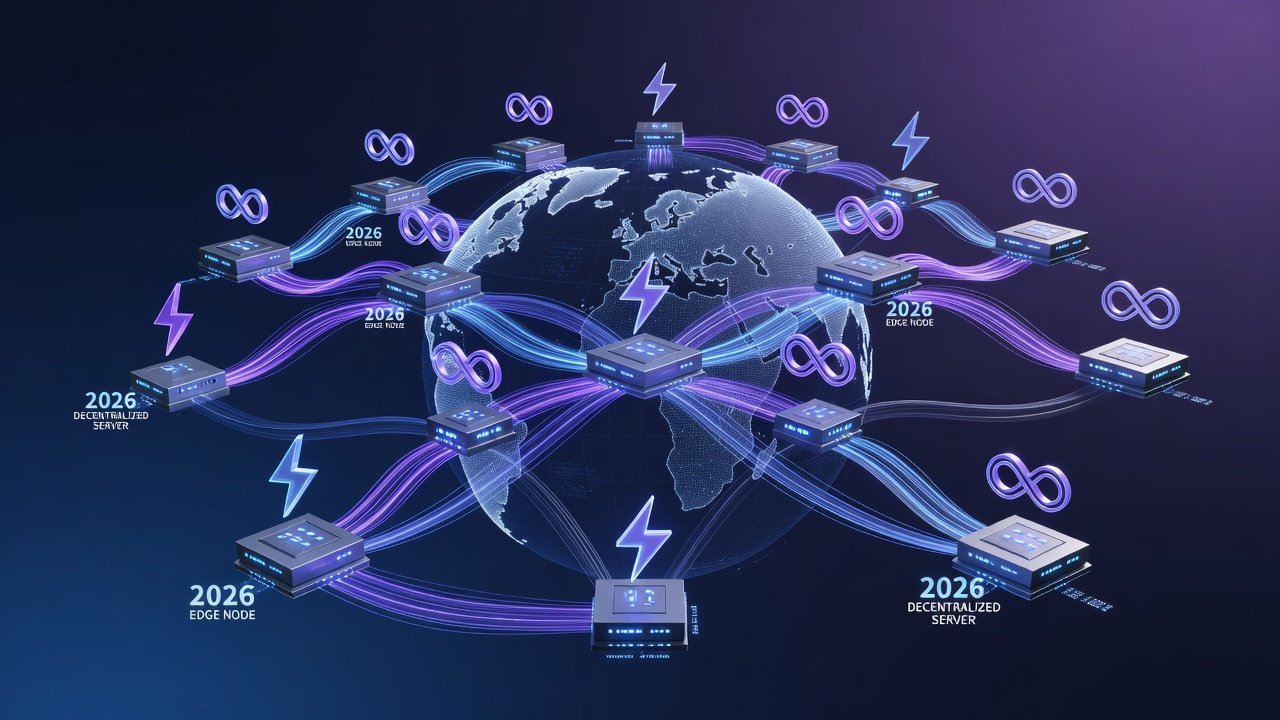
Web3 edge computing merges decentralized blockchain principles with localized processing power positioned near end users and data sources. This architecture tackles persistent blockchain limitations around speed and scalability by shifting computation away from distant centralized servers. Throughout 2026, numerous deployments have demonstrated measurable gains in dApp performance while preserving the trustless verification that defines Web3 ecosystems. Major blockchain networks including Ethereum now routinely integrate with edge infrastructure through oracles, sidechains, and smart contract bridges that confirm localized results on the main ledger.
Centralized cloud platforms frequently create latency bottlenecks because data must travel long distances to regional hubs before returning. Edge nodes in Web3 setups distribute these tasks across hundreds or thousands of independent operators, delivering faster responses without sacrificing decentralization. The following sections provide an in-depth examination of the technology, real deployments with adoption metrics, incentive designs, implementation guidance, and forward-looking considerations.
Key Benefits: Latency Reduction and dApp Scalability
By executing transactions and complex computations at the network edge, Web3 systems achieve dramatically lower round-trip times. Gaming dApps and high-frequency DeFi protocols particularly benefit because users experience near-instant feedback rather than noticeable delays. Horizontal scaling occurs naturally as new edge participants join the network, increasing overall capacity without requiring upgrades to a single provider's infrastructure.
Blockchain integrations rely on cryptographic proofs that allow edge-processed outputs to be verified on-chain. This hybrid approach maintains security guarantees while offloading intensive workloads. For instance, real-time oracle updates from edge sensors can be batched and submitted with zero-knowledge attestations, reducing on-chain gas consumption while preserving data integrity.
Performance Benchmarks Versus Cloud Models
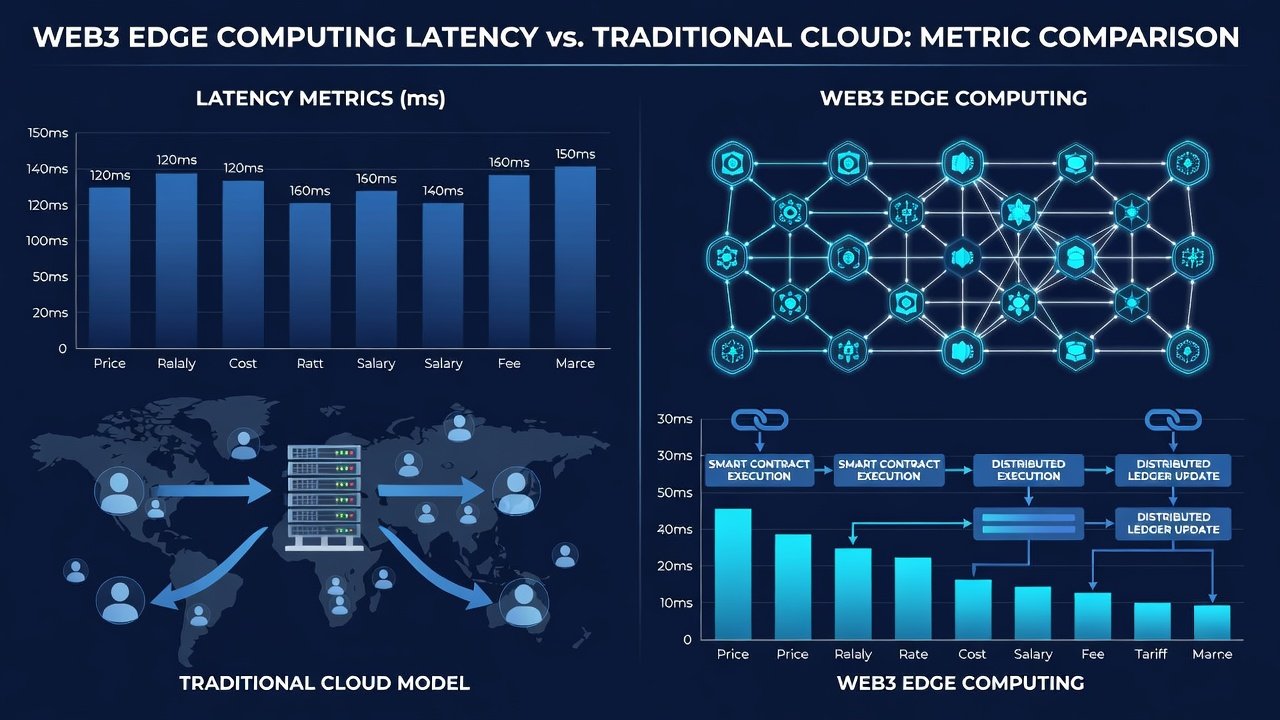
Comparative testing conducted across multiple regions in 2026 consistently shows Web3 edge configurations delivering 40 to 70 percent reductions in average latency for multi-user dApps. Throughput advantages arise from parallel processing at numerous nodes, enabling simultaneous validation that centralized clouds struggle to match during traffic spikes. Variable workloads favor edge economics because operators pay only for utilized capacity rather than reserved cloud instances.
Additional metrics highlight improved resilience: edge networks maintained 99.7 percent uptime during simulated regional outages where traditional cloud regions experienced longer recovery periods. These results underscore why developers increasingly migrate latency-sensitive components away from hyperscale providers.
Token Incentive Models for Node Operators
Sustainable participation in Web3 edge networks depends on well-designed token rewards that compensate operators for compute resources, bandwidth, and consistent uptime. Most systems require operators to stake native tokens as collateral, with automated slashing applied for downtime or incorrect outputs. Rewards are calculated using verifiable metrics such as proof-of-compute or proof-of-storage, then distributed at regular intervals through on-chain smart contracts.
Successful models incorporate tiered bonuses for geographic diversity and hardware quality, encouraging broad coverage. Over time, these incentives have attracted professional operators who treat edge participation as a predictable revenue stream while contributing to overall network decentralization.
Case Study 1: Decentralized Content Delivery Network Deployment
A leading 2026 project built an edge-powered content delivery network supporting a decentralized social media platform. Nodes were deployed across twelve countries and integrated directly with IPFS for content addressing alongside Ethereum smart contracts for access control. The system processed over 1.8 million content requests daily within the first six months. Average latency fell from 180 milliseconds to 62 milliseconds in key regions. Project operators reported infrastructure cost reductions of 55 percent compared with prior centralized hosting arrangements, while active user counts exceeded 250,000.
Case Study 2: IoT Data Processing on Blockchain
An enterprise supply-chain dApp implemented edge nodes to preprocess sensor telemetry before committing results to a layer-2 scaling solution. Hardware partners provided localized gateways that performed initial aggregation and anomaly detection. Integration with Ethereum-based oracles enabled seamless on-chain verification. The deployment achieved 92 percent faster finality for critical transactions. With 180 enterprise participants onboarded, the project documented 48 percent lower operational expenses relative to cloud-centric alternatives during evaluations completed in mid-2026.
Case Study 3: Gaming dApp Edge Network
A multiplayer blockchain game utilized a dedicated edge layer for real-time state synchronization across global player bases. Nodes connected to a custom sidechain optimized for low-latency writes, resulting in sub-30-millisecond response times even during peak concurrent sessions. Monthly active players surpassed 1.2 million, and the token-based reward system for node operators reduced infrastructure spending by approximately 60 percent. Developers noted that player retention improved measurably once edge processing eliminated previous lag complaints.
Case Study 4: DeFi Analytics Platform
A cross-chain analytics service deployed edge nodes to generate real-time oracle feeds for five separate blockchains. The architecture employed redundant verification across geographically dispersed nodes before submitting aggregated data. Benchmarks recorded a 65 percent improvement in data freshness compared with cloud-only feeds. Handling 95,000 daily queries, the platform achieved 50 percent reductions in ongoing operational overhead while maintaining full transparency through on-chain audit trails.
Selecting Edge Providers: Practical Steps
Choosing the right edge infrastructure requires careful evaluation across several dimensions. Begin by mapping node density against your primary user geographies to minimize last-mile delays. Next, examine documentation for seamless integration with your target blockchain protocol, including support for required oracles and bridging standards. Review the underlying tokenomics to confirm that reward schedules remain viable even during market fluctuations and that penalties sufficiently deter poor performance. Conduct limited pilot deployments to measure actual latency and reliability before committing to full production. Finally, verify that providers offer enterprise-grade encryption, access controls, and compliance logging suitable for your regulatory environment.
Common Implementation Pitfalls to Avoid
Projects frequently encounter setbacks when they neglect node reputation systems, allowing underperforming operators to degrade overall service quality. Another recurring issue involves inadequate cross-chain testing, which surfaces as data inconsistencies when edge outputs move between protocols. Some teams design incentives around a single volatile token without hedging mechanisms, exposing operators to unpredictable income. Insufficient monitoring tooling often delays detection of node failures, resulting in cascading latency spikes. Addressing these areas during the planning phase significantly increases the likelihood of successful long-term operation.
FAQs
How does Web3 edge computing address security concerns?
Security is maintained through cryptographic verification of all edge computations combined with on-chain consensus mechanisms. Operators must stake tokens and submit to periodic third-party audits, creating economic disincentives for malicious behavior while upholding the decentralized character of the network.
What interoperability challenges exist between edge networks and blockchains?
Primary challenges center on standardizing data formats and proof systems across heterogeneous protocols. Effective solutions employ middleware translation layers and standardized APIs that convert localized edge results into verifiable on-chain transactions, enabling reliable operation across multiple chains.
What future trends will shape Web3 edge computing?
Expect deeper incorporation of zero-knowledge proofs to enable private edge computations and broader adoption of AI-driven optimization at the node level. Expansion of decentralized physical infrastructure networks will further accelerate growth by lowering hardware barriers for new operators. Continued maturation of these technologies will reinforce Web3's position as a viable alternative to centralized cloud infrastructure.
Organizations evaluating Web3 edge solutions in 2026 benefit from studying existing deployments and prioritizing rigorous pilot programs. By aligning technical choices with proven incentive structures, teams can achieve meaningful latency improvements and scalable dApp performance while preserving core decentralization principles.


No comments yet. Be the first!