 CryptoChain Blog

Introduction to Web3 and Edge Computing Convergence
The decentralized web, often called Web3, is evolving rapidly as it merges with edge computing technologies. This combination addresses critical challenges in blockchain-based applications, such as high latency and limited scalability. By processing data closer to the source, edge computing reduces reliance on centralized servers and enables real-time interactions essential for decentralized applications (dApps). As of 2026, this synergy is transforming how developers build resilient networks. Edge nodes distribute computation across global devices, complementing blockchain protocols like those on Ethereum. Users benefit through faster transactions and improved privacy, particularly in mobile and IoT environments. The integration promises to unlock new possibilities for applications that demand immediate responsiveness without sacrificing decentralization or security.
Traditional cloud infrastructures often create bottlenecks, especially when handling the massive data volumes generated by IoT sensors and mobile devices. Edge computing mitigates these issues by bringing processing power to the periphery of the network. When combined with Web3 principles, it creates a more robust foundation for the next generation of decentralized services. This trend is particularly relevant for sectors requiring high availability and low delays, including finance, healthcare, and logistics.
Key Innovations Driving the Integration
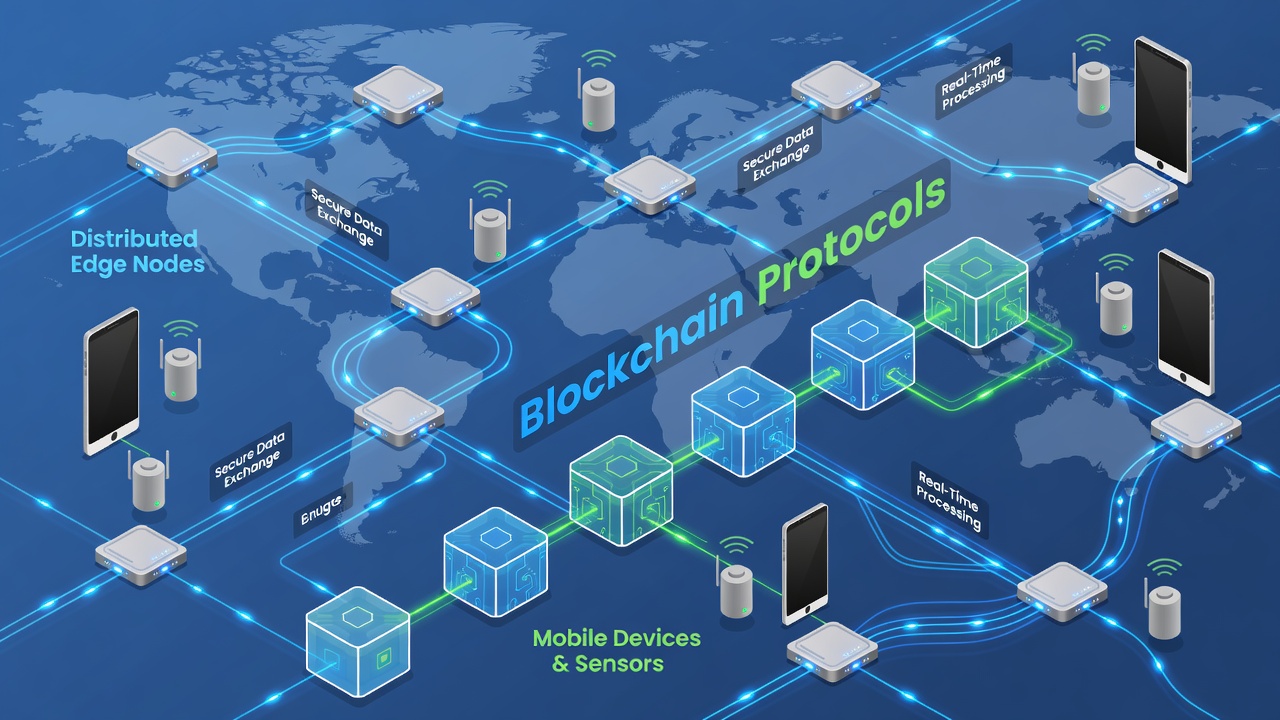
Distributed nodes form the backbone of this trend. Unlike traditional cloud models, these nodes operate at the network periphery, validating transactions locally while syncing with main chains. Real-time data processing allows immediate analytics on sensor inputs without full blockchain confirmation delays. Integration with existing protocols involves lightweight consensus mechanisms. For example, projects layer edge capabilities onto proof-of-stake systems, enabling hybrid architectures. This reduces energy consumption and supports high-throughput scenarios like gaming or supply chain tracking.
Distributed Nodes and Network Architecture
Distributed nodes enhance resilience by eliminating single points of failure. Each node can independently handle validation tasks before propagating results to the broader blockchain. This architecture supports thousands of simultaneous connections, making it ideal for global-scale deployments.
Real-Time Data Processing Capabilities
Real-time capabilities rely on advanced caching and predictive algorithms that anticipate user needs. Data is filtered and aggregated at the edge, only committing essential records to the immutable ledger when necessary.
Comparisons of Leading Edge-Web3 Projects
Several initiatives stand out in 2026 deployments. Akash Network emphasizes decentralized cloud with edge nodes for compute sharing. In contrast, Fetch.ai focuses on autonomous agents that leverage edge for machine learning inference directly on devices. Another player, Helium, excels in wireless IoT connectivity powered by blockchain incentives. Comparisons reveal trade-offs: Akash offers broad GPU access but higher setup complexity, while Fetch.ai prioritizes AI integration at the cost of narrower hardware compatibility. Developers should evaluate based on use-case latency requirements and node distribution density. Additional projects like Render Network provide GPU rendering at the edge, offering unique advantages for creative industries seeking decentralized alternatives to centralized cloud providers.
Practical Implementation Steps for Developers
Start by assessing your dApp's data flow needs. Identify latency-sensitive components suitable for edge offloading.
- Select compatible frameworks such as those extending Solidity with edge APIs and test them in sandbox environments to ensure seamless interoperability with core blockchain layers.
- Deploy initial nodes using open-source tools from established networks, beginning with a small cluster of devices to validate connectivity and performance metrics before scaling.
- Implement sharding to partition data between edge and core layers, allowing critical transactions to remain on-chain while offloading routine computations to nearby nodes.
- Test with real IoT devices for mobile optimization, focusing on battery efficiency and network handover scenarios common in urban and rural settings.
- Monitor via dashboards and iterate on consensus rules, incorporating feedback loops that adjust node behavior based on real-world usage patterns and threat detection.
Always prioritize security audits during rollout to mitigate risks from distributed environments. Documentation from major foundations can guide configuration choices.
Case Studies from 2026 Deployments
In one logistics project, a European firm integrated edge nodes with Web3 oracles, achieving sub-second updates for tracking shipments across continents. Mobile users reported seamless app performance even in low-connectivity areas. A second case involved a North American smart agriculture platform that used edge processing to analyze soil sensor data locally, reducing blockchain write operations by over 70 percent while maintaining full audit trails. A third example from Asia showcased a decentralized ride-sharing application where edge nodes handled real-time matching and payments, resulting in dramatically improved user satisfaction during peak hours.
Benefits for IoT and Mobile Users
IoT devices gain from reduced bandwidth costs and enhanced responsiveness. Mobile users experience lower battery drain as processing shifts locally. Overall, this leads to more inclusive decentralized ecosystems, especially in emerging markets with variable connectivity. Edge-Web3 solutions also improve data sovereignty, allowing users to retain control over personal information without exposing it to distant servers. For developers, the approach opens opportunities to build applications that function reliably offline or in challenging network conditions.
Challenges and Mitigation Strategies
Despite the advantages, several challenges remain. Network heterogeneity can lead to compatibility issues across devices. Security concerns arise from the physical exposure of edge nodes. Mitigation includes standardized protocols and hardware-level encryption. Adoption barriers such as initial hardware investment are being addressed through incentive models that reward node operators with tokens. Regulatory considerations around data localization also require careful navigation in global projects.
FAQ
What security risks exist in edge-Web3 setups?
Distributed nodes introduce attack surfaces like physical tampering. Mitigation involves encryption and regular firmware updates, as recommended by standards bodies.
How do adoption barriers manifest?
Technical complexity and hardware costs slow rollout. Education and standardized tooling are helping overcome these, with growing developer communities providing support.
Is this suitable for all dApps?
High-frequency apps benefit most, while simple storage solutions may not require edge layers. Assess based on performance metrics.
What role does interoperability play?
Cross-chain bridges and standardized APIs are essential for seamless data movement between edge networks and multiple blockchains.
Conclusion
Web3 edge computing trends are set to redefine decentralized infrastructure in 2026 and beyond. By focusing on practical integrations and learning from early deployments, stakeholders can harness these advancements for scalable, user-centric applications. Explore resources from Ethereum Foundation, Web3 Foundation, and World Wide Web Consortium to begin your journey.


No comments yet. Be the first!