 CryptoChain Blog
Introduction to DApp Migrations in 2026
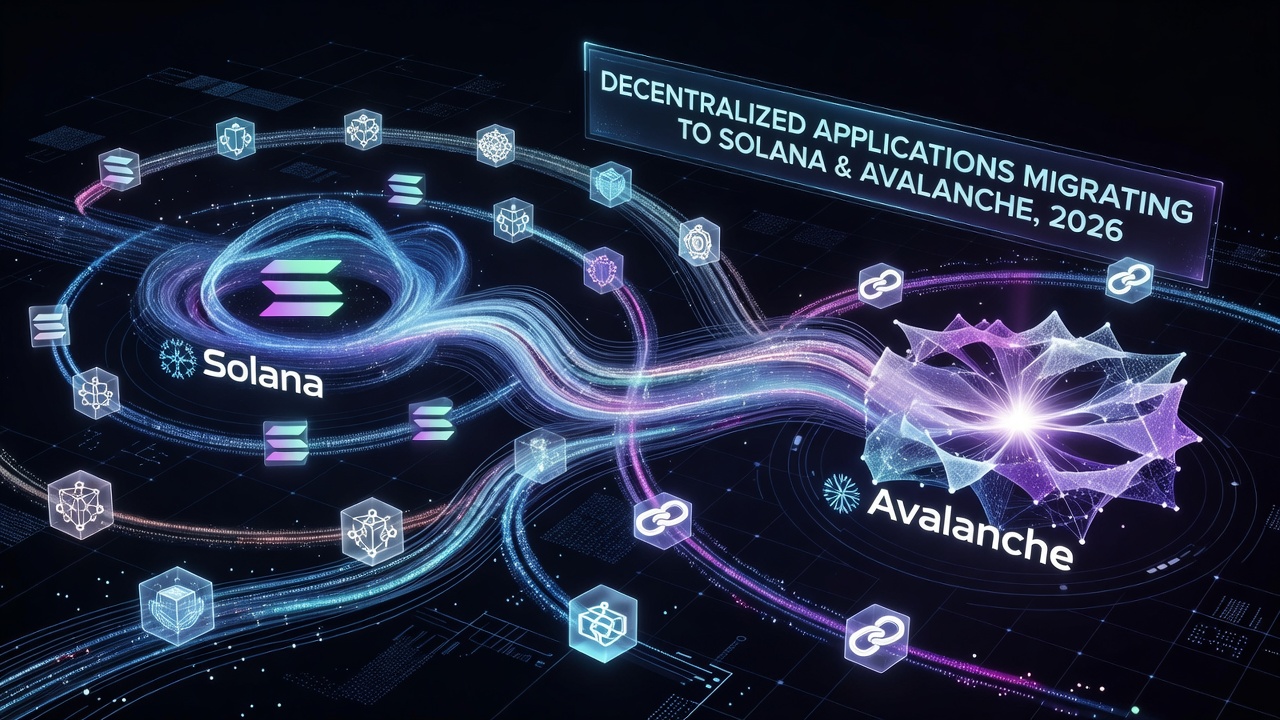
As blockchain ecosystems mature, many decentralized application teams are reevaluating their infrastructure choices. In 2026, migrations to high-performance Layer 1 altcoins like Solana and Avalanche (AVAX) have become increasingly common due to demands for better scalability and lower operational friction. Developers and project leads often face bottlenecks on legacy chains, including high fees during peak usage and limited transaction throughput that hinders user growth. This article examines real migration journeys, highlighting key decision factors, technical processes, measurable outcomes, and actionable advice for teams considering similar shifts.
The search for optimal L1 environments stems from evolving user expectations. Applications in DeFi, gaming, and NFTs require consistent performance without compromising decentralization. Solana and Avalanche stand out for their distinct architectural advantages, prompting detailed evaluations across multiple projects throughout the first half of 2026.
Key Decision Factors for Choosing Solana or AVAX
Teams typically evaluate throughput needs, developer tooling maturity, and cost efficiencies when selecting a new L1. Solana offers parallel transaction processing with theoretical peaks exceeding 65,000 TPS, making it suitable for high-frequency trading or real-time applications. Avalanche provides subnet customization for tailored performance, allowing projects to launch dedicated chains with independent validators while maintaining interoperability with the primary network.
Developer experience plays a major role. Solana's toolchain includes Anchor for simplified smart contract development and comprehensive Rust libraries, whereas Avalanche supports familiar Ethereum tools via its C-Chain and offers extensive documentation for subnet deployment. Cost considerations focus on predictable fee structures rather than volatile gas spikes seen on congested networks. Additional factors include ecosystem grants, community support, and long-term roadmap alignment. Projects often compare these elements through internal benchmarks before committing to a migration path.
Step-by-Step Migration Processes
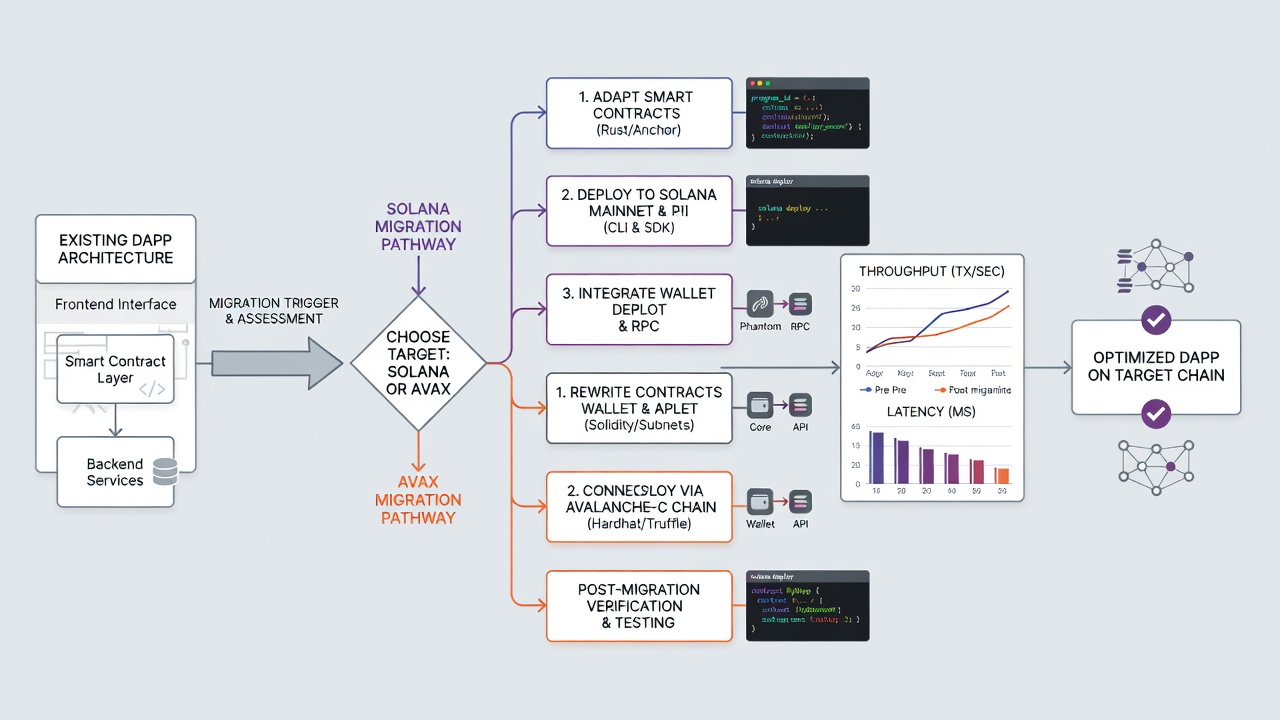
Migration generally follows a structured path that minimizes risk. First, teams conduct a full audit of existing smart contracts and dependencies to identify compatibility issues. Next, they select appropriate tooling and set up development environments on the target chain, whether using Solana's CLI or Avalanche's Avalanche-CLI. Testnet deployments follow, allowing thorough validation of contract logic and integrations.
State data migration comes next, involving secure export and import mechanisms to preserve user balances, NFTs, and historical records. Teams then implement a phased traffic shift, starting with a small user cohort before expanding. Monitoring tools track metrics throughout. Finally, full cutover occurs with contingency plans for rollback if needed. This methodical approach reduces downtime and maintains trust.
Technical Challenges and Solutions
Common hurdles include handling state synchronization across chains, updating oracle integrations for price feeds, and ensuring seamless wallet compatibility. Data integrity remains paramount, requiring rigorous checksum validations and Merkle tree proofs during transfers. Solana's account model differs significantly from Ethereum's, necessitating code refactoring for storage patterns. Avalanche's EVM compatibility eases some transitions but requires subnet-specific configurations for optimal results.
Solutions often involve custom scripts for batch data migration and extensive testnet simulations. Teams also address user education around new wallet addresses or bridge mechanisms. Addressing these challenges early prevents post-migration issues that could affect retention.
Project Case Studies and Performance Benchmarks
Several projects completed migrations in early 2026, providing valuable insights. One DeFi lending protocol moved from Ethereum to Solana, achieving a 40x increase in transactions per second and reducing average confirmation times from 12 seconds to under 400 milliseconds. Post-migration, daily active users grew by 85 percent within three months due to improved responsiveness.
A gaming DApp shifted to Avalanche subnets, reporting 60 percent lower latency for in-game asset transfers alongside improved user retention metrics. The subnet architecture allowed custom gas tokens, further enhancing economic alignment with players. Before the move, peak congestion caused frequent drop-offs; afterward, sustained sessions increased by over 50 percent.
Another NFT marketplace transitioned to Solana, noting enhanced throughput that supported peak loads of 25,000 daily active users without congestion. Transaction costs became more predictable, enabling better budgeting for promotions. A prediction market platform on AVAX highlighted streamlined tooling that accelerated feature releases by 35 percent. Before-and-after comparisons consistently showed gains in cost predictability, scalability, and developer velocity across all cases.
Practical Tips for Teams Considering Migration
- Conduct thorough audits of smart contract dependencies before initiating any move to avoid hidden integration issues.
- Leverage official documentation from Solana and Avalanche for chain-specific best practices and sample code repositories.
- Implement phased rollouts with robust monitoring tools such as transaction explorers and analytics dashboards to catch issues early.
- Test user experience flows extensively on testnets, including wallet connections and notification systems, to preserve engagement during transitions.
- Engage community moderators early to communicate timelines and gather feedback on potential pain points.
- Compare ecosystem incentives, including developer grants available as of mid-2026, to offset initial migration expenses.
Conclusion
Migrating DApps to Solana or AVAX in 2026 delivers tangible benefits when teams prioritize throughput, tooling, and efficiency. The case studies demonstrate that careful planning mitigates risks while unlocking new performance levels. Developers who invest time in evaluation and phased execution position their projects for sustained growth in competitive markets.
FAQ
How is data integrity maintained during migration?
Teams use cryptographic proofs and incremental state syncing to verify all records remain accurate and unaltered throughout the process. Multiple validation rounds and third-party audits further safeguard against corruption.
What impact does migration have on user experience?
With proper planning, users notice faster transactions and lower fees. Phased cutovers minimize downtime, preserving seamless interactions and often resulting in higher satisfaction scores.
Are there common pitfalls to avoid?
Skipping comprehensive testing or neglecting wallet ecosystem support often leads to friction. Always prioritize community communication and provide clear migration guides.
How long does a typical migration take?
Timelines vary but range from four to twelve weeks depending on application complexity. Smaller projects may complete faster with focused teams, while larger ones require extended testing phases.
Can teams revert if issues arise post-migration?
Yes, many maintain parallel deployments initially. Rollback procedures involve redirecting traffic and restoring previous state snapshots, though proactive testing reduces the likelihood of needing this option.


No comments yet. Be the first!