 CryptoChain Blog
Introduction to 2026 Scalability in Leading L1 Altcoins
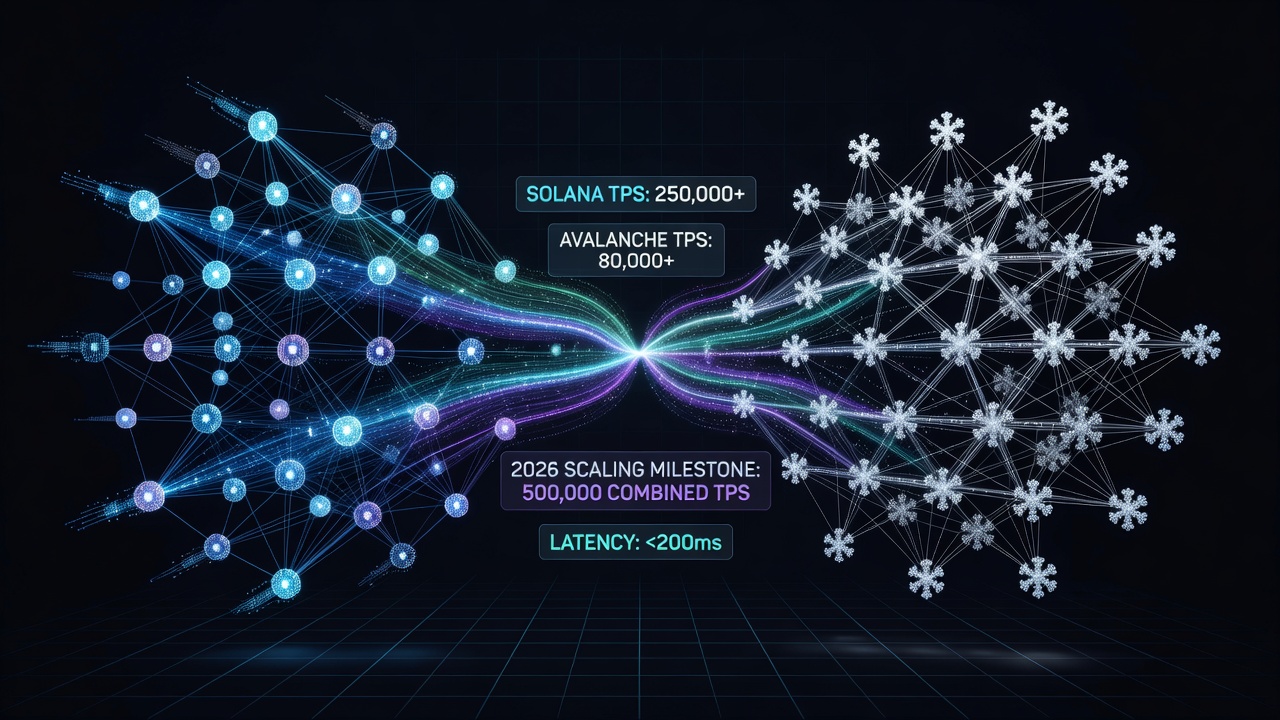
As blockchain adoption accelerates in 2026, scalability remains the core challenge for Layer 1 altcoins like Solana and Avalanche (AVAX). Developers and investors need deep insights into performance enhancements that enable higher throughput without compromising security or decentralization. This article examines the latest upgrades, real-world benchmarks, and practical implementation details to help stakeholders navigate the evolving landscape of high-performance blockchains.
The demand for faster transaction processing stems from growing decentralized applications in DeFi, gaming, and enterprise solutions. Solana and AVAX have positioned themselves as frontrunners by continuously iterating on their core protocols. Understanding these changes provides actionable knowledge for optimizing deployments and evaluating investment opportunities in the altcoin space.
Solana's Consensus Mechanism Evolutions
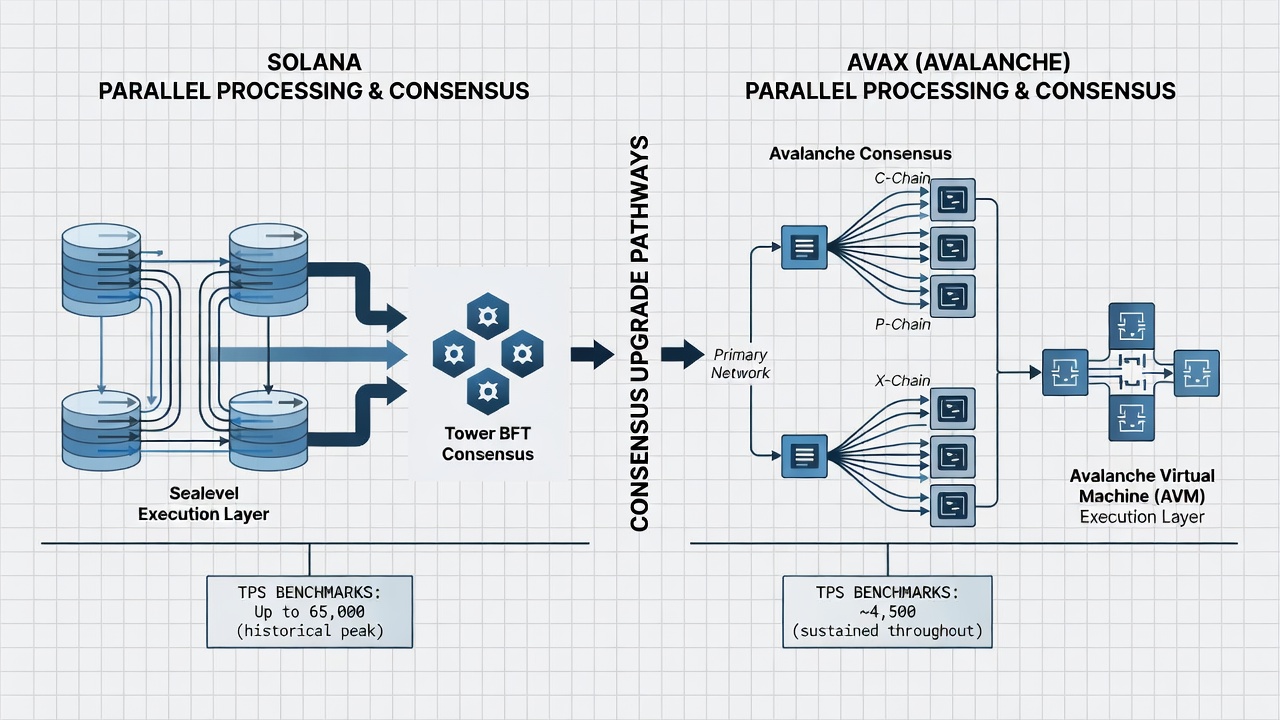
Solana continues to refine its Proof of History (PoH) combined with Tower BFT. In 2026, upgrades focus on reducing latency in leader rotation and improving validator efficiency under high load. These changes allow the network to maintain sub-second finality while scaling transaction volumes significantly. The evolution includes enhancements to the gossip protocol that propagate blocks more efficiently across the validator set, reducing the time required for network-wide agreement.
Validator operators benefit from streamlined software updates that incorporate machine learning-assisted scheduling for better resource allocation. This results in fewer dropped transactions during network spikes and improved overall stability. Real-world tests from early 2026 showed these modifications enabling consistent performance even when transaction volumes doubled compared to previous years.
Parallel Processing Techniques in Solana
Solana's Sealevel runtime enables parallel smart contract execution across GPUs. Recent enhancements optimize runtime scheduling for better resource utilization. Developers can now deploy applications that leverage concurrent processing more effectively, resulting in improved overall network performance during peak usage. For example, a decentralized exchange built on Solana can process multiple order books simultaneously without sequential bottlenecks.
Practical examples include NFT marketplaces that handle minting and trading in parallel threads. By structuring smart contracts to minimize shared state conflicts, developers achieve higher effective throughput. This technique requires careful code design but yields substantial gains in user experience for high-volume applications.
AVAX Consensus and Subnet Innovations
Avalanche's Snowman consensus protocol has seen targeted improvements for linear chain performance within subnets. The platform emphasizes customizable execution environments that support parallel transaction validation across multiple subnets, allowing tailored scalability for specific use cases. Subnet operators can now configure dynamic validator thresholds that adjust based on network demand, providing flexibility not available in monolithic chains.
These innovations enable enterprises to launch private or semi-private chains optimized for their workloads while benefiting from the security of the primary AVAX network. Integration with cross-subnet messaging protocols further reduces latency for applications spanning multiple environments.
Real-World TPS Benchmarks and Comparisons
Network tests conducted in mid-2026 demonstrate Solana achieving sustained rates exceeding 65,000 TPS in controlled environments, while AVAX subnets have recorded peaks above 4,500 TPS with enhanced parallel execution. Direct comparisons highlight Solana's strength in monolithic high-throughput scenarios versus AVAX's flexibility in modular architectures. Independent benchmarking reports emphasize that real-world figures vary based on transaction complexity and network conditions.
When evaluating these metrics, it is essential to consider factors such as finality time and cost per transaction. Solana excels in raw speed for simple transfers, whereas AVAX subnets offer advantages in customized security models for complex DeFi logic. Developers should run their own simulations to validate performance for specific use cases.
Case Studies of High-Load Applications
High-frequency trading platforms on Solana showcase the benefits of parallel processing during volatile market periods. One notable implementation involved a perpetual futures protocol that maintained sub-400ms latency even at peak trading volumes by distributing computation across multiple validator clusters. This allowed traders to execute strategies without slippage caused by network delays.
On AVAX, decentralized finance protocols running on dedicated subnets demonstrate reliable performance for complex DeFi operations without network-wide congestion. A lending platform case study revealed that subnet isolation prevented spillover effects from unrelated high-activity applications, ensuring predictable gas costs and execution times for users.
Step-by-Step Upgrade Implementation Guide
- Assess current validator hardware requirements for new consensus parameters by reviewing official documentation and running diagnostic tools provided in the latest releases.
- Update node software to the latest release incorporating parallel execution optimizations, ensuring all dependencies are compatible before proceeding with the upgrade.
- Configure runtime settings for maximum concurrency in smart contracts by adjusting parameters related to thread allocation and state access patterns.
- Conduct load testing using official network simulation tools to identify potential failure points under anticipated transaction volumes.
- Monitor metrics post-deployment and adjust subnet or cluster parameters accordingly, using real-time dashboards to track validator health and transaction success rates.
Potential Bottlenecks and Mitigation Strategies
Common issues include state growth on Solana and cross-subnet communication latency on AVAX. Mitigation involves regular pruning mechanisms and optimized routing protocols that maintain efficiency as adoption grows. Developers should also implement retry logic in client applications to handle transient congestion gracefully.
Another emerging bottleneck involves storage requirements for historical data. Solutions include off-chain indexing services that reduce on-chain load while preserving query performance for decentralized applications.
Pros and Cons Comparison
| Aspect | Solana | AVAX |
|---|---|---|
| Throughput | High monolithic TPS | Flexible via subnets |
| Complexity | Steep learning curve for optimization | Modular but requires subnet management |
| Decentralization | Improving with more validators | Strong through validator sets per subnet |
| Use Cases | Ideal for DeFi and NFTs at scale | Suited for enterprise and custom chains |
Developer Best Practices for Scalable Deployments
- Design smart contracts with minimal shared mutable state to maximize parallel execution benefits.
- Utilize official SDKs and testing frameworks to simulate high-load scenarios before mainnet deployment.
- Implement comprehensive logging and monitoring from the outset to quickly diagnose performance issues.
- Stay updated with network governance proposals that may affect scalability parameters.
Investor Implications of 2026 Upgrades
These technical advancements signal maturing infrastructure that could drive broader institutional adoption. Investors should monitor validator participation rates and subnet growth metrics as indicators of long-term viability for each chain.
FAQ on Scalability for Altcoin Projects
What are the main scalability upgrades in 2026?
Both networks emphasize parallel execution and refined consensus to boost transaction capacity while preserving security guarantees.
How do TPS benchmarks translate to real applications?
Benchmarks provide baselines, but actual performance depends on application design, with parallelization yielding the greatest gains.
Are there risks in adopting these upgrades?
Potential risks include temporary instability during rollout, mitigated by thorough testing and phased implementation.
How can developers prepare for future scalability needs?
Focus on modular architecture and continuous performance testing to adapt quickly to protocol changes.
Conclusion
The 2026 upgrades position Solana and AVAX as competitive L1 solutions for scalable decentralized applications. By understanding these technical advancements, stakeholders can make informed decisions on deployment and investment strategies. For further details, visit Solana's official resources and Avalanche documentation.

No comments yet. Be the first!