 CryptoChain Blog
Introduction to Token Burns in Solana and Avalanche
Token burns serve as a foundational deflationary mechanism within blockchain tokenomics, permanently removing tokens from circulation to create scarcity and potentially support long-term value. In 2026, Solana (SOL) and Avalanche (AVAX) continue to evolve their burn strategies amid growing network adoption, DeFi expansion, and institutional interest. These burns interact closely with transaction fees, staking rewards, and overall supply dynamics, influencing how investors approach holding strategies and portfolio decisions.
Understanding these mechanisms goes beyond simple inflation comparisons. This comprehensive analysis explores burn mechanics in detail, contrasts historical data with 2026 projections, examines staking synergies, and outlines practical scenarios for altcoin investors. Readers will gain actionable insights through examples, side-by-side comparisons, and guidance on evaluating personal benefits from ongoing burns.
Solana's Fee Burn Mechanism Explained
Solana implements a fee burn model where a portion of every transaction fee is permanently destroyed. This design ties deflation directly to network activity levels. Base fees contribute to burns while validators receive priority fees as incentives, maintaining network security without excessive inflation.
The mechanism encourages efficient usage because higher throughput accelerates burn rates. Developers building on Solana benefit from predictable costs, and users see their activity contribute to token scarcity. In practice, this creates a feedback loop where increased DeFi lending, NFT minting, and payment volumes drive measurable supply reduction over time.
Avalanche's Burn and Supply Schedule
Avalanche integrates burns through its fee structure across the primary C-Chain and emerging subnets. Transaction fees on these chains include a burn component that reduces total AVAX supply progressively. The protocol balances this with controlled emissions to reward validators and stakers while ensuring net deflation during high-utility periods.
Supply schedules in 2026 reflect ongoing refinements to emission curves and burn multipliers. Subnet launches and cross-chain bridges add additional burn opportunities, particularly when assets move between ecosystems. This layered approach makes AVAX burns responsive to both core chain activity and broader platform expansion.
Side-by-Side Comparison of Burn Dynamics
- Fee Structure: Solana burns a consistent share of base fees per transaction, creating steady deflation tied to TPS; Avalanche uses dynamic pricing on subnets that can amplify burns during congestion or high-priority transfers.
- Deflationary Impact: Solana's high transaction capacity allows rapid accumulation of burned tokens during peak DeFi seasons, whereas Avalanche's burns gain momentum from institutional subnet deployments and asset bridging events.
- Staking Interaction: SOL stakers experience indirect benefits as reduced supply increases relative ownership; AVAX stakers receive complementary effects because burns often coincide with reward distributions from subnet activity.
- Utility Drivers: Both networks see burns fueled by DeFi protocols, but Solana emphasizes speed for payments while Avalanche focuses on customizable chain logic that increases overall fee generation.
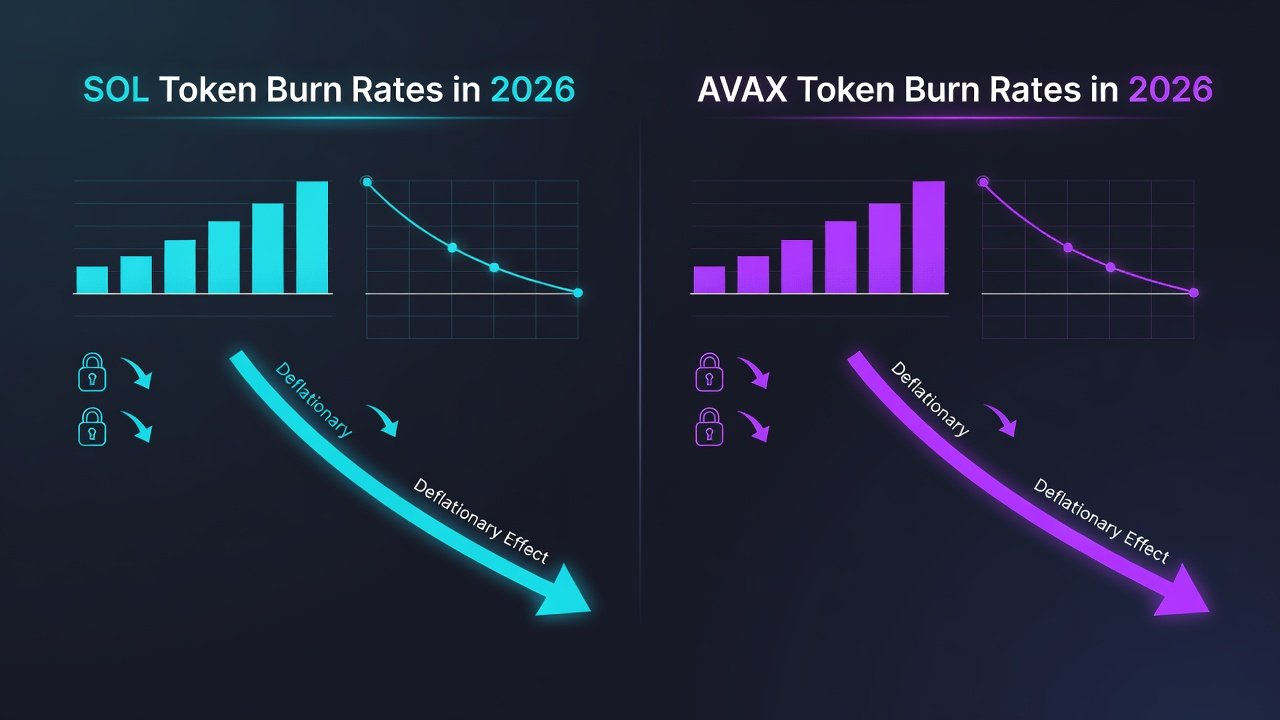
Historical Burn Data Versus 2026 Projections
Historical Solana burns remained relatively low in early years but surged with the rise of decentralized exchanges and NFT marketplaces. Avalanche burns followed a similar trajectory, accelerating after major subnet adoptions and institutional integrations. Data from previous cycles shows clear correlation between daily active users and cumulative tokens destroyed.
Looking ahead to 2026, projections indicate continued elevation in burn rates assuming sustained ecosystem growth. Variables such as average transaction size, fee market conditions, and new DeFi primitives will determine the pace. When burns consistently exceed residual emissions, both networks move into net supply contraction phases that historically support stronger holder conviction.
Staking Interactions and Investor Holding Strategies
Staking remains central to maximizing benefits from burns on both chains. SOL stakers lock tokens for network validation while burns continue shrinking the circulating supply, potentially improving their proportional stake over time. AVAX stakers monitor subnet metrics because higher bridge and contract activity directly increases burn velocity.
Practical holding strategies include regular review of on-chain dashboards to identify accumulation windows during lower burn periods. Investors often combine staking with periodic rebalancing to maintain exposure across market regimes. A disciplined approach involves setting alerts for cumulative burn milestones that have preceded previous appreciation phases in similar tokenomic environments.
Practical Examples of Burn Events
One documented Solana burn event took place during a major decentralized exchange upgrade when trading volumes spiked dramatically for several consecutive days, resulting in thousands of SOL permanently removed. On Avalanche, a popular cross-subnet asset transfer protocol triggered repeated burn batches over weeks as liquidity migrated, demonstrating how utility directly translates into supply contraction.
These real-world cases highlight the direct link between usage spikes and deflationary outcomes. Investors who maintained positions through such events observed measurable shifts in token velocity and scarcity metrics that influenced subsequent price behavior.
DeFi Utility Implications and Long-Term Value Scenarios
Burn mechanisms enhance DeFi utility by aligning token scarcity with genuine network usage. In Solana lending markets and Avalanche-based automated market makers, reduced supply can amplify value accrual when protocols incorporate revenue-sharing elements. This creates stronger incentives for liquidity providers and borrowers alike.
Long-term value scenarios range from steady appreciation driven by moderate deflation to accelerated scarcity effects during sustained bull markets. Conservative investors may diversify holdings across both ecosystems to capture differing burn velocities, while more aggressive participants focus on chains showing the highest usage-to-burn ratios. Continuous monitoring of transaction counts and fee trends remains essential for adapting strategies.
Additional authoritative resources include Solana's official site and Avalanche network documentation.
Practical Steps for Investors Evaluating Burn Benefits
- Review real-time burn trackers on official explorers to establish baseline daily and weekly averages.
- Calculate personal exposure by comparing your holdings percentage against projected annual burn volumes.
- Combine staking positions with burn monitoring to identify optimal entry points during supply contraction periods.
- Assess DeFi protocol participation that historically correlates with elevated burn activity on each chain.
FAQs: Calculating Personal Burn Benefits
- How do I estimate my share of burns? Divide your token holdings by the current total supply, then multiply by expected annual burns to approximate proportional impact on your position.
- Does staking amplify burn benefits? Yes, staking reduces liquid supply while burns permanently remove tokens, which can increase your relative ownership percentage over time.
- What tools track real-time burns? Both networks offer public explorers and community dashboards that display live burn statistics and historical trends for informed decision-making.
- How do burns interact with emissions? When burn rates exceed new token issuance, the net result is deflationary pressure that supports long-term holding strategies.
Conclusion
Token burns in Solana and Avalanche represent sophisticated tools for shaping long-term value in 2026. By examining fee mechanics, staking interactions, historical patterns, and projected supply trajectories, investors can develop nuanced strategies. Ongoing attention to usage metrics and on-chain data will continue to be vital for those seeking to optimize exposure to these deflationary designs.
No comments yet. Be the first!