 CryptoChain Blog
Introduction to 2026 SOL and AVAX Tokenomics
Tokenomics in 2026 continues to shape altcoin investment decisions, especially for holders focused on deflationary mechanics. Solana (SOL) and Avalanche (AVAX) both incorporate fee burns that reduce circulating supply over time, directly influencing long-term returns. This analysis examines their supply schedules, burn rates, projected staking APYs, and practical utility across DeFi and memecoin ecosystems to help investors build data-driven strategies. Understanding these elements goes beyond basic staking guides by revealing how network activity translates into tangible value preservation and growth for patient holders. Deflationary features like burns act as a counterbalance to inflation, rewarding those who commit capital over multiple market cycles rather than chasing short-term volatility.
Solana Tokenomics: Supply Schedule and Deflationary Burns
Solana operates with a dynamic inflation model that decreases annually until reaching a long-term minimum. Fee burns from network activity permanently remove SOL from circulation, creating deflationary pressure during high-usage periods. In 2026, transaction volume from DeFi protocols and memecoins accelerates these burns, potentially offsetting new issuance for holders who maintain positions beyond three years. The schedule features a gradual taper of inflationary rewards, which encourages validators and stakers to rely more on transaction fees and burns for sustained economics. Historical data shows that periods of elevated on-chain activity have already demonstrated measurable supply contraction, setting a precedent for stronger effects as adoption scales.
Key Deflationary Mechanisms
- Base fee burns on every transaction that scale with demand
- Priority fee allocation that captures additional value during congestion
- Staking rewards funded partly by inflation but balanced by ongoing burns
- Integration with decentralized applications that drive consistent usage
Investors should monitor on-chain burn dashboards for real-time impact on net supply changes. Practical tracking involves reviewing validator performance metrics and total value locked in major protocols to anticipate burn acceleration points.
Avalanche Tokenomics: Supply Dynamics and Burn Features
Avalanche uses a fixed maximum supply cap with ongoing burns from transaction fees on its C-Chain and subnets. The 2026 schedule features reduced issuance rates compared to prior years, amplifying the effect of burns when DeFi activity spikes. AVAX burns tie directly to subnet usage, offering diversified deflationary sources beyond the primary chain. This structure supports customized blockchain deployments for enterprises and developers, each contributing to fee generation and subsequent burns. The result is a more resilient supply model that adapts to varied use cases while maintaining pressure toward scarcity.
Comparison of 2026 Supply Schedules
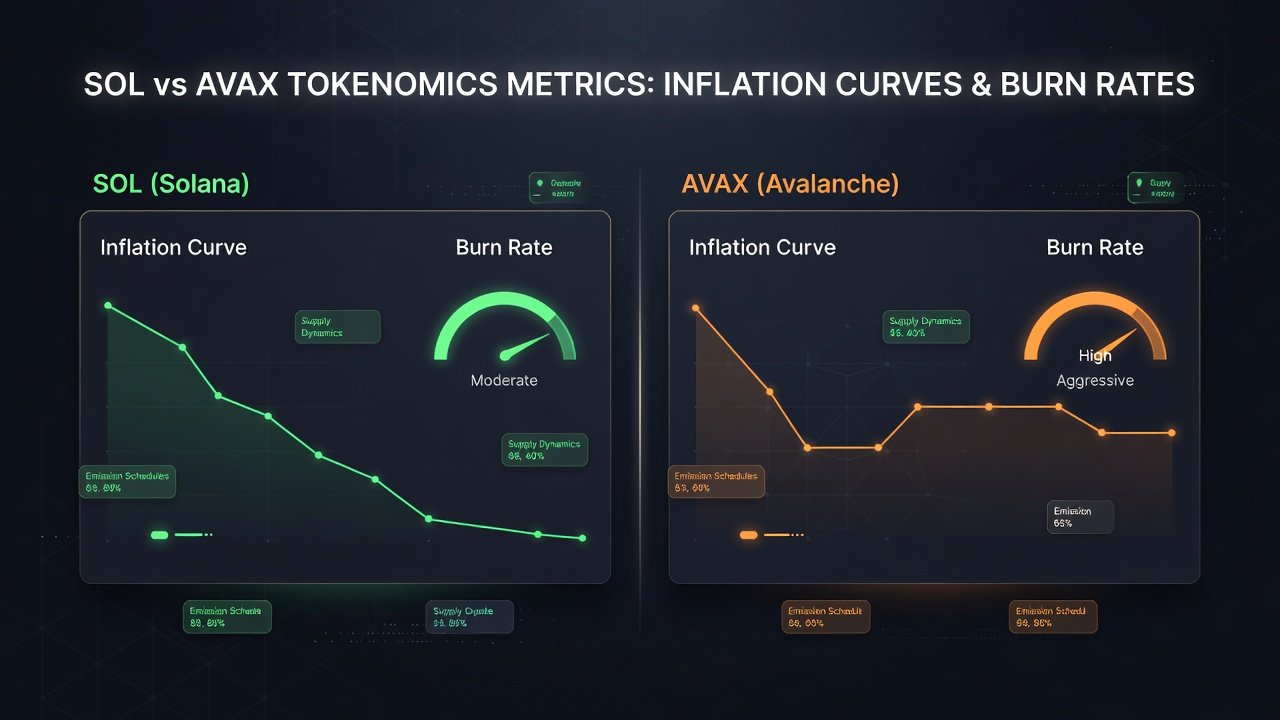
| Metric | SOL (Projected) | AVAX (Projected) |
|---|---|---|
| Annual Inflation Rate | Declining toward 1.5% floor | Approaching 0% net with burns |
| Fee Burn Rate | 50%+ of fees during peaks | Variable by subnet activity |
| Historical vs 2026 Inflation | Lower than 2023 levels | Sharper reduction post-cap |
| Primary Burn Driver | DeFi and memecoin volume | Subnet and institutional flows |
Staking APY Projections and Holder Value
Staking remains central to both networks. SOL stakers benefit from compounding rewards plus indirect gains from burns that tighten supply. AVAX staking yields incorporate validator incentives tied to subnet growth. Projections for 2026 suggest competitive APYs when network utilization stays elevated, rewarding long-term holders who avoid frequent trading. Effective strategies include diversifying across multiple validators to mitigate slashing risks and reinvesting rewards during low-price periods to maximize accumulation. Comparing the two, SOL offers higher throughput that often correlates with more consistent burn events, while AVAX provides flexibility through its multi-chain architecture that can sustain yields even in segmented markets.
Utility in DeFi Versus Memecoins
SOL powers high-speed DeFi lending and perpetuals platforms while also hosting viral memecoins that drive transaction volume and burns. Solana official site highlights ecosystem tools that support both sectors. AVAX excels in customized subnet DeFi applications and institutional-grade liquidity pools. Memecoin activity on both chains boosts short-term burns but DeFi usage provides steadier deflationary support for multi-year holders. Practical evaluation involves assessing total value locked trends and average transaction sizes to determine which utility type delivers more predictable supply reduction. Investors focused on returns should allocate portions of portfolios to protocols that combine utility with high fee generation, avoiding overexposure to purely speculative memecoin plays that may fade quickly.
Step-by-Step Valuation Examples for Different Holding Periods
Modeling returns requires breaking down inflation offsets, burn contributions, and compounding effects. Consider these expanded scenarios based on 2026 dynamics.
- 1-Year Hold: Start with base staking rewards, subtract estimated inflation, then add moderate burn offsets during bull markets. Example: A holder staking 100 SOL might see net supply benefits equivalent to 2-4% additional value if burns exceed issuance in peak months, assuming consistent network activity.
- 3-Year Hold: Model cumulative burns against issuance, showing net supply reduction that amplifies per-token value even at flat price levels. Over this period, repeated burn cycles can reduce effective inflation by 30-50% compared to early years, creating a compounding advantage when rewards are restaked.
- 5-Year Hold: Project compounding staking returns combined with sustained burn pressure from ecosystem growth, comparing outcomes across varying utilization scenarios. Long-term modeling often reveals that holders maintaining positions through cycles capture outsized gains from scarcity effects, particularly when DeFi adoption continues expanding.
Practical Strategies and Mistakes to Avoid
Successful investors treat tokenomics as a core decision factor rather than an afterthought. Key strategies include regular portfolio rebalancing based on burn data, selecting staking pools with strong uptime records, and monitoring subnet or program launches that could increase fee volume. Common mistakes involve ignoring tax implications of reward distributions, chasing the highest advertised APY without considering risks, and underestimating how memecoin-driven volatility can temporarily distort burn rates. Another pitfall is failing to diversify between SOL and AVAX, missing the complementary strengths of high-throughput burns versus subnet flexibility. Avalanche network resources provide additional context for evaluating these factors over time.
FAQs on Tax Implications
How are staking rewards taxed?
Staking rewards are typically treated as ordinary income at fair market value when received. Consult local regulations for 2026 updates and maintain records of receipt dates.
Do token burns affect capital gains calculations?
Burns influence supply and price but do not directly alter individual tax basis. Track cost basis separately from network events to avoid reporting errors.
What records should investors maintain?
Keep detailed transaction logs, staking reward statements, and burn-related on-chain data for accurate reporting and compliance.
How do holding periods influence tax treatment?
Longer holds may qualify for preferential capital gains rates in many jurisdictions, making multi-year strategies more tax-efficient when combined with staking.
Conclusion
Both SOL and AVAX deliver compelling deflationary features through burns that enhance long-term holder value when paired with disciplined staking. Investors who analyze supply schedules, compare utilities, and model multi-year scenarios position themselves for informed decisions in the 2026 altcoin landscape. Focus on sustained network activity as the primary driver of real returns beyond basic yield chasing, and implement the outlined strategies to navigate supply dynamics effectively.
No comments yet. Be the first!