 CryptoChain Blog
Introduction to 2026 Tokenomics for SOL and AVAX
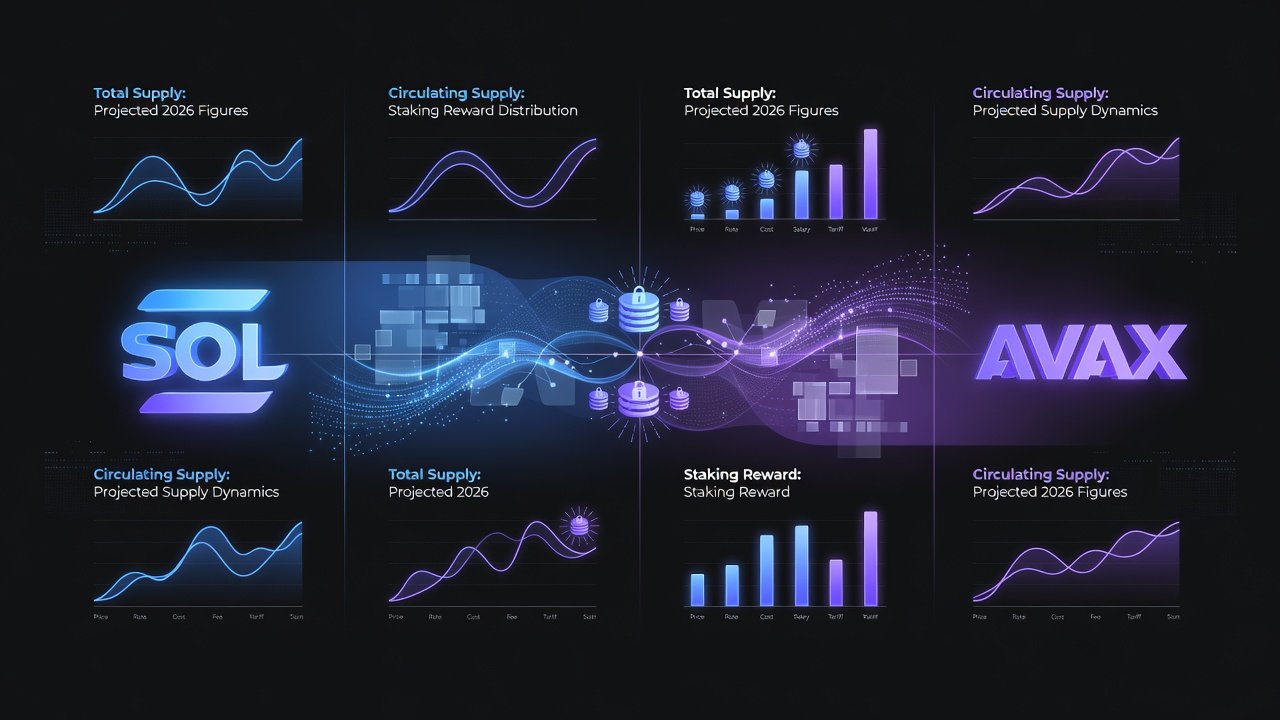
Long-term altcoin investors in 2026 face critical decisions around Layer 1 blockchains like Solana (SOL) and Avalanche (AVAX). Understanding tokenomics—particularly inflation schedules, staking rewards, token burns, and supply dynamics—helps holders optimize returns while managing risks. This comparison draws on protocol mechanics to highlight how each network balances growth with value accrual. Both SOL and AVAX rely on proof-of-stake consensus, where staking secures the network and distributes rewards. However, their approaches to inflation and supply differ significantly, affecting net yields over time. As networks mature, holders must evaluate how issuance rates interact with real-world usage patterns and ecosystem growth to determine which asset better aligns with portfolio goals.
Tokenomics analysis goes beyond simple APY comparisons. It requires examining how new tokens enter circulation, how burns remove them, and how governance allows community input on future parameters. In 2026, these factors become even more relevant as both chains compete in DeFi, NFTs, and enterprise applications. Investors who grasp these nuances can make informed choices about delegation, diversification, and timing of stake adjustments.
SOL Tokenomics Overview
Solana's tokenomics emphasize high throughput and low fees, with SOL serving as the native gas token. Inflation is designed to decrease over time through a disinflationary schedule, though exact rates depend on network participation. Token burns from transaction fees provide a counterbalance to new issuance, potentially reducing net supply growth. Staking rewards for SOL holders come from inflationary issuance. Participants can delegate to validators, earning yields that vary with total staked supply. Governance occurs through on-chain proposals, allowing SOL holders to influence network upgrades and treasury decisions. The network's focus on speed and scalability has driven adoption in decentralized applications, which in turn influences burn volumes during peak activity periods.
Further details on Solana's design can be found on the official Solana website. This foundation supports a vibrant validator ecosystem where delegation strategies directly impact individual returns.
AVAX Tokenomics Overview
Avalanche features a multi-chain architecture with AVAX as the primary asset for fees, staking, and governance. Its inflation model includes a capped maximum supply, with issuance tapering as the network matures. Subnet creation and custom blockchains add utility layers that can influence token demand. Staking APYs on Avalanche derive from both base issuance and additional incentives from DeFi protocols built on its subnets. Burns from transaction activity help offset inflation, creating a dynamic supply environment. The three-chain structure (X-Chain, P-Chain, and C-Chain) enables specialized functions that enhance overall utility and encourage sustained token holding.
More information is available at the Avalanche network site. These mechanics make AVAX particularly attractive for projects seeking customizable blockchain environments.
Side-by-Side Comparison: Inflation vs Staking Rewards
When evaluating inflation against staking rewards, SOL tends to offer competitive base yields due to its high validator count and delegation model. AVAX provides similar mechanics but benefits from ecosystem-specific rewards that can boost effective returns. Key differences emerge in supply caps: AVAX has a defined upper limit, while SOL follows a disinflationary path without a hard cap. Burns play a larger role in SOL's economics during periods of high activity. Investors should consider how these factors interact with overall network usage. Practical metrics to review include the percentage of supply staked, average validator performance, and historical burn rates relative to issuance.
Consider these comparison points in a structured list:
- Inflation trajectory: SOL features scheduled reductions over time, while AVAX issuance slows as the cap approaches.
- Net yield impact: Both chains see staking rewards partially offset by inflation, but burns can improve net outcomes during high transaction volumes.
- Delegation flexibility: SOL allows easy delegation across many validators; AVAX emphasizes subnet-specific opportunities.
- Risk factors: Slashing conditions and lock-up periods differ slightly between the two protocols.
DeFi Utility and Governance Participation
SOL powers a robust DeFi ecosystem including lending, DEXes, and liquid staking derivatives. Governance participation allows holders to vote on proposals that shape fee markets and development priorities. AVAX extends utility through subnets that enable customized DeFi applications. Governance focuses on validating new subnets and allocating resources, giving AVAX holders direct influence over ecosystem expansion. Both networks integrate with broader DeFi primitives, but SOL's emphasis on speed attracts high-frequency trading strategies while AVAX's subnet model supports specialized financial products. Active governance involvement can unlock additional reward streams or influence parameters that affect long-term token value.
Yield Optimization Tactics for 2026
Long-term holders can apply these practical steps to maximize returns. First, compare effective APYs after accounting for inflation and fees across both chains by reviewing real-time dashboard data. Second, use liquid staking solutions to maintain liquidity while earning rewards, allowing simultaneous participation in lending protocols. Third, participate in governance to access additional incentives or influence burn mechanisms that may enhance scarcity. Fourth, diversify across SOL and AVAX portfolios to balance inflation exposure with subnet-specific yields. Fifth, monitor transaction volume trends, as higher activity increases burn rates and supports token value. Sixth, regularly reassess validator performance to avoid underperforming nodes that could reduce net rewards. Seventh, combine staking with DeFi strategies such as providing liquidity on decentralized exchanges while maintaining core positions. These tactics require ongoing attention but can materially improve outcomes compared to passive holding.
Case Studies of Real Staking Portfolios
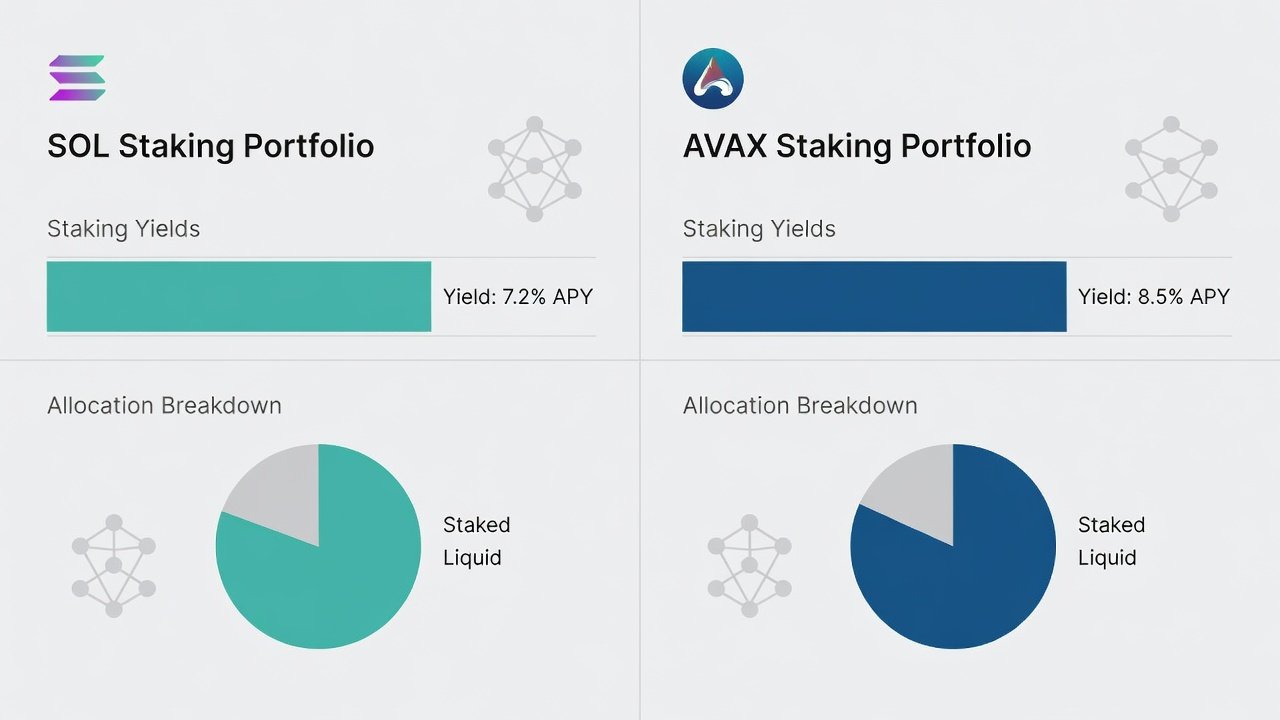
Consider a sample portfolio allocating equally between SOL and AVAX. Over a multi-year horizon, the combination of staking rewards and burn effects can compound differently than single-asset strategies. Adjusting delegation based on validator performance further enhances outcomes. In one scenario, an investor reallocates during periods of elevated network activity to capture higher burn offsets on SOL while maintaining AVAX subnet exposure. Another example involves integrating DeFi protocols for leveraged yields, though this introduces smart contract risks that must be weighed against base staking returns. A third case study examines a conservative holder who focuses solely on native staking and governance voting, achieving steady compounding with lower operational overhead. Each approach demonstrates how tokenomics interact with individual strategy and market conditions.
Conclusion
Choosing between SOL and AVAX tokenomics in 2026 depends on individual risk tolerance and yield goals. Both networks offer compelling staking opportunities, but their inflation and burn dynamics create distinct long-term profiles. Holders who actively manage participation and monitor protocol changes position themselves for better results.
FAQ
What are the main risks of staking SOL or AVAX? Slashing for validator downtime and opportunity costs from locked tokens represent key concerns. Always review current network parameters before committing.
How do taxes apply to staking rewards in 2026? Rewards are typically treated as income upon receipt, with capital gains applying on sale. Consult local regulations for precise obligations.
Can token burns significantly offset inflation? In high-usage scenarios, burns provide meaningful supply reduction, though results vary with network activity levels.
Which chain offers better long-term supply dynamics? AVAX's hard cap provides predictability, while SOL's burn mechanism can create deflationary pressure during peak usage.

No comments yet. Be the first!