 CryptoChain Blog

Introduction to 2026 SOL and AVAX Tokenomics
Solana (SOL) and Avalanche (AVAX) continue to rank among the most prominent Layer-1 blockchains in 2026, each presenting unique tokenomic structures that directly influence yield generation opportunities within decentralized finance. Investors seeking sustainable returns must understand how inflation schedules, token burn mechanisms, and staking rewards interact with broader DeFi ecosystems on both networks. This comprehensive analysis moves beyond surface-level comparisons to deliver practical guidance on evaluating real yield potential, calculating risk-adjusted returns, and constructing resilient portfolios. By examining supply dynamics in detail, readers can better distinguish between short-term hype and strategies that support long-term value accrual through active participation in lending, liquidity provision, and staking protocols.
SOL Tokenomics Overview and Supply Dynamics
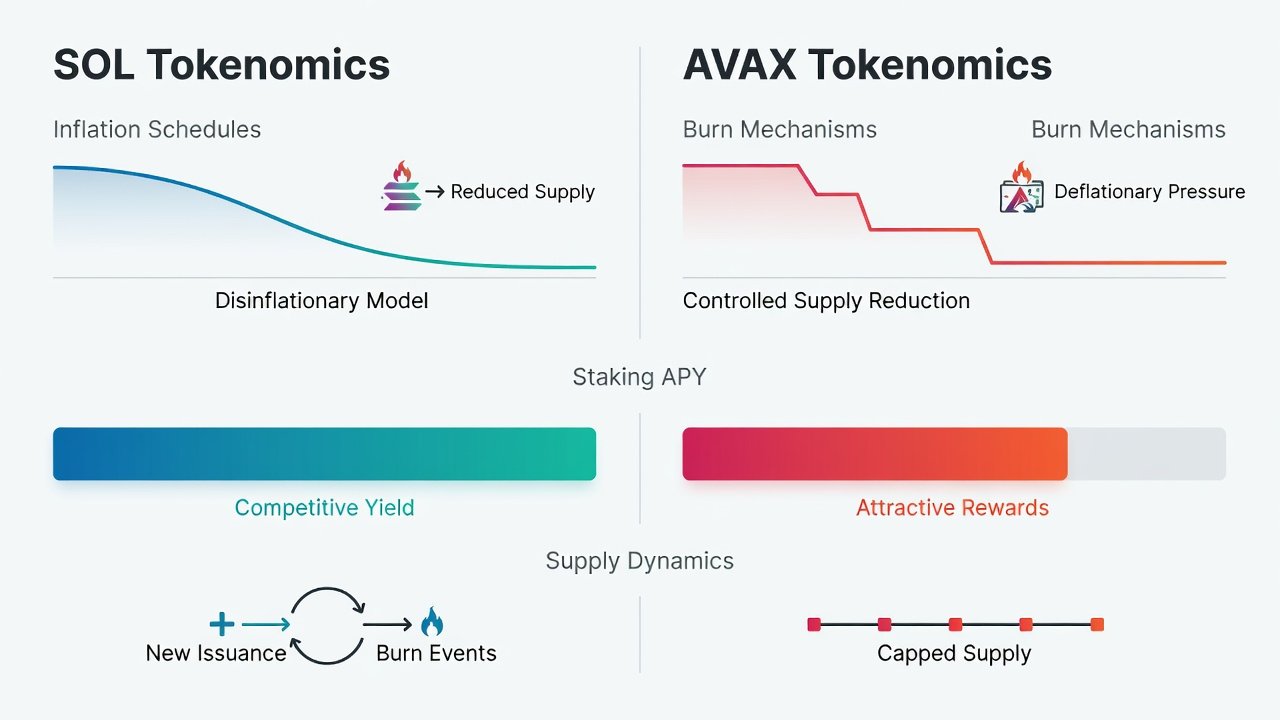
Solana operates under a disinflationary issuance model where new SOL tokens are created to reward validators and stakers, yet this issuance is counterbalanced by a robust fee-burning mechanism tied to network activity. The inflationary rate gradually decreases over time as the network matures, creating a predictable path toward lower supply growth. High transaction throughput on Solana enables thousands of DeFi interactions daily, which in turn accelerates token burns during periods of elevated usage. These burns reduce circulating supply and can enhance the relative value of staked positions for long-term holders. Key factors affecting SOL tokenomics include validator performance metrics, total staked percentage of supply, and real-world adoption of decentralized applications that drive fee revenue. Participants who stake SOL directly contribute to network security while earning baseline yields that adjust based on overall participation levels and transaction volume.
AVAX Tokenomics Overview and Supply Dynamics
Avalanche features a capped maximum supply with variable issuance primarily directed toward staking incentives across its primary network and expanding subnet ecosystem. The three-chain architecture separates concerns effectively: the X-Chain handles asset transfers, the P-Chain manages staking and subnets, and the C-Chain supports smart contract execution similar to Ethereum. This design facilitates specialized DeFi activities, including custom subnet deployments that unlock additional yield avenues. Burn mechanisms on Avalanche arise from transaction fees and certain governance operations, helping offset new issuance. As subnet adoption grows, fee generation can increase, creating a self-reinforcing cycle where network usage supports token value stability. AVAX stakers secure the platform while gaining eligibility for subnet-specific rewards, making the tokenomics particularly attractive for investors exploring cross-chain opportunities.
Staking APYs and Comparative Analysis
Staking represents the foundational yield layer on both chains, providing relatively predictable returns compared to more volatile DeFi strategies. SOL staking yields fluctuate according to the percentage of supply locked and the proportion of fees burned versus distributed. AVAX staking offers consistent base returns augmented by potential subnet incentives that vary by project. When comparing the two, investors should evaluate not only nominal APYs but also lock-up durations, slashing conditions, and compounding options. Risk-adjusted calculations involve assessing the probability of network disruptions, smart contract vulnerabilities in associated DeFi protocols, and opportunity costs from alternative allocations. Historical patterns show that chains with higher real usage tend to deliver more sustainable staking economics over multi-year horizons.
Real Yield Farming Examples on Solana
Practical yield optimization on Solana often begins with native staking followed by deployment into liquidity pools on established decentralized exchanges. For instance, users can stake SOL as collateral in lending protocols to borrow stable assets, then redeploy those assets into high-volume trading pairs that distribute additional reward tokens. Another common tactic involves providing liquidity to stablecoin pairs where impermanent loss remains minimal while earning trading fees plus protocol incentives. These strategies require ongoing monitoring of pool utilization rates and reward emission schedules to maintain attractive net returns after accounting for gas costs and potential slippage.
Real Yield Farming Examples on Avalanche
Avalanche investors frequently combine mainnet staking with subnet participation for layered returns. One approach includes supplying AVAX to lending markets on the C-Chain, then using borrowed assets to farm liquidity incentives on emerging subnets. Cross-chain bridges allow capital to move efficiently between ecosystems, enabling strategies such as arbitrage between differing APYs on similar assets. Subnet-specific farming can deliver bonus rewards, but these often carry higher execution risk due to newer codebases and smaller liquidity pools. Successful participants diversify across multiple subnets while maintaining core exposure to the primary network for baseline security.
Risk-Adjusted Return Calculations and Decision Framework
Calculating risk-adjusted returns requires quantifying both expected yield and potential downside scenarios. Start by documenting baseline staking yields, then layer on additional DeFi returns while subtracting estimated costs such as bridge fees or liquidation risks. Stress-test portfolios by modeling 30-50% drawdowns in token prices and assessing whether yields remain positive after margin calls or forced liquidations. Diversification across Solana and Avalanche reduces single-chain exposure, yet investors must also consider correlated risks such as broader market sentiment affecting both ecosystems simultaneously. Tools like on-chain analytics dashboards help track real-time metrics including active addresses, transaction counts, and total value locked to inform allocation adjustments.
Portfolio Allocation Tips for Long-Term Holders
Effective long-term allocation typically reserves a substantial portion for native staking on both networks to capture baseline security and yields. Remaining capital can be distributed across vetted DeFi protocols with clear risk parameters, such as maximum exposure limits per protocol and regular rebalancing intervals. Quarterly reviews should incorporate updated network usage data and burn statistics to identify shifts in sustainable yield potential. Avoiding over-allocation to the highest advertised APYs helps mitigate smart contract and liquidity risks that often accompany elevated returns.
Common Mistakes to Avoid in DeFi Yield Strategies
- Chasing unsustainable emissions without evaluating underlying tokenomics or fee generation.
- Neglecting bridge and smart contract audit status when moving assets between chains or subnets.
- Failing to account for tax implications and transaction costs that can erode net yields significantly.
- Over-leveraging positions without maintaining adequate collateral buffers during volatility spikes.
Common Investor FAQs
- How do ongoing burns influence long-term staking yields? Higher burn rates can reduce supply pressure, indirectly supporting token prices and real returns for stakers.
- What distinguishes subnet yields on Avalanche from mainnet opportunities? Subnet rewards often depend on project-specific adoption and may carry additional governance or technical risks.
- How frequently should portfolios be rebalanced? Most long-term holders benefit from quarterly reviews aligned with major network upgrades or usage metric changes.
- Are there regulatory considerations for cross-chain DeFi participation? Investors should consult local guidelines regarding staking rewards and decentralized protocol interactions.
Additional authoritative resources on blockchain fundamentals include solana.com, avax.network, and defillama.com for protocol data.
Conclusion
Thorough evaluation of 2026 SOL and AVAX tokenomics equips DeFi investors with the insights needed to pursue sustainable yields. Combining disciplined staking, diversified farming tactics, and regular risk assessments enables participants to navigate supply dynamics effectively while building resilient portfolios. Continuous attention to on-chain metrics remains critical for adapting strategies as both networks evolve.
No comments yet. Be the first!