 CryptoChain Blog
Introduction to Token Burns in 2026
As Layer 1 blockchains continue to evolve, token burn mechanisms have emerged as a critical driver of value accrual for holders of Solana (SOL) and Avalanche (AVAX). In 2026, these deflationary processes interact dynamically with network usage, transaction fees, and staking rewards to influence long-term investor outcomes. This comprehensive analysis explores the underlying mechanics, compares burn data from DeFi activity and protocol upgrades, and provides practical guidance for positioning portfolios around these trends. Token burns permanently remove tokens from circulation, creating scarcity that can enhance value when paired with sustained or growing demand. For both SOL and AVAX, burns serve as a counterbalance to inflationary token issuance from staking rewards, potentially leading to net positive effects for holders who maintain positions over multiple years.
Understanding SOL Token Burns in Detail
Solana's burn model primarily derives from a percentage of base transaction fees and priority fees being destroyed with each on-chain action. This mechanism has been refined through protocol upgrades that increase fee capture during periods of high congestion or DeFi volume. In 2026, Solana's high-throughput design supports thousands of transactions per second, meaning even modest activity levels generate meaningful burn volumes from decentralized exchanges, lending protocols, and NFT marketplaces. The burns directly reduce the circulating supply, which over time can amplify the purchasing power of remaining tokens held by investors. Protocol-level changes have also introduced more efficient fee markets, ensuring that a larger share of economic activity contributes to permanent supply contraction rather than temporary validator rewards alone.
Understanding AVAX Token Burns in Detail
Avalanche implements burns through its dynamic fee structure across the primary network and customizable subnets. Fees from transactions, smart contract executions, and cross-chain operations are partially burned, with the rate adjusting based on network demand. The three-chain architecture allows for specialized burn activity in areas such as custom blockchains for enterprise use or DeFi applications. By 2026, subnet adoption has expanded the sources of burns beyond the core C-Chain, creating a more diversified deflationary profile. This responsive design means AVAX burns scale with ecosystem growth, offering a natural hedge against inflationary pressures while encouraging long-term holding among participants who benefit from reduced overall supply.
2026 Burn Rate Comparisons and Data Insights
Direct comparisons between Solana and Avalanche reveal distinct patterns in burn efficiency. Solana typically achieves higher absolute burn volumes due to its elevated transaction throughput and vibrant DeFi sector, while Avalanche demonstrates strong relative impact through subnet-driven activity and fee optimization. On-chain metrics from both networks illustrate how burns interact with total supply, often resulting in measurable contraction when DeFi volumes remain elevated. Investors tracking these figures can observe periods where burns exceed new token issuance, leading to deflationary phases that favor existing holders. Real data from transaction logs and validator reports underscores the importance of monitoring fee markets and upgrade implementations for accurate forecasting.
Interaction with Staking Rewards and Inflation: Detailed Examples
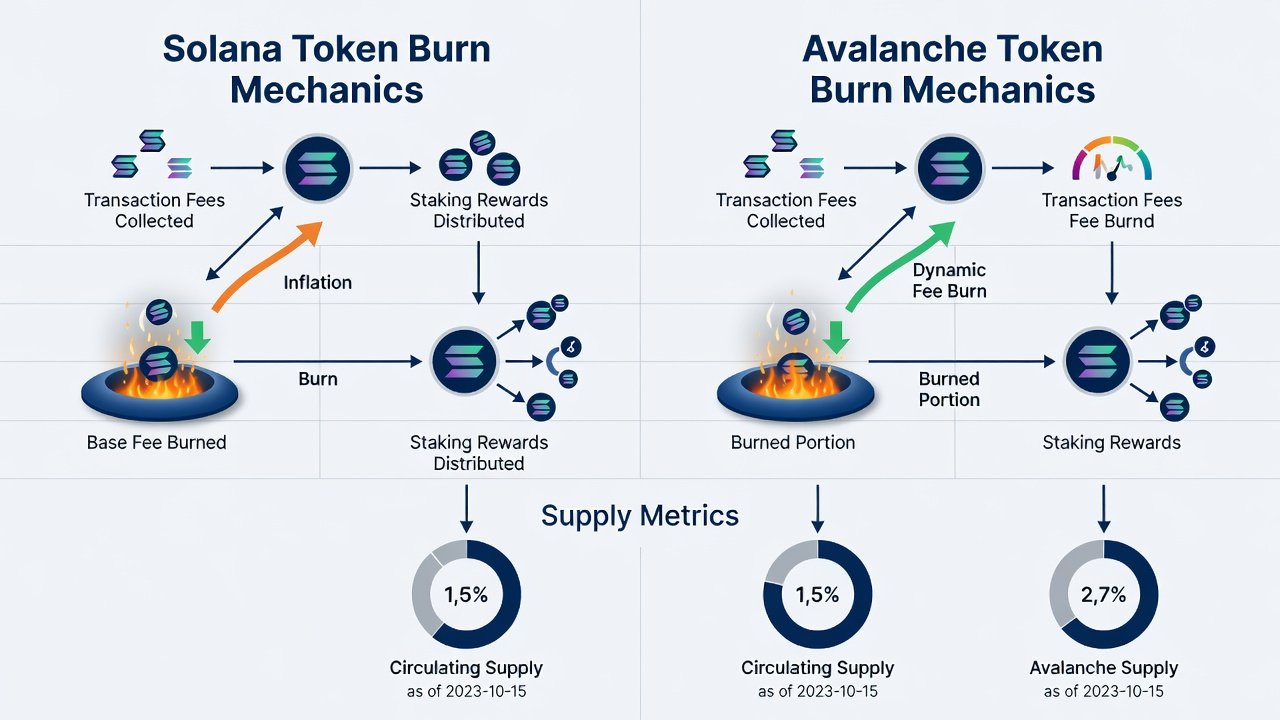
Step-by-step, the process begins when a user initiates a transaction on either chain. A fee is collected, part of which is burned to reduce supply while the remainder compensates validators. This burn offsets a portion of the inflationary rewards distributed through staking, creating a net effect that depends on overall network activity. For SOL holders, a practical example involves staking a fixed amount while the network processes high DeFi volumes; the resulting burns can lower the effective inflation rate from its base schedule, enhancing real yields. In an AVAX scenario, subnet fees add an additional burn layer, allowing stakers to model outcomes where sustained activity produces supply reduction that compounds over quarterly periods. Multiple simulations show that consistent positioning through staking combined with burn awareness can lead to improved token economics compared to holding unstaked assets alone.
Practical Investor Strategies and Scenarios
Effective positioning requires ongoing attention to on-chain indicators and network health. Key approaches include regularly reviewing burn dashboards to identify high-activity windows, maintaining a balanced staking allocation to capture both rewards and scarcity benefits, and diversifying exposure across SOL and AVAX to manage chain-specific variables such as congestion events or subnet growth rates. Another tactic involves reinvesting a portion of staking rewards during lower burn periods to maximize long-term compounding. Scenario planning helps investors prepare for different outcomes: in a high-usage environment, burns may drive stronger value accrual, while moderate activity still provides meaningful offsets to inflation. These strategies emphasize patience and data-driven decisions rather than short-term speculation.
- Track daily and weekly burn statistics from reliable blockchain explorers to spot trends early.
- Adjust staking ratios based on projected fee volumes and upgrade timelines.
- Use portfolio rebalancing to maintain exposure during varying market conditions.
- Review protocol governance proposals that could alter burn parameters.
Addressing Sustainability, Risks, and FAQs
Is the burn rate sustainable long-term?
Sustainability hinges on continued network utility and adoption. Both Solana and Avalanche have roadmaps focused on scaling activity, which supports ongoing burn generation even as base fees evolve.
What risks exist for holders?
Potential risks include shifts in regulatory landscapes, competition from alternative Layer 1 solutions, and fluctuations in DeFi participation. Mitigation comes from diversification and active monitoring of key performance indicators.
How do burns affect short-term versus long-term value?
Short-term price movements can remain volatile due to external market factors, yet long-term scarcity from burns tends to support holders who combine staking with a multi-year horizon.
Conclusion
Token burns represent a foundational element of value dynamics for SOL and AVAX in 2026. By examining their interplay with staking rewards, inflation schedules, and real network activity, investors gain clearer insight into potential outcomes. Continued observation of on-chain metrics and protocol developments will remain essential for making informed allocation decisions in this evolving space. For further details, consult authoritative sources such as Solana and Avalanche.
No comments yet. Be the first!