 CryptoChain Blog
2026 SOL & AVAX Tokenomics: Real Investor Returns Compared
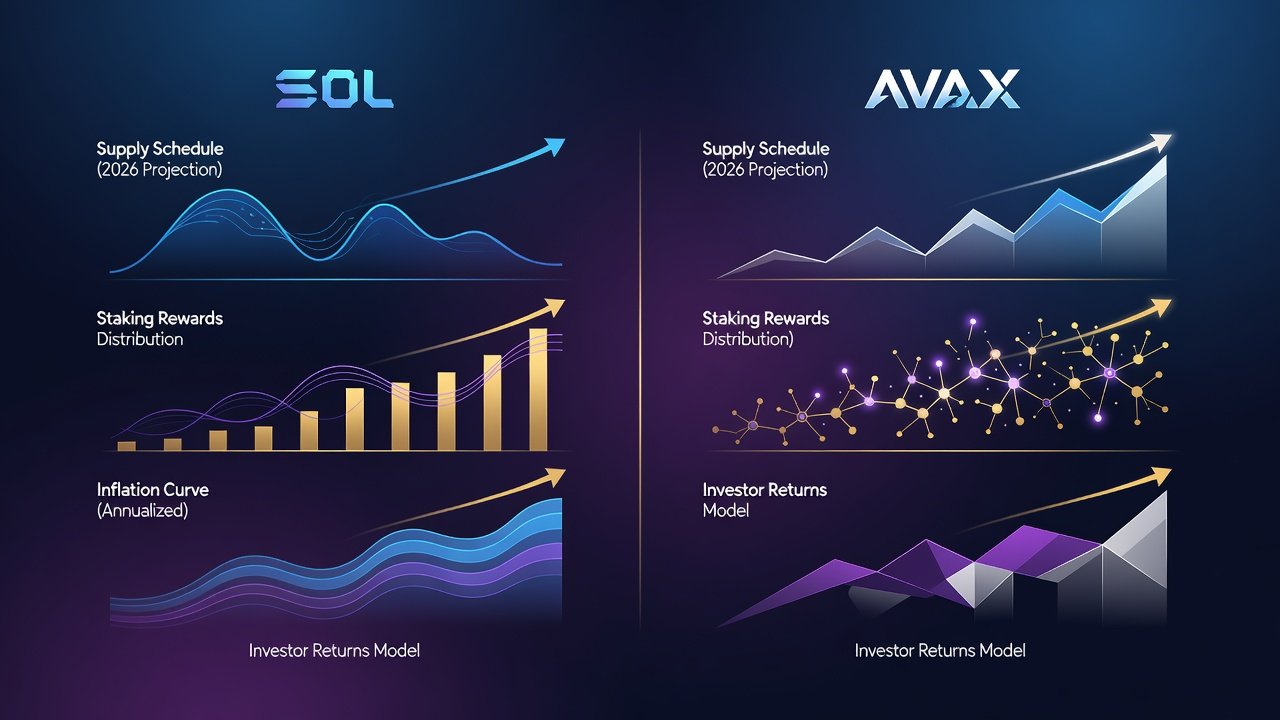
Altcoin investors in 2026 face a complex landscape when evaluating Solana (SOL) and Avalanche (AVAX). Tokenomics determine whether holding these assets delivers meaningful value after accounting for inflation, token burns, and staking rewards. This guide examines net returns for long-term holders, drawing on supply schedules, real-world DeFi protocol examples, and proven holding strategies that outperformed in prior cycles. Understanding these dynamics helps investors move beyond surface-level inflation rates to actionable insights that support portfolio decisions throughout the year.
Understanding SOL Tokenomics in 2026
Solana maintains a dynamic supply model centered on staking incentives and deflationary mechanisms. New SOL issuance rewards validators and stakers, yet periodic burns from transaction fees reduce overall supply. The network's emphasis on high throughput generates substantial fee activity that feeds into the burn process, creating a self-regulating system. Investors must calculate net yield by subtracting inflationary pressure from staking rewards and burn benefits. This balance shifts with network usage, meaning periods of elevated activity can enhance the deflationary effect and improve long-term holder economics. Validator performance also plays a role, as delegation choices influence both reward distribution and overall network security.
AVAX Tokenomics Overview for 2026
Avalanche employs a fixed issuance schedule with staking rewards distributed across its primary network and subnets. Burns occur through transaction fees and specific protocol events, offsetting new supply in a structured manner. AVAX holders benefit from flexible staking options across multiple chains, allowing customized risk-reward profiles that adapt to different use cases. Comparing this to SOL highlights differences in how each chain manages long-term scarcity and validator participation. The subnet architecture introduces additional layers of utility that can indirectly support token demand and reward sustainability for dedicated holders.
Net Returns After Inflation, Burns, and Staking
Calculating real investor returns requires subtracting annual inflation from staking yields while adding the deflationary impact of burns. SOL typically offers competitive base staking returns that can improve when burns accelerate during high network activity. AVAX provides layered rewards through its primary staking model and additional incentives on connected subnets. Side-by-side analysis shows that diversified approaches across both assets can smooth volatility while capturing distinct yield opportunities. Compounding effects become significant over multi-year horizons, turning modest base yields into substantial portfolio growth when reinvested consistently. Market cycles from previous years illustrate that timing entry points during lower valuation periods combined with uninterrupted staking often produces superior net outcomes compared to sporadic trading activity.
Detailed Yield Calculation Examples for Long-Term Holders
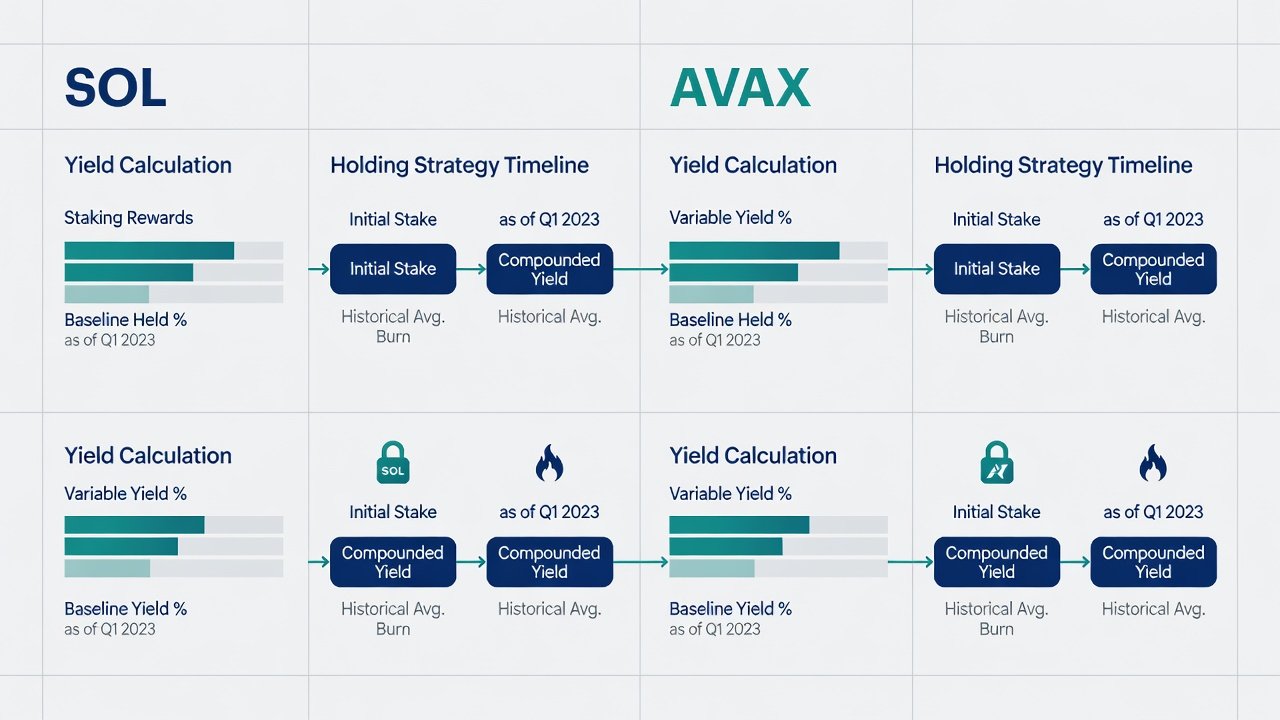
Practical yield modeling starts with baseline staking rates adjusted for estimated inflation and burn offsets. For example, a holder staking SOL might begin with a nominal reward rate, then reduce that figure by the prevailing inflation percentage and add an estimated burn contribution derived from historical transaction volume. AVAX calculations follow a similar path but incorporate subnet-specific bonuses where applicable. These models benefit from regular updates using on-chain data to reflect real-time conditions. Investors who maintain spreadsheets or use automated trackers can simulate different scenarios, such as varying lock-up durations or allocation splits, to identify optimal strategies for their risk tolerance and time horizon.
Real-World APY Examples from Top DeFi Protocols
Leading DeFi platforms built on Solana and Avalanche offer enhanced yields beyond base chain staking. Liquidity provision pools and lending markets provide additional layers of return that can significantly boost overall portfolio performance. These opportunities require monitoring protocol health and smart contract risks, yet they often deliver superior net returns for active participants who diversify across established platforms. Investors should review protocol documentation and community governance updates regularly to identify sustainable APY sources and avoid temporary incentive programs that may not persist.
Comparison Table: SOL vs AVAX Yield Factors
| Factor | SOL Characteristics | AVAX Characteristics |
|---|---|---|
| Inflation Rate | Dynamic, offset by burns | Fixed schedule with burn offsets |
| Staking APY Range | Variable based on participation | Multi-chain reward layers |
| Burn Mechanism | Fee-based deflation | Transaction and event burns |
| Long-Term Holder Advantage | High-throughput fee generation | Subnet flexibility |
| DeFi Integration Depth | Broad ecosystem liquidity options | Custom subnet yield opportunities |
Practical Steps for Tracking Rewards
- Connect wallets to official explorers for both networks to monitor real-time staking balances and reward accruals.
- Use portfolio dashboards that aggregate on-chain data across Solana and Avalanche for consolidated views.
- Set calendar reminders for reward distribution cycles and governance votes that may affect future yields.
- Review validator performance metrics quarterly to optimize delegation choices and minimize downtime risks.
- Export transaction histories monthly to maintain accurate records for performance analysis and tax reporting.
- Cross-reference data from multiple sources to verify accuracy and catch discrepancies early.
Tools and Resources for Ongoing Monitoring
Effective tracking relies on a combination of native network explorers, third-party analytics platforms, and community-maintained dashboards. Official documentation from Solana and Avalanche provides foundational details on supply mechanics and reward structures. Supplementing these with aggregator tools allows investors to simulate net returns under different market conditions. Regular engagement with governance forums further informs decisions about potential changes to staking parameters or burn rates.
Tax Considerations for 2026 Holders
Staking rewards and token burns carry tax implications in most jurisdictions. Rewards are often treated as ordinary income at the time of receipt, while burns may influence cost-basis calculations during sales. Maintaining detailed transaction records simplifies compliance and supports accurate reporting. Resources such as official tax authority guidance provide foundational information, though professional advice tailored to individual circumstances remains essential for complex portfolios.
Common Mistakes to Avoid When Managing SOL and AVAX Holdings
Many investors overlook the compounding impact of consistent staking by withdrawing rewards too frequently. Others fail to rebalance allocations as relative yields shift between the two networks. Ignoring validator reliability can lead to missed rewards or unexpected slashing events. Diversification across chains and protocols reduces concentration risk, yet over-fragmentation increases management overhead. Learning from these pitfalls through documented case studies helps refine approaches for 2026 and beyond.
Case Studies of Outperforming Holding Strategies
Investors who maintained consistent staking positions through 2024-2025 volatility captured compounded returns that exceeded market averages. One documented approach involved splitting allocations between SOL and AVAX while rotating portions into high-yield DeFi pools during favorable conditions. Another strategy focused on long lock-up periods that maximized base yields while minimizing transaction costs. A third example demonstrated the benefit of gradual accumulation during market dips followed by uninterrupted staking through recovery phases. These examples underscore the value of disciplined, data-driven allocation over reactive trading.
FAQs on Maximizing 2026 Value
How do burns affect net returns?
Burns reduce circulating supply, which can enhance scarcity and support price appreciation when demand remains steady, thereby improving overall holder economics beyond stated staking yields.
Which chain offers better long-term staking stability?
Both networks provide robust staking frameworks; stability depends on validator selection, network usage levels, and individual risk tolerance rather than inherent superiority of one chain.
What tools help track multi-chain rewards?
Official block explorers combined with aggregator dashboards allow holders to view consolidated performance across Solana and Avalanche ecosystems without manual calculations.
Should holders reinvest rewards immediately?
Reinvestment supports compounding but requires attention to gas costs and market timing; many successful strategies automate small, regular reinvestments to balance growth with risk management.
How often should allocation splits be reviewed?
Quarterly reviews aligned with major network upgrades or macroeconomic shifts provide a practical cadence for most long-term holders.
Conclusion
Evaluating 2026 SOL and AVAX tokenomics through the lens of net investor returns reveals opportunities for informed holders. By focusing on inflation offsets, staking mechanics, and disciplined tracking, altcoin investors can position themselves for sustainable value creation. Continued monitoring of protocol developments and tax rules will remain critical throughout the year.
No comments yet. Be the first!