 CryptoChain Blog
Introduction to SOL and AVAX Token Utility
Long-term altcoin investors seeking sustainable value often look beyond short-term price swings to examine token utility models. Solana (SOL) and Avalanche (AVAX) represent two leading layer-1 blockchains with distinct approaches to supply dynamics, inflation, staking, and real-world applications in DeFi and dApps. This guide analyzes these mechanisms with a focus on 2026 projections, helping investors evaluate holding strategies that prioritize utility-driven growth. Both networks emphasize scalability and low fees, yet their token designs differ significantly in how they create ongoing demand and value accrual for holders.
SOL powers a high-throughput environment optimized for speed, while AVAX supports a subnet architecture for customizable chains. Understanding these utilities reveals opportunities for returns tied to ecosystem adoption rather than speculation alone. Token utility extends to governance participation, fee payments, collateral in lending protocols, and enabling cross-chain interactions, all of which contribute to long-term holding appeal in a maturing crypto market.
Supply Dynamics and Inflation Schedules
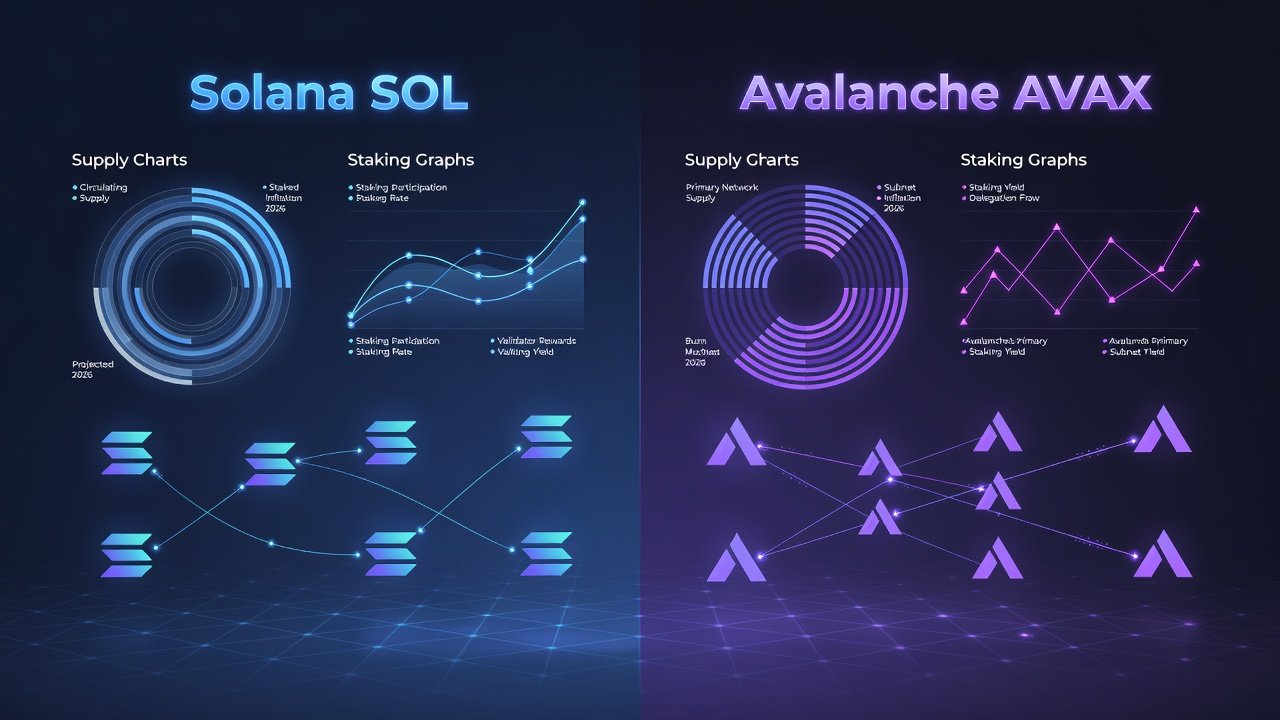
SOL features a dynamic supply model with ongoing issuance for validator rewards, balanced by periodic burns from transaction fees. This creates deflationary pressure during high network activity. AVAX maintains a capped total supply of 720 million tokens, with a portion allocated to staking rewards and ecosystem development, leading to a more predictable issuance curve that appeals to conservative investors focused on scarcity.
Inflation schedules play a key role in long-term holding. SOL's inflation rate adjusts based on staking participation, trending lower as adoption grows. AVAX follows a disinflationary path post-initial distribution, with emissions decreasing over time. Investors should monitor on-chain metrics to assess how these schedules impact token scarcity by 2026. Additional factors include how network upgrades can alter burn rates or reward emissions, potentially shifting the balance between inflationary pressures and utility-driven demand.
| Metric | SOL | AVAX |
|---|---|---|
| Total Supply Model | Dynamic with burns | Capped at 720M |
| Primary Inflation Driver | Staking rewards | Subnet incentives |
| 2026 Projection Focus | Reduced inflation via usage | Steady emission decline |
Staking Reward Structures
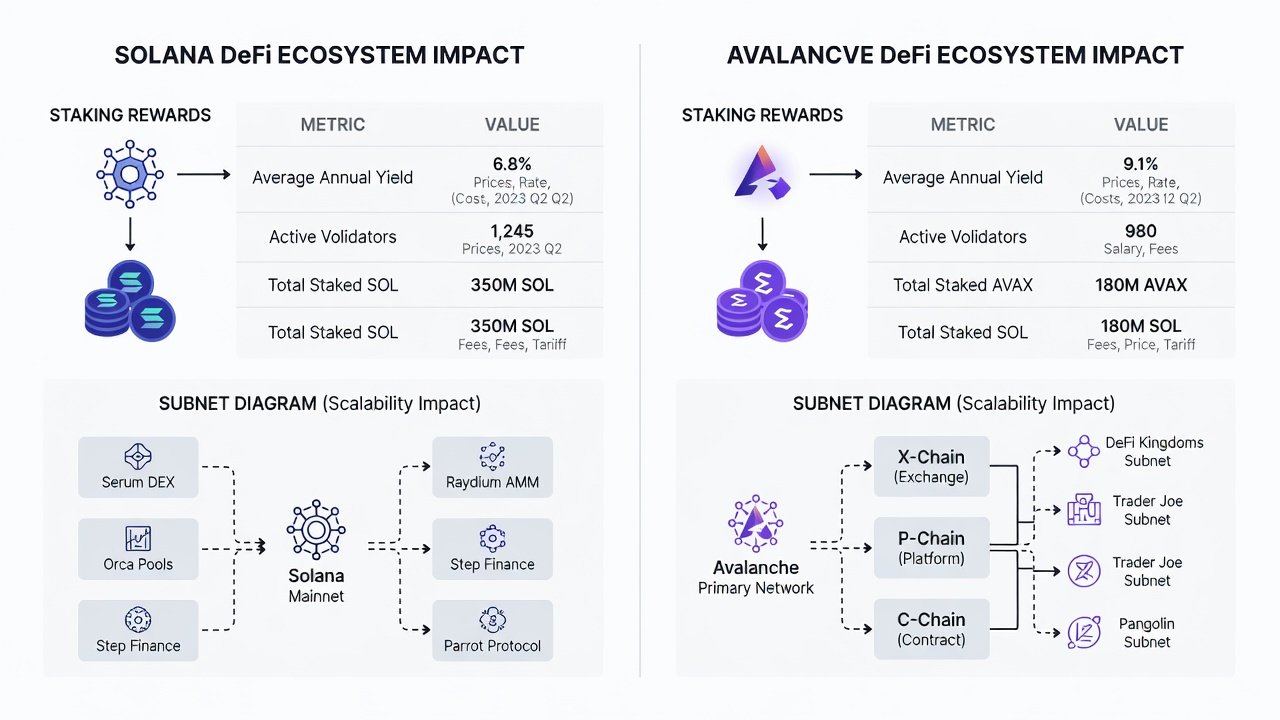
Staking forms the backbone of both networks' security and investor returns. SOL staking offers variable annual percentage yields influenced by total staked supply and network fees. Rewards compound through delegation to validators, with penalties for downtime. AVAX staking provides fixed reward pools distributed across primary and subnet validators, emphasizing consistent yields for long-term participants who lock tokens for extended periods.
Beyond basic staking, utility extends to governance and fee payments. SOL holders influence protocol upgrades via governance votes, while AVAX tokens enable cross-subnet transactions. These layers create compounded value for holders who engage actively with the ecosystems. For example, active governance participants may see indirect benefits through protocol improvements that boost overall network usage and token demand.
Real-World Utility in DeFi and dApps
SOL excels in high-frequency DeFi protocols such as decentralized exchanges and lending platforms, where speed supports complex strategies like yield farming. Popular dApps leverage SOL for seamless user experiences in NFTs and gaming. AVAX shines in enterprise-grade applications through its subnets, enabling tailored DeFi solutions for institutions and custom chains for specific use cases such as tokenized real-world assets.
Case studies illustrate impact. Solana's integration with major DeFi aggregators has driven sustained transaction volumes, enhancing token demand through usage fees. Avalanche's subnet model supported specialized projects in supply chain and tokenized assets, creating diversified utility that stabilizes value over time. These real-world applications demonstrate how token utility drives adoption beyond mere holding or staking.
2026 Projections and Sustainable Returns
By 2026, SOL utility is projected to expand with further DeFi maturation and mobile-first dApps, potentially increasing token velocity and burn rates. AVAX could see growth in institutional subnets, boosting demand for AVAX in governance and bridging. Both models highlight utility beyond staking, such as collateral in derivatives and payments in dApp ecosystems. Sustainable returns come from networks where tokens are actively used rather than solely staked.
Practical Steps for Evaluating Holding Strategies
Investors can follow these concrete steps to assess SOL and AVAX holdings: First, review on-chain dashboards for staking ratios and active addresses to gauge real usage. Second, analyze DeFi TVL trends across both ecosystems to identify growth areas. Third, stress-test scenarios against potential network upgrades or regulatory changes. Fourth, diversify across both tokens while allocating based on risk tolerance, such as favoring SOL for high-throughput applications or AVAX for enterprise customization. Fifth, track governance proposals to understand future utility enhancements.
Common Mistakes to Avoid
- Over-relying on staking APYs without considering inflation dilution over multi-year periods.
- Ignoring subnet or validator performance metrics that affect long-term yields and security.
- Failing to account for ecosystem-specific risks like smart contract vulnerabilities or liquidity fragmentation.
- Neglecting diversification between high-speed and customizable chain models when building a portfolio.
Ecosystem Impact Case Studies
One notable example involves SOL powering rapid settlement in decentralized perpetual futures platforms, where high throughput reduces costs and attracts traders, indirectly supporting token utility through fee burns. In contrast, AVAX subnets have enabled custom blockchains for gaming studios, locking up tokens for validation and creating steady demand. These cases show how utility mechanisms translate into measurable ecosystem effects that benefit long-term holders.
FAQ
What are the main risks in SOL and AVAX token models?
Key risks include variable inflation impacting real yields and potential centralization in validator sets. Always review recent network health reports from official sources.
How do these utilities support returns beyond staking?
Token demand arises from DeFi usage, dApp fees, and governance participation, creating organic value accrual tied to adoption.
Which network offers better 2026 prospects for long-term holders?
Prospects depend on individual risk tolerance; SOL favors high-throughput DeFi while AVAX suits customizable enterprise applications. Evaluate both via Solana and Avalanche resources.
How can investors mitigate token model risks?
Regular portfolio rebalancing, monitoring validator health, and staying informed on protocol upgrades help reduce exposure to inflation or centralization issues.
Conclusion
SOL and AVAX token utility models offer compelling frameworks for altcoin investors prioritizing sustainability. By focusing on supply mechanics, staking, and DeFi integration, holders can build strategies aligned with 2026 ecosystem growth. Continuous monitoring and diversified approaches remain essential for maximizing long-term value.
No comments yet. Be the first!