 CryptoChain Blog
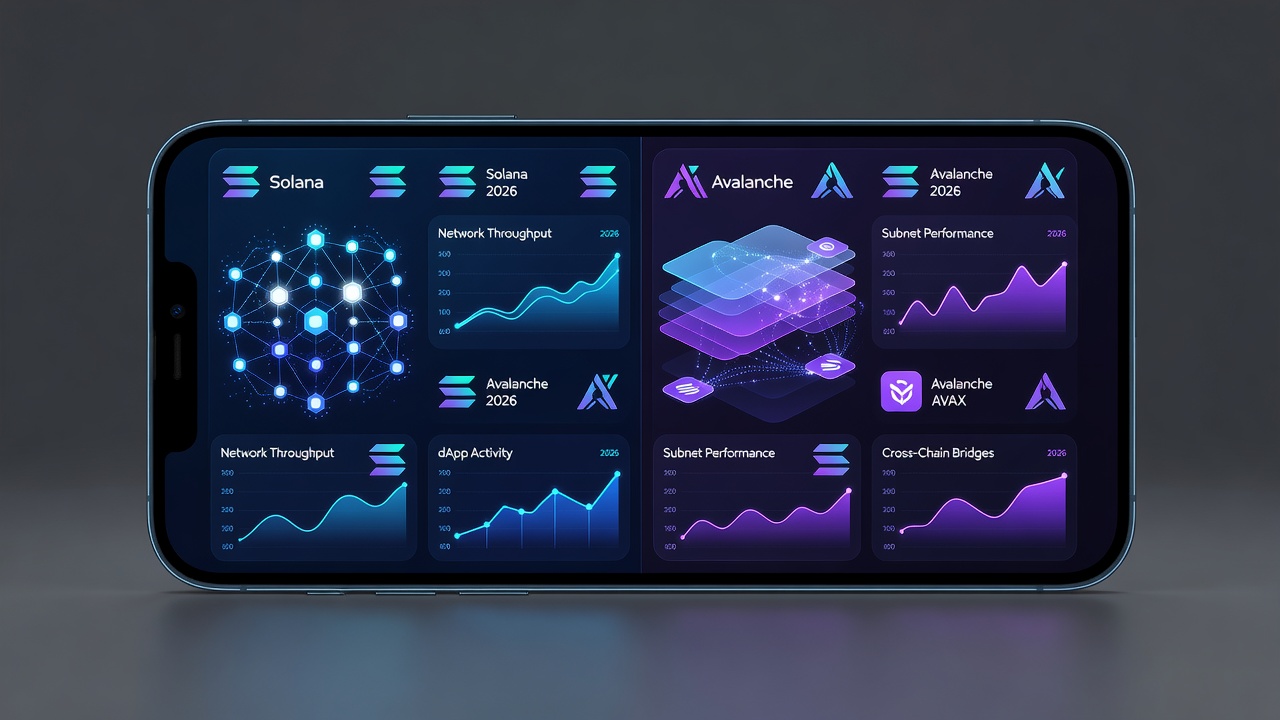
Introduction to Mobile dApp Development on Solana and AVAX in 2026
The altcoin landscape continues to evolve rapidly, with Layer 1 blockchains like Solana and Avalanche (AVAX) positioning themselves as leaders in high-throughput, low-cost environments. As mobile usage dominates global internet traffic, developers and project leads must prioritize mobile-first approaches to drive adoption. This article examines practical strategies for building performant mobile dApps on these networks, covering optimizations, integrations, and measurable outcomes in depth.
By focusing on the unique strengths of Solana's parallel processing and AVAX's subnet architecture, teams can create seamless experiences that outperform competitors. Whether targeting DeFi, gaming, or social applications, understanding mobile constraints is essential for success in 2026. Mobile devices now account for the majority of blockchain interactions, making it critical to address battery efficiency, intermittent connectivity, and intuitive interfaces from day one.
The shift toward mobile also opens opportunities for broader user bases in emerging markets where smartphones are the primary computing device. Projects that ignore these realities risk losing ground to more agile competitors who optimize specifically for touch interfaces and push notifications.
Performance Optimizations for Mobile Environments
Mobile devices face limitations in processing power, battery life, and network connectivity compared to desktops. For Solana dApps, leveraging the Solana Mobile Stack enables efficient transaction handling through optimized RPC endpoints and compressed account data. Developers should implement lazy loading of on-chain data and use local caching mechanisms to reduce latency while preserving user experience during offline periods.
On AVAX, subnet customization allows for tailored gas fees and faster finality, which translates well to mobile. Techniques such as batching transactions and using lightweight client libraries help maintain responsiveness. Real-world testing on mid-range Android and iOS devices reveals that these optimizations can cut load times by up to 40% in high-traffic scenarios. Additional strategies include minimizing state synchronization calls and employing background task management to handle network switches gracefully.
Further enhancements involve integrating hardware acceleration where available and profiling apps with mobile-specific tools to identify bottlenecks early in the development cycle. Teams that invest in these areas often see improved retention as users encounter fewer crashes or delays.
Wallet Integrations and Security Best Practices
Seamless wallet connectivity remains a cornerstone of user retention. Solana supports Phantom and Solflare mobile wallets via deep linking and the Wallet Adapter SDK, enabling frictionless onboarding. AVAX developers benefit from Core Wallet integrations and MetaMask mobile support through the Avalanche JS SDK. These integrations should be tested across multiple wallet versions to ensure compatibility.
Security considerations include implementing biometric authentication and secure enclave storage for private keys. Avoid storing sensitive data client-side; instead, use session-based signing with short-lived tokens. Solana documentation provides detailed guides on mobile wallet flows that reduce phishing risks significantly. Similarly, Avalanche resources emphasize secure key management practices tailored for mobile deployments.
Additional layers of protection involve regular penetration testing and educating users about transaction previews before signing. Implementing rate limiting on backend services also prevents abuse while maintaining smooth flows for legitimate users.
SDK Comparisons: Solana Mobile Stack vs. AVAX Tools
Choosing the right SDK impacts development speed and app performance. Solana's Mobile Stack offers Rust-based on-device execution and seamless NFT handling, ideal for gaming dApps. In contrast, AVAX's AvalancheGo and Subnet SDKs excel in customizable consensus and cross-chain bridging, suiting DeFi applications that require flexible governance models.
Key differences emerge in transaction speed: Solana averages 400ms confirmations while AVAX subnets can achieve sub-second finality under optimized conditions. Developers should benchmark both against their use case, considering factors like ecosystem maturity and community tooling support. A practical comparison list includes:
- Development ease: Solana provides more mature mobile examples and community templates.
- Customization depth: AVAX subnets allow fine-tuned parameters for specific business logic.
- Scalability focus: Solana shines in high-frequency interactions, AVAX in modular chain deployments.
- Community resources: Both have growing documentation, but Solana currently leads in mobile-specific tutorials.
Evaluating these trade-offs through small proof-of-concept projects helps teams make informed decisions early.
Real-World Case Examples from Leading Mobile Apps
Popular apps demonstrate successful implementations. Helium Mobile leverages Solana for decentralized wireless networks, achieving millions of monthly active users through efficient mobile mining interfaces. On AVAX, the Trader Joe mobile app showcases intuitive DeFi interactions with real-time price feeds and one-tap swaps that simplify complex yield farming for everyday users.
These examples highlight the value of iterative user testing and incorporating feedback loops. Analyzing their architectures reveals patterns such as progressive web app fallbacks and offline mode capabilities that boost engagement metrics. Another notable case is the Jupiter aggregator on Solana, which uses mobile-optimized routing to deliver fast swaps even on variable connections.
Lessons from these projects emphasize starting with core user journeys and layering advanced features gradually. Monitoring real-user data from these apps shows how mobile-specific tweaks led to higher conversion rates from install to first transaction.

Step-by-Step Implementation Guidance
Follow this structured approach to launch your mobile dApp:
- Define core features and select the primary chain based on throughput needs and target audience geography.
- Integrate wallet adapters early and test across multiple devices, including older models common in emerging markets.
- Implement performance monitoring using tools like Firebase or custom on-chain analytics to track real-time metrics.
- Conduct A/B testing for UX elements such as transaction confirmation screens and notification preferences.
- Deploy via TestFlight or Google Play beta channels for phased rollouts with controlled user groups.
- Iterate based on analytics before full public release, focusing on reducing drop-off points in the onboarding funnel.
Each phase should include security audits and compliance checks for regional regulations to avoid costly delays later.
Cross-Platform Compatibility and Emerging Trends
Ensuring compatibility across iOS and Android requires careful handling of platform-specific APIs while maintaining a unified codebase where possible. Frameworks like React Native combined with blockchain SDKs allow shared logic with native performance tweaks. In 2026, trends point toward deeper integration with device features such as NFC for wallet interactions and AI-assisted transaction suggestions.
Staying ahead also means monitoring updates from both ecosystems, such as new mobile SDK releases that introduce improved encryption or simplified bridging. Teams adopting these trends early gain competitive advantages in user acquisition.
Potential Pitfalls and How to Avoid Them
Common challenges include network congestion during peak hours and compatibility issues with older mobile OS versions. Mitigate these by implementing graceful degradation and fallback RPC providers. Over-reliance on third-party libraries can introduce vulnerabilities; always audit dependencies thoroughly before integration.
Another frequent mistake is neglecting accessibility features, which limits audience reach. Incorporate screen reader support and high-contrast modes from the outset. Additionally, failing to plan for regulatory shifts around data privacy can expose projects to legal risks in multiple jurisdictions.
Metrics for Measuring Mobile Engagement Success
Track key performance indicators such as daily active users, session duration, and transaction completion rates. Tools like Dune Analytics and custom dashboards provide on-chain insights, while Mixpanel handles off-chain behavior tracking. Successful projects aim for retention rates above 30% after 30 days, with mobile-specific cohorts showing higher frequency of interactions than desktop users. Regular reviews of these metrics guide iterative improvements and help prioritize feature development.
Conclusion
Mastering mobile dApp strategies on Solana and AVAX requires a blend of technical optimizations, thoughtful integrations, and data-driven decisions. By applying the insights from SDK comparisons, case studies, and implementation steps outlined above, developers can significantly enhance adoption in the competitive 2026 altcoin space. Start small, measure rigorously, and scale based on proven user behaviors for sustainable growth.

No comments yet. Be the first!