 CryptoChain Blog

Introduction to Solana and AVAX in 2026
As layer 1 blockchains continue to evolve, Solana and Avalanche (AVAX) stand out for their high throughput and developer-friendly ecosystems. In 2026, the focus shifts from competition to strategic partnerships that unlock new value for developers, investors, and users across both networks. This article examines untapped angles for collaboration, moving beyond rivalry to explore synergies in DeFi, infrastructure, and marketing. Forward-looking insights reveal how these two leading altcoins can complement each other rather than compete directly, creating opportunities that extend beyond basic token swaps or simple bridges.
Readers seeking practical guidance will find detailed sections on identifying synergies, evaluating outcomes, and addressing common hurdles. By examining real-world precedents and outlining actionable steps, this piece provides a roadmap for teams looking to build across ecosystems in the coming years.
Understanding the Core Ecosystems
Solana emphasizes parallel transaction processing and a proof-of-history mechanism that delivers exceptional speed for consumer-facing applications. Avalanche, on the other hand, leverages its subnet architecture to offer customizable environments ideal for enterprise and specialized use cases. These differing strengths create natural complementarity. Developers familiar with one chain can transfer skills to joint projects, while investors gain diversified exposure without needing entirely separate portfolios.
Potential Joint DeFi Protocols
Cross-chain DeFi protocols represent a major opportunity. Teams could build bridges that allow seamless liquidity sharing between Solana's speed-focused environment and AVAX's subnet architecture. For example, a unified lending platform could leverage Solana's low-latency transactions alongside AVAX's customizable subnets for specialized asset pools. Another angle involves composable yield aggregators that automatically route funds between chains based on real-time performance data. Such protocols reduce friction for users who currently manage multiple wallets and gas tokens. Developers benefit from combined user bases, while investors gain exposure to diversified yield opportunities. Practical implementation might start with audited smart contract templates that handle cross-chain messaging securely.
Shared Infrastructure Projects
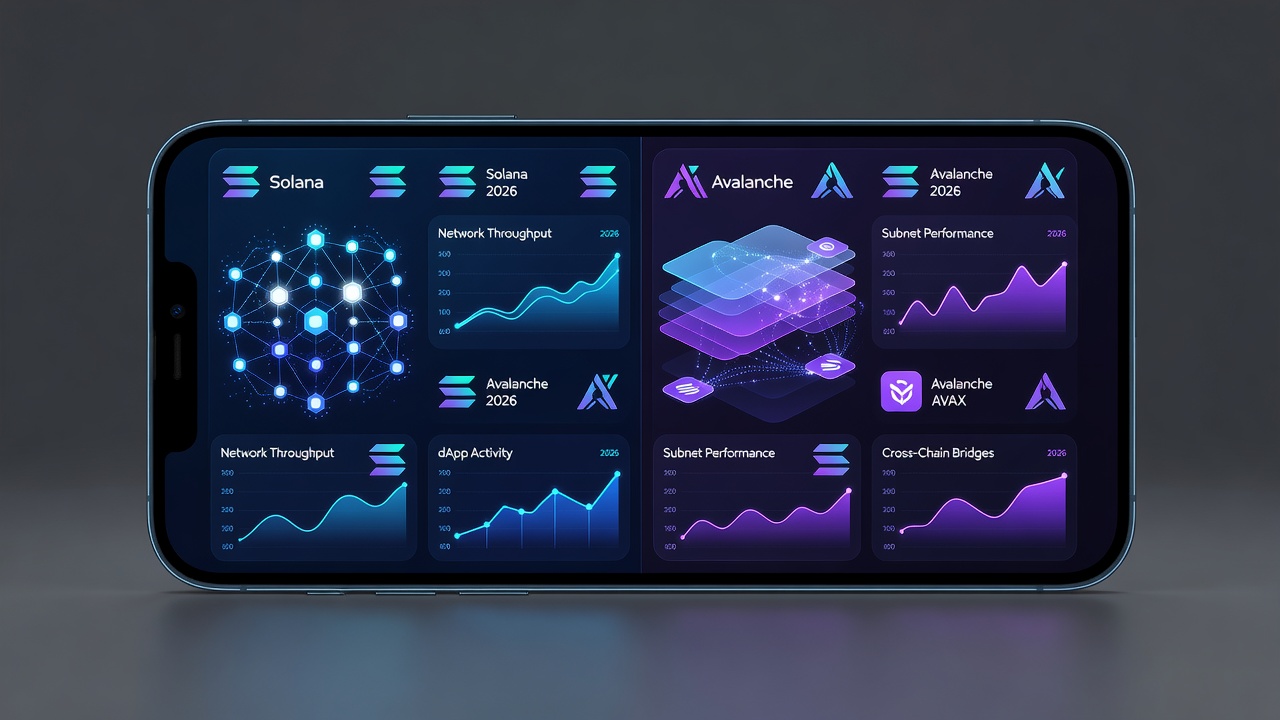
Infrastructure collaborations might include joint oracle networks or shared security frameworks. A combined validator incentive program could enhance resilience for both chains. These projects reduce duplication and accelerate innovation in areas like cross-chain messaging and data availability. Shared tooling for decentralized identity or zero-knowledge proofs could also emerge, allowing developers to deploy once and reach audiences on both networks. One logical placement for visuals is here to illustrate ecosystem overlap.

Co-Marketing Strategies
Joint campaigns can amplify reach. Co-branded hackathons, shared educational content, and unified developer grants encourage adoption across both ecosystems. Marketing teams could target institutional players with case studies highlighting combined TPS metrics and subnet flexibility. Joint webinars and community AMAs foster trust, while unified documentation portals simplify onboarding for new builders. These strategies lower customer acquisition costs and create network effects that benefit participants on either chain.
Real-World Examples of Cross-Ecosystem Synergies
Historical precedents include early bridge experiments between high-performance chains. Similar patterns appear in other layer 1 pairings where shared tooling led to faster dApp deployment. In 2026, expect expanded use of standards like Wormhole-style interoperability to connect Solana's DeFi primitives with AVAX subnets. One concrete case could involve a decentralized exchange that lists assets native to both ecosystems and settles trades across chains without centralized custodians. Another example is a gaming platform that uses Solana for in-game economies and AVAX subnets for player-owned land registries, demonstrating how complementary features drive engagement.
Steps for Identifying Partnership Opportunities
- Map overlapping use cases in DeFi and NFTs by reviewing active projects on public dashboards for each chain.
- Analyze developer activity on both chains using public explorers to identify teams already experimenting with cross-chain tools.
- Evaluate technical compatibility through testnet experiments that simulate real transaction volumes and failure scenarios.
- Assess community sentiment via governance forums to gauge support for collaborative initiatives.
- Prioritize projects with complementary strengths, such as Solana speed paired with AVAX customizability, and draft initial proposals for joint grants.
- Conduct security reviews with third-party auditors before mainnet deployment to build confidence among users and investors.
Metrics for Evaluating Success
- Total value locked growth across bridged assets, tracked monthly to identify trends.
- Developer retention rates post-collaboration, measured through active repository contributions.
- Transaction volume increases on both networks, segmented by cross-chain versus native activity.
- User acquisition cost reductions from joint campaigns, compared against solo efforts.
- Community growth indicators such as governance participation and social engagement metrics.
Data-Driven Comparisons
Solana emphasizes parallel processing for consumer applications, while AVAX excels in modular subnets for enterprise use. Side-by-side analysis shows complementary strengths in scalability approaches, making partnerships more attractive than direct competition. Throughput benchmarks, finality times, and ecosystem tool availability differ in ways that allow hybrid solutions to outperform single-chain deployments in specific scenarios.
Challenges and Solutions in Cross-Chain Partnerships
Teams often face hurdles around differing tokenomics and governance models. Solutions include phased rollouts with clear milestones and joint oversight committees. Regulatory uncertainty can be addressed by prioritizing compliance-friendly jurisdictions and transparent reporting. Security remains paramount, requiring rigorous audits and bug bounty programs that cover both ecosystems.
FAQ: Addressing Common Partnership Challenges
How do teams handle differing consensus mechanisms?
Interoperability layers abstract these differences, allowing focus on application logic rather than protocol alignment.
What governance models work best?
Joint DAOs with proportional representation from both communities often provide balanced decision-making.
Are there risks in shared infrastructure?
Security audits and phased rollouts mitigate risks, following best practices from established cross-chain projects.
How can smaller teams participate?
Start with open-source contributions or grant applications that focus on specific integration modules rather than full protocols.
What timelines are realistic for 2026 initiatives?
Most successful partnerships begin with six-month pilot phases followed by iterative expansions based on user feedback.
Conclusion
Strategic partnerships between Solana and AVAX in 2026 offer substantial upside for the broader altcoin landscape. By focusing on joint protocols, infrastructure, and marketing, stakeholders can drive innovation that benefits developers and investors alike. Explore official resources at Solana and Avalanche to begin identifying opportunities. Additional guidance on interoperability standards is available through established developer documentation portals.

No comments yet. Be the first!