 CryptoChain Blog
Introduction to 2026 Tokenomics for SOL and AVAX
Long-term holders of altcoins like Solana (SOL) and Avalanche (AVAX) must understand the underlying tokenomics to evaluate sustainable value accrual. This analysis examines supply dynamics, inflation schedules, staking mechanisms, and real-world utility as of 2026, focusing on how each Layer-1 blockchain supports ecosystem growth and DeFi integration. Both networks prioritize scalability and developer adoption, yet their economic designs differ significantly in how they manage dilution and incentivize participation over extended periods.
Investors seeking sustained yields need to evaluate not only current reward rates but also how these models evolve with network usage. Token utility extends beyond basic transactions to include governance, collateral in lending protocols, and incentives for liquidity providers. By comparing these elements side by side, holders can better position their portfolios against risks such as inflationary pressure or shifting adoption trends.
Solana Token Supply Model and Inflation Schedule
Solana employs a disinflationary model with a fixed maximum supply cap. The network's inflation rate decreases annually through a scheduled reduction, aiming to reach a long-term terminal rate. This structure rewards validators and stakers while gradually curbing new issuance to protect holder value over time. The design encourages consistent staking participation because rewards are distributed in a way that favors long-term commitment rather than short-term speculation.
Staking remains central to Solana's security. Participants delegate SOL to validators, earning rewards derived from transaction fees and inflation. In practice, top DeFi protocols such as Jupiter and Raydium demonstrate how staking integrates with liquidity provision, allowing holders to compound yields through automated strategies. For example, a long-term holder might stake SOL on a validator with high uptime and then use the staked position as collateral in a lending pool, generating additional returns without selling assets.
Avalanche Token Supply Model and Inflation Schedule
Avalanche uses a dynamic issuance model without a hard cap, with AVAX supply expanding based on network activity and validator needs. The primary inflation component funds staking rewards, while a portion of transaction fees is burned to create deflationary pressure during high usage periods. This approach ties issuance more closely to actual demand, rewarding networks that see increased activity across subnets and decentralized applications.
Subnet creation and cross-chain transfers highlight AVAX utility. Holders stake to secure the primary network and participate in governance, with rewards distributed proportionally to uptime and performance. Protocols like Trader Joe showcase how AVAX staking supports yield farming across multiple chains, enabling users to move assets seamlessly between the C-Chain and custom subnets for optimized returns.
Comparative Analysis of Staking Rewards and Burn Mechanisms
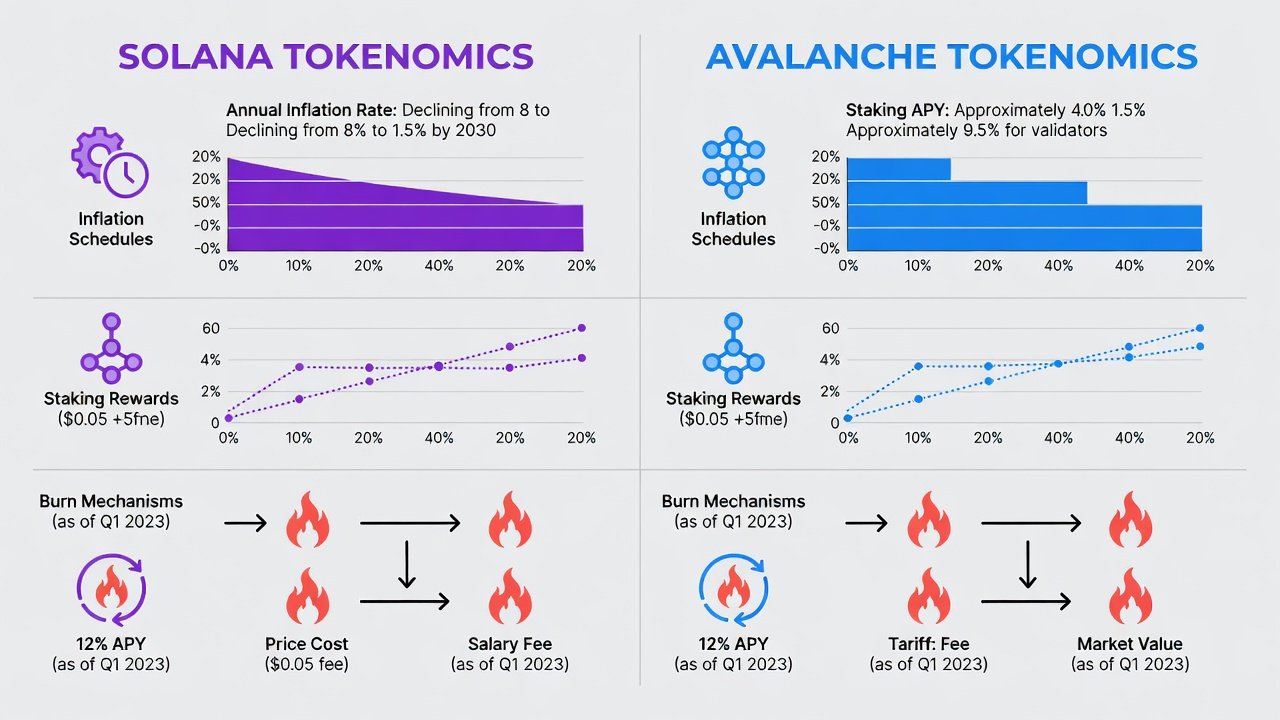
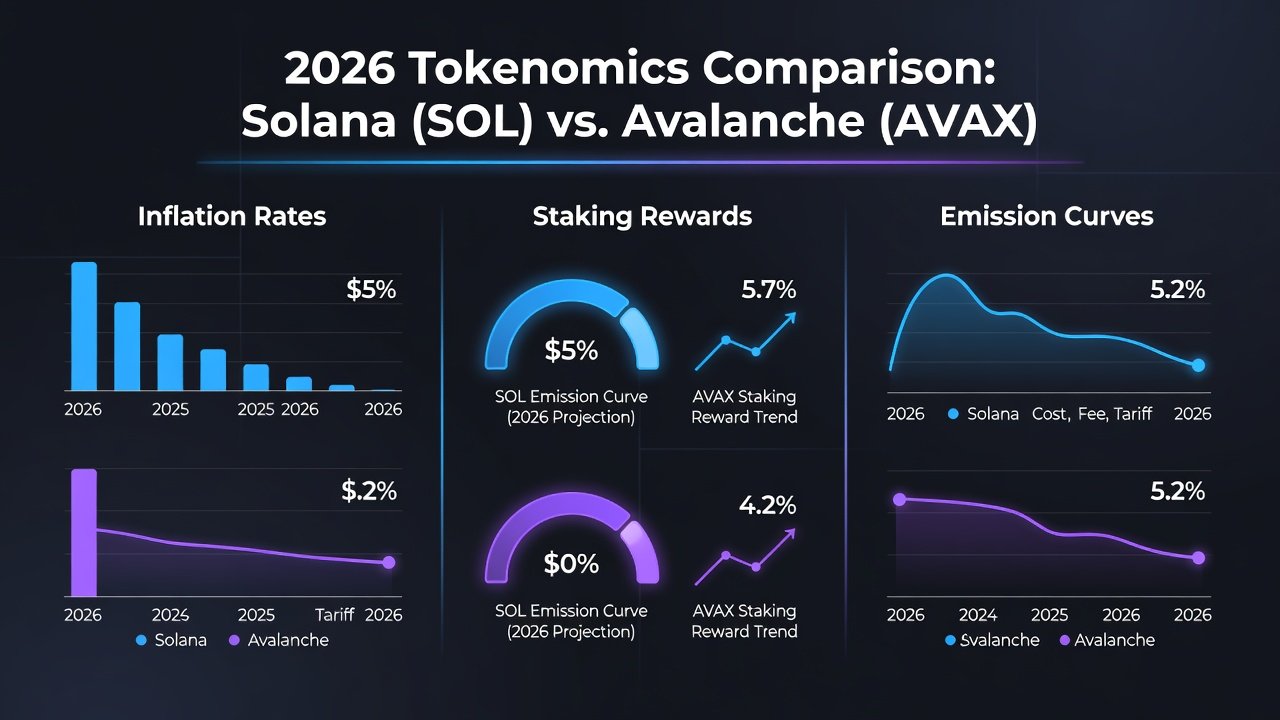
Both chains offer competitive staking yields, though Solana's predictable disinflation provides clearer long-term projections compared to Avalanche's activity-driven adjustments. Burn mechanisms on Avalanche intensify during DeFi surges, potentially offsetting dilution more aggressively than Solana's fee distribution model. When evaluating these systems, holders should consider how transaction volume directly influences net yields after accounting for any issuance.
Data Tables and Practical Examples
Practical examples include Solana's integration with lending platforms where staked SOL collateralizes positions, reducing liquidation risks for long-term holders. On Avalanche, similar mechanics appear in decentralized exchanges where AVAX burns from high-volume trades enhance scarcity. A useful comparison involves reviewing how each chain handles validator performance metrics, which directly affect reward distribution and overall network health.
Utility Mechanisms Supporting DeFi and Ecosystem Growth
Solana's high throughput enables seamless DeFi participation, with SOL serving as gas and collateral across decentralized applications. Value accrues as network usage increases fee capture for stakers. This utility extends to memecoin launches, perpetual futures trading, and automated market makers that rely on low-cost, high-speed execution to attract retail and institutional users alike.
Avalanche emphasizes interoperability via subnets, allowing customized blockchains that drive AVAX demand for validation and bridging. This supports broader ecosystem expansion beyond core DeFi into areas such as gaming, enterprise solutions, and tokenized real-world assets. The flexibility of subnets encourages developers to build specialized environments while still benefiting the main token through validation requirements.
Investor Strategies: Portfolio Allocation and Risk Management
Successful long-term holding requires deliberate allocation decisions based on tokenomics metrics. Consider these practical steps:
- Assess dilution risk by monitoring annual inflation against projected network growth metrics from official documentation.
- Allocate based on utility strength: favor SOL for speed-focused DeFi and AVAX for multi-chain scalability needs.
- Rebalance quarterly using staking rewards to maintain exposure without excessive selling that could trigger tax events.
- Diversify across both assets to hedge against protocol-specific vulnerabilities like temporary congestion or governance shifts.
- Review validator performance and delegation options regularly to maximize compounding effects over multi-year horizons.
Common mistakes include over-allocating to one chain without reviewing reward sustainability or ignoring burn rate fluctuations during market volatility. Another pitfall is neglecting to factor in opportunity costs when comparing yields across different DeFi protocols built on each chain.
Risk Factors Including Dilution and Market Dynamics
Dilution remains a primary concern for both tokens. Solana mitigates this through predictable reductions, while Avalanche relies on usage-driven burns. External factors such as regulatory changes or competing L1s can impact long-term yields and should be monitored through credible sources like Solana's official resources and Avalanche network documentation.
Additional risks involve smart contract exploits in dependent protocols, shifts in developer activity, and macroeconomic conditions that affect overall crypto adoption. Long-term holders benefit from maintaining a clear exit or reallocation plan tied to measurable tokenomics thresholds rather than emotional market reactions.
Practical Steps for Monitoring and Adjusting Holdings
Begin by tracking key on-chain metrics such as active addresses, transaction volume, and staking participation rates. Next, compare these against inflation schedules published in each project's technical papers. Finally, test small allocation adjustments in a simulated environment before committing larger portions of a portfolio. This methodical approach helps align holdings with evolving network economics.
Conclusion
Understanding these tokenomics empowers investors to make informed decisions on holding SOL or AVAX. Both networks demonstrate strong utility foundations that can support sustained value for disciplined participants who actively manage their positions based on data rather than speculation.
FAQ
How do SOL and AVAX inflation rates compare in 2026?
Solana follows a declining schedule targeting stability, while Avalanche adjusts dynamically with network demand and fee burns to balance issuance and usage.
What staking yields can long-term holders expect?
Yields vary with participation levels but typically reward consistent validators and delegators through combined inflation and fees, with compounding opportunities available via integrated DeFi tools.
Which offers better DeFi utility for yields?
Solana excels in high-speed transactions suitable for frequent trading strategies; Avalanche provides advantages in cross-chain and subnet flexibility for diversified applications.
Are there specific risks to holding these assets long-term?
Key risks include dilution from issuance, smart contract vulnerabilities, and shifts in ecosystem adoption rates that could affect overall demand and reward sustainability.
How should investors incorporate burn mechanisms into their analysis?
Track real-time fee burns on Avalanche and fee distribution patterns on Solana to estimate net supply changes and adjust allocations accordingly over quarterly reviews.
No comments yet. Be the first!