 CryptoChain Blog
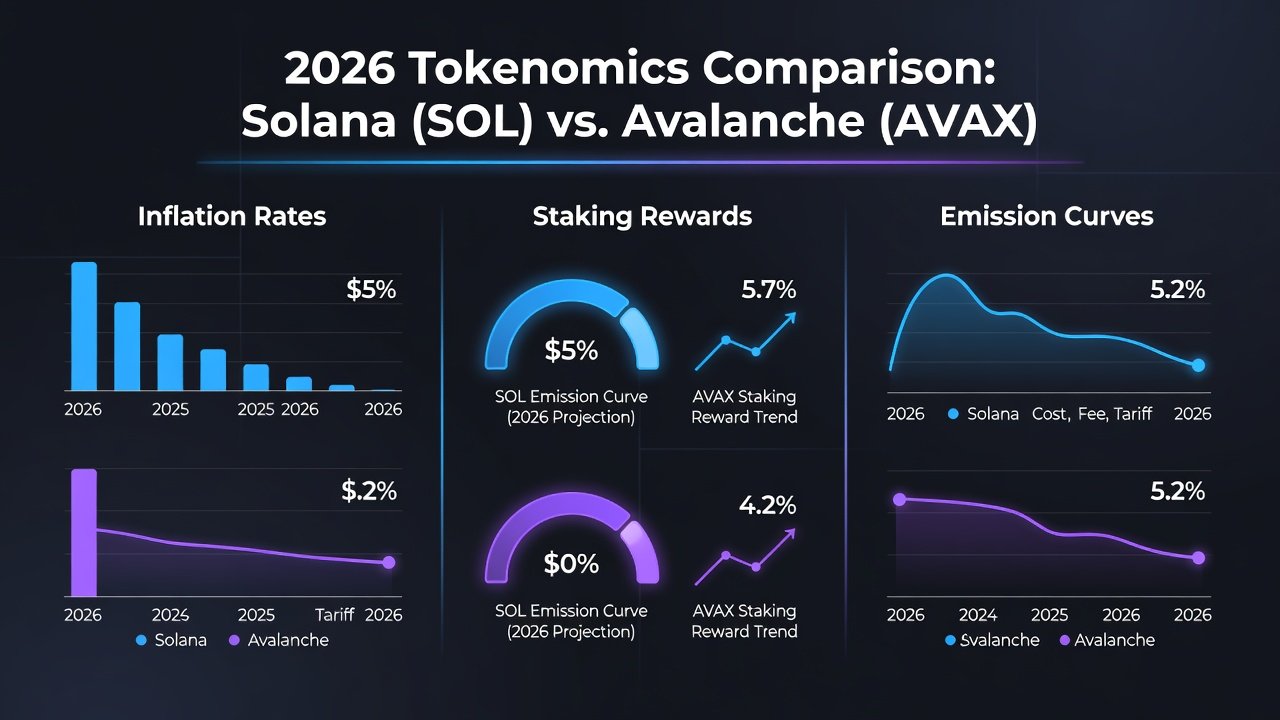
Introduction to SOL and AVAX Tokenomics in 2026
As Layer 1 blockchains continue to evolve, their tokenomics models play a pivotal role in determining network security, validator incentives, and long-term value for token holders. This comprehensive 2026 analysis dives deep into Solana (SOL) and Avalanche (AVAX) supply dynamics, examining inflation schedules, staking reward mechanisms, and utility across DeFi and cross-chain environments. Both networks actively tune their parameters to maintain robust security while preserving holder value, yet their methodologies reveal distinct philosophies in emission control and deflationary tools.
Investors seeking sustainable yields must grasp these intricacies to navigate dilution risks effectively. The following sections break down each chain's model with data tables, validator examples, and actionable strategies.
Solana Token Supply Model and Inflation Schedule
Solana operates under a disinflationary framework where annual token issuance decreases predictably over time. This schedule is designed to transition the network toward greater scarcity as usage scales. Inflation starts at a higher rate and tapers, supporting early validator growth before settling into a long-term floor that still incentivizes participation without excessive dilution.
Transaction fee burns serve as the primary deflationary counterbalance, permanently removing SOL from circulation during periods of elevated activity. Major validators such as those operating large-scale infrastructure pools have reported staking ratios consistently exceeding 70 percent of circulating supply, demonstrating strong community commitment. These validators often provide detailed dashboards showing real-time emission versus burn metrics, helping delegators assess net yield.
Expanded Emission Curve Insights for Solana
The emission curve follows a geometric reduction pattern, with inflation dropping annually until reaching its terminal rate. This predictability allows investors to model multi-year returns with reasonable accuracy. In practice, validators frequently reinvest a portion of rewards into infrastructure upgrades, indirectly benefiting the ecosystem by enhancing uptime and throughput.
| Year | Inflation Rate Phase | Projected Staking APY Range | Burn Impact Considerations |
|---|---|---|---|
| 2025 | Moderate decline phase | 5-8% | Variable based on DeFi and NFT volume |
| 2026 | Further reduction | 4-7% | Increased with cross-chain bridge activity |
| 2027 | Approaching long-term floor | 3-6% | Stronger deflation potential during peak usage |
Avalanche Token Supply Model and Inflation Schedule
Avalanche implements a participation-linked inflation model that adjusts rewards based on overall staking levels across its primary chains and expanding subnets. The system rewards both validators and delegators while integrating fee burns on the C-Chain and X-Chain to offset new issuance. This creates a responsive equilibrium where network growth directly influences token scarcity.
Prominent validators managing large delegated pools often highlight diversified reward streams originating from subnet launches and cross-chain interoperability features. These examples illustrate how Avalanche's architecture supports scalability without proportionally increasing dilution for long-term holders.
Expanded Emission Curve Insights for Avalanche
The schedule emphasizes stability, with inflation rates calibrated to maintain validator sets even as total staked supply grows. Subnet operators benefit from tailored reward pools that encourage specialized use cases such as gaming or institutional finance applications. Real-world staking data from established validators shows consistent participation that supports both security and yield generation.
| Year | Inflation Rate Phase | Projected Staking APY Range | Burn Impact Considerations |
|---|---|---|---|
| 2025 | Targeted reduction | 6-9% | Usage-dependent across primary chains |
| 2026 | Stabilizing phase | 5-8% | Enhanced by growing subnet ecosystem |
| 2027 | Long-term equilibrium | 4-7% | Cross-chain synergies amplifying burns |
Side-by-Side Comparison of Inflation and Rewards
While both Solana and Avalanche prioritize security through high staking participation, their adjustment mechanisms differ in key ways. Solana emphasizes predictable disinflation paired with aggressive burns during usage spikes, offering holders a clear path toward reduced dilution. Avalanche, conversely, ties rewards more closely to subnet expansion and dynamic participation rates, creating opportunities for higher baseline yields during growth phases.
Projected APY shifts indicate a gradual moderation for both networks as staking saturation increases. Burn rates will increasingly determine net holder value, especially as DeFi volumes rise. 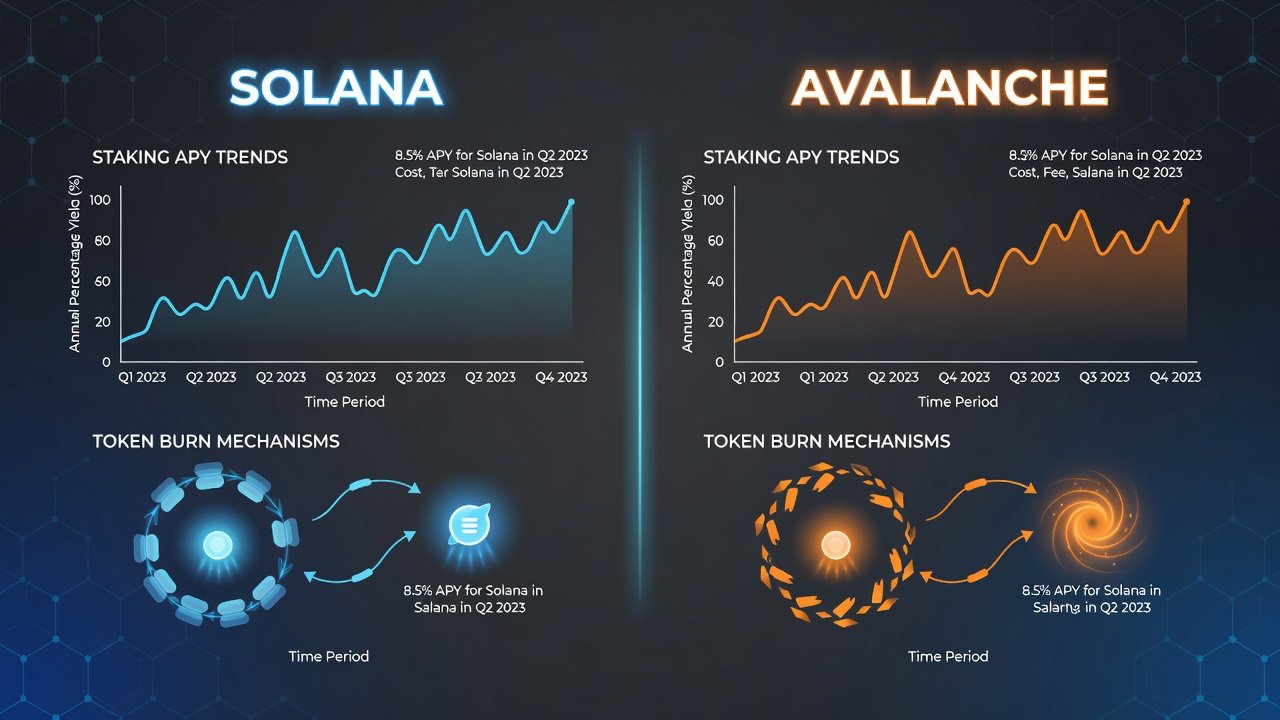
Practical Strategies for Maximizing Yields and Mitigating Dilution
Effective yield optimization in 2026 requires a multi-layered approach that combines core staking with advanced DeFi tactics while actively managing inflation exposure.
- Select validators with proven uptime above 99 percent and competitive commission rates below 10 percent to preserve maximum rewards.
- Implement auto-compounding where supported to reinvest earnings seamlessly and counteract gradual supply increases.
- Integrate staked positions into lending protocols for additional interest layers without unstaking principal.
- Monitor quarterly burn reports published by each network to calculate real net APY after inflation effects.
- Diversify staking allocations across both Solana and Avalanche to hedge against chain-specific events such as temporary congestion or governance shifts.
- Participate in subnet or validator delegation programs that offer bonus incentives for long-term commitments.
- Use hardware wallets with delegation features to maintain security while earning yields across multiple chains.
- Review cross-chain bridge volumes regularly, as increased interoperability often correlates with higher burn activity and improved token economics.
These strategies, when applied consistently, help balance security contributions with personal portfolio resilience.
Risks and Mitigation in Tokenomics Planning
Investors should account for potential risks including sudden governance changes that alter inflation parameters, validator slashing events, or reduced network activity lowering burn effectiveness. Mitigation involves spreading exposure, staying informed via official forums, and stress-testing yield models under various adoption scenarios.
FAQs on SOL and AVAX Utility in DeFi and Cross-Chain Scenarios
How do staking rewards impact long-term holding in DeFi?
Rewards create a reliable income stream that can be redeployed into lending markets or liquidity pools, strengthening overall returns against inflationary pressures over multi-year periods.
What role do burns play in cross-chain utility?
Burn mechanisms reduce circulating supply during bridge transfers and inter-chain transactions, supporting token value and making cross-ecosystem movements more economically attractive for users.
Are there risks of APY compression by 2026?
Yes, both networks anticipate moderate APY declines as staking participation matures, underscoring the importance of validator selection and burn awareness for sustained performance.
Can investors use SOL and AVAX interchangeably in cross-chain DeFi?
Bridges facilitate asset movement, yet each token's distinct inflation and reward structures favor customized strategies rather than simple substitution.
How do subnet expansions affect Avalanche staking yields?
Subnet growth often introduces new reward pools that can supplement base staking returns, though they require evaluation of additional operational risks.
What governance factors could alter Solana's emission schedule?
Community proposals may adjust the long-term inflation floor or burn priorities, making active participation in governance discussions valuable for informed holders.
For deeper technical references, consult Solana's official site, Avalanche's official site, and Mozilla Developer Network documentation on web standards relevant to blockchain interfaces.
Conclusion
Understanding the nuanced tokenomics of SOL and AVAX equips investors with the tools needed for informed decision-making in 2026. By combining disciplined staking practices with ongoing analysis of burns and rewards, participants can position themselves for sustainable growth while contributing to network security across both ecosystems.
No comments yet. Be the first!