 CryptoChain Blog
Introduction: Looking Ahead to 2027 for Solana and AVAX
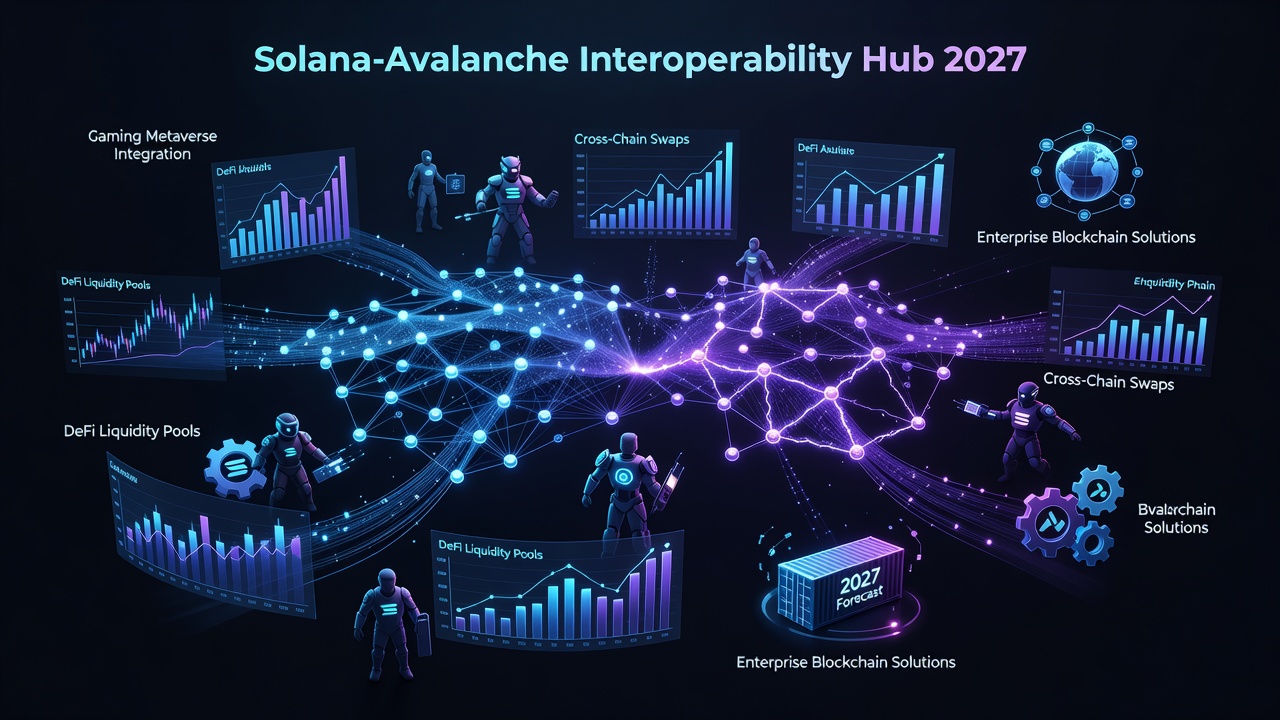
As blockchain technology matures, Layer 1 altcoins like Solana and Avalanche (AVAX) continue to push boundaries beyond basic token transfers. This forward-looking analysis examines novel applications projected through 2027, focusing on investor and developer interests in sustainable growth areas such as decentralized finance expansions, immersive gaming ecosystems, and real-world enterprise integrations. Both networks bring distinct technical advantages that position them for specialized roles in the evolving Web3 landscape.
Solana emphasizes high throughput and low latency, while AVAX prioritizes customizable subnets for tailored solutions. These strengths enable differentiated use cases that go far beyond current trends like meme coins or basic staking. Market observers anticipate that by 2027 these platforms will host sophisticated protocols capable of handling millions of daily interactions across finance, entertainment, and supply chains. Understanding these trajectories helps stakeholders prepare for shifts in adoption patterns and technological integration.
DeFi Expansions: Scaling Complex Financial Protocols
By 2027, DeFi on these L1s is expected to incorporate advanced mechanisms such as real-time cross-chain liquidity pools and AI-driven yield optimization. Solana's architecture supports rapid transaction finality, making it ideal for high-frequency trading protocols and perpetual futures platforms that require sub-second settlements. Developers are already experimenting with integrations that allow seamless bridging of assets across multiple chains without traditional bottlenecks, potentially enabling new forms of synthetic asset creation and automated market making at unprecedented scales.
AVAX, through its subnet technology, enables isolated DeFi environments with custom rules for compliance-heavy applications like tokenized real-world assets. This approach reduces congestion on the primary chain while maintaining security via the Avalanche consensus. Real-world examples include emerging platforms testing fractionalized ownership of carbon credits and supply chain financing instruments directly on AVAX subnets. Such setups allow institutions to experiment with permissioned liquidity without compromising the public network's openness.
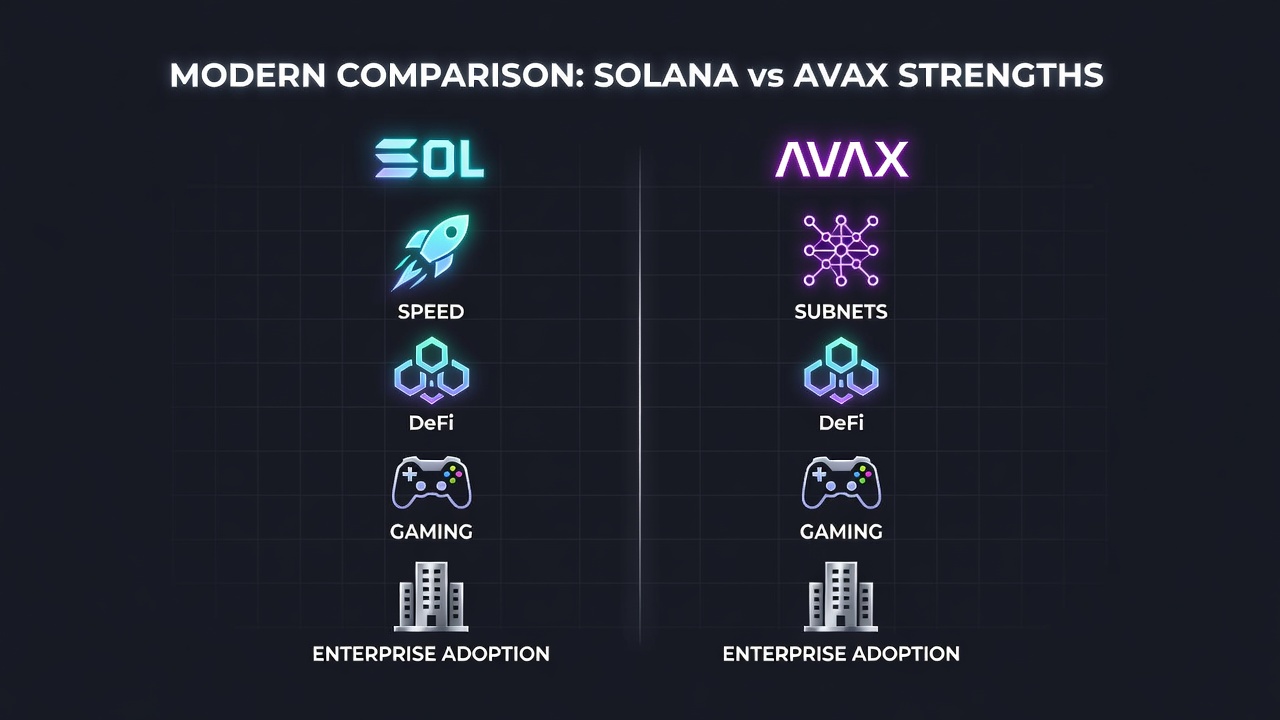
Comparisons reveal Solana excelling in speed-critical DeFi activities, whereas AVAX offers superior flexibility for regulated financial products. Solana and Avalanche both benefit from active developer communities iterating on these features. Additional depth comes from expected integrations with oracle networks for more accurate pricing data and risk assessment models that adapt dynamically to market volatility.
Gaming Integrations: Building Persistent Virtual Economies
The gaming sector stands to gain significantly from L1 capabilities in 2027. Solana's low fees and high TPS make it suitable for mass-scale play-to-earn mechanics, where thousands of in-game transactions occur simultaneously without prohibitive costs. Projects are exploring fully on-chain games with dynamic NFTs that evolve based on player interactions in real time, creating living economies where item scarcity and value shift according to community-driven events.
AVAX subnets allow game studios to launch dedicated environments with unique tokenomics and governance, perfect for large-scale metaverse projects requiring isolated economies. Examples include experimental titles using AVAX for player-owned virtual land registries and interoperable item systems across multiple games. These setups reduce latency for global player bases and support complex smart contract logic for in-game rule enforcement.
Practical participation involves developers starting with official documentation to deploy testnet contracts, followed by community audits. Investors can engage via early ecosystem funds or governance tokens tied to promising gaming protocols. Studios should also consider hybrid models that blend on-chain ownership with off-chain rendering to optimize performance while preserving decentralization benefits.
Enterprise Adoptions: Real-World Implementations
Enterprise use cases project toward supply chain transparency and decentralized identity solutions by 2027. Solana supports high-volume data logging for IoT devices in logistics, enabling verifiable tracking at scale. This capability suits industries like shipping and manufacturing where real-time provenance records can reduce fraud and improve efficiency across global operations.
AVAX subnets facilitate private-permissioned networks for corporations needing regulatory compliance alongside blockchain immutability. Companies in finance and healthcare are testing these environments for secure data sharing that meets strict privacy standards. Strength comparisons show Solana leading in public, high-speed data applications, while AVAX provides modular frameworks for hybrid public-private deployments. Both chains demonstrate growing partnerships with traditional businesses exploring tokenized incentives and automated compliance checks.
Direct Comparisons of Unique Strengths
- Performance: Solana prioritizes raw speed for consumer-facing apps; AVAX focuses on customizable scalability through subnets that can be tuned for specific throughput needs.
- Adoption Barriers: Solana offers simpler onboarding for retail users via intuitive wallets; AVAX appeals to institutions via subnet isolation that supports tailored security policies.
- Future-Proofing: Both support upgrades toward quantum resistance and enhanced interoperability, though Solana's single-state architecture may require different scaling solutions compared to AVAX's multi-chain approach.
- Developer Experience: Solana provides robust Rust-based tooling for high-performance applications, while AVAX emphasizes EVM compatibility for easier migration from other ecosystems.
Practical Steps for Participation
- Research official validator or developer resources on each network to understand current testnet environments and grant opportunities.
- Experiment with testnets to build or interact with sample applications, starting with simple smart contracts before advancing to complex DeFi or gaming logic.
- Join ecosystem grants programs for funding novel use cases and collaborate with existing projects to gain practical experience.
- Monitor governance proposals to influence protocol directions and stay informed about upcoming upgrades that could impact emerging applications.
- Diversify exposure through established liquidity pools tied to emerging projects while maintaining awareness of network-specific risks.
Mistakes to Avoid When Exploring These Use Cases
One common error is overcommitting to a single chain without evaluating interoperability options, which can limit future flexibility. Another pitfall involves neglecting security audits for custom subnets or high-speed protocols, leading to potential vulnerabilities. Investors should avoid chasing hype without reviewing on-chain metrics and developer activity. Developers often underestimate the importance of user experience design when building on high-throughput networks, resulting in interfaces that fail to retain mainstream participants.
Conclusion
The trajectory for Solana and AVAX through 2027 highlights specialized roles in DeFi, gaming, and enterprise. By leveraging their core strengths, both chains can capture distinct market segments while contributing to broader blockchain utility. Forward-thinking participants who engage early with development tools and ecosystem initiatives stand to benefit from these expansions.
FAQ: Risks and Opportunities for Altcoin Enthusiasts
What are the main risks with these L1 altcoins? Network congestion events, regulatory shifts, and smart contract vulnerabilities remain key concerns. Diversification and ongoing education help mitigate exposure.
How can developers get started with emerging use cases? Begin with sandbox environments and community forums to prototype ideas before mainnet deployment.
Are there opportunities beyond speculation? Yes, active participation in governance, development bounties, and real-world pilots offers tangible involvement outside pure trading.
What timelines should participants expect for meaningful adoption? Significant enterprise and gaming integrations are projected between late 2026 and mid-2027, contingent on continued infrastructure improvements.

No comments yet. Be the first!