 CryptoChain Blog

Introduction to Community Building for Solana and AVAX in 2026
In 2026, Solana and Avalanche (AVAX) continue to stand out as leading Layer 1 altcoins, each fostering distinct ecosystems that thrive on strong, engaged communities. Organic growth remains the cornerstone of sustainable adoption, focusing on retention and genuine user involvement rather than short-term hype. This guide dives deep into practical strategies tailored for crypto enthusiasts and project teams aiming to build lasting networks around these altcoins. Effective community building drives altcoin adoption by creating spaces where users feel valued, informed, and empowered to contribute meaningfully over time.
Solana's ecosystem often leverages fast-paced, meme-inspired energy that attracts a broad base of participants looking for quick engagement and viral moments. In contrast, AVAX emphasizes developer collaboration and enterprise-grade applications, drawing in users who seek technical depth and long-term infrastructure projects. Understanding these differences helps tailor approaches for maximum impact, ensuring that initiatives align with the unique culture of each chain while promoting cross-pollination where possible. By prioritizing organic methods such as consistent interaction and value-driven content, projects can achieve higher retention rates and foster environments that naturally encourage new users to join and stay active.
Discord and Twitter Engagement Tactics
Discord servers serve as the digital town halls for both ecosystems, providing real-time spaces for discussion, support, and collaboration. Start by creating dedicated channels for discussions, AMAs, and feedback loops that encourage ongoing participation. For Solana projects, incorporate meme contests and rapid-fire polls to match the chain's vibrant, fast-moving culture, which often sees spikes in activity during market movements. AVAX communities benefit from technical deep-dives, code review sessions, and governance previews that appeal directly to developers and builders focused on subnets and decentralized applications.
On Twitter (now X), consistent posting schedules combined with thread-based education build visibility and establish thought leadership. Use hashtags like #SolanaCommunity and #AVAXBuilders to connect with broader audiences and surface relevant conversations. Engage daily by replying to mentions, sharing user content, and participating in trending discussions to foster reciprocity and trust. Real 2026 examples include Solana meme projects running weekly Twitter raids that boosted follower growth by double digits, while AVAX-focused groups hosted developer Twitter Spaces that led to increased GitHub contributions from new participants. These tactics work best when they emphasize listening to community input rather than one-way broadcasting.
Ambassador Programs That Drive Retention
Ambassador initiatives reward active members with roles, exclusive access, and recognition, turning casual users into dedicated advocates. Launch by outlining clear criteria such as consistent participation, content creation, and positive interactions. In 2026 examples, Solana-based meme projects have seen retention rates improve through tiered rewards systems that include NFT badges and early access to launches, while AVAX developer DAOs use ambassadors to onboard new builders via structured mentorship pairings and technical workshops.
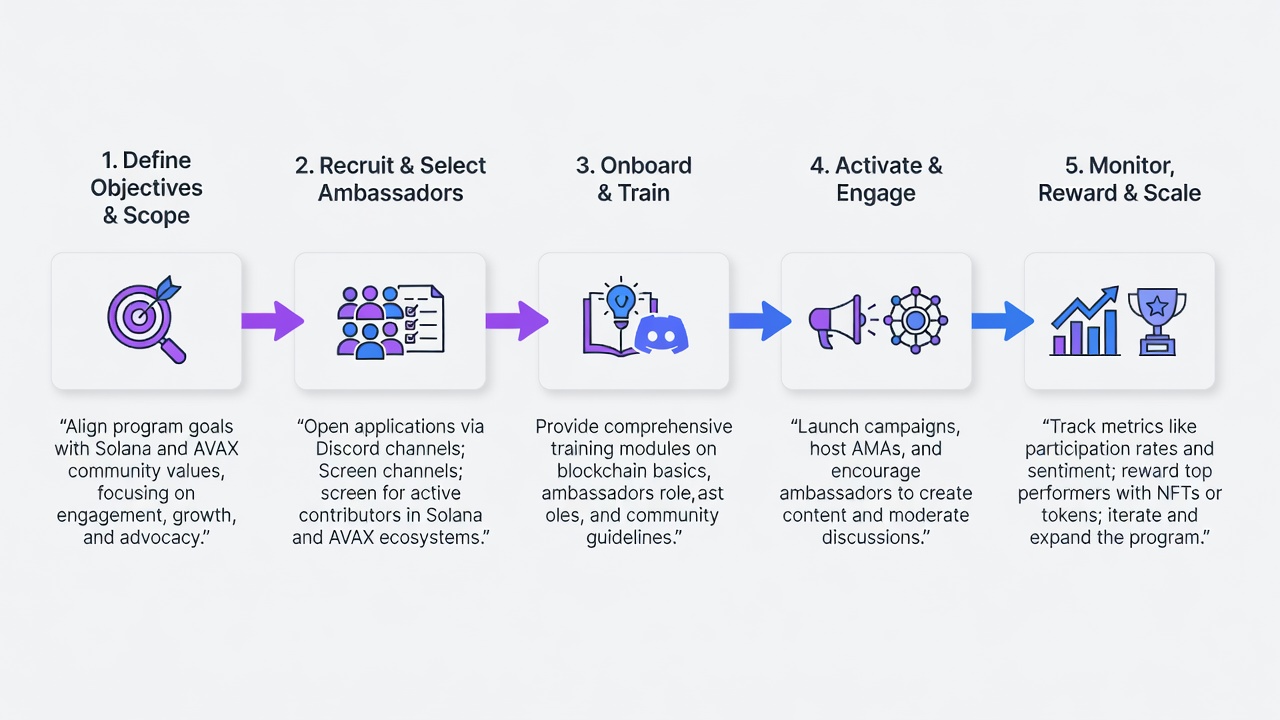
Step-by-step guide for launching an ambassador program includes defining goals and target personas first, then recruiting via application forms on Discord that ask for examples of past contributions. Provide training resources and branded assets to equip ambassadors effectively, followed by tracking contributions with simple dashboards that highlight top performers. Finally, iterate based on quarterly feedback sessions to refine the program and keep it aligned with evolving community needs. This structured approach ensures ambassadors feel supported and motivated to contribute sustainably.
Hosting Events for Ecosystem Growth
Virtual and hybrid events remain powerful tools for 2026 community expansion, offering opportunities for direct interaction and knowledge sharing. Host Twitter Spaces weekly, featuring ecosystem updates and guest speakers from both Solana and AVAX projects. For in-person meetups, partner with local crypto hubs to discuss real-world use cases such as decentralized finance applications or gaming integrations. Solana events often include hackathon-style meme challenges that energize participants, whereas AVAX gatherings focus on subnet deployments, DeFi workshops, and developer office hours that build technical skills.
Successful 2026 events have combined both chains, such as joint virtual summits where Solana creators showcased viral applications alongside AVAX teams demonstrating scalable infrastructure. Planning should include clear agendas, interactive elements like Q&A segments, and post-event follow-ups via Discord to maintain momentum. These gatherings not only attract new members but also strengthen bonds among existing ones through shared experiences.
Comparing Solana's Meme-Driven vs AVAX's Developer-Focused Approaches
Solana communities excel at viral moments through memes and rapid token launches, creating excitement that draws casual users and generates widespread awareness quickly. This approach thrives on humor, creativity, and timely trends that resonate with a younger, social-media-savvy audience. In contrast, AVAX prioritizes depth with developer grants, technical workshops, and enterprise partnerships that attract long-term builders interested in robust, scalable solutions. The developer-focused model emphasizes education, tooling, and collaborative problem-solving, leading to more stable project foundations over time.
Successful projects often blend elements of both: use Solana's energetic meme culture for initial awareness campaigns and AVAX's structured resources for deeper retention strategies. For instance, a hybrid initiative might start with a Solana-style meme contest to spark interest, then transition participants into AVAX-led developer tutorials. This comparison highlights the importance of adapting tactics to audience preferences while recognizing that organic growth benefits from authenticity in either style.
Metrics for Measuring Community Success
Track engagement through active user counts, message volume, and event attendance rates to gauge overall health. Retention metrics include repeat participation rates, referral growth from existing members, and qualitative sentiment analysis from polls. Tools like Discord analytics, on-chain activity dashboards, and social listening platforms provide quantifiable insights that help identify what resonates. Aim for steady monthly increases in organic mentions across platforms, alongside growth in unique contributors rather than just total numbers.
Practical examples from 2026 show Solana communities measuring success via meme engagement scores and AVAX groups tracking developer onboarding conversions. Regular reviews of these metrics allow teams to pivot strategies quickly, such as increasing technical content if retention dips among builder segments. Combining quantitative data with direct community feedback creates a balanced view of progress.
Step-by-Step Guide to Launching a Community Initiative
- Research existing channels in both ecosystems to identify gaps and avoid duplication, spending time observing successful servers and accounts.
- Set up core platforms with clear rules emphasizing respect, value addition, and constructive dialogue to set the right tone from day one.
- Seed initial content and invite early members from aligned networks, focusing on quality over quantity to establish a strong foundation.
- Implement moderation early using bots and volunteer teams trained in de-escalation techniques.
- Measure initial traction after 30 days using the metrics outlined above and adjust tactics based on data and feedback.
- Scale successful elements gradually, introducing new features like specialized sub-channels or themed events as the community grows.
Mistakes to Avoid in Organic Community Growth
Common pitfalls include over-reliance on paid promotions that attract low-quality members with poor retention, or ignoring feedback which creates disconnects and frustration. Another mistake is neglecting moderation, which can allow toxic behavior to erode trust. Always prioritize organic conversations, transparent communication, and consistent value delivery to sidestep these issues. Projects that rush growth without building genuine relationships often see high churn rates shortly after launch.
FAQ: Common Pitfalls and Moderation Tools
What are the biggest pitfalls in community building?
Over-reliance on paid promotions leads to low retention and superficial engagement. Ignoring feedback creates disconnects between teams and users. Always prioritize organic conversations and transparent communication to maintain authenticity.
Which tools help with moderation?
Popular options include Discord's built-in moderation features, Carl-bot for automation of rules and warnings, and community management platforms that integrate across Twitter and Discord for unified oversight and reporting.
How do you measure long-term retention?
Focus on cohort analysis showing active members after 90 days, alongside qualitative sentiment from polls and direct outreach to understand underlying motivations.
What should teams do if engagement drops suddenly?
Conduct quick surveys and review recent activities to identify causes, then respond with targeted content or events that re-engage the core group before expanding outward.
Building thriving communities around Solana and AVAX requires patience, authenticity, and a willingness to adapt based on real user input. By applying these tactics consistently and learning from both successes and setbacks, projects can achieve meaningful adoption in 2026 and beyond. For more foundational resources, explore Solana's official site and Avalanche's network hub.


No comments yet. Be the first!