 CryptoChain Blog
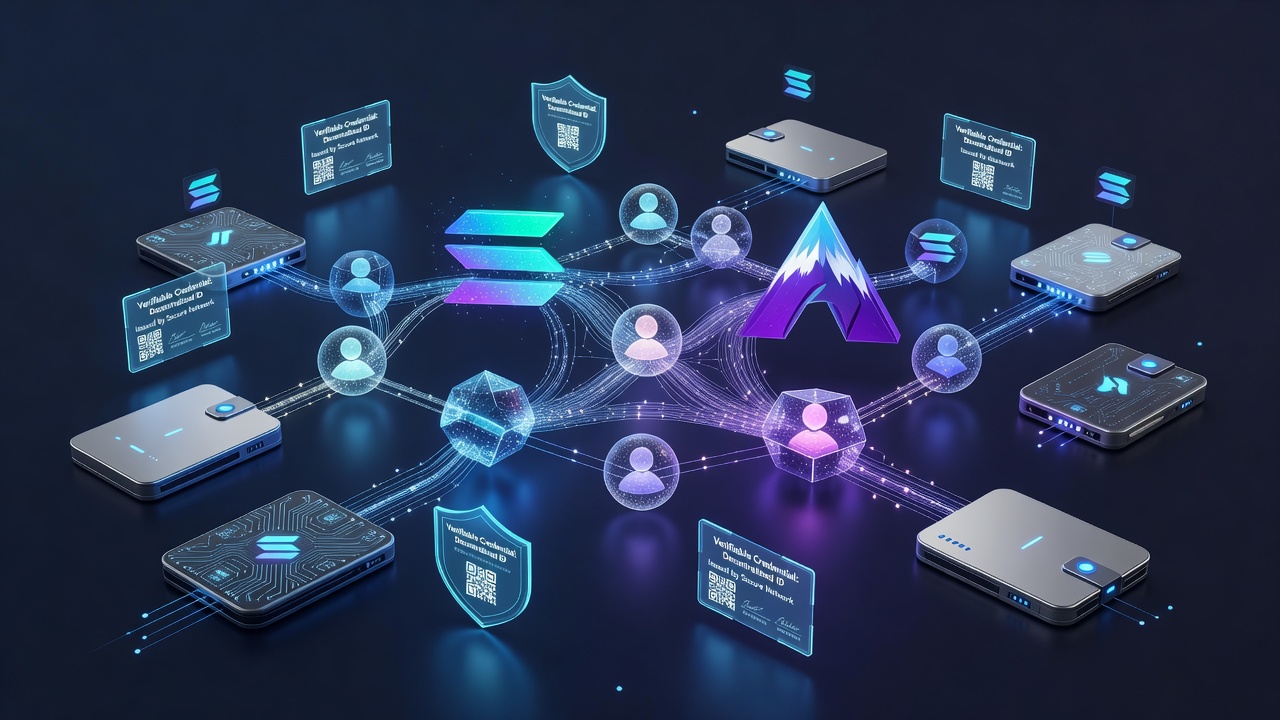
Introduction to Decentralized Identity on Layer-1 Altcoins
Decentralized identity (DID) empowers users with full control over their digital credentials without relying on centralized providers. In 2026, Solana and Avalanche (AVAX) stand out among L1 altcoins for their high throughput and developer-friendly ecosystems that support scalable identity solutions. This guide explores practical implementations beyond governance or social topics, focusing on secure, user-controlled identities that enable verifiable credentials for everyday applications like access management and compliance checks.
The shift toward decentralized identity addresses growing concerns over data breaches and privacy erosion in traditional systems. By leveraging blockchain's immutability, users can present proofs of identity attributes without exposing underlying data. Solana and Avalanche provide the infrastructure needed for mass adoption, with their respective strengths in speed and customization making them ideal for altcoin enthusiasts seeking alternatives to Ethereum-centric solutions.
Solana's Decentralized Identity Framework
Solana leverages its fast transaction speeds and low fees to enable efficient DID operations. Projects build on Solana's account model to issue verifiable credentials that users store in self-sovereign wallets. Key advantages include sub-second finality and support for compressed NFTs that represent identity claims efficiently. Developers utilize the Solana Program Library to create custom programs for credential issuance and revocation, allowing seamless updates to identity states without high gas costs.
Further, Solana's integration with compressed state technologies reduces on-chain storage needs, making it feasible to handle millions of identity records. This framework supports standards aligned with W3C recommendations for decentralized identifiers, ensuring compatibility across tools and dApps. Enthusiasts benefit from the chain's vibrant developer community, which continuously releases updated libraries for identity-specific use cases.
Avalanche's Approach to Decentralized Identity
Avalanche utilizes its subnet architecture to create customizable identity chains. The platform's EVM compatibility allows seamless integration with existing Ethereum tools while offering enhanced privacy through custom virtual machines. AVAX focuses on interoperability across multiple subnets for cross-chain credential verification, enabling organizations to deploy dedicated identity subnets that operate independently yet connect to the primary network.
This modular design supports advanced features like zero-knowledge proofs tailored to specific regulatory environments. Avalanche's consensus mechanism ensures rapid finality across subnets, facilitating real-time identity verifications in high-volume scenarios such as event ticketing or supply chain tracking. Users gain flexibility in choosing privacy levels, from fully public credentials to fully private ones anchored on-chain.
Protocol Comparison: Solana vs AVAX for DID
- Throughput: Solana handles thousands of TPS for rapid credential issuance; AVAX subnets provide dedicated bandwidth for identity workloads.
- Cost: Both maintain minimal fees, supporting broad accessibility for individual users and enterprises alike.
- Interoperability: AVAX excels in cross-subnet communication, while Solana integrates well with Wormhole for bridging identities to other ecosystems.
- Privacy Features: AVAX offers stronger customizable privacy options via subnets, whereas Solana emphasizes efficiency with optional encryption layers.
- Developer Ecosystem: Solana boasts extensive tooling for quick prototyping; Avalanche provides robust support for enterprise-grade deployments with governance features.
- Scalability Limits: Both chains continue to evolve, with ongoing upgrades addressing potential bottlenecks in identity-heavy applications.
Choose Solana for consumer-facing apps needing speed; select AVAX for enterprise-grade privacy requirements. Decision factors also include existing wallet preferences and desired level of chain customization.
Integration Steps with Existing Wallets
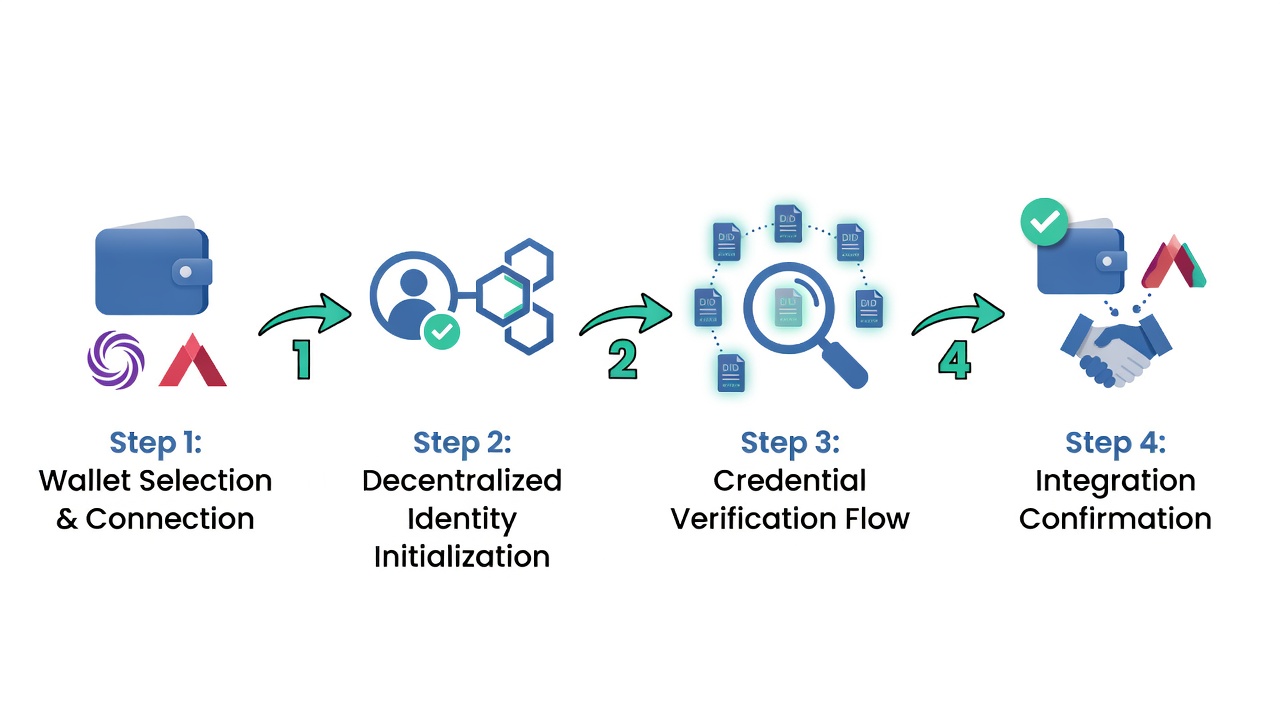
Follow this step-by-step guide to integrate decentralized identity on both chains using popular wallets like Phantom for Solana or Core for Avalanche. Begin by ensuring your wallet supports the latest DID extensions and has sufficient native tokens for transaction fees.
- Install a compatible wallet supporting DID standards such as Phantom or MetaMask with custom RPC configurations for the target chain.
- Generate a DID document on-chain using the respective SDK: Solana's @solana/web3.js or Avalanche's avalanche.js library, including key pairs for signing credentials.
- Link your wallet address to the DID and issue initial verifiable credentials for attributes like email verification or professional affiliations.
- Store credentials off-chain in encrypted formats while anchoring cryptographic proofs on-chain for tamper resistance.
- Test verification by presenting credentials to a sample dApp and confirming zero-knowledge proofs function correctly across devices.
- Monitor and revoke credentials as needed through on-chain transactions, maintaining an audit trail without compromising privacy.
Developers should reference official documentation at Solana and Avalanche for the latest SDK versions. Testing in devnet environments first prevents costly errors during mainnet deployment.
Real-World Use Cases: Verifiable Credentials
Verifiable credentials enable practical applications such as decentralized KYC for DeFi lending, academic degree verification, and professional certification checks. On Solana, projects issue soulbound tokens representing credentials that cannot be transferred, ensuring authenticity in gaming or membership platforms. Avalanche supports private credential exchanges within dedicated subnets for healthcare or supply chain identity verification, allowing selective disclosure of sensitive information.
Additional scenarios include age verification for digital services without revealing birth dates and employment history proofs for remote work platforms. These use cases reduce reliance on third-party verifiers while enhancing user privacy and reducing fraud risks across industries.
Live Projects and Examples in 2026
Active initiatives include Solana-based Civic for reusable identity verification and Avalanche's integration with decentralized identity protocols via its subnets. Additional examples feature projects using compressed NFTs on Solana for lightweight credential storage and custom AVAX subnets for institutional identity management. These projects demonstrate real traction, with growing user bases adopting self-sovereign models for daily interactions.
Community-driven efforts also highlight hybrid solutions combining both chains for maximum flexibility, such as issuing credentials on Solana and verifying them across Avalanche subnets through bridges.
Potential Challenges and Mitigation Strategies
Adoption hurdles include key management complexity, regulatory uncertainty, and interoperability gaps. Mitigate these by using hardware wallets for enhanced security, monitoring evolving standards from bodies like the W3C, and testing cross-chain bridges thoroughly. Always audit smart contracts handling identity data to prevent vulnerabilities, and educate users on backup procedures to avoid permanent loss of access.
Other considerations involve educating non-technical users about the benefits and providing intuitive interfaces that abstract blockchain complexities. Ongoing research into quantum-resistant cryptography will further strengthen long-term viability.
Step-by-Step Implementation Guide for Enthusiasts
For altcoin enthusiasts ready to experiment, start with small-scale tests on testnets. Document each step, including transaction hashes, to build personal knowledge bases. Collaborate with developer communities on forums to troubleshoot common integration issues and share successful patterns.
FAQ: Common Adoption Hurdles for Altcoin Enthusiasts
How secure are decentralized identities on Solana and AVAX?
Both chains employ robust cryptographic standards; users retain private keys, reducing single-point-of-failure risks compared to traditional logins. Regular security audits and multi-signature setups add further protection layers.
What wallets support DID features in 2026?
Phantom, Solflare for Solana, and Core Wallet or MetaMask for Avalanche provide native or plugin-based support for identity protocols, with ongoing updates expanding compatibility.
Can I migrate existing credentials between chains?
Yes, via cross-chain bridges, though always verify bridge security and test small transfers first to ensure data integrity during migration.
Are there regulatory considerations?
Users should review local laws regarding digital credentials, as frameworks continue evolving globally and may impact specific use cases like financial services.
What training resources help beginners get started?
Official chain documentation, community tutorials, and open-source repositories offer step-by-step guidance tailored to identity implementations.
Conclusion
Solana and Avalanche offer compelling platforms for decentralized identity in 2026, delivering speed, scalability, and innovation for user-controlled digital identities. By following the outlined integration steps and exploring live projects, enthusiasts can implement secure solutions tailored to their needs while navigating potential challenges effectively.


No comments yet. Be the first!