 CryptoChain Blog

Introduction to Modular Architecture in L1 Blockchains
Modular architecture is redefining Layer 1 blockchains by separating core functions like execution, settlement, consensus, and data availability. For Solana and Avalanche (AVAX) in 2026, this shift enables greater scalability and customization for altcoin projects. Developers and investors are increasingly moving beyond monolithic designs to build flexible ecosystems that support high-throughput applications and decentralized finance innovations. The search for modular solutions stems from the limitations of integrated chains, where bottlenecks in one component affect the entire network. Solana and AVAX are leading this evolution with targeted upgrades that integrate data availability layers and specialized execution environments, allowing altcoin creators to tailor performance without compromising security or decentralization.
By decoupling these layers, projects gain the ability to scale specific components independently. This is particularly valuable for altcoins aiming to handle thousands of transactions per second while maintaining low fees and robust finality. In 2026, the focus remains on forward-looking innovations that position these chains as top choices for customizable L1 solutions.
Understanding Modular vs Monolithic Designs
In monolithic blockchains, all operations occur within a single layer, leading to trade-offs in speed, security, and flexibility. Modular designs decouple these into specialized components, offering altcoin teams the freedom to optimize for specific needs such as rapid transaction processing or secure settlement. This separation reduces congestion risks and supports parallel development of improvements across layers.
Key Components of Modular Systems
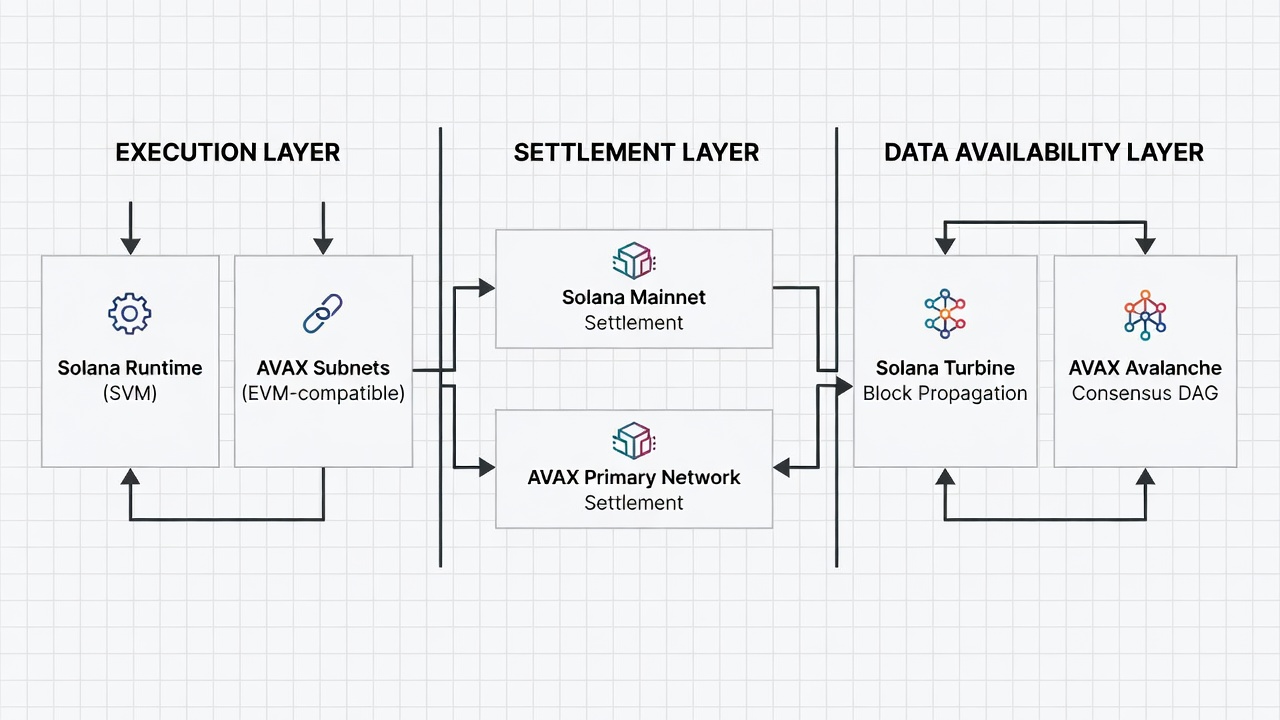
- Execution Layer: Handles smart contract computation and state changes with customizable virtual machines.
- Settlement Layer: Finalizes transactions and resolves disputes through efficient mechanisms.
- Data Availability Layer: Ensures data is accessible for verification without storing everything on-chain, often using sampling techniques.
- Consensus Layer: Maintains network agreement across nodes with pluggable algorithms.
By 2026, integrations with solutions like Celestia for data availability are becoming standard in both ecosystems, enabling altcoins to focus on business logic rather than infrastructure basics.
Solana's Modular Upgrades in 2026
Solana continues to evolve its high-performance base with modular extensions. Recent advancements focus on separating execution from data availability to support more altcoin deployments. Developers can now leverage Solana's SVM (Solana Virtual Machine) alongside external data availability providers. This enables customizable rollup-like environments while retaining Solana's speed advantages. Solana official documentation outlines these frameworks for seamless integration.
Step-by-Step Implementation Overview for Solana
- Assess project requirements for throughput and customization needs.
- Integrate modular execution clients via Solana's SDK and configure virtual machine parameters.
- Connect to data availability solutions for off-chain storage and verification sampling.
- Test settlement mechanisms on testnets before mainnet deployment, including edge cases for disputes.
- Monitor performance metrics and iterate on consensus parameters for optimal altcoin performance.
- Deploy monitoring tools to track layer interactions and ensure uptime.
AVAX's Approach to Modular Architecture
Avalanche emphasizes subnet customization, which aligns closely with modular principles. In 2026, AVAX subnets can operate with independent execution and settlement layers while sharing security through the primary network. This allows altcoin projects to launch tailored L1 instances with specific consensus rules. Integration of external data availability further enhances scalability for DeFi and gaming applications. Avalanche network resources provide detailed guides on subnet modularization.
Expanded Implementation Steps for AVAX Subnets
- Define subnet parameters including virtual machine type and validator set.
- Implement modular data availability bridges for off-chain data handling.
- Configure settlement protocols to interact with the primary Avalanche network.
- Conduct thorough testing across multiple subnet instances.
- Launch with phased rollouts and gather community feedback for refinements.
Comparisons of Execution and Settlement Layers
Solana's execution layer prioritizes parallel processing for speed, while AVAX subnets offer flexible virtual machines. Settlement on Solana remains tightly coupled but benefits from modular data layers, whereas AVAX provides more isolated settlement options per subnet. Real-world examples show Solana excelling in high-frequency trading altcoins, while AVAX shines in permissioned enterprise deployments.
Pros of Solana's model include higher baseline TPS and mature tooling for quick altcoin launches. Cons involve greater complexity in modular add-ons and potential learning curves for new developers. Pros of AVAX include superior customization and security sharing across subnets. Cons may include potentially higher setup overhead for new subnets and additional coordination for cross-subnet communication.
Integration of Data Availability Solutions
Both chains are incorporating data availability sampling techniques. This reduces on-chain bloat and supports altcoin projects needing high data throughput. Real-world examples include Solana-based rollups using external DA and AVAX subnets experimenting with modular DA bridges to offload storage while preserving verifiability.
Benefits for Altcoin Developers and Investors
Modular designs unlock practical advantages such as reduced development time through reusable components and improved user experiences via optimized performance. Investors benefit from chains that can adapt to market demands, fostering sustainable growth in altcoin ecosystems. Case studies from 2025-2026 demonstrate faster iteration cycles for projects migrating to modular setups on these L1s.
Potential Challenges and Mitigation Strategies
Common challenges include interoperability hurdles between layers and increased architectural complexity. Mitigation involves using standardized protocols, comprehensive testing suites, and community-driven documentation. Avoiding over-customization early on helps maintain simplicity during initial deployments.
Pros and Cons Lists for Modular Adoption
Advantages
- Improved scalability for growing altcoin ecosystems with independent layer scaling.
- Enhanced customization without compromising base chain security.
- Better resource allocation for developers focusing on specific pain points.
- Future-proofing against evolving blockchain demands in 2026 and beyond.
Challenges
- Increased architectural complexity requiring specialized expertise and training.
- Potential interoperability hurdles between layers that demand robust bridging solutions.
- Higher initial testing requirements to ensure all components function cohesively.
- Learning curve for teams transitioning from monolithic architectures.
Real-World Examples and 2026 Innovations
Forward-looking projects in 2026 showcase modular Solana deployments powering DeFi protocols with external DA for enhanced throughput. AVAX subnets are enabling enterprise-grade altcoin chains with isolated settlement for regulatory compliance. These innovations position both as top choices for scalable L1 solutions, with ongoing upgrades expected to further blur lines between execution and settlement efficiencies.
Short FAQ on Deployment Challenges
How do I handle cross-layer communication?
Use standardized bridges and messaging protocols to ensure seamless data flow between execution and settlement layers while monitoring for latency issues.
What are common pitfalls in modular setups?
Overlooking data availability verification often leads to security gaps; always implement robust sampling and conduct regular audits.
Is modular design suitable for all altcoin projects?
It excels for high-volume applications but may add unnecessary overhead for simpler use cases focused on basic token transfers.
How does modular architecture impact costs in 2026?
While specific fees vary, the design typically lowers long-term operational expenses through efficient resource use compared to monolithic alternatives.
Conclusion
Modular architecture trends are propelling Solana and AVAX forward as premier platforms for altcoins in 2026. By embracing these principles, developers unlock new levels of scalability and innovation that monolithic chains cannot match, paving the way for a more adaptable blockchain landscape.

No comments yet. Be the first!