 CryptoChain Blog
Introduction to Privacy in Layer 1 Blockchains
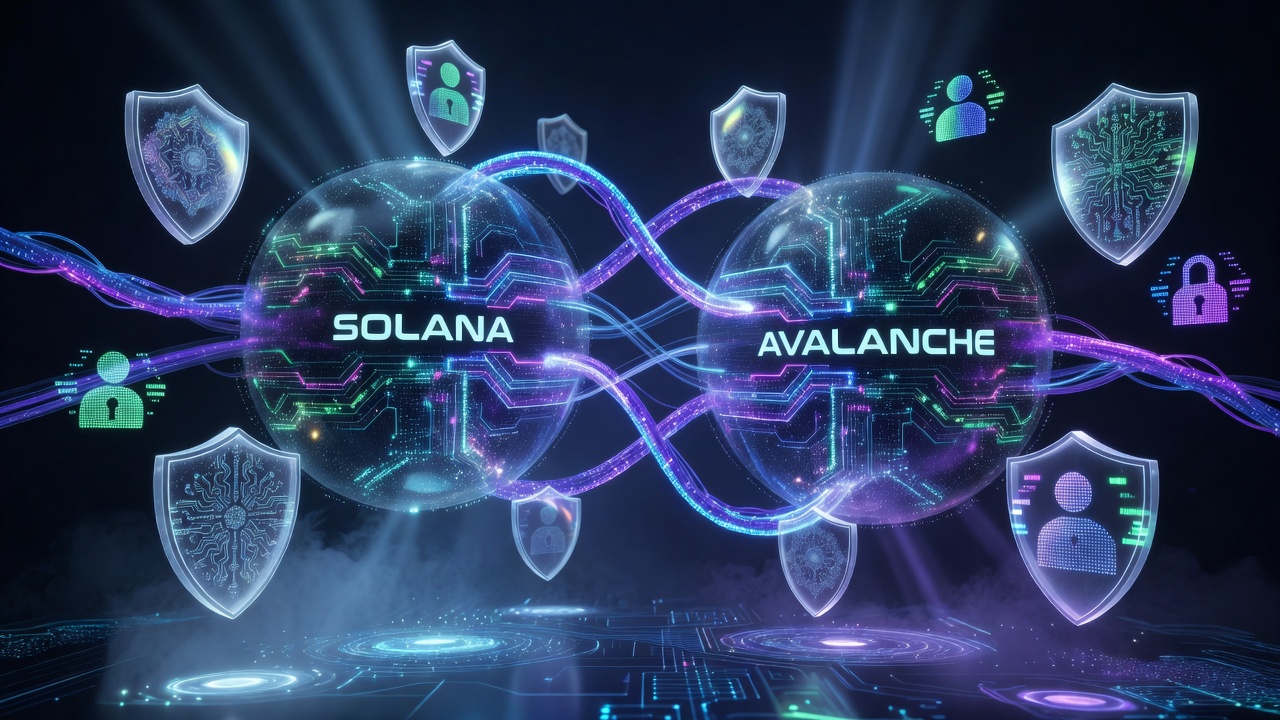
In 2026, privacy enhancements are becoming a critical differentiator for Layer 1 altcoins like Solana and Avalanche (AVAX). As regulatory scrutiny increases and users demand stronger anonymity, these networks are integrating zero-knowledge (ZK) proofs and confidential transaction mechanisms without sacrificing their signature high throughput and low fees. The evolution reflects a broader industry shift where transparency once prized for security now clashes with user expectations for financial privacy in decentralized systems.
Unlike earlier privacy-focused chains that often traded scalability for anonymity, Solana and AVAX are evolving to deliver both. This article examines the specific implementations, real-world applications, upcoming technical upgrades planned for 2026, and practical guidance for developers and users seeking to leverage these features. By exploring comparisons, use cases, and potential pitfalls, readers will gain a complete understanding of how these enhancements position the two networks competitively.
Understanding the Growing Need for Privacy in 2026
Blockchain adoption has accelerated across finance, supply chains, and digital identity, yet public ledgers expose every transaction detail. In 2026, this visibility creates risks including targeted attacks, competitive intelligence leaks, and regulatory overreach. Privacy protocols address these by enabling selective disclosure while preserving auditability where required. Both Solana and AVAX recognize that high-performance networks must now incorporate anonymity layers to retain users migrating from slower but more private alternatives.
Zero-knowledge technology forms the backbone of these upgrades. ZK proofs allow verification of transaction validity without revealing amounts, sender, or receiver. This maintains network integrity and prevents double-spending while shielding user data. The challenge lies in implementing these proofs efficiently so they do not increase fees or reduce transaction speeds below competitive thresholds.
Privacy Protocols on Solana in 2026
Solana has historically prioritized speed, but 2026 sees the rollout of advanced ZK integrations. Developers are leveraging zk-SNARKs to enable private token transfers while maintaining the network's 65,000+ TPS capability. Confidential transactions allow users to hide amounts and addresses, implemented via programs that verify balances without revealing data on-chain. These programs run within Solana's runtime environment, utilizing parallel execution to keep latency low.
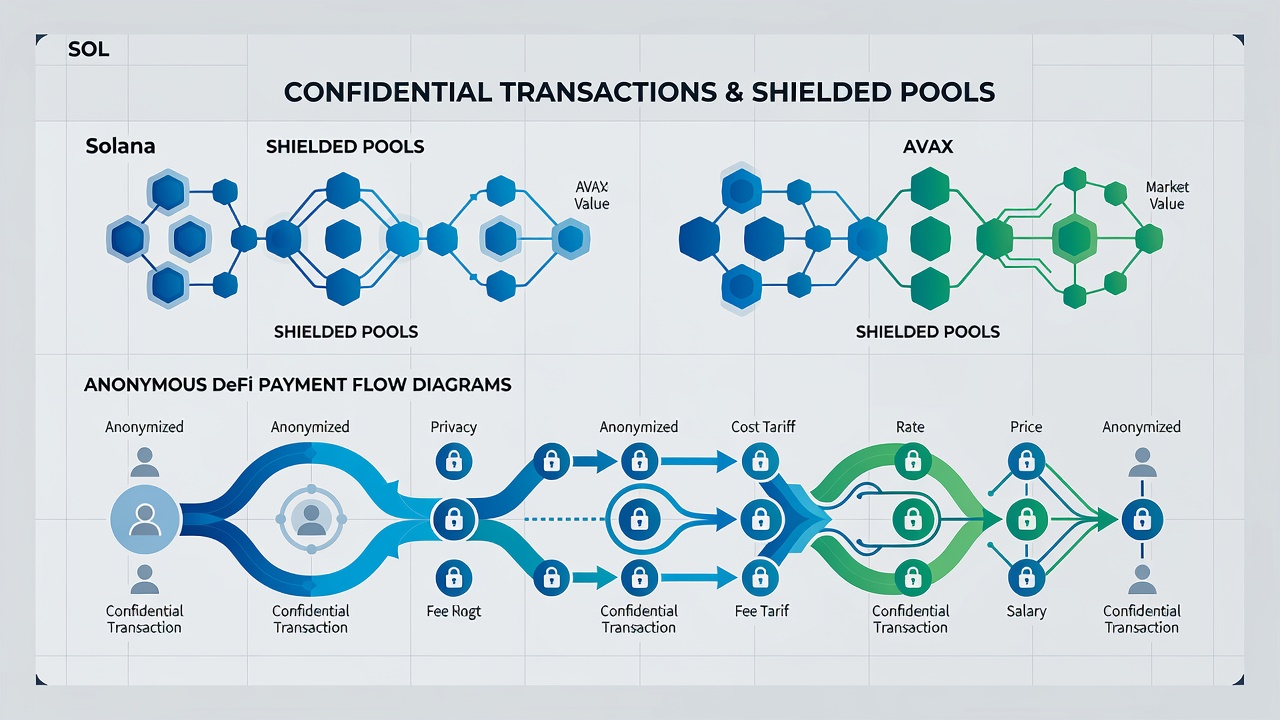
Key features include shielded transaction pools similar to those in other ecosystems but optimized for Solana's parallel processing. Users can opt into privacy modes for specific transfers, creating a hybrid public-private experience. Upcoming tools also support private smart contract interactions, letting DeFi protocols hide position sizes during trades. These upgrades are expected to boost adoption in privacy-sensitive sectors such as gaming economies and institutional treasury management.
Privacy Features on Avalanche (AVAX)
Avalanche's subnet architecture provides unique flexibility for privacy. In 2026, AVAX is advancing its zero-knowledge virtual machine integrations, enabling custom subnets with built-in shielded pools. Confidential transactions on AVAX use homomorphic encryption techniques to support private DeFi operations such as lending and yield farming without exposing user balances.
This approach allows AVAX to differentiate from competitors by offering modular privacy that can be toggled per subnet, preserving the main chain's public transparency where needed. Subnet operators can enforce privacy rules tailored to specific industries, such as healthcare data sharing or private voting systems. The result is a versatile platform that balances openness with confidentiality across diverse applications.
Comparing Implementations: Confidential Transactions vs Shielded Pools
Both networks employ variations of confidential transactions and shielded pools, but execution differs significantly. Solana focuses on lightweight ZK circuits for minimal overhead, while AVAX emphasizes subnet-level isolation for enhanced security. The following list highlights key distinctions:
- Solana: Prioritizes speed with batch ZK proofs; ideal for high-frequency trading apps and real-time payments where milliseconds matter.
- AVAX: Offers greater customization; better suited for enterprise-grade private payments and regulated environments requiring audit trails on demand.
- Throughput Impact: Solana maintains near-native TPS even with privacy enabled, whereas AVAX subnets can scale independently without affecting the primary chain.
- Fee Structure: Both keep fees minimal, though Solana's model benefits from its fee market design that remains stable under load.
These differences help each chain carve distinct market positions while appealing to developers who value either raw performance or architectural flexibility.
Real-World Use Cases in DeFi and Payments
In DeFi, private lending protocols on Solana allow anonymous borrowing without exposing collateral details to front-running bots. Traders can execute large positions discreetly, reducing slippage risks. On AVAX, shielded pools facilitate compliant private stablecoin transfers for cross-border payments, enabling businesses to move funds without revealing counterparties. Developers can integrate these features using official SDKs from Solana and Avalanche.
Additional examples include anonymous payroll solutions where companies distribute salaries privately, privacy-preserving DEX liquidity provision that hides pool contributions, and confidential NFT marketplaces protecting buyer identities. These applications demonstrate how privacy layers unlock new economic activity while preserving the speed and cost advantages that made Solana and AVAX popular initially.
Technical Upgrades Planned for 2026 and Adoption Impact
Planned upgrades include enhanced ZK rollup compatibility on Solana and improved encryption standards on AVAX subnets. Solana's roadmap features native support for recursive ZK proofs that further compress verification data. AVAX plans to introduce privacy-focused precompiles that simplify shielded pool creation for subnet developers. These changes are projected to accelerate adoption by addressing user concerns over traceability while sustaining low fees.
The impact includes increased developer activity, user migration from less private alternatives, and stronger positioning in institutional markets. As more protocols adopt these tools, network effects will compound, making both chains more attractive for long-term ecosystem growth.
Practical Steps for Developers
Developers interested in building with these privacy features should follow a structured approach. First, review the latest documentation and join community testnets to experiment with ZK circuits. Next, prototype a simple confidential transfer contract using provided templates. Then, conduct security audits focusing on proof generation efficiency. Finally, deploy to mainnet with gradual rollout, monitoring gas usage and user feedback. Resources at Solana documentation and Avalanche Labs provide starting points and sample code.
Common Mistakes to Avoid
Teams often underestimate the complexity of integrating ZK proofs, leading to bloated transaction sizes. Another frequent error is neglecting optional compliance features, which can invite regulatory issues later. Always test privacy modes under realistic load conditions and avoid assuming default settings will suffice for production use.
FAQ: Regulatory Risks and Developer Implementation
What regulatory risks exist with these privacy features?
Privacy tools may attract scrutiny from bodies like the SEC, but both networks design implementations with optional compliance hooks to mitigate risks and allow selective disclosure when legally required.
How can developers implement these features?
Start by reviewing documentation, then test ZK circuits in devnets before mainnet deployment. Always audit smart contracts for vulnerabilities and consider phased rollouts to gather performance data.
Will privacy features increase transaction fees significantly?
Current implementations aim to keep overhead minimal, preserving the low-fee advantage that defines both networks in 2026.
Can existing dApps easily add privacy support?
Many protocols can integrate via SDK updates, though full shielded functionality may require architecture changes depending on the use case.
Conclusion
Privacy enhancements on Solana and AVAX represent a pivotal evolution for Layer 1 altcoins in 2026. By combining robust anonymity tools with unmatched speed and cost efficiency, these networks are well-positioned to lead the next wave of blockchain adoption across DeFi, payments, and beyond.


No comments yet. Be the first!