 CryptoChain Blog
Introduction to RWA Tokenization on Leading L1 Altcoins
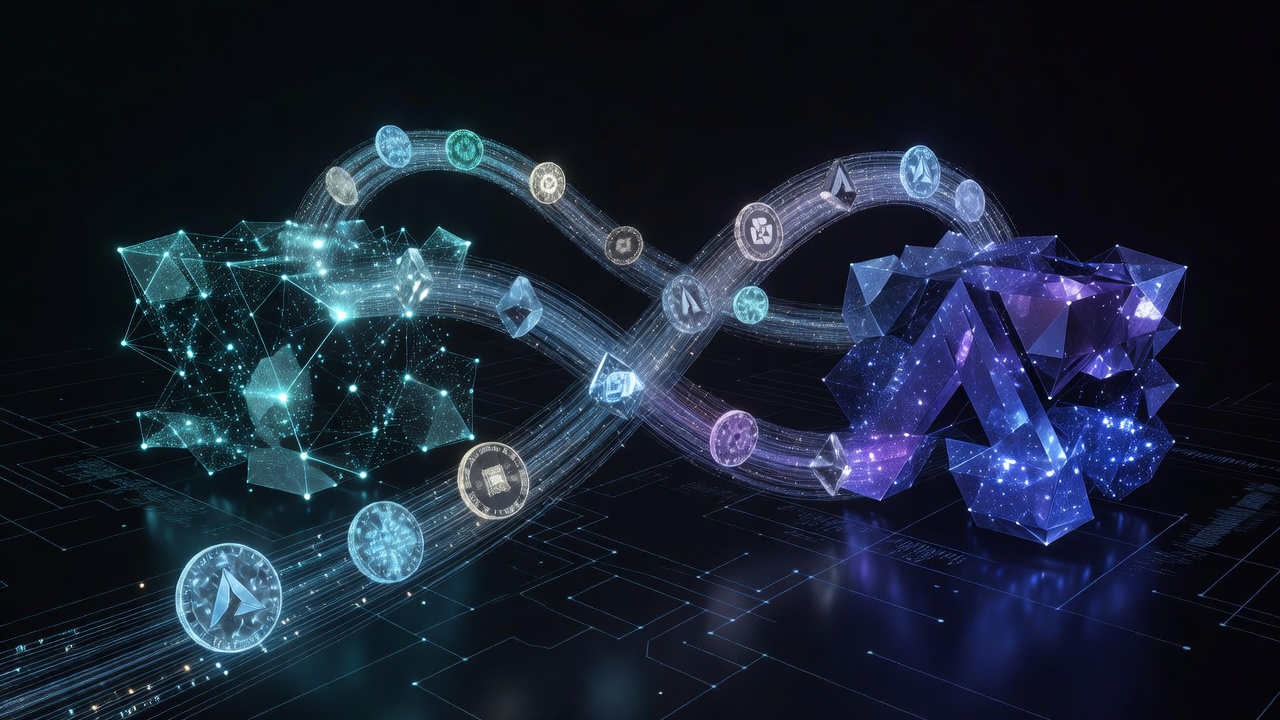
Real-world asset (RWA) tokenization is transforming how investors access traditional markets through blockchain technology. In 2026, Solana and Avalanche (AVAX) stand out as premier Layer 1 altcoins enabling efficient, scalable tokenization of assets like real estate, commodities, and financial instruments. This guide provides actionable strategies for enthusiasts seeking new use cases beyond standard DeFi, focusing on practical investment and development opportunities.
Both chains offer low fees and high throughput, making them ideal for RWAs. Solana excels in speed while AVAX provides strong subnet customization for tailored compliance environments. Developers and investors can leverage these platforms for compliant, liquid tokenized products that bridge traditional finance with decentralized ecosystems. The growing interest stems from fractional ownership models that lower entry barriers for retail participants while attracting institutional capital seeking transparent on-chain records.
Regulatory Considerations for RWA Projects
Navigating regulations is critical for 2026 RWA deployments. Projects must comply with securities laws in key jurisdictions to avoid enforcement actions. The U.S. SEC continues to emphasize disclosure requirements for tokenized assets, similar to traditional offerings, requiring clear identification of underlying asset rights and redemption mechanisms.
In Europe, MiCA frameworks guide stablecoin and asset token rules, mandating licensing for issuers and custodians. Teams should consult legal experts early in the development cycle. SEC resources offer guidance on digital asset classifications. Non-compliance risks project delays or shutdowns, while proactive adherence can unlock broader market access. Additional considerations include tax reporting obligations and anti-money laundering protocols that vary by region, often requiring integrated KYC solutions within smart contracts.
Smart Contract Templates for RWAs
Reusable templates accelerate development and reduce errors. On Solana, Anchor framework templates support tokenized bonds with built-in compliance hooks for automated reporting. AVAX uses Solidity-based contracts optimized for subnets, enabling custom governance for asset ownership transfers and voting rights.
Key features include KYC integration via oracles, dividend distribution logic tied to asset performance, and oracle feeds for real-time valuation updates. Open-source repos from established protocols provide starting points, reducing audit costs and time-to-market. Security best practices emphasize modular design, allowing independent verification of compliance modules before full deployment. Developers often incorporate upgradeable contract patterns to adapt to evolving regulatory standards without disrupting existing token holders.
Liquidity Mechanisms and Market Access
Liquidity is essential for RWA success and sustained adoption. Automated market makers on both chains allow fractional ownership trading with minimal slippage. Solana's Jupiter aggregator and AVAX's Trader Joe provide deep pools for tokenized real estate and commodities, facilitating seamless entry and exit for participants.
Wrapped asset bridges enhance cross-chain liquidity, connecting Solana and AVAX ecosystems with Ethereum-based protocols. Institutional participants often use permissioned pools with yield incentives to bootstrap trading volume in early stages. Additional mechanisms include staking programs that reward long-term holders and order book integrations for larger block trades. These approaches create robust secondary markets that maintain price discovery aligned with underlying asset values.
Performance Comparison: Solana vs AVAX in 2026
Solana delivers sub-second finality and thousands of TPS at minimal cost, suiting high-frequency RWA trading scenarios. AVAX subnets offer customizable throughput and EVM compatibility for easier migration from Ethereum environments.
Benchmarks from 2026 show Solana handling larger RWA volumes with lower latency, while AVAX excels in complex compliance logic via dedicated subnets. Choose based on asset type and user base: Solana for speed-focused consumer applications and AVAX for enterprise-grade customization. Factors like network uptime, developer tooling maturity, and ecosystem partnerships further influence selection decisions in live deployments.
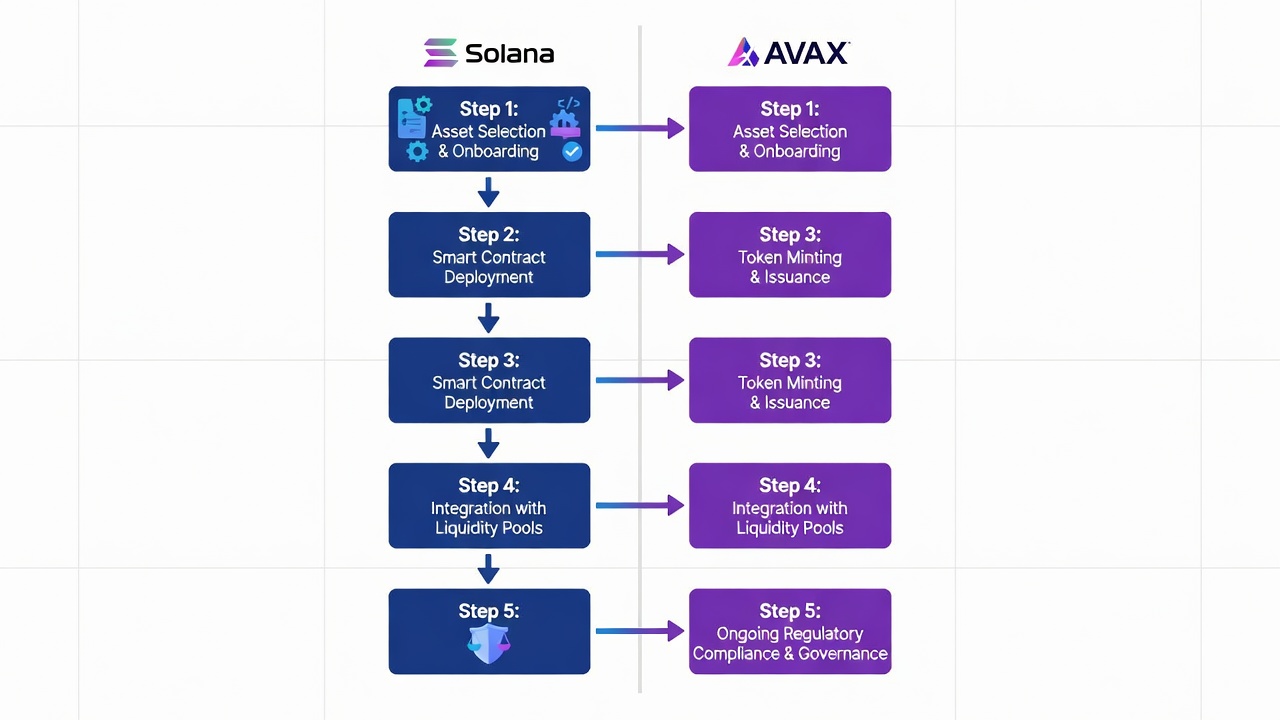
Step-by-Step Examples of Tokenizing Assets
Real Estate Tokenization on Solana:
- Conduct legal structuring and obtain necessary licenses from relevant authorities to establish the tokenized vehicle.
- Deploy an SPL token contract with metadata for property details, including location, valuation history, and ownership structure.
- Integrate oracles for ongoing valuation updates sourced from trusted appraisal services.
- Launch on a DEX with liquidity incentives to encourage initial trading activity and price discovery.
- Enable fractional ownership through wallet integrations that support multi-signature approvals for governance decisions.
Commodity Tokenization on AVAX:
- Select a subnet for isolated compliance to meet jurisdiction-specific rules without affecting the main network.
- Create an ERC-20 equivalent with redemption rights backed by physical reserves held by licensed custodians.
- Set up custodian partnerships for physical backing verification through regular audits and on-chain attestations.
- Implement automated reporting for regulators using built-in data export functions.
- Facilitate secondary trading via AMMs while monitoring for compliance triggers such as large transfers.
2026 Case Examples and Investment Opportunities
Recent projects demonstrate viability across multiple asset classes. Tokenized real estate platforms on Solana have facilitated significant transaction volumes, offering yields through rental distributions paid directly to token holders. AVAX-based commodity tokens provide exposure to gold and oil with transparent on-chain tracking that reduces counterparty risk.
Altcoin enthusiasts can participate via staking tokenized shares or developing custom dApps that integrate with existing protocols. Focus on projects with audited contracts and clear regulatory paths for sustainable returns. Opportunities also arise in hybrid models combining RWAs with DeFi primitives like lending pools, creating new yield strategies tailored to risk profiles.
Risks, Mitigation Strategies, and Tools
Common risks include smart contract vulnerabilities, oracle failures, and regulatory shifts. Mitigation involves multi-signature wallets, redundant oracle networks, and regular third-party audits. Useful tools encompass development frameworks like Anchor for Solana and Hardhat for AVAX, alongside monitoring dashboards that track token circulation and compliance metrics.
FAQ: Common Pitfalls in RWA Tokenization
- How do I handle custody? Partner with licensed custodians to maintain asset backing and avoid legal issues while ensuring transparent on-chain proof of reserves.
- What about volatility? Use stable oracles and hedging strategies to stabilize tokenized values against market fluctuations.
- Are there interoperability challenges? Leverage bridges carefully and test cross-chain transfers thoroughly before scaling operations.
- How to ensure liquidity? Seed markets with incentives and target institutional buyers early to build sustainable trading depth.
- What security measures are essential? Implement role-based access controls and conduct frequent penetration testing on all contract components.
Conclusion
Solana and AVAX provide robust foundations for RWA tokenization in 2026. By addressing regulations, using proven templates, following structured processes, and understanding performance trade-offs, investors and developers can unlock significant opportunities in tokenized assets while navigating the evolving landscape responsibly.
No comments yet. Be the first!