 CryptoChain Blog
Introduction
Investing in Layer 1 altcoins such as Solana and Avalanche (AVAX) can deliver substantial returns during bull markets, yet 2026 continues to present elevated volatility driven by macroeconomic shifts, regulatory developments, and network-specific events. This comprehensive guide equips investors with practical risk management tactics designed to minimize downside exposure while allowing participation in these high-growth ecosystems. Readers will learn concrete methods for tracking volatility, diversifying holdings, auditing smart contracts, and maintaining regulatory compliance, supported by real-world examples and decision frameworks.
Real-World Risk Events on L1 Blockchains
Understanding past incidents provides essential context for future preparedness. Solana suffered repeated network outages between 2021 and 2024 caused by transaction congestion and validator issues, resulting in temporary trading halts across decentralized exchanges and lending protocols. These events triggered sharp price corrections and liquidity crunches for SOL holders. Avalanche experienced smart contract exploits in several early DeFi projects during 2022 and 2023, where vulnerabilities in bridge contracts led to millions in losses before patches were deployed. More recently, both chains have navigated flash loan attacks and governance disputes that highlighted the importance of continuous security monitoring. These cases demonstrate that even established Layer 1 networks remain susceptible to technical and market shocks.
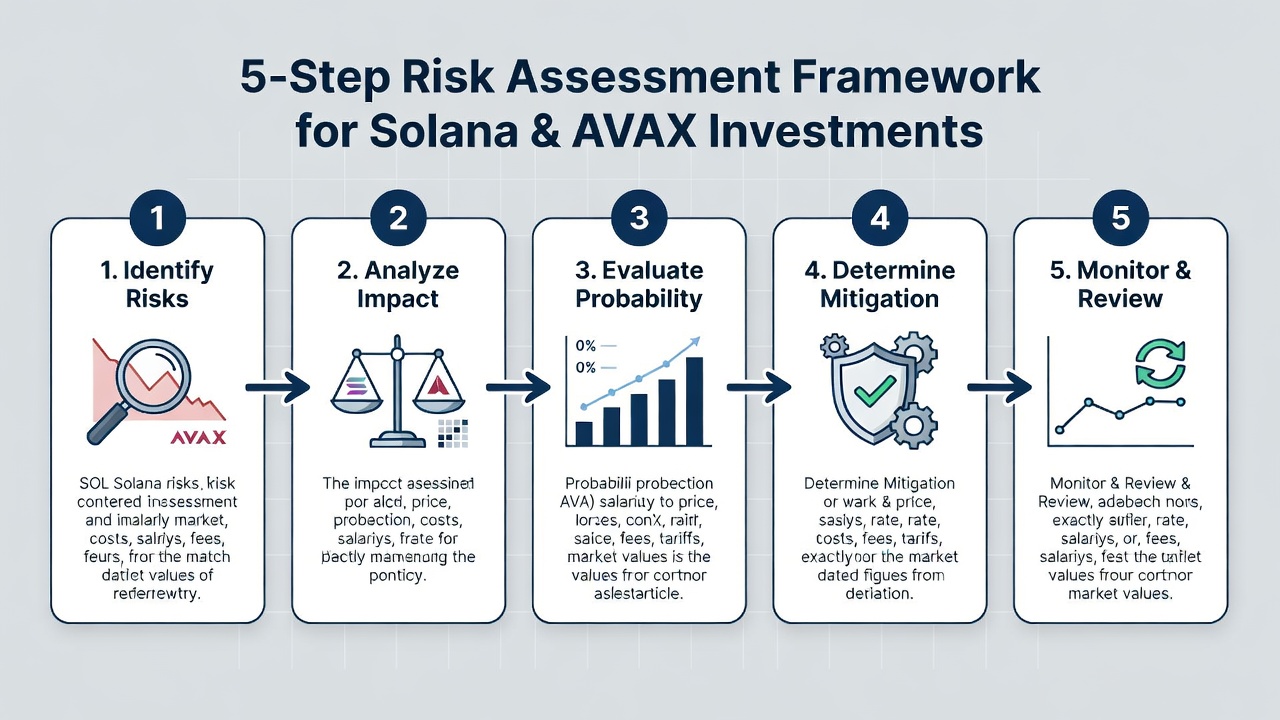
5-Step Risk Assessment Framework
A systematic approach helps investors evaluate exposure before committing capital. Step one requires identifying asset-specific risks such as network congestion, validator centralization, and token unlock schedules. Step two involves quantifying exposure using volatility metrics including standard deviation of returns and correlation with Bitcoin. Step three focuses on smart contract security through review of audit reports and bug bounty activity. Step four examines the regulatory environment in key jurisdictions to anticipate compliance costs or restrictions. Step five establishes ongoing monitoring protocols with automated alerts and quarterly portfolio reviews. Applying this framework consistently reduces emotional decision-making during market stress.
Volatility Tracking Methods
Effective volatility monitoring combines on-chain data with traditional market indicators. Investors should track 30-day and 90-day realized volatility using platforms that aggregate price feeds from multiple exchanges. Monitoring beta relative to Bitcoin reveals how SOL and AVAX respond to broader market moves, while sudden spikes in trading volume often precede large drawdowns. Additional signals include validator uptime statistics for Solana and subnet activity metrics for Avalanche. Setting up custom dashboards that combine these indicators allows for early detection of risk escalation. Weekly reviews of these metrics help investors adjust position sizes before volatility fully materializes.
Portfolio Diversification Tactics
Concentrated bets on single Layer 1 tokens amplify losses during adverse events. A balanced approach spreads allocations across Solana, Avalanche, other established altcoins, stablecoins, and uncorrelated assets such as Bitcoin or traditional equities. Practical guidelines suggest limiting any individual L1 exposure to no more than 10-15 percent of total portfolio value. Investors can further diversify by participating in multiple ecosystems through wrapped tokens or cross-chain bridges while maintaining strict position limits. Rebalancing on a quarterly schedule or when any single asset exceeds its target allocation prevents drift toward excessive risk. Real-world application of these tactics helped many portfolios weather the 2024-2025 correction with smaller drawdowns than undiversified holdings.
Smart Contract Audit Checklists
Before interacting with any protocol on Solana or Avalanche, complete a thorough security review. Begin by confirming that the contract has received audits from at least two reputable firms within the past twelve months. Next, verify the existence of an active bug bounty program with meaningful reward tiers. Examine the code for recurring vulnerabilities such as reentrancy, integer overflows, and improper access controls. Review deployment addresses on block explorers to ensure the audited code matches the live version. Finally, monitor governance forums for proposed upgrades that could introduce new risks. This checklist approach has prevented numerous losses by steering investors away from unaudited or recently modified contracts.
Regulatory Compliance Steps
Regulatory clarity remains fluid across jurisdictions in 2026. Investors should regularly consult official sources including SEC investor guidance and CFTC resources for updates on digital asset classification and reporting requirements. Maintaining detailed transaction records supports tax compliance and audit readiness. Using regulated custodians or self-custody solutions that meet know-your-customer standards further reduces legal exposure. Understanding how different countries treat staking rewards and token swaps helps avoid unexpected liabilities. Proactive compliance protects capital from sudden enforcement actions or forced liquidations.
Common Pitfalls Comparison
| Pitfall | Solana Example | AVAX Example | Mitigation Strategy |
|---|---|---|---|
| Over-concentration | Allocating 40% of portfolio to SOL before 2024 outage | Heavy exposure to single Avalanche DeFi protocol | Cap each chain at 10-15% and rebalance quarterly |
| Ignoring audits | Using unaudited lending dApps during congestion | Interacting with unverified bridge contracts | Require multiple recent audits before use |
| Neglecting exits | No stop-loss during rapid volatility spike | Holding through unexpected regulatory announcements | Predefine profit targets and stop-loss levels |
| Poor custody choices | Leaving large SOL on centralized exchanges | Storing AVAX in hot wallets without multisig | Move majority holdings to hardware or institutional custody |
Custody Best Practices
Secure storage forms the foundation of any risk management plan. Hardware wallets remain the preferred option for amounts exceeding small day-to-day trading needs. Institutional-grade solutions offering multisignature requirements and insurance policies provide additional protection for larger portfolios. Avoiding prolonged storage on centralized exchanges reduces counterparty risk during exchange-specific events. Regular verification of wallet addresses and seed phrase backups prevents permanent loss from simple operational errors.
Exit Strategies
Defining clear exit rules before entering positions prevents panic selling. Establish both profit-taking targets and maximum acceptable loss thresholds for each holding. Use limit orders and trailing stops where supported by exchanges or decentralized protocols. Periodic portfolio reviews allow investors to exit or reduce exposure when fundamental risks increase, such as major network upgrades or regulatory shifts. Documenting these rules in advance promotes disciplined execution.
FAQ
How to handle slippage in trades?
Slippage occurs when market orders execute at prices different from expected quotes. Reduce impact by using limit orders, trading during lower volume periods, or routing through aggregators that split orders across multiple venues. Monitoring order book depth on Solana and Avalanche decentralized exchanges further improves execution quality.
What custody options are safest?
Hardware wallets combined with multisignature setups offer strong security for most retail investors. Institutional custody providers with SOC 2 compliance and insurance add another layer for larger sums. Never store significant holdings exclusively on exchange hot wallets due to historical breach risks.
Best exit strategies?
Combine predefined profit targets with stop-loss orders. Rebalance when portfolio allocations drift beyond stated risk limits. Maintain a portion of holdings in stablecoins to facilitate rapid exits during extreme volatility without incurring additional slippage.
Conclusion
Implementing structured risk management practices enables investors to participate confidently in Solana and Avalanche ecosystems throughout 2026. Consistent application of the five-step framework, thorough diversification, regular audits, and proactive compliance protects capital against both technical failures and market shocks. For additional authoritative information, consult Solana's official documentation and Avalanche network resources. Disciplined risk mitigation ultimately supports sustainable long-term participation in these dynamic blockchain environments.


No comments yet. Be the first!