 CryptoChain Blog
Introduction to Solana and AVAX Governance in 2026
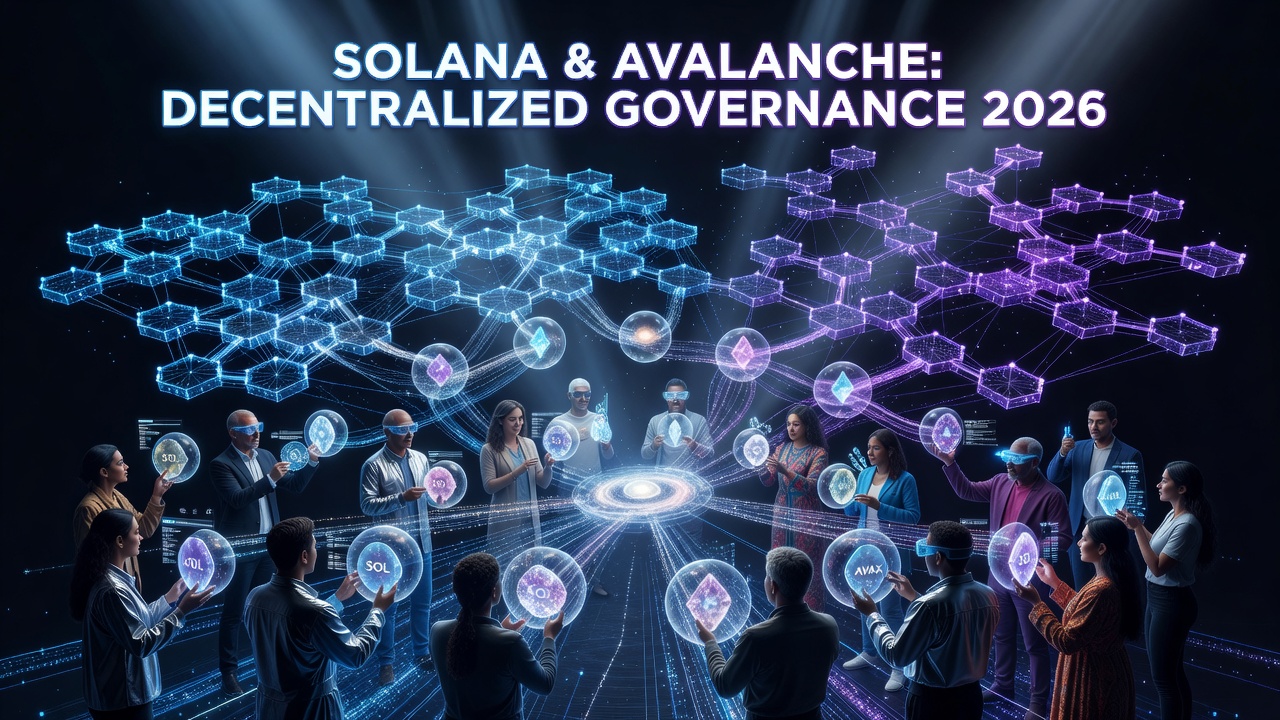
Decentralized governance has become a cornerstone of layer-1 blockchains like Solana and Avalanche (AVAX). In 2026, both ecosystems continue to refine how token holders influence upgrades, treasury allocation, and protocol parameters. This article provides altcoin investors and developers with detailed insights into voting mechanisms, participation metrics, and real-world examples from each network. Governance on these platforms empowers communities to steer development while balancing security and scalability demands that define modern blockchain infrastructure.
Effective governance balances speed, security, and inclusivity. Solana emphasizes rapid iteration through its on-chain tools, while Avalanche leverages a hybrid model that incorporates both on-chain votes and off-chain signaling. Understanding these differences helps participants make informed decisions about staking and proposal involvement. As adoption grows, governance structures directly impact network resilience and long-term value accrual for token holders.
Comparing On-Chain vs Off-Chain Governance Models
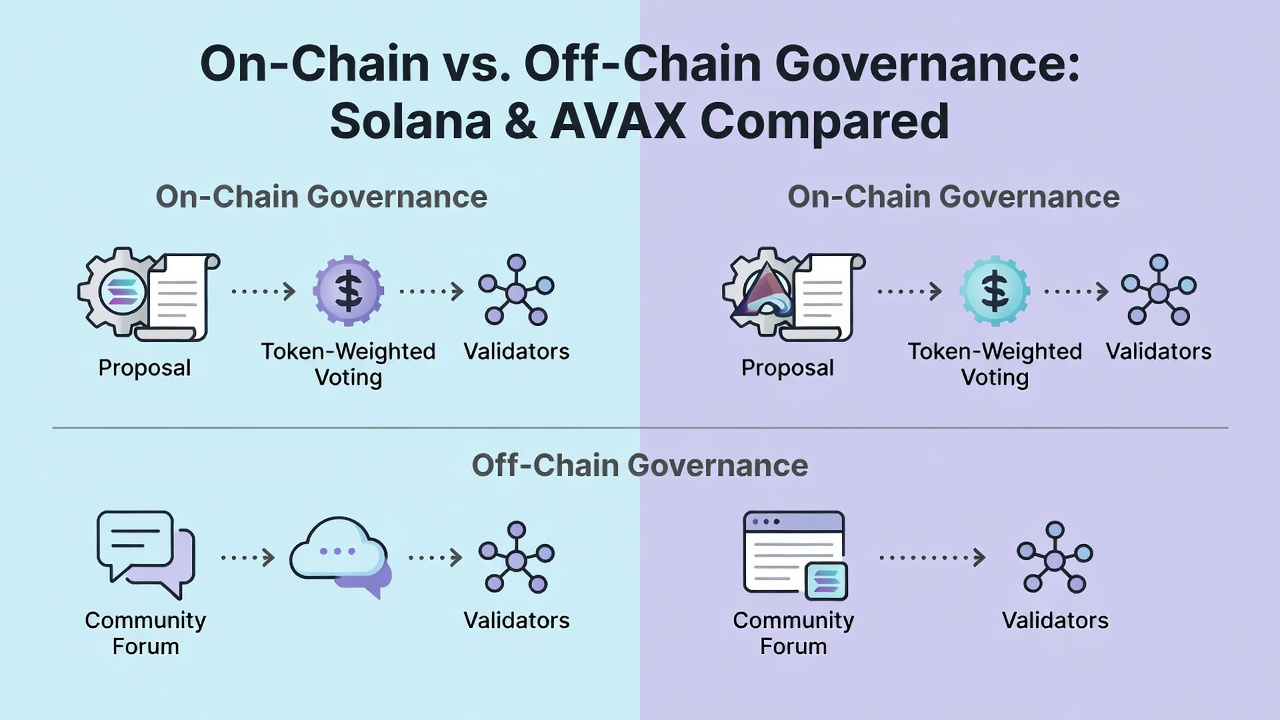
Solana primarily uses on-chain governance via the Realms platform and SPL governance programs. Proposals are submitted directly on-chain, and token-weighted voting occurs transparently. This approach minimizes intermediaries but requires users to hold and stake SOL to participate meaningfully. On-chain systems provide immutable audit trails that enhance trust among participants.
Avalanche employs a hybrid system. Core upgrades often begin with off-chain discussions on forums before moving to on-chain votes through the Avalanche Foundation or subnet-specific governance. This flexibility allows broader community input while maintaining technical efficiency. Hybrid approaches can accelerate consensus on complex topics by first gathering qualitative feedback.
Key differences include execution speed and accessibility. On-chain models like Solana’s offer immutable records but can face high transaction costs during congestion. Hybrid models reduce barriers yet introduce coordination challenges. For developers evaluating which chain to build on, these distinctions affect how quickly feature requests translate into deployed code.
Voting Mechanisms and Proposal Processes
On Solana, a typical proposal follows these steps: a token holder creates a governance proposal using the Realms DAO interface, the community discusses it, and voting occurs with SOL or staked tokens. Quorum requirements and timelocks ensure legitimacy before any changes execute automatically through smart contracts.
Avalanche proposals often start in the Avalanche Community Forum before advancing to on-chain execution via the AVAX token. Subnet operators and validators play a larger role in final implementation compared to Solana’s more direct token-holder model. Both systems require clear documentation to prevent ambiguity during implementation.
- Submit a proposal with clear rationale and technical specifications
- Engage in forum discussions for feedback and iteration
- Stake tokens to increase voting weight and signal commitment
- Monitor quorum and voting deadlines closely
- Execute approved changes through verified smart contracts
- Track post-implementation outcomes for future improvements
Token Holder Participation Rates and 2026 Examples
Participation metrics reveal engagement levels across both ecosystems. Solana has seen average voter turnout around 15-20% of circulating supply in major 2026 votes, driven by large staking pools and institutional participants. Avalanche reports similar figures, with higher engagement on subnet-related proposals that directly affect validator economics.
A notable Solana example in early 2026 involved a governance vote to adjust priority fees for network stability. The proposal passed with strong support from institutional stakers who prioritized long-term scalability. On Avalanche, a treasury allocation decision for developer grants demonstrated how off-chain signaling can accelerate on-chain ratification while maintaining transparency.
These examples illustrate how governance shapes protocol evolution. Data from 2026 shows that proposals with extensive pre-vote discussion achieve higher approval rates and smoother execution.
Case Studies of Recent Upgrades Driven by Governance
In March 2026, Solana governance approved an upgrade to its fee market structure, improving predictability for developers building high-throughput applications. Community discussions highlighted concerns over spam transactions, leading to targeted parameter changes that reduced network load without compromising decentralization.
Avalanche’s governance facilitated a subnet expansion vote that integrated new institutional partners. Token holders weighed risks of centralization against growth opportunities, resulting in a balanced implementation plan that preserved validator incentives while expanding use cases in decentralized finance and gaming.
Another 2026 case on Avalanche involved updating cross-subnet communication standards after extensive forum debate. The resulting upgrade enhanced interoperability and demonstrated the value of hybrid governance in coordinating technical changes across diverse validator sets.
Practical Steps for Submitting or Voting on Proposals
Users can begin by connecting a compatible wallet to Realms for Solana or the official Avalanche governance portal. Verify token balances and staking status before engaging. Always review proposal documentation and participate in preliminary discussions to avoid uninformed votes that could harm network health.
Developers should prepare detailed technical specs and consider economic impacts on tokenomics. Engaging early with validators and community moderators increases proposal visibility and success rates. Testing proposals in sandbox environments where possible further reduces implementation risks.
Potential Risks Including Centralization Concerns
Both networks face risks of centralization when large staking entities dominate votes. Solana has addressed this through delegation programs that encourage broader distribution of voting power among smaller holders. Avalanche mitigates similar issues by empowering subnet communities with localized governance rights that prevent single-entity control.
Additional risks include low participation leading to plutocracy and smart-contract vulnerabilities in on-chain execution. Users should diversify voting power across multiple wallets and monitor treasury management transparency through public dashboards. Regular audits and community oversight remain essential safeguards.
Staking Influence and Treasury Management Practices
Staking directly amplifies governance influence on both chains. On Solana, delegated stakes allow smaller holders to pool power through trusted validators, while Avalanche’s model ties staking rewards to active participation in subnet decisions. Treasury management involves community votes on grant allocations that fund ecosystem growth without depleting reserves unsustainably.
Best practices include setting clear milestones for funded projects and requiring periodic reporting. This approach maintains accountability and aligns treasury spending with long-term network objectives.
FAQ: Common Queries on Staking Influence and Treasury Management
How does staking affect voting power on Solana?
Staking SOL directly increases your voting weight in governance proposals, though delegation to validators can amplify influence for smaller holders seeking efficient participation.
What role does the treasury play in AVAX governance?
The Avalanche treasury funds ecosystem initiatives, with token holders voting on allocations to ensure sustainable development and grant programs that support innovation.
Can off-chain votes override on-chain decisions?
No, but off-chain signaling often shapes which proposals reach the on-chain stage, creating a collaborative filter process that improves proposal quality.
Are there minimum token requirements to submit proposals?
Both ecosystems impose thresholds to prevent spam, typically requiring a modest amount of native tokens plus community support signatures for visibility.
How can users monitor treasury spending effectively?
Public dashboards and regular community reports provide transparency, allowing token holders to track fund usage and hold teams accountable through future votes.
Conclusion
Solana and Avalanche governance models in 2026 offer distinct pathways for community-driven evolution. By understanding voting mechanics, participation trends, and risk factors, investors and developers can actively shape the future of these leading layer-1 blockchains. Active involvement strengthens decentralization and long-term network resilience while fostering innovation across the broader ecosystem.

No comments yet. Be the first!