 CryptoChain Blog
Introduction to Solana and Avalanche Tokenomics in 2026
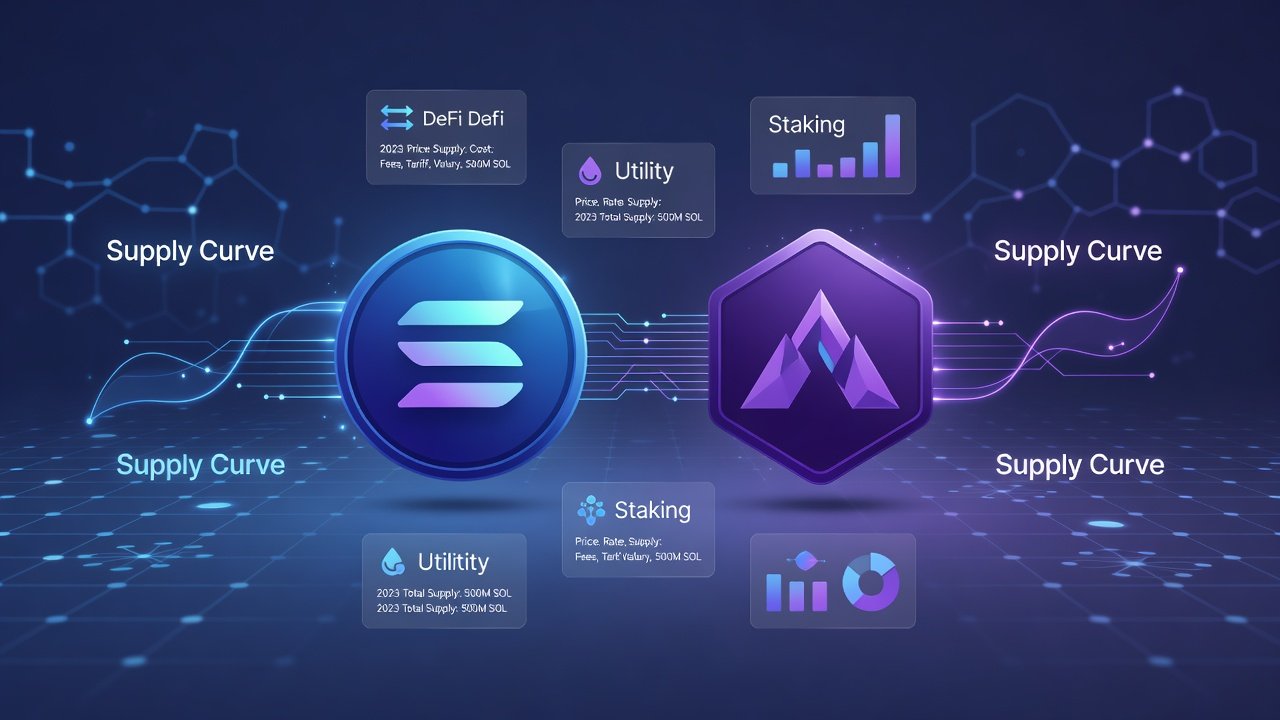
As Layer-1 blockchains mature, Solana (SOL) and Avalanche (AVAX) continue to differentiate themselves through sophisticated token utility models that directly influence DeFi participation and investor returns. In 2026, the focus has shifted toward how these mechanisms convert network activity into tangible value, particularly via supply management, inflation dynamics, and staking incentives. Both tokens serve as the backbone for transaction fees, collateral in lending markets, liquidity provision, and governance decisions, yet their designs reflect contrasting philosophies on scarcity and reward distribution. This analysis draws on on-chain patterns to explore how SOL and AVAX drive sustainable DeFi ecosystems while offering investors clear frameworks for evaluating long-term potential. Understanding these elements is essential for anyone navigating the competitive L1 landscape where utility determines whether a token merely facilitates transactions or accrues meaningful holder value over time.
Solana Tokenomics: Supply Dynamics and Inflation Curve
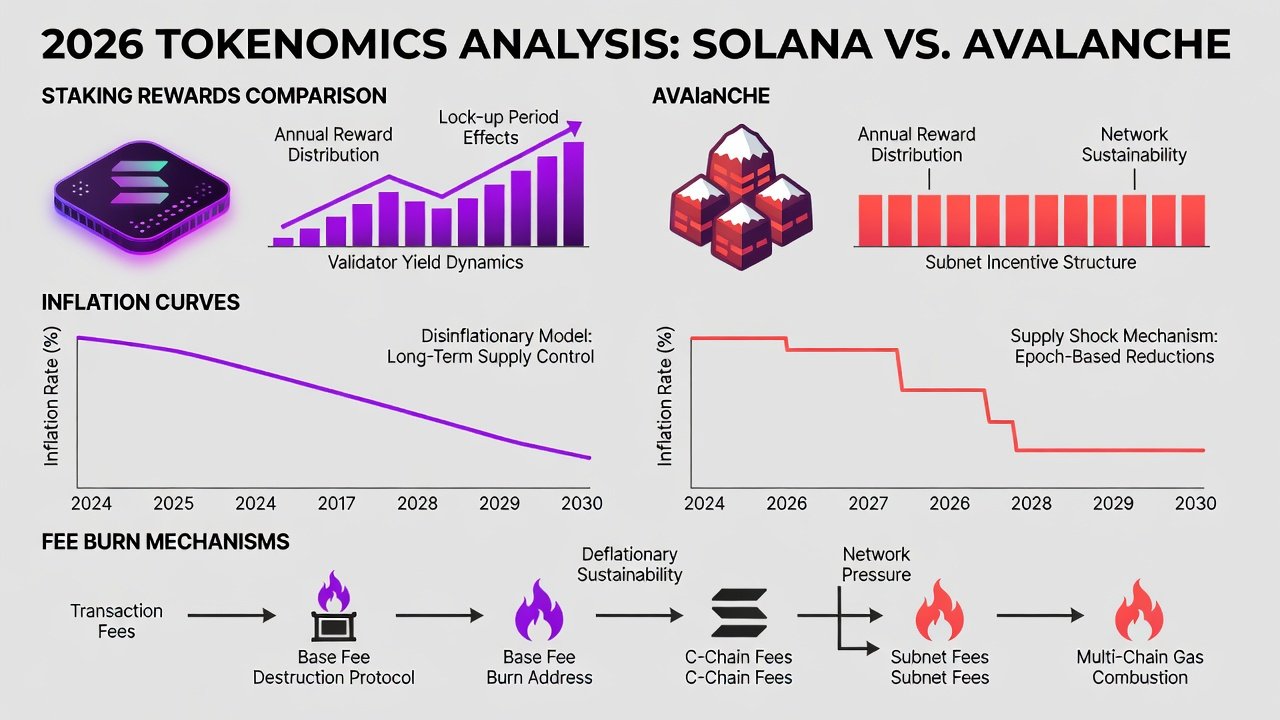
Solana maintains an uncapped supply with a disinflationary schedule that gradually reduces the annual issuance rate, creating predictable pressure toward equilibrium. The fee-burn mechanism activates on every transaction, permanently removing a portion of SOL from circulation and counterbalancing new issuance. This model rewards consistent network usage by tightening supply as adoption grows. Staking forms the core security layer, with rewards derived primarily from inflation that decreases annually until reaching a terminal rate. Validators and delegators share these rewards proportionally, encouraging broad participation that strengthens the network against attacks. On-chain data shows staking participation often exceeds 60 percent of circulating supply, underscoring its role as a primary utility driver.
Avalanche Tokenomics: Fixed Supply and Burn-Driven Scarcity
Avalanche operates with a capped maximum supply, front-loading issuance before transitioning to a regime where fee burns frequently outpace new tokens created. This structure fosters stronger deflationary tendencies during periods of high throughput across its primary network and subnets. Staking rewards blend inflationary issuance with a share of transaction fees, distributed to validators securing the platform. The multi-chain architecture allows AVAX to serve distinct roles in different subnets while maintaining unified governance. Investors benefit from a model that ties value accrual more directly to actual economic activity rather than perpetual dilution, making AVAX particularly attractive in high-volume DeFi environments.
Side-by-Side Comparison of Supply, Inflation, and Staking Structures
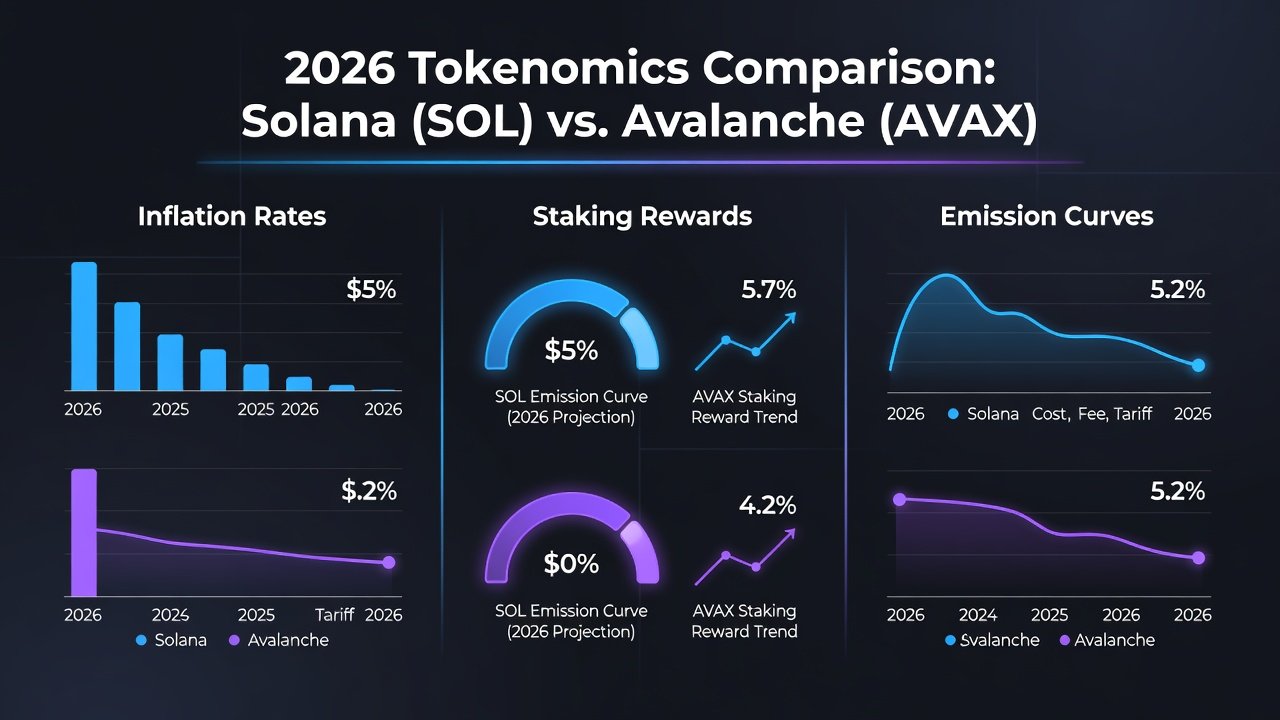
When placed side by side, Solana and Avalanche reveal complementary strengths. Solana emphasizes high-speed execution with a tapering inflation curve that still provides meaningful staking yields, while Avalanche prioritizes scarcity through aggressive burns that can lead to net supply reduction. Staking on Solana often features shorter unbonding periods, improving capital efficiency, whereas Avalanche staking integrates deeply with its subnet ecosystem for diversified reward streams. Both networks publish transparent on-chain metrics that allow real-time assessment of inflation versus burn rates. Practical differences emerge in how each handles congestion: Solana uses priority fees that enhance burns during peak activity, and Avalanche leverages its consensus design for consistent fee distribution. These nuances matter for investors constructing portfolios that balance yield generation with supply preservation.
Practical Token Utility in Lending Protocols and Liquidity Pools
SOL and AVAX demonstrate clear utility when deployed in DeFi lending markets. Users lock native tokens as collateral to borrow stablecoins or other assets, simultaneously earning staking rewards on the locked position. This dual-yield approach optimizes capital without requiring separate positions. In liquidity pools, both tokens bootstrap trading pairs on decentralized exchanges, allowing providers to capture swap fees plus native staking yields through liquid staking derivatives. Real examples include SOL used in automated market makers for high-frequency trading pairs and AVAX deployed across cross-subnet bridges that facilitate seamless asset movement. These use cases convert passive holdings into active contributors to network security and liquidity depth.
Governance Voting and Decision-Making Power
Beyond financial utility, SOL and AVAX grant direct governance rights. Token holders vote on protocol upgrades, treasury allocations, and parameter adjustments that shape future economics. On Solana, community proposals frequently address fee structures and staking thresholds, while Avalanche governance influences subnet expansion and burn-rate policies. Active participation requires understanding proposal impacts on supply dynamics, turning governance into a strategic tool for long-term value protection. Investors who engage consistently can influence outcomes that favor sustainable inflation curves and enhanced utility features.
Investor Tips for Long-Term Holding Strategies and Yield Optimization
- Track quarterly inflation schedules and burn volumes using public dashboards to anticipate net supply shifts before they affect market pricing.
- Layer staking with DeFi positions such as collateralized lending or liquidity provision to compound returns while maintaining exposure to governance rights.
- Diversify staking across multiple validators or subnets to reduce single-point risks and capture varied reward profiles on each chain.
- Monitor token velocity indicators, which reveal whether tokens circulate rapidly in speculation or remain locked in productive uses like staking and collateral.
- Rebalance portfolios annually based on evolving subnet activity for Avalanche or congestion patterns for Solana to maintain optimal yield exposure.
- Utilize liquid staking tokens to keep assets productive in additional DeFi strategies without sacrificing base staking rewards.
Evaluating Risks and Common Pitfalls to Avoid
Long-term holders should remain aware of risks such as governance capture by large stakeholders or unexpected changes to burn mechanics. Over-concentration in a single chain can amplify protocol-specific events, while ignoring validator performance metrics may erode staking efficiency. A disciplined approach involves regular review of on-chain health indicators and avoiding yield-chasing without understanding underlying token velocity implications.
Common Questions on Fee Burns and Token Velocity: FAQ
How do fee burns affect long-term token value?
Fee burns permanently reduce circulating supply, creating deflationary pressure that supports value when network usage scales, as observed across both Solana and Avalanche ecosystems during periods of elevated transaction volume.
What is token velocity and why does it matter for investors?
Token velocity tracks the frequency of token circulation. Lower velocity often signals that tokens are held for staking or collateral rather than traded frequently, which can strengthen price stability and long-term appreciation potential.
Are staking rewards sustainable beyond 2026?
Sustainability improves when rewards derive from a mix of inflation and real fee revenue, allowing both networks to adjust parameters through governance as usage patterns evolve.
How should investors measure effective yield across chains?
Effective yield accounts for inflation dilution, burn offsets, and additional DeFi returns; comparing net figures on transparent dashboards helps identify which chain currently offers superior risk-adjusted returns.
Conclusion
Solana and Avalanche showcase refined tokenomics that link utility directly to DeFi value creation through balanced supply controls and staking incentives. By applying the detailed comparisons and strategies presented, investors can make informed decisions that align holding periods with network growth trajectories. Continued engagement with official resources such as Solana's official site and Avalanche documentation provides ongoing updates essential for adapting strategies in this dynamic sector.
No comments yet. Be the first!