 CryptoChain Blog
Introduction: Altcoins Beyond Speculation in 2026
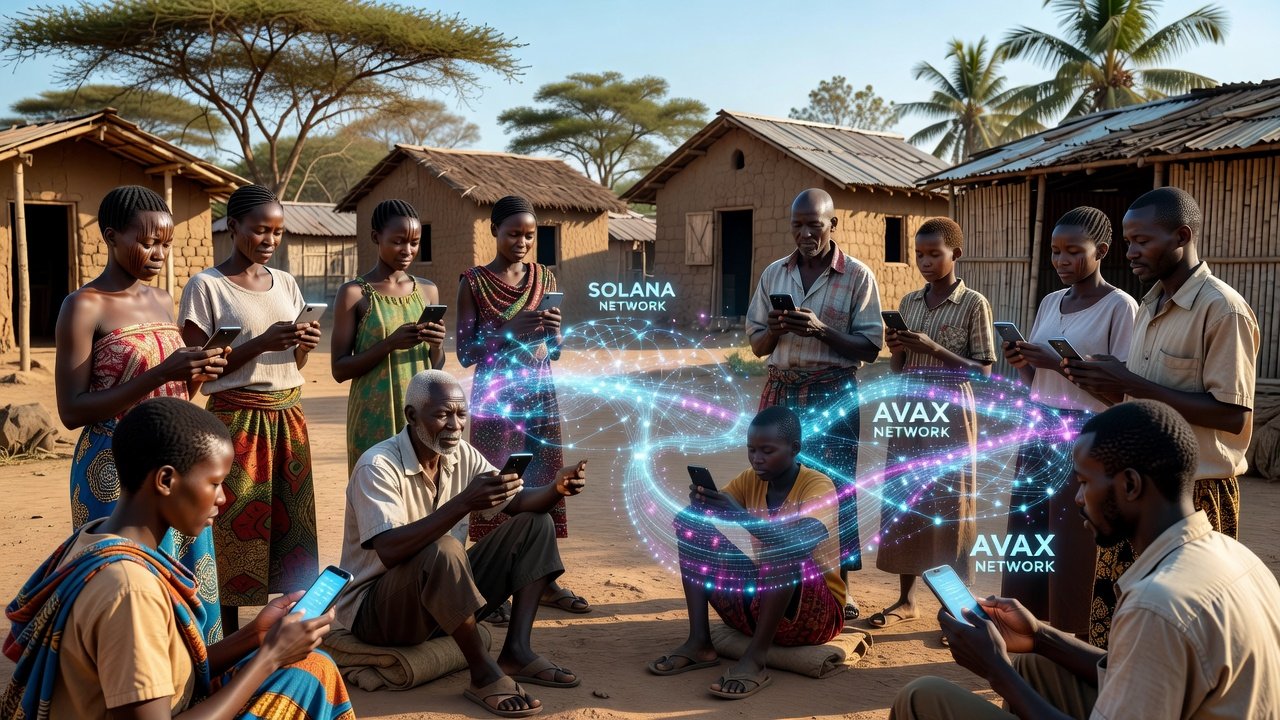
In 2026, blockchain technology continues shifting focus from price speculation to tangible real-world impact. Solana and Avalanche (AVAX) stand out as layer-1 networks accelerating financial inclusion for unbanked populations across emerging markets. These platforms deliver high throughput and minimal fees, making them suitable for micro-transactions that traditional banks frequently overlook or deem unprofitable. Financial inclusion remains a pressing global issue, with hundreds of millions of adults still lacking access to basic banking services according to ongoing World Bank assessments. Projects built on Solana and AVAX bridge this gap through decentralized applications tailored specifically to local economic realities in Southeast Asia and Africa. This article examines the mechanisms, challenges, and opportunities these networks provide, offering developers and users concrete guidance for meaningful adoption.
Real-World Use Cases: Micro-Lending Platforms and Remittance Solutions
Several decentralized platforms now leverage Solana's rapid transaction speeds for peer-to-peer micro-lending initiatives. In Southeast Asia, applications enable smallholder farmers to secure modest loans collateralized by tokenized assets without traditional intermediaries. These systems process approvals within minutes rather than days. In Africa, AVAX-based protocols facilitate instant cross-border remittances, allowing migrant workers to send funds home at significantly reduced costs compared to conventional money transfer operators. Real-world examples from Kenya illustrate how farmers use mobile wallets integrated with Solana dApps to receive seasonal credit for seeds and equipment. Indonesian gig workers similarly benefit from AVAX-powered remittance corridors that settle in under 30 seconds. These implementations demonstrate blockchain's capacity to foster economic empowerment at scale by removing geographic and bureaucratic barriers that have historically excluded rural and low-income populations.
Integration Challenges with Local Regulations
Adopting these technologies requires careful navigation of varied regulatory environments. Many African jurisdictions maintain ambiguous cryptocurrency policies that complicate dApp launches and user onboarding. Southeast Asian governments have advanced clearer guidelines in recent years, yet compliance with anti-money laundering and counter-terrorism financing standards remains mandatory. Developers must integrate hybrid KYC processes into smart contracts while preserving user privacy where possible. Partnerships with licensed local financial entities often prove essential for scaling operations. Failure to address these regulatory nuances can result in project delays or restrictions, underscoring the importance of legal due diligence before deployment in any target market.
Transaction Costs Versus Traditional Banking: Detailed Comparison
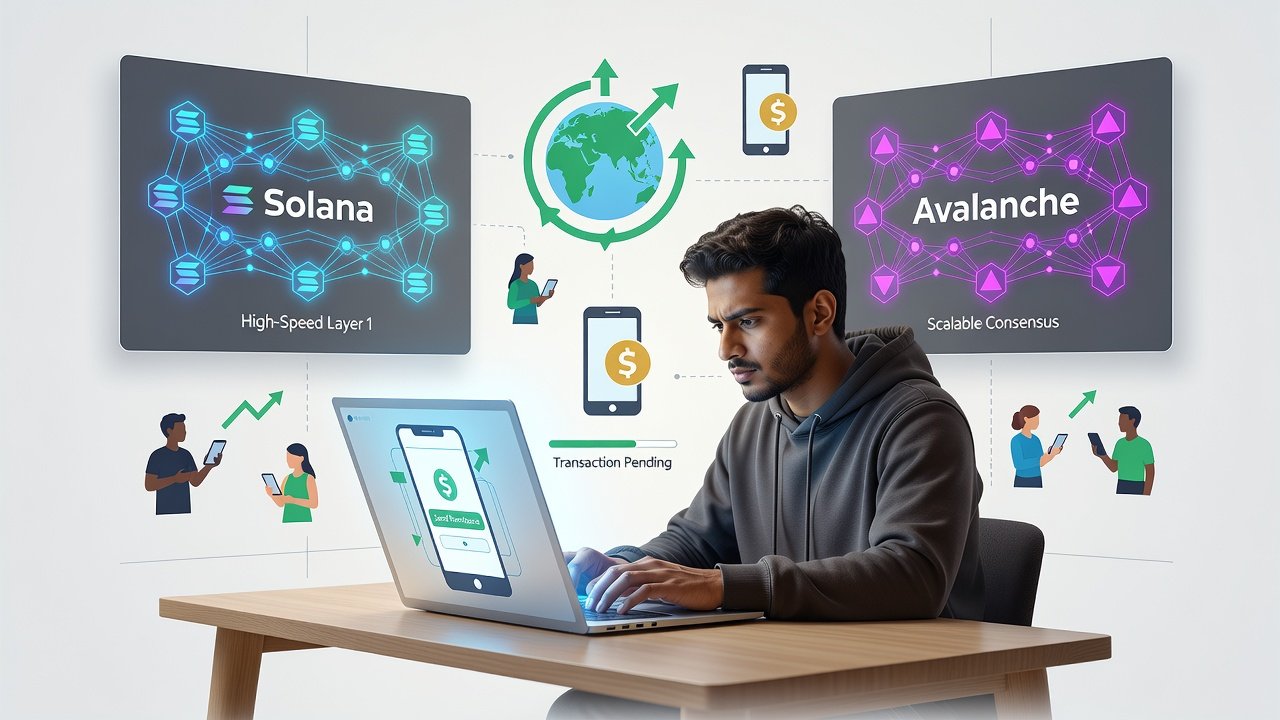
Conventional banking services in emerging markets typically impose high fees on small-value transfers along with slow processing windows limited to business hours. Solana and AVAX networks, by contrast, enable near-instant settlements at a fraction of those expenses, supporting frequent micro-transactions essential for daily commerce. Users gain 24/7 accessibility and full transparency through public ledgers, empowering individuals previously blocked by documentation requirements or minimum balance thresholds. Beyond cost savings, the networks reduce counterparty risk by eliminating centralized points of failure. Retail participants in rural areas particularly appreciate the ability to conduct business without physical branch visits, which can involve travel expenses and lost wages.
Step-by-Step Guide for Developers: Launching Inclusive dApps
- Select the optimal chain based on use case: prioritize Solana for applications demanding ultra-low latency or AVAX for customized subnet architectures supporting regional compliance needs.
- Configure a development environment with official toolkits available from Solana and Avalanche.
- Incorporate inclusive design elements including mobile-first interfaces, offline transaction queuing, and integration of stablecoins pegged to local currencies.
- Conduct rigorous security audits and extensive testnet trials involving representative user groups from target regions.
- Establish collaborations with community organizations and NGOs to deliver onboarding workshops and ongoing user education.
- Monitor on-chain analytics post-launch to iterate features based on actual adoption patterns and feedback loops.
Adhering to these sequential steps positions developers to create solutions that genuinely resolve user pain points while maintaining technical robustness.
Case Studies from Successful Projects
A prominent Solana initiative in the Philippines provides micro-insurance products for informal sector workers, automating claims verification through oracle-fed weather data and settling payouts in seconds. In Nigeria, an AVAX-driven remittance service has onboarded thousands of users by partnering with local agent networks for cash-in and cash-out services. Additional examples from Vietnam show how AVAX subnets enable compliant lending pools that respect national interest rate caps while still offering competitive yields. These case studies reveal consistent patterns: success stems from deep localization, robust community involvement, and iterative product refinement based on field testing. Developers can draw direct lessons on feature prioritization and partnership models from these deployments.
Practical Advice for Retail Users and Institutional Stakeholders
Retail participants should begin with established non-custodial wallets, conduct small test transfers, and gradually increase activity as familiarity grows. Emphasis on education around seed phrase security and phishing avoidance proves critical in regions with limited prior exposure to digital assets. Institutional players exploring entry can initiate controlled pilot programs focused on specific corridors with high remittance volumes. Both audiences benefit from tracking ecosystem grant programs that fund inclusion-oriented projects, allowing alignment with broader social impact goals alongside financial returns. Monitoring network upgrade roadmaps also helps anticipate improvements in scalability and interoperability that further enhance accessibility.
Future Outlook and Growth Opportunities in 2026
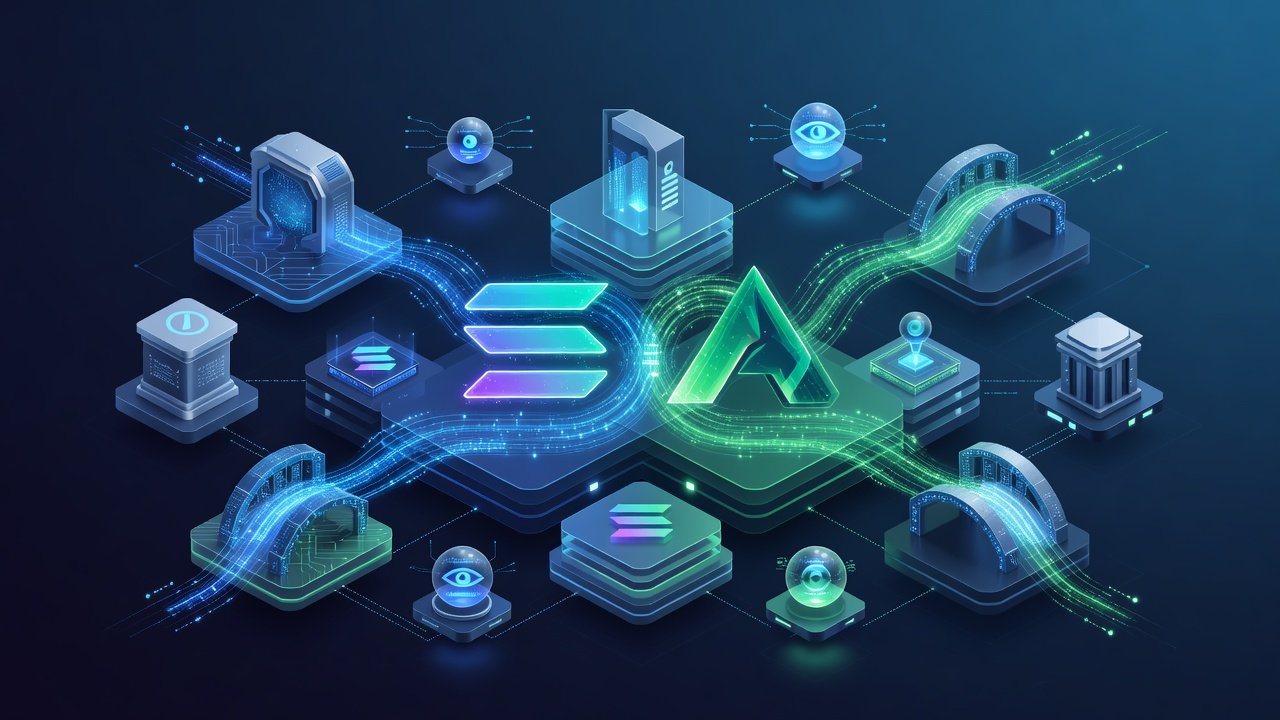
Continued upgrades to both Solana and AVAX infrastructure promise even greater efficiency gains throughout 2026. Emerging opportunities include tokenized real-world assets serving as collateral for micro-loans and cross-chain bridges that connect disparate local payment rails. Institutional adoption may accelerate through structured products that combine blockchain rails with traditional banking licenses. Retail growth will likely concentrate in mobile-centric markets where smartphone penetration outpaces formal banking infrastructure. Stakeholders who prioritize measurable social outcomes alongside technical metrics position themselves for sustainable expansion in these dynamic environments.
FAQ: Common Investor and User Concerns
What specific attributes make Solana and AVAX suitable for emerging markets?
Exceptional transaction throughput combined with negligible per-transaction costs aligns directly with the high-frequency, low-value payments typical among unbanked communities.
How do regulatory risks affect long-term viability?
While policy uncertainty persists in select jurisdictions, proactive engagement with regulators and adoption of compliance-first architectures substantially mitigate potential disruptions.
What steps should first-time users take to minimize security risks?
Users must verify wallet software sources, enable all available multi-factor protections, and avoid sharing private keys under any circumstances.
Can these networks support institutional-scale volumes?
Both chains have demonstrated capacity for enterprise-level throughput in production environments, with ongoing optimizations further enhancing reliability for large-scale deployments.
Where can developers access funding or mentorship for inclusion projects?
Official foundation grant portals and accelerator programs tied to each ecosystem regularly issue calls for proposals focused on real-world utility and emerging-market applications.
Conclusion
Solana and AVAX continue proving instrumental in reshaping financial access throughout 2026. By emphasizing practical applications over pure speculation, these networks create pathways for millions previously excluded from formal finance, driving inclusive economic growth across emerging markets. Thoughtful integration of regulatory considerations, developer best practices, and community engagement will determine the ultimate scale of their positive influence in the years ahead.

No comments yet. Be the first!