 CryptoChain Blog
Introduction to Blockchain in Modern Supply Chains
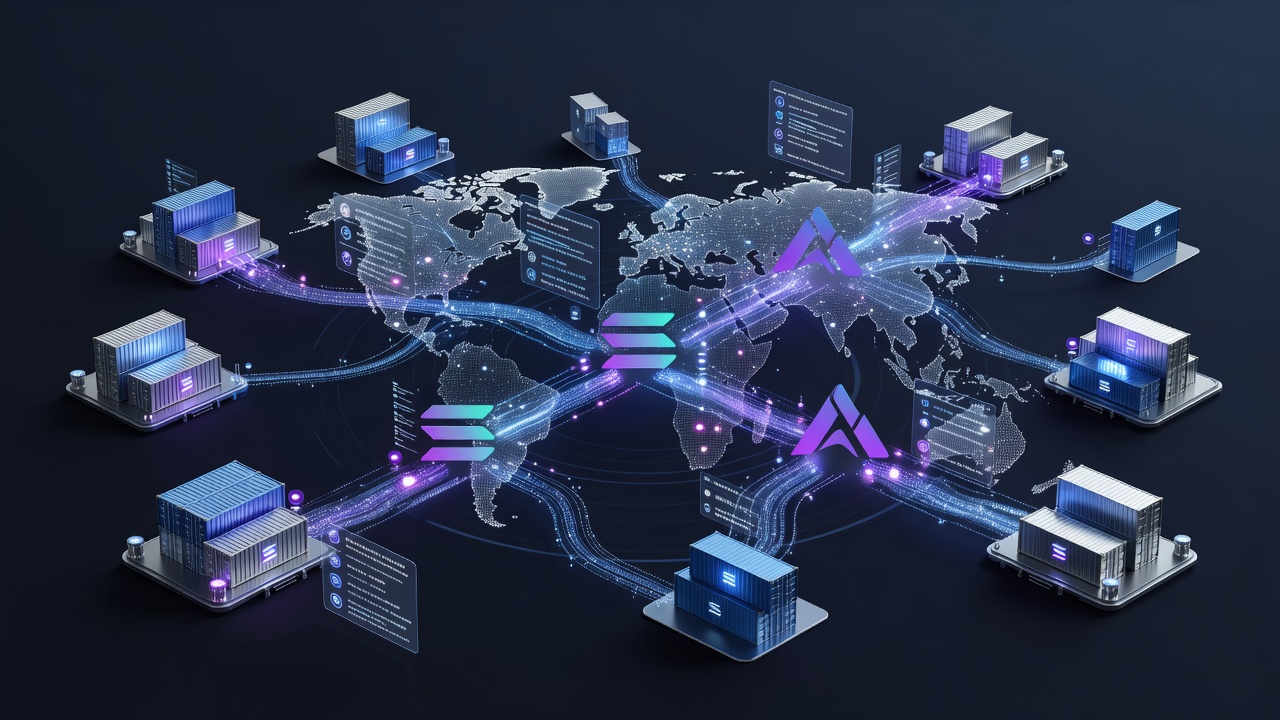
In 2026, supply chain professionals face mounting pressure to deliver transparency, speed, and cost control across global networks. Layer-1 blockchains Solana and Avalanche (AVAX) stand out as powerful alternatives to traditional systems, offering high throughput and low fees that extend well beyond DeFi and gaming into practical logistics applications. These networks enable immutable records, automated agreements, and seamless device connectivity. Companies now leverage them to reduce delays, combat counterfeiting, and optimize routes in real time. The shift toward these altcoins reflects a broader industry move away from siloed databases toward decentralized ledgers that multiple stakeholders can trust without a central authority. As global trade volumes grow and regulatory demands increase, Solana and AVAX provide the infrastructure needed for end-to-end visibility from raw material sourcing to final delivery.
Traditional supply chains often suffer from fragmented data, manual reconciliation, and vulnerability to fraud. Blockchain addresses these issues by creating a single source of truth. Solana and AVAX specifically excel in environments requiring rapid updates and affordable operations, making them suitable for industries like manufacturing, pharmaceuticals, and agriculture where timing and condition monitoring are critical.
Performance Benchmarks: Transaction Speed and Cost Efficiency
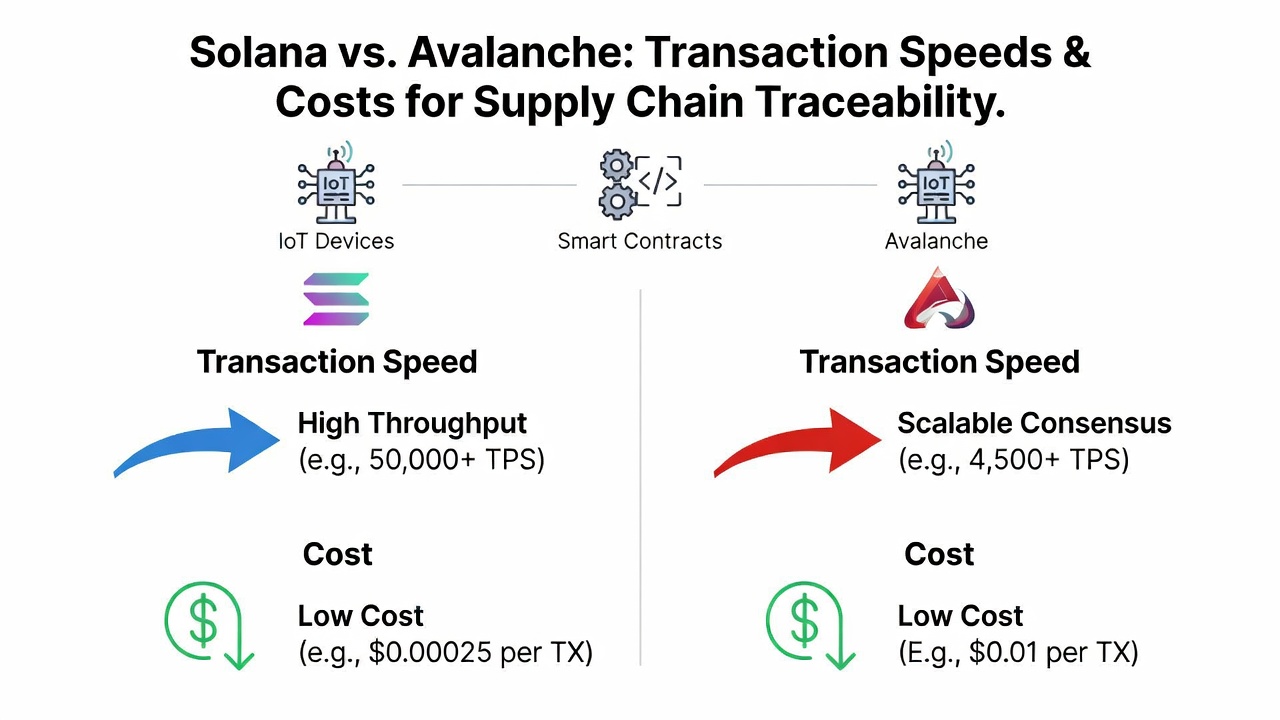
Solana processes thousands of transactions per second with sub-second finality, making it ideal for high-volume tracking events such as pallet scans at distribution centers. Avalanche delivers sub-second confirmations through its subnets, supporting customizable chains for enterprise needs. Both outperform many legacy systems in scalability while maintaining security through proof-of-stake consensus mechanisms. Cost efficiencies arise from minimal transaction fees, allowing frequent updates from IoT sensors without budget strain. This supports granular visibility that older databases cannot match economically. In practice, Solana’s parallel processing architecture handles burst activity during peak shipping seasons, while Avalanche’s modular design lets teams isolate supply chain workloads on dedicated subnets to avoid congestion on the primary network. Benchmark comparisons in 2026 highlight Solana’s edge in raw throughput for public-facing tracking and Avalanche’s advantage in private data partitioning for sensitive partner information.
Traceability and Smart Contracts for Logistics
Real-time traceability relies on recording every handoff on-chain. Smart contracts automate payments upon delivery confirmation, reducing disputes and paperwork. Integration with IoT devices feeds live data such as temperature, location, and humidity directly into the ledger. This combination creates auditable trails that regulators and consumers can verify instantly. For example, a smart contract can release funds to a supplier only when sensors confirm goods remained within acceptable temperature ranges throughout transit. Such automation minimizes human error and accelerates cash flow for all parties involved.
IoT Integration and Real-Time Data Flows
Connecting Internet of Things sensors to Solana or Avalanche networks unlocks continuous monitoring capabilities. Devices attached to containers or vehicles transmit data via oracles that bridge off-chain information to on-chain records. This setup supports predictive analytics, such as rerouting shipments based on weather disruptions detected by connected systems. Practical implementations include temperature-controlled pharmaceutical shipments where deviations trigger immediate alerts and contract adjustments. Both blockchains support lightweight client interactions that keep sensor hardware costs low while ensuring data integrity through cryptographic signing.
Comparing Solana and AVAX Ecosystems for Supply Chain
Solana emphasizes raw speed and a unified global state, suiting high-frequency scanning at warehouses and ports. Avalanche offers flexible subnets that let organizations run private or permissioned environments alongside public chains. Decision makers should evaluate latency tolerance, data privacy requirements, and existing tech stacks when choosing between them. Solana’s growing ecosystem includes developer tools optimized for asset tokenization, enabling digital representations of physical goods. Avalanche’s EVM compatibility simplifies migration from Ethereum-based pilots, and its subnet architecture supports industry-specific governance rules. A side-by-side analysis reveals trade-offs: Solana may require more upfront optimization for complex queries, whereas Avalanche provides built-in support for multi-party workflows through its consensus model. Teams often prototype on both networks before committing to one primary platform.
- Solana strengths: Massive parallel processing, growing developer tooling, strong community focus on real-world assets.
- AVAX strengths: Instant finality, EVM compatibility for easy migration, modular architecture for industry-specific rules.
- Shared benefits: Low fees enabling micro-transactions for every sensor reading and high availability for mission-critical logistics operations.
Real-World Company Examples and Adoption
Several logistics firms have piloted Solana for cross-border shipment tracking, achieving faster customs clearance through verifiable digital twins. Avalanche-based solutions appear in pharmaceutical cold chains where subnets isolate sensitive compliance data while sharing audit trails publicly when needed. Manufacturing companies in Asia have adopted Solana to track component provenance across multiple tiers of suppliers, reducing counterfeit parts by embedding unique digital identifiers. European retailers use Avalanche subnets to comply with strict data residency laws while maintaining global visibility. These deployments demonstrate reduced spoilage rates and improved partner coordination without relying on centralized intermediaries. Early adopters report smoother audits and stronger supplier relationships due to shared, tamper-proof records.
Step-by-Step Implementation Outline
- Map current supply chain pain points and identify data points best suited for on-chain recording, including shipment milestones, quality checks, and ownership transfers.
- Select the network based on throughput needs and integration preferences, running small testnets to measure latency under realistic loads.
- Develop or adopt smart contracts for key workflows such as provenance verification and automated settlements, incorporating multi-signature approvals for high-value transactions.
- Connect IoT sensors via reliable oracles and test data integrity across simulated shipments, validating that readings match physical conditions in controlled environments.
- Train teams on wallet management and dashboard monitoring before phased rollout, starting with a single product line to gather feedback.
- Monitor performance metrics and iterate on contract logic for continuous improvement, scaling successful pilots across additional routes and partners.
Common Challenges and Mitigation Strategies
Adoption hurdles include integrating legacy ERP systems, managing key security for non-technical staff, and ensuring network uptime during global events. Mitigation involves using established middleware providers, implementing hardware security modules, and selecting networks with proven reliability records. Data privacy concerns are addressed through selective disclosure techniques where only necessary information is shared on-chain. Scalability testing during peak periods helps prevent bottlenecks when transaction volumes spike.
FAQ Section Addressing Common Challenges
How do Solana and AVAX handle regulatory compliance?
Both networks support permissioned data access and audit logs. Organizations combine on-chain transparency with off-chain controls to meet GDPR or industry-specific rules.
What skills are required for teams adopting these solutions?
Basic blockchain literacy plus familiarity with APIs and IoT protocols. Many providers offer no-code interfaces that lower the barrier significantly.
Can these blockchains integrate with existing ERP systems?
Yes. Middleware and oracle services bridge legacy platforms to Solana and Avalanche, allowing gradual migration rather than full replacement.
What are the main risks of relying on these altcoins for supply chains?
Network congestion events or smart contract bugs represent primary risks. Regular audits, insurance products, and fallback procedures reduce exposure.
How does adoption affect smaller suppliers in the network?
Lower entry barriers through mobile wallets and simplified dashboards enable smaller players to participate without heavy IT investment, promoting inclusive ecosystems.
Conclusion
Solana and AVAX continue to expand practical supply chain use cases in 2026 by combining speed, affordability, and programmability. Forward-thinking organizations that invest in these tools gain measurable advantages in visibility, efficiency, and resilience. Explore official resources at solana.com and avax.network to begin evaluating pilots tailored to your operations. Additional guidance on enterprise blockchain standards is available from nist.gov.

No comments yet. Be the first!