 CryptoChain Blog

Introduction: Bitcoin's Growing Role in Global Monetary Policy
In 2026, Bitcoin continues to exert significant influence on central bank strategies and monetary policies across major economies. As institutional adoption grows, policymakers are reevaluating traditional approaches to reserves, digital currencies, and volatility management. This guide provides an in-depth analysis of these shifts, drawing on recent developments to offer actionable insights for traders and analysts seeking to understand the macroeconomic interplay between decentralized assets and sovereign monetary systems.
Central banks worldwide are navigating the tension between innovation and stability. Bitcoin's decentralized nature challenges conventional monetary tools, prompting discussions on reserves and regulatory frameworks. Bank for International Settlements reports highlight how digital assets are reshaping global finance, with Bitcoin often at the center of debates about future-proofing monetary policy against technological disruption.
CBDC Developments and Bitcoin Integration
Central Bank Digital Currencies (CBDCs) represent a direct response to cryptocurrencies like Bitcoin. In 2026, over 130 countries are exploring or piloting CBDCs, with Bitcoin often serving as a benchmark for design and functionality. Unlike Bitcoin's fixed supply, CBDCs allow programmable money with potential for negative interest rates or targeted stimulus. This programmability introduces new tools for central banks but also raises questions about privacy and financial inclusion that Bitcoin's pseudonymous model avoids.
Key examples include the European Central Bank's digital euro project and China's e-CNY expansion. These initiatives aim to maintain monetary sovereignty while competing with decentralized assets. Traders must monitor how CBDC rollouts affect Bitcoin's utility as a store of value, particularly in regions where digital fiat could reduce demand for borderless cryptocurrencies. Additional pilots in countries such as India and Brazil demonstrate varied approaches, from wholesale CBDCs focused on interbank settlements to retail versions aimed at consumers, each carrying implications for Bitcoin liquidity and adoption curves.
Bitcoin as a Reserve Asset: Institutional Holdings and Considerations
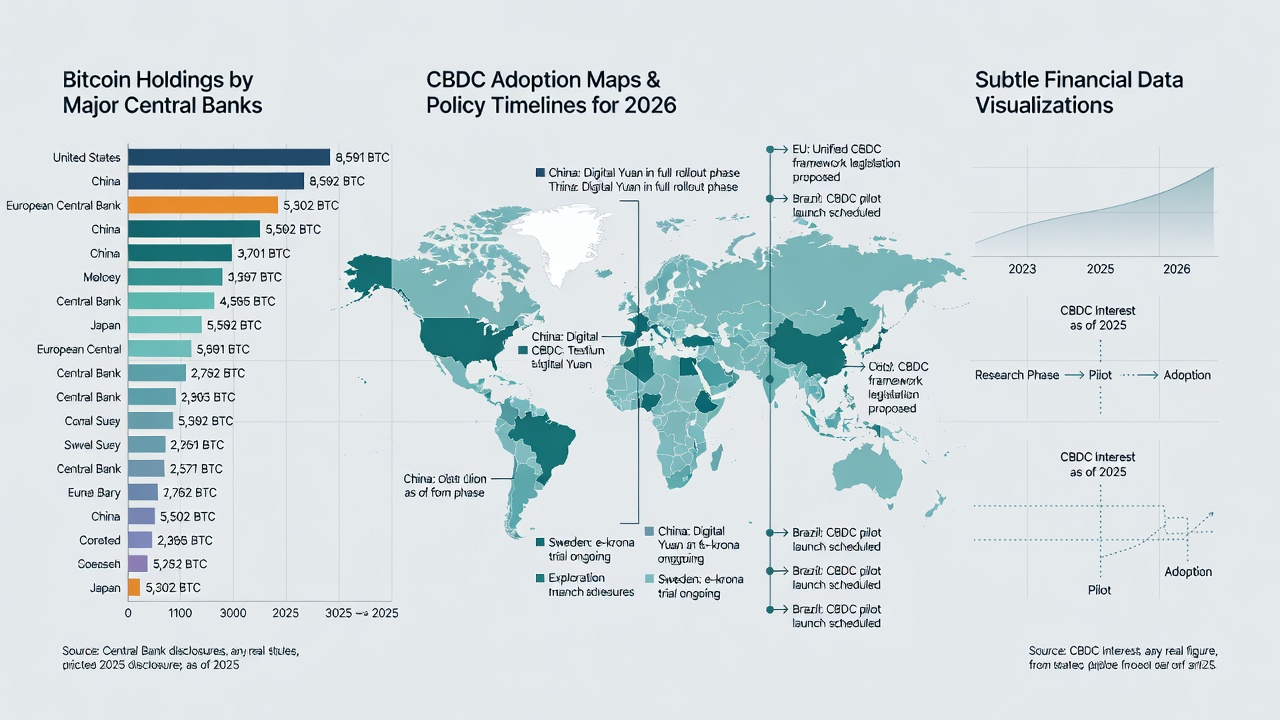
Bitcoin's inclusion in central bank reserves is no longer theoretical. Several nations have added BTC to their balance sheets, citing diversification benefits amid fiat volatility. Data from 2026 shows increased holdings by institutions in emerging markets seeking hedges against inflation and currency devaluation. Comparisons reveal policy divergences: while some central banks view Bitcoin as a speculative risk, others treat it as digital gold. Federal Reserve analyses emphasize risk management frameworks for any crypto exposure, including stress testing for extreme price movements.
Further examination of institutional data reveals patterns in holdings. Sovereign wealth funds and certain central banks in Latin America and Asia have quietly accumulated positions, often through indirect vehicles like exchange-traded products to mitigate custody concerns. This trend underscores Bitcoin's evolving perception from volatile asset to strategic reserve component, though liquidity risks and regulatory hurdles remain key considerations for larger-scale adoption.
Regulatory Responses to BTC Volatility
Volatility remains a core concern for regulators. In 2026, frameworks focus on disclosure requirements, anti-money laundering standards, and stress testing for Bitcoin-related exposures. Major economies have implemented varying approaches, from outright bans in certain jurisdictions to tax incentives for compliant holders. These responses impact market dynamics, with policy announcements often triggering price swings. Effective regulation balances innovation with consumer protection, influencing Bitcoin's integration into traditional finance.
Examples include enhanced reporting mandates in the United States and harmonized rules under the EU's Markets in Crypto-Assets (MiCA) framework. Such measures aim to reduce systemic risks while allowing controlled growth. Traders benefit from understanding these regulatory nuances, as they directly affect trading volumes, custody solutions, and cross-border flows of Bitcoin.
Case Studies from Major Economies
Examining specific nations provides concrete illustrations of Bitcoin's policy influence. In the United States, the Federal Reserve monitors Bitcoin through existing banking oversight, with ongoing discussions about potential reserve eligibility and integration into payment systems. European Union policies under MiCA offer regulatory clarity that fosters institutional Bitcoin adoption while simultaneously advancing the digital euro project. China's approach remains restrictive, yet underground Bitcoin mining and trading continue to shape parallel monetary strategies aimed at capital control.
Emerging markets offer compelling case studies. El Salvador's ongoing experiment with Bitcoin as legal tender demonstrates both opportunities for financial inclusion and challenges related to price stability. Other nations in Africa and Southeast Asia are observing these outcomes closely, weighing similar experiments against risks of capital flight. These varied responses highlight how Bitcoin forces central banks to adapt policies in real time, often leading to hybrid models that incorporate elements of both decentralized and centralized systems.
Global Data on Bitcoin Holdings and Policy Shifts
Recent 2026 data on institutional Bitcoin holdings shows steady accumulation by public and private entities. Reports indicate that corporate treasuries and select sovereign entities have increased exposure, driven by inflation hedging strategies. Policy shifts are evident in updated reserve management guidelines from several central banks, which now explicitly reference digital assets. Comparing pre-2025 and current approaches reveals a clear evolution toward cautious integration rather than outright dismissal.
Step-by-Step Framework for Traders to Monitor Policy Impacts
Traders can use this practical framework to track Bitcoin's central bank influence effectively:
- Review official central bank statements and BIS publications weekly to identify emerging themes around digital assets and reserves.
- Track institutional Bitcoin wallet movements via on-chain analytics tools, focusing on large transfers that may signal policy-driven accumulation or divestment.
- Analyze CBDC pilot outcomes for competitive effects on BTC demand, including transaction volume data and user adoption metrics from pilot regions.
- Assess regulatory news from bodies like the IMF for volatility signals, paying attention to enforcement actions or new compliance requirements.
- Correlate policy shifts with Bitcoin price action using historical data comparisons, creating custom dashboards that overlay announcement dates with market reactions.
- Adjust portfolio allocations based on reserve asset announcements, incorporating scenario planning for both bullish adoption news and restrictive regulatory developments.
- Engage with expert commentary from think tanks and financial institutions to contextualize raw data within broader macroeconomic trends.
This structured approach helps anticipate market reactions tied to 2026 events and supports more resilient trading decisions.
FAQs on Bitcoin's Macroeconomic Role
How does Bitcoin affect central bank monetary policy?
Bitcoin introduces competition to fiat systems, prompting central banks to accelerate digital currency projects and refine reserve strategies for greater resilience against technological and geopolitical shifts.
What data exists on institutional Bitcoin holdings in 2026?
Public disclosures show growing allocations by sovereign funds and some central banks, though exact figures vary by jurisdiction due to differing reporting standards and transparency levels.
Are there risks in treating Bitcoin as a reserve asset?
Yes, primarily volatility and regulatory uncertainty. Central banks mitigate these through diversification, rigorous risk assessments, and phased implementation strategies.
How should traders respond to CBDC launches?
Monitor for shifts in Bitcoin's perceived utility and adjust strategies based on liquidity impacts, adoption rates, and any resulting changes in cross-border payment flows.
What comparisons exist between different central bank approaches?
Western economies tend toward integration with safeguards, while some Asian and Latin American nations experiment more aggressively, creating a spectrum of policy responses that traders can map to market opportunities.
Conclusion
Bitcoin's influence on central bank policies in 2026 underscores its evolving status from fringe asset to macroeconomic factor. By understanding CBDC trends, reserve considerations, regulatory landscapes, and global holdings data, stakeholders can navigate this dynamic environment with informed strategies. Continuous monitoring through structured frameworks remains essential for capturing opportunities and managing risks in this shifting landscape.


No comments yet. Be the first!