 CryptoChain Blog

Corporate Bitcoin Treasury Strategies: 2026 Analysis Guide
As corporations increasingly view Bitcoin as a strategic treasury asset in 2026, finance teams must navigate evolving accounting rules, risk frameworks, and performance measurement tools. This guide delivers actionable insights for integrating BTC into balance sheets while addressing regulatory, tax, and volatility considerations. Finance professionals seeking practical BTC analysis will find detailed frameworks, real-world examples, and decision-making tools tailored to current market conditions.
Why Corporations Are Adding Bitcoin to Treasuries in 2026
Bitcoin offers a hedge against inflation and currency debasement for multinational firms. Leading adopters treat it as a reserve asset alongside cash and bonds. Finance professionals now require structured approaches to allocation, custody, and reporting that align with 2026 market conditions. Beyond inflation protection, Bitcoin provides portfolio diversification uncorrelated with traditional equities and fixed income. Companies with global operations also use it to manage cross-border payment inefficiencies and reduce reliance on any single fiat currency. In 2026, board-level discussions frequently center on Bitcoin’s role in long-term capital preservation rather than short-term speculation.
Accounting Standards for Bitcoin Holdings
Under current FASB guidance, Bitcoin is classified as an intangible asset. Companies must apply impairment testing rather than fair-value accounting in most jurisdictions. Accurate tracking requires daily valuation feeds and clear policies for recognizing gains or losses upon sale. SEC reporting requirements further mandate transparent disclosure of digital asset positions in quarterly filings. Firms should also align with IFRS interpretations where applicable and maintain audit-ready documentation that includes cost basis, impairment triggers, and disposal records. Regular reconciliation between on-chain wallets and accounting ledgers prevents discrepancies during external audits.
Risk Mitigation Techniques
Successful treasury programs combine cold storage, multi-signature wallets, and insurance policies. Key techniques include position sizing limits, counterparty due diligence for custodians, and regular penetration testing. Firms also establish governance committees to approve any rebalancing decisions. Additional safeguards involve geographic diversification of private keys, annual third-party security audits, and predefined response protocols for potential breaches. Treasury teams often maintain a small hot wallet for operational needs while keeping the majority of holdings in offline cold storage to minimize exposure.
Performance Tracking Using On-Chain Metrics and Market Data
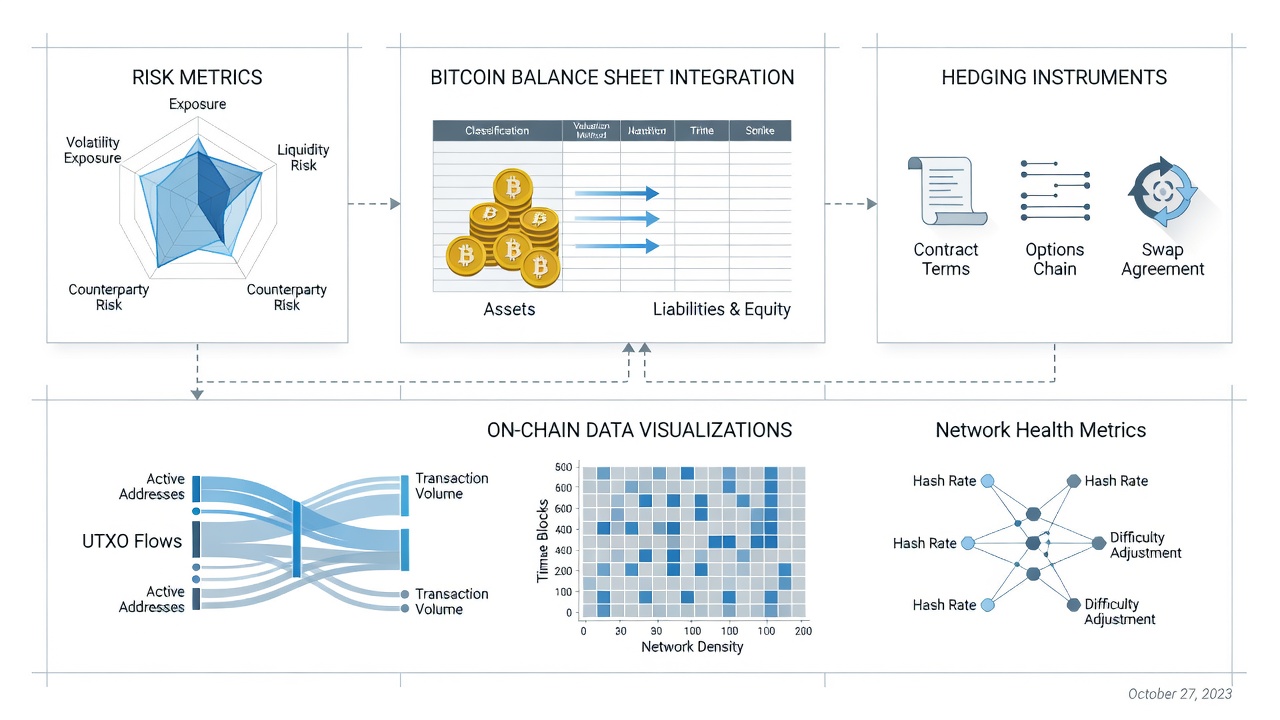
Finance teams monitor realized price, realized cap, and exchange reserve levels to gauge market sentiment. Additional KPIs include realized volatility, hash rate trends, and active address growth. Integrating these signals with traditional treasury dashboards enables data-driven allocation reviews. Teams also track miner capitulation indicators, long-term holder supply ratios, and funding rates across derivatives platforms. Combining on-chain data with macroeconomic variables such as interest rate expectations and equity market volatility produces more robust forecasting models for internal reporting.
Real-World Case Studies
Public companies such as MicroStrategy and Tesla have disclosed substantial Bitcoin holdings. Their quarterly reports reveal different custody models and impairment handling approaches. Mid-sized firms are now following suit with smaller, phased purchases to test operational processes before scaling. For example, one software company allocated 5 percent of its treasury to Bitcoin over six months, using quarterly reviews to adjust exposure based on realized volatility metrics. Another manufacturer partnered with a regulated custodian to implement daily automated reporting that feeds directly into its ERP system, reducing manual reconciliation time by 70 percent.
Step-by-Step Implementation Framework
Implementing a corporate Bitcoin treasury program requires careful sequencing. Begin by forming a cross-functional steering committee that includes treasury, legal, tax, and IT stakeholders. Next, define clear policy objectives such as maximum allocation percentage, rebalancing triggers, and exit criteria. Select qualified custodians through a rigorous RFP process that evaluates security certifications, insurance coverage, and operational resilience. Develop detailed accounting and tax reporting procedures in consultation with external auditors. Implement monitoring tools that combine on-chain analytics with market data feeds. Conduct pilot purchases using small test amounts to validate wallet operations and reporting workflows. Finally, establish quarterly performance reviews that compare Bitcoin returns against benchmarks such as cash equivalents and inflation indices.
Hodling Versus Active Management Strategies
Pure hodling minimizes trading fees and tax events but exposes the firm to full volatility. Active strategies incorporate options overlays or periodic rebalancing to capture upside while capping downside. A hybrid model often suits corporate mandates by maintaining core holdings while using 10-20 percent of the position for tactical trades. Hodling works best for firms with long investment horizons and strong governance. Active management requires dedicated personnel or external advisors and may increase compliance complexity. Decision-makers should model both approaches under different volatility scenarios before selecting a primary strategy.
Volatility Forecasting Methods
Analysts combine historical realized volatility with implied volatility from options markets. Machine-learning models incorporating on-chain flows and macroeconomic indicators improve forecast accuracy. Regular stress testing against 2022-style drawdowns remains essential. Forward-looking estimates also benefit from sentiment analysis of social and developer activity on the Bitcoin network. Treasury teams should document assumptions and update models monthly to reflect changing market regimes.
Hedging Tools and Instruments
Available instruments include CME Bitcoin futures, options, and OTC swaps. Firms also explore structured products that provide downside protection in exchange for capped upside. Counterparty risk assessment is critical when selecting derivatives providers. Many organizations start with simple futures hedges before advancing to more complex option strategies. Clear policies governing hedge ratios and collateral requirements help maintain alignment with overall treasury objectives.
Tax Considerations and Regulatory Compliance
Tax treatment varies by jurisdiction. In the United States, Bitcoin is treated as property, triggering capital gains rules on disposal. Companies should consult IRS guidance and maintain detailed cost-basis records. International operations require review of local VAT and transfer pricing rules. U.S. Treasury Department resources provide additional compliance frameworks. Regular updates from regulatory bodies and engagement with tax counsel ensure ongoing adherence to evolving standards. Documentation of every transaction, including wallet addresses and timestamps, supports audit defense and regulatory inquiries.
Frequently Asked Questions
How often should a corporate Bitcoin policy be reviewed?
Most firms conduct formal reviews quarterly, with ad-hoc updates following major regulatory announcements or market regime shifts. Annual board-level reviews are also recommended to confirm strategic alignment.
What custody solution is recommended for mid-sized treasuries?
Institutional-grade custodians offering SOC 2 Type II certification and multi-signature controls are preferred over self-custody for most organizations. Hybrid models that split keys across multiple providers add an extra layer of protection.
Can Bitcoin allocations affect credit ratings?
Rating agencies increasingly evaluate digital asset exposure; transparent policies and conservative sizing typically mitigate negative impacts. Proactive communication with rating agencies helps manage expectations.
What insurance options exist for corporate Bitcoin holdings?
Specialized insurers now offer coverage for theft, hacking, and key loss. Policies often require proof of cold storage practices and regular security audits before coverage is granted.
Conclusion
Corporate Bitcoin treasury management in 2026 demands rigorous policy design, robust risk controls, and continuous performance monitoring. By following the frameworks outlined above, finance teams can integrate Bitcoin responsibly while meeting stakeholder expectations for transparency and compliance. Ongoing education and adaptation to new regulatory and technological developments will remain essential for long-term success.


No comments yet. Be the first!