 CryptoChain Blog

Introduction to Bitcoin Core Developments in 2026
Bitcoin Core remains the reference implementation of the Bitcoin protocol, and its ongoing evolution directly influences network performance, transaction costs, and trader decision-making. In 2026, developers continue to focus on scalability improvements, enhanced security measures, and efficiency optimizations that reshape how markets react to protocol changes. These updates are not merely technical; they create ripple effects across liquidity pools, miner incentives, and institutional trading desks that monitor on-chain metrics closely.
Traders who monitor these updates gain an edge by anticipating shifts in liquidity, fee structures, and overall network reliability. This guide examines recent protocol modifications, their real-world effects, and actionable methods for integrating findings into analysis workflows. Understanding these trends allows market participants to differentiate between noise and signal when major code merges occur.
Key Protocol Changes and Their Market Effects
Recent releases have introduced refinements to consensus rules and mempool management. These changes improve block propagation speeds while maintaining the decentralized nature of the network. Scalability enhancements allow for higher throughput without compromising security, which can lead to more stable price action during periods of high demand. For instance, optimizations in orphan block handling have reduced unnecessary bandwidth usage across nodes, indirectly supporting smoother price discovery during volatility spikes.
Security upgrades, including better signature verification and protection against certain denial-of-service vectors, reduce the risk of network disruptions. Traders often see reduced volatility when such improvements are widely adopted, as confidence in the protocol grows. Real-world examples from 2025 releases showed faster relay of compact blocks, which correlated with tighter bid-ask spreads on major exchanges during stress tests.
Scalability Updates in Detail
Developers have prioritized incremental improvements to the peer-to-peer layer. These include refined transaction relay policies that prioritize high-fee transactions more intelligently. The result is a network that handles bursts of activity without widespread fee spikes, benefiting both retail traders and high-frequency desks that rely on timely confirmations.
Security Enhancements
New validation checks help prevent resource exhaustion attacks. Such measures protect node operators and maintain the integrity of the blockchain, which in turn supports long-term holder confidence and reduces panic selling during perceived threats.
Tracking Developer Proposals and Community Consensus
Monitoring Bitcoin Improvement Proposals (BIPs) provides early signals of upcoming changes. Active discussions on mailing lists and GitHub repositories reveal the level of community support. Strong consensus typically precedes smoother rollouts, minimizing market surprises. Traders should pay attention to the number of ACKs (acknowledgments) from respected developers and the diversity of testing environments reported.
Traders should follow key repositories and review pull request activity regularly. High engagement from multiple independent developers often indicates robust testing and lower likelihood of contentious forks. Tools such as GitHub notifications, combined with on-chain dashboards, help surface relevant activity without requiring constant manual checks.
Comparing Impacts on Transaction Fees Versus Network Efficiency
Protocol optimizations frequently target fee estimation algorithms and transaction relay policies. These adjustments can lower average costs during congestion while improving confirmation times. Efficiency gains also benefit layer-two solutions that rely on the base layer for settlement. In practice, traders have observed that certain mempool optimizations lead to more predictable fee markets, allowing better execution of large orders without excessive slippage.
Understanding the balance between fee reduction and security trade-offs helps traders time entries and exits more effectively, especially around major releases. Historical patterns show that efficiency-focused updates tend to compress fee volatility, while security patches may temporarily increase on-chain activity as nodes upgrade.
Step-by-Step Methods for Monitoring GitHub Activity and Price Correlations
- Clone the official Bitcoin Core repository and enable notifications for new issues and pull requests to receive real-time alerts on critical changes.
- Use commit history analysis tools to identify clusters of activity around specific features such as wallet improvements or consensus modifications.
- Cross-reference release notes with on-chain metrics such as average transaction fees and block size utilization to quantify network impact.
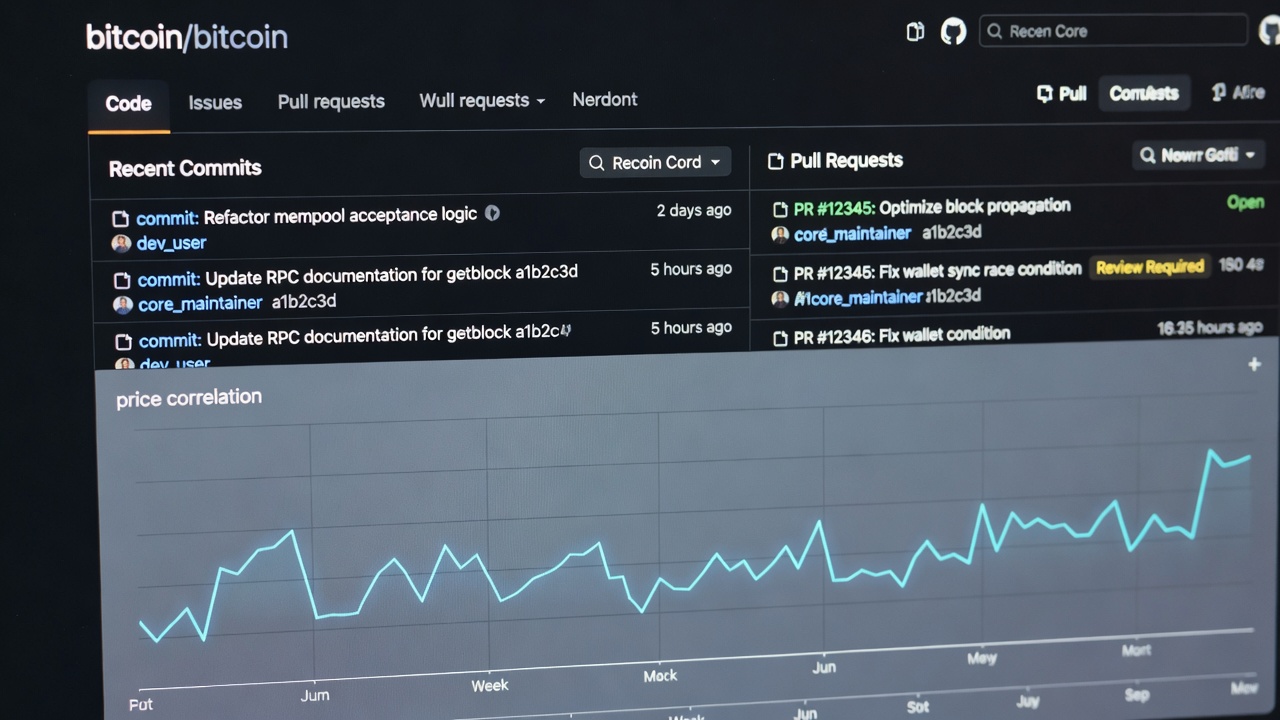
- Plot these data points against historical price movements to spot recurring patterns, such as price reactions following major merges.
- Maintain a simple dashboard that flags high-impact merges for immediate review and correlates them with exchange order book depth.
- Review developer mailing list archives weekly to capture nuanced discussions that may not appear in code comments alone.
Practical Checklist for Daily BTC Analysis
- Review the latest merged pull requests each morning and note any that alter transaction validation or relay rules.
- Check community forums for emerging concerns about proposed changes and gauge sentiment through comment volume.
- Compare current fee levels with pre-release baselines to identify whether updates are delivering expected efficiency gains.
- Assess any new security advisories and their potential market implications, including possible short-term hash rate shifts.
- Document observed correlations between code activity and price behavior in a personal trading journal for pattern recognition over time.
- Verify node software versions across major mining pools to anticipate upgrade timelines.
Common Misconceptions: FAQ
Does every Core update immediately affect Bitcoin price?
Not necessarily. Only changes that alter user experience or network capacity tend to move markets noticeably. Minor optimizations often go unnoticed by traders until cumulative effects become visible in on-chain data.
Are all developer proposals eventually implemented?
No. Proposals require broad consensus. Many remain in discussion for months or years before acceptance or rejection, and some are abandoned after extensive review.
Can monitoring GitHub replace traditional technical analysis?
It serves as a complementary tool. Fundamental protocol insights enhance, but do not replace, chart-based strategies that focus on price action and volume.
How long does it typically take for a BIP to reach activation?
Timelines vary widely. Simple improvements may activate within one release cycle, while complex consensus changes often require multiple years of testing and community alignment.
Integrating Findings Into Daily Workflows
Incorporate a dedicated section in your analysis routine for protocol monitoring. Set calendar reminders aligned with expected release windows and maintain a log of observed impacts. Over time, this practice refines your ability to anticipate how development trends translate into trading opportunities. Consider combining GitHub activity feeds with price alert systems so that significant merges trigger immediate review of open positions.
Additional practical tips include subscribing to release announcement channels and participating in testnet simulations when available. These steps provide hands-on familiarity with upcoming changes before they reach mainnet.
For authoritative resources, consult bitcoin.org and the official Bitcoin Core GitHub repository. Further reference material is available at bitcoincore.org.
Mistakes to Avoid When Analyzing Core Updates
One common error is overreacting to early pull request drafts that never reach merge status. Another is ignoring the testing phase, which can lead to misjudging the timeline of market impact. Traders should also avoid relying solely on social media sentiment without verifying actual code changes in the repository.
Conclusion
Staying informed about Bitcoin Core developments equips traders with deeper context for market movements in 2026. By systematically tracking proposals, evaluating their effects, and applying structured checklists, analysts can transform protocol insights into actionable trading intelligence that supports more informed position management.


No comments yet. Be the first!