 CryptoChain Blog
Introduction to Bitcoin Difficulty Adjustments
Bitcoin's automatic difficulty adjustment is a foundational protocol feature that ensures consistent block production times of approximately ten minutes even as the network hashrate fluctuates dramatically. Throughout 2026, this mechanism will continue to shape price dynamics by influencing miner profitability, supply issuance rates, and overall network security. Intermediate analysts seeking deeper on-chain context will find that difficulty adjustments provide signals beyond simple price charts, revealing how hashrate growth or contraction feeds directly into market behavior and miner decision-making.
Understanding these adjustments helps traders anticipate periods of increased volatility, identify potential capitulation points among miners, and align strategies with the protocol's predictable yet powerful rhythms. This comprehensive analysis covers the algorithm mechanics, historical precedents, monitoring methods, and forward scenarios while delivering practical checklists for real-world application.
How the Bitcoin Difficulty Adjustment Algorithm Works
The difficulty adjustment occurs automatically every 2,016 blocks, which equates to roughly fourteen days under normal conditions. The core calculation measures the actual time taken to mine those 2,016 blocks against the target of 20,160 minutes. If blocks arrived faster than expected, the protocol raises the difficulty target to slow mining; if slower, it lowers the target to speed things up. This elegant feedback loop maintains the network's intended pace regardless of whether thousands of new ASIC machines come online or large mining operations shut down.
Consider a concrete example: suppose the previous period saw blocks produced in only 18,000 minutes due to a surge in hashrate. The adjustment would increase difficulty by approximately 11 percent, requiring miners to perform more computational work per block. Conversely, a drop in hashrate extending the period to 22,000 minutes would trigger a difficulty reduction. These changes directly affect electricity costs per bitcoin mined and can shift the breakeven point for marginal operators, sometimes leading to rapid hashrate redistribution across regions or pools.
Miners must constantly evaluate hardware efficiency, energy contracts, and bitcoin's spot price against these shifting targets. In 2026, with institutional mining fleets growing and renewable energy sources becoming more common, even modest hashrate increases can produce larger cumulative difficulty jumps than in earlier cycles.
Links to Network Security and Bitcoin Supply Issuance
Difficulty adjustments reinforce Bitcoin's security by ensuring that higher hashrate always translates into proportionally higher attack costs. A network secured by elevated difficulty makes coordinated 51 percent attacks economically irrational for all but the most well-funded adversaries. At the same time, the mechanism works in tandem with the subsidy halving schedule to control new coin issuance, preserving the 21 million bitcoin cap.
When difficulty rises alongside hashrate, efficient miners continue earning rewards while less competitive operations may exit, concentrating hash power among resilient players. This dynamic indirectly supports price stability by reducing potential sell pressure from distressed miners. For authoritative protocol documentation, consult bitcoin.org. Analysts tracking 2026 should note that sustained upward difficulty trends often coincide with periods of accumulation by long-term holders, creating a feedback loop between security metrics and market sentiment.
Real-Time Monitoring Tools and Data Sources
Successful incorporation of difficulty data requires reliable, up-to-date sources. Leading platforms display live difficulty values, upcoming adjustment countdowns in blocks, and historical change percentages alongside hashrate charts. Traders frequently cross-reference these figures with mempool congestion data and miner revenue dashboards to gauge whether an upcoming adjustment will likely be positive or negative.
Key metrics to watch include the seven-day and thirty-day hashrate moving averages, the exact block height of the next retarget, and the percentage change from the prior adjustment. Combining these with exchange inflow data from large mining wallets adds context on potential selling. Public explorers and analytics suites from established providers allow users to set alerts for adjustments exceeding certain thresholds, enabling timely position adjustments.
Historical Adjustment Events and Price Correlations
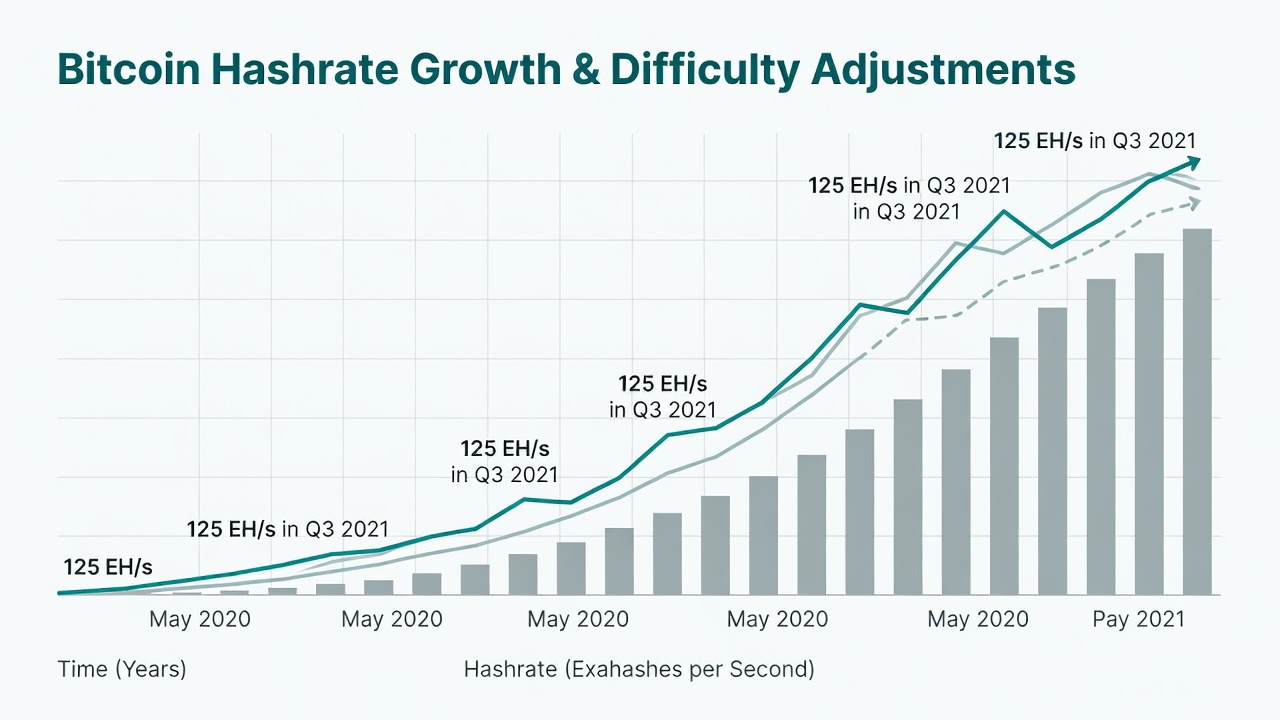
Reviewing past cycles reveals consistent patterns. After the 2020 halving, a series of difficulty drops during the subsequent hashrate migration correlated with local price bottoms before the 2021 rally. Similarly, rapid difficulty increases in late 2023 preceded consolidation phases that ultimately resolved higher as miner efficiency improved. These events demonstrate that difficulty acts as both a lagging indicator of hashrate trends and a leading signal for miner-driven supply dynamics.
By examining the magnitude of adjustments around previous halvings, analysts can calibrate models for 2026. For instance, difficulty spikes exceeding 10 percent within a single retarget often coincided with short-term price resistance, while negative adjustments frequently preceded relief rallies. Understanding these correlations allows traders to filter noise from genuine regime shifts in miner economics.
Forward-Looking Scenarios for 2026
Three primary scenarios emerge for 2026. In a high-growth environment driven by expanded renewable-powered mining facilities, difficulty could rise steadily by 5 to 8 percent per adjustment on average. This path would strengthen network security but compress margins for older hardware, potentially triggering selective capitulation and localized price support from reduced selling. A second scenario involving regulatory pressure on energy usage in key regions might produce intermittent negative adjustments, easing entry barriers for new participants and supporting bullish sentiment. A third balanced case assumes moderate hashrate growth offset by efficiency gains, resulting in smaller, more frequent adjustments that stabilize miner revenue without dramatic price shocks.
Each scenario should be stress-tested against variables such as ETF flow volumes, global energy price movements, and macroeconomic liquidity conditions to refine probability-weighted price targets.
Step-by-Step Checklist for Incorporating Difficulty Data into Trading Decisions
- Track the current block height and calculate the exact timing of the next 2,016-block retarget using public explorers.
- Compare the most recent difficulty change against rolling averages to determine momentum direction and magnitude.
- Overlay hashrate growth rates with publicly reported miner revenue per terahash to assess profitability pressure.
- Monitor large-wallet flows on-chain for signs of accumulation or distribution coinciding with adjustment windows.
- Adjust position sizing by scaling exposure upward when negative adjustments align with oversold technical conditions.
- Wait for post-adjustment price confirmation, such as sustained volume increases, before committing to larger trades.
- Document each adjustment outcome in a trading journal to refine future correlation assumptions and avoid repeating misreads.
FAQ: Common Myths About Bitcoin Difficulty Adjustments
Does difficulty directly set Bitcoin's market price?
No. Difficulty influences miner costs and issuance velocity but remains one of many factors; broader demand, macroeconomic conditions, and investor sentiment ultimately determine price.
How precisely is the adjustment interval calculated?
The protocol targets exactly 2,016 blocks. While the average interval is fourteen days, actual timing can vary by several hours depending on instantaneous hashrate.
Can difficulty adjustments forecast halving events?
They provide useful context around issuance changes but cannot predict halving dates, which are fixed by block height.
Do negative adjustments always signal a price bottom?
Historically they have often preceded recoveries, yet they can also occur during prolonged bear markets when hashrate contracts for unrelated reasons.
Should retail traders attempt to front-run adjustments?
Only with strict risk management; the mechanism offers context rather than guaranteed signals, and transaction costs can erode small edges.
Conclusion
Bitcoin difficulty adjustments serve as a vital bridge between protocol rules and real-world market outcomes in 2026. By mastering their mechanics, historical correlations, and monitoring techniques, analysts gain actionable insight into miner economics and potential price inflection points. Consistent application of the checklists and scenario frameworks outlined above will strengthen any on-chain trading approach and help navigate the evolving landscape with greater precision.

No comments yet. Be the first!