 CryptoChain Blog

Introduction to Bitcoin L2 Scaling in 2026
Bitcoin's base layer remains the gold standard for security and decentralization, yet its transaction throughput limitations continue to drive innovation in Layer 2 solutions. In 2026, traders and analysts are increasingly turning to L2 protocols to assess real-world adoption beyond simple on-chain metrics like daily active addresses or total value locked. These solutions enable faster, cheaper transactions while leveraging Bitcoin's robust security model, unlocking new liquidity pools and yield opportunities that were previously constrained by on-chain fees and confirmation times.
This guide provides a comprehensive analysis of emerging Bitcoin L2 protocols, focusing on performance benchmarks, security considerations, and practical integration into trading workflows. Whether you are evaluating Lightning Network channels or newer rollup-style constructions, understanding these layers is essential for navigating BTC market dynamics and capitalizing on liquidity flows that extend far beyond core blockchain statistics.
Core Bitcoin L2 Protocols and Their Evolution
Several protocols have matured significantly by 2026. The Lightning Network continues to dominate payment channels with its focus on instant micropayments and has seen widespread integration into merchant services and exchange withdrawals. Newer entrants like state channels and optimistic rollups built on Bitcoin are gaining traction for DeFi-like applications, allowing complex smart contract interactions that settle back to the Bitcoin mainchain.
Key examples include enhanced Lightning implementations that support larger channel capacities and sidechain projects that periodically settle to the Bitcoin blockchain. These developments allow for greater composability, enabling traders to move liquidity seamlessly between layers without compromising the underlying network's integrity. Protocol teams have also introduced improved routing algorithms that reduce failure rates during high-volatility periods.
Performance Benchmarks for 2026
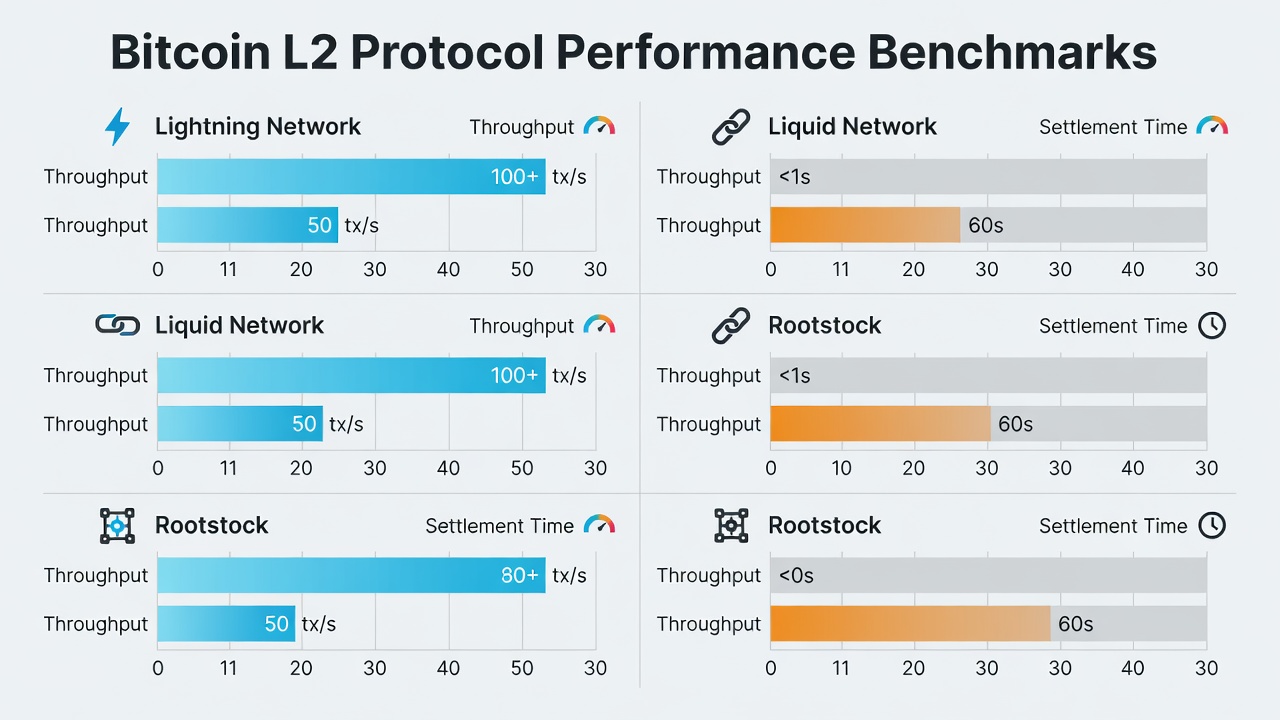
Benchmarks in 2026 highlight substantial improvements across multiple dimensions. Lightning channels routinely process thousands of transactions per second with sub-second finality, making them ideal for high-frequency trading scenarios. Newer L2 constructions demonstrate throughput exceeding 100 TPS while maintaining Bitcoin settlement guarantees, which is critical for institutional participants seeking reliable execution.
Traders should monitor metrics such as channel capacity distribution, average route success rates, and settlement latency when comparing protocols. Real-world data from 2026 shows that integrated L2 solutions contribute to higher effective liquidity, with cross-layer transfers becoming more efficient. Analysts often compare these figures against base-layer constraints to quantify scalability gains and identify protocols that offer the best balance of speed and cost.
Security Trade-offs and Risk Mitigation
Every L2 solution involves trade-offs between speed and security. Lightning relies on watchtowers and penalty mechanisms to deter fraud, while newer protocols may introduce additional trust assumptions during dispute periods. Traders must evaluate custody risks, smart contract vulnerabilities, and the maturity of bridging mechanisms that connect L2 environments back to the Bitcoin base layer.
Best practices include diversifying across multiple L2s, using hardware wallets for channel management, and staying updated on protocol audits. Understanding these nuances helps avoid common pitfalls like liquidity fragmentation or prolonged withdrawal delays during network stress. Regular monitoring of node health and penalty enforcement mechanisms further strengthens risk management strategies.
Step-by-Step: Incorporating L2 Metrics into Daily Analysis
- Start with base-layer data from reliable sources and layer on L2-specific dashboards for channel activity and TVL equivalents to build a holistic view of network health.
- Track liquidity flows between L1 and L2 using on-chain settlement patterns, noting spikes that often precede major price movements or adoption surges.
- Integrate yield metrics from L2-native opportunities, such as routing fees or staking derivatives, and compare them against traditional Bitcoin holding strategies.
- Build comparison tables for protocol health indicators like uptime, node distribution, and average transaction costs to quickly identify underperforming solutions.
- Monitor regulatory developments and network upgrades that could impact L2 viability, including changes in how exchanges handle L2 deposits and withdrawals.
- Automate alerts for key thresholds, such as channel closure rates or liquidity concentration, to stay ahead of potential disruptions.
Comparison Table of Leading L2 Solutions
| Protocol | Throughput (TPS) | Settlement Time | Primary Use Case |
|---|---|---|---|
| Lightning Network | 1000+ | Instant | Payments and micropayments |
| State Channels | 500+ | Minutes | High-frequency trading |
| Bitcoin Rollups | 100+ | Hours | DeFi and smart contracts |
Integration Examples with 2026 Data
Traders are integrating L2 solutions into portfolio strategies by routing a portion of holdings through Lightning for efficient rebalancing during market swings. Exchanges have begun offering native L2 withdrawals, reducing on-chain congestion and lowering fees for users. Case studies from mid-2026 demonstrate how combining multiple L2 protocols can optimize for both speed and cost during volatile market periods, with one notable example showing a 40% reduction in effective trading costs for active BTC pairs.
Market Impact and Liquidity Considerations
Beyond technical metrics, L2 adoption is reshaping Bitcoin's liquidity landscape. Increased L2 activity correlates with deeper order books on derivatives platforms and more stable funding rates. Traders who incorporate these signals into their models often achieve better entry and exit timing, especially when L2 liquidity pools signal impending on-chain demand.
FAQs on Risks, Yield, and Future Outlook
What are the main risks of Bitcoin L2s?
Primary risks include smart contract bugs, liquidity provider failures, and potential centralization in node operators. Mitigation involves thorough due diligence and diversified exposure across protocols with proven track records.
How can traders capture yield on L2s?
Opportunities arise from routing fees, liquidity provision incentives, and emerging derivatives products. Always assess counterparty risks before committing capital and review recent protocol updates for changes in fee structures.
What does the future hold for BTC L2 adoption?
Continued growth is expected as protocols mature, with potential for deeper integration into institutional trading infrastructure. Watch for upgrades that enhance interoperability between different L2 environments and the base layer.
Are there specific tools recommended for tracking L2 metrics?
Popular options include dedicated explorers for channel monitoring and aggregator dashboards that combine data from multiple protocols, allowing for real-time comparison without manual data collection.
Conclusion
Bitcoin L2 scaling solutions are pivotal for the network's 2026 trajectory, offering traders enhanced tools for liquidity management and market participation. By mastering performance metrics, security considerations, and analytical workflows, market participants can position themselves advantageously in an evolving ecosystem. For further reading, consult authoritative resources such as bitcoin.org, lightning.network, and en.bitcoin.it.

No comments yet. Be the first!