 CryptoChain Blog
Introduction: The Evolving Bitcoin Landscape in 2026
Bitcoin Ordinals have fundamentally altered how traders and analysts interpret on-chain activity. By inscribing data directly onto satoshis, Ordinals create new demand for block space and introduce fresh signals that complement traditional metrics like hash rate and transaction volume. This analysis examines 2026 network behavior, highlighting shifts in fee dynamics and competition for block real estate. Since their introduction, Ordinals have moved from experimental novelty to a core component of Bitcoin ecosystem monitoring, forcing professionals to rethink everything from mempool analysis to long-term security models. In 2026, inscriptions continue to influence everything from daily trading decisions to institutional custody strategies, making it essential for any serious analyst to incorporate Ordinal-specific data into their workflows.
Fee Market Dynamics Under Ordinal Pressure
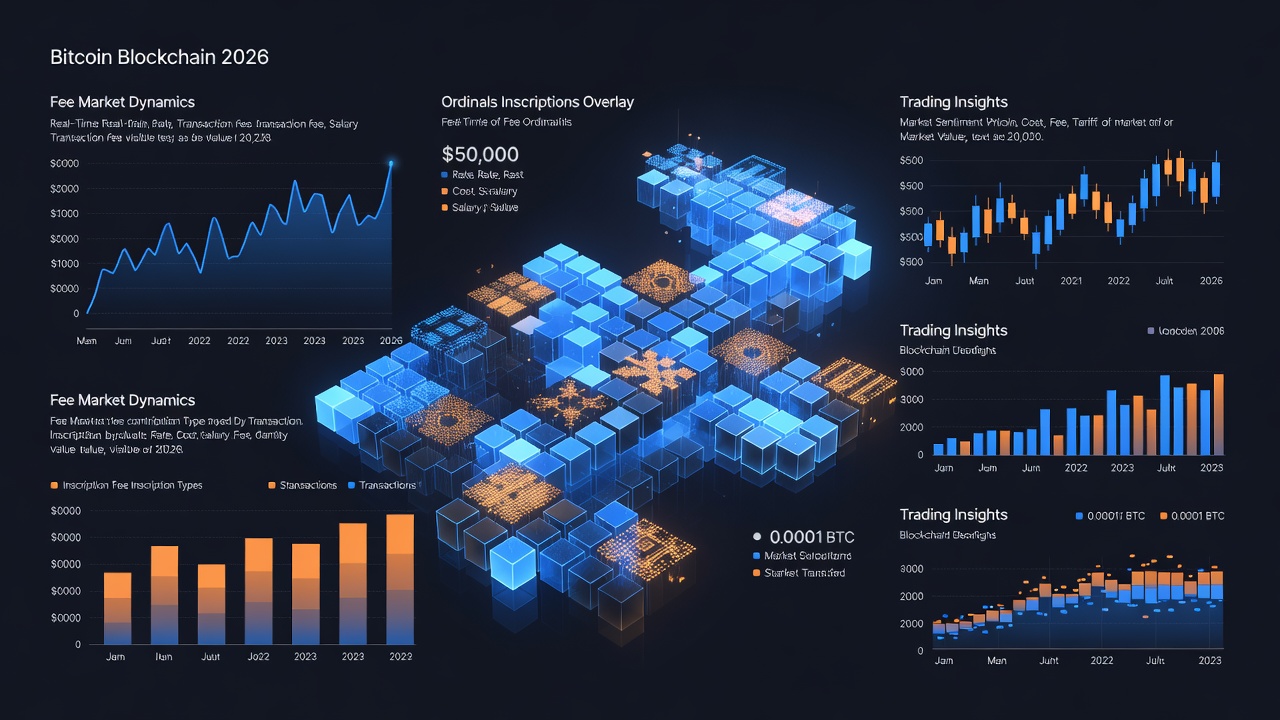
Ordinals activity has intensified competition within each block, pushing average fees higher during peak inscription periods. Traders now monitor inscription volume alongside classic fee estimators to anticipate volatility. Pre-Ordinals baselines showed steadier fee curves, while 2026 data reveals sharper spikes tied to high-profile collections and rare satoshi hunts. For example, during March 2026 inscription surges, fee rates briefly exceeded levels seen during the 2024 halving, demonstrating how Ordinal-driven demand can override traditional seasonal patterns. Analysts who track the ratio of inscription transactions to standard payments gain an early warning system for fee market stress that pure BTC volume metrics often miss.
Block Space Competition and Its Trading Implications
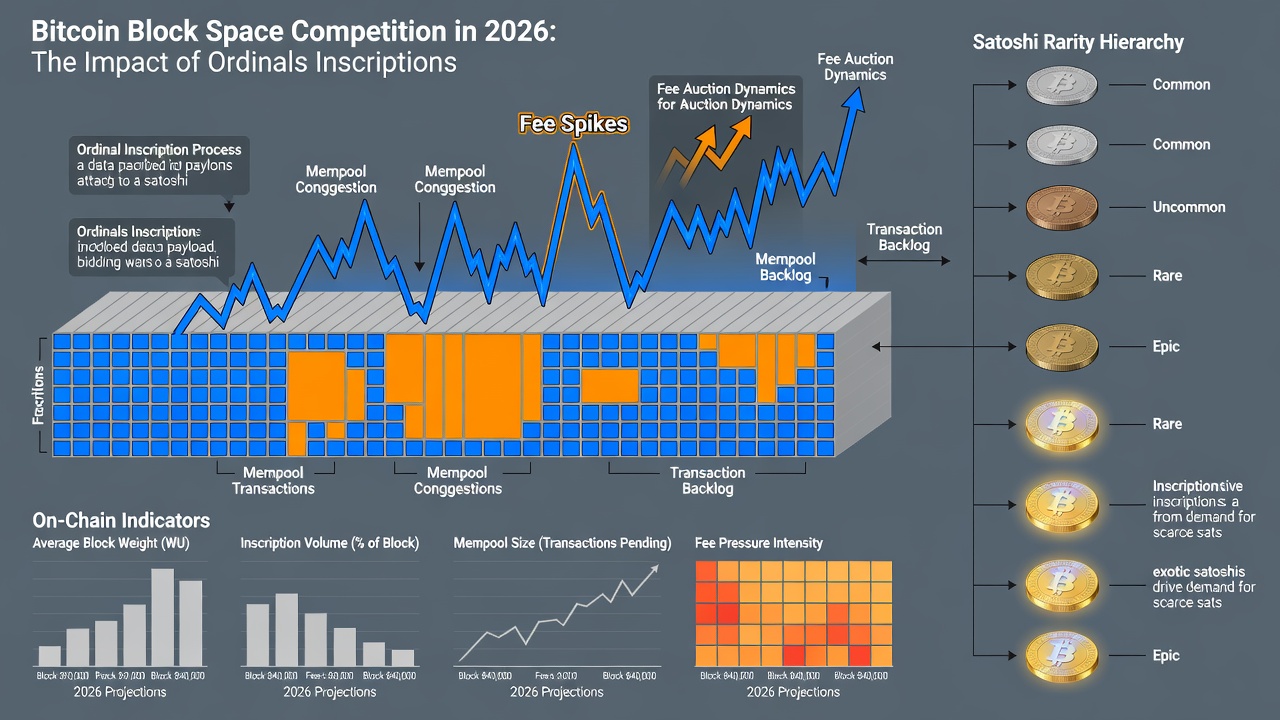
With inscriptions consuming a notable share of block weight, miners prioritize fee-paying transactions more aggressively. This environment rewards analysts who track ordinal-specific mempool congestion. Real-world examples from early 2026 demonstrate how sudden inscription waves delayed standard BTC transfers, creating short-term arbitrage opportunities for fee-aware traders. Block space has become a zero-sum resource where inscription batches can push out lower-fee payments, leading to confirmation delays that ripple through exchanges and payment processors. Understanding this competition helps traders time entries and exits more precisely, especially when planning large transfers or monitoring DeFi activity built on Bitcoin layers.
New Indicators for Tracking Ordinal Activity
Effective 2026 workflows combine established Bitcoin metrics with Ordinal-focused signals such as inscription rate per block, satoshi rarity distribution, and cumulative inscription size. These indicators help distinguish organic network growth from speculative inscription surges. The inscription rate per block provides a real-time pulse on demand, while rarity distribution reveals whether activity centers on common or premium satoshis. Cumulative inscription size tracks overall data load and can forecast future fee pressure as collections grow. Traders who layer these signals onto existing dashboards often spot momentum shifts days before they appear in headline volume numbers.
Step-by-Step Methods for Incorporating Ordinal Data
Integrating Ordinal insights requires a structured approach that builds on existing analysis habits. Begin by exporting raw block data from a full node and parsing inscription metadata using open-source libraries. Next, overlay inscription volume on fee heatmaps using customizable dashboards to visualize correlations. Compare current metrics against 2024 pre-Ordinals averages to quantify deviation and establish new baselines. Automate alerts for unusual satoshi transfer patterns that often precede fee spikes, and regularly backtest these alerts against historical 2025-2026 data. Finally, combine Ordinal signals with classic indicators like realized price and exchange reserves to build composite trading models. This methodical process turns raw inscription data into actionable intelligence rather than noise.
Sample Dashboards and Recommended Tools
Popular setups integrate on-chain explorers with custom scripts that flag high inscription density blocks. Analysts frequently reference public resources like bitcoin.org for protocol fundamentals and github.com repositories for open-source Ordinal parsers. Additional tools include mempool.space for visual congestion tracking and custom Python notebooks that merge inscription APIs with traditional blockchain analytics. These combinations allow rapid iteration on custom indicators without building infrastructure from scratch. Many professional desks now maintain dual dashboards—one for classic BTC metrics and one dedicated solely to Ordinal flows—enabling side-by-side comparison during volatile periods.
Real-World 2026 Network Activity Examples
Throughout the first half of 2026, several notable events illustrated Ordinals’ growing influence. A major collection launch in February caused a 48-hour period where over 35% of block weight was dedicated to inscriptions, pushing median confirmation times for standard transactions from 12 minutes to nearly 45 minutes. Another example occurred in May when rare satoshi bidding wars coincided with a routine difficulty adjustment, creating a perfect storm of fee volatility that caught many automated trading systems off guard. These cases underscore why static models fail and why continuous monitoring of Ordinal activity has become non-negotiable for serious participants.
Comparisons to Pre-Ordinals Baselines
Before widespread inscriptions, block utilization rarely exceeded 80% outside major events. In 2026, sustained utilization above 95% has become common, altering how traders model transaction confirmation times and fee estimates. This shift demands updated risk parameters in portfolio strategies. Pre-Ordinals fee distributions followed relatively predictable patterns tied to halvings and macro events, whereas today’s environment shows frequent, inscription-triggered outliers that require dynamic modeling. Analysts who fail to update their baselines risk underestimating both opportunity and downside during periods of elevated inscription activity.
Mistakes to Avoid When Analyzing Ordinals
- Over-relying on raw transaction count without adjusting for inscription size and complexity.
- Ignoring the distinction between one-time collection launches and sustained organic demand.
- Applying pre-2024 fee models without recalibrating for the new baseline utilization rates.
- Neglecting satoshi rarity tracking when assessing long-term scarcity signals.
FAQ: Common Trader Questions on Risk and Opportunity
How do Ordinals affect long-term Bitcoin security?
Higher fee revenue from inscriptions can strengthen miner incentives, though sustained demand remains uncertain and requires ongoing observation through 2026 and beyond.
What risks arise from ignoring Ordinal signals?
Traders may underestimate fee volatility or mis-time entries during inscription-driven congestion, leading to unexpected slippage or delayed settlements.
Are there opportunities in Ordinal-related trading?
Yes, monitoring inscription flows can reveal early momentum in niche digital asset segments tied to the Bitcoin network, including secondary markets for rare sats and inscription-linked derivatives.
How should position sizing change in high-Ordinals environments?
Many traders reduce average position size during periods of elevated inscription density to account for increased fee uncertainty and potential confirmation delays.
Conclusion
Bitcoin Ordinals continue to reshape network economics in 2026. By integrating new indicators and workflows, analysts gain a clearer view of evolving conditions and maintain an edge in decision-making. The combination of traditional metrics with Ordinal-specific data creates a more complete picture of Bitcoin’s current state and future trajectory, empowering traders to navigate an increasingly complex on-chain environment with greater confidence.

No comments yet. Be the first!