 CryptoChain Blog

Introduction to Bitcoin Regulatory Shifts in 2026
The global regulatory environment for Bitcoin continues to evolve rapidly in 2026, creating both challenges and opportunities for traders and investors. New policies from major jurisdictions are reshaping market dynamics, liquidity, and compliance requirements. This article provides an in-depth analysis of these shifts, drawing on case studies, scenario comparisons, and actionable guidance to help traders refine their strategies amid uncertainty. Regulatory developments are no longer limited to isolated announcements; they now influence everything from exchange operations to institutional adoption. Understanding these changes is essential for anyone seeking to navigate the compliance landscape effectively while maintaining a competitive edge in Bitcoin trading. As governments worldwide seek to balance innovation with consumer protection, traders must stay informed to avoid unexpected disruptions and capitalize on emerging opportunities in a more structured market.
Bitcoin's decentralized nature makes it particularly sensitive to regulatory announcements, often triggering immediate price movements and shifts in trading volume. In 2026, the focus has moved beyond basic licensing toward integrated frameworks that address custody, taxation, and cross-border flows. This comprehensive overview equips readers with the knowledge needed to adjust their approaches proactively.
Key Global Regulatory Updates in 2026
Several jurisdictions have introduced or expanded frameworks targeting Bitcoin. In the United States, enhanced oversight from financial authorities focuses on custody standards and anti-money laundering protocols. The European Union has advanced its Markets in Crypto-Assets regulation with additional reporting layers for cross-border transfers. Meanwhile, Asian markets such as Singapore and Japan have refined licensing regimes to balance innovation with investor protection. These updates reflect a broader trend toward harmonization of rules while preserving regional differences that traders must account for when operating across borders. Additional regions including the United Kingdom and Australia are aligning their approaches with international standards set by bodies like the Bank for International Settlements.
Traders should note that these policies often include phased implementation timelines, allowing time for market participants to adapt systems and processes. Monitoring official channels remains critical to avoid compliance gaps that could lead to trading restrictions or penalties.
Case Studies of Major Jurisdiction Changes
United States Developments
Recent U.S. policy refinements emphasize clearer guidelines for Bitcoin exchanges and institutional custody. Traders now face stricter know-your-customer requirements and transaction monitoring obligations. This has led to increased collaboration between platforms and regulators to ensure seamless compliance without disrupting trading volumes. Practical examples include exchanges implementing automated screening tools that flag high-risk transactions in real time, helping traders maintain access to liquidity pools while meeting new documentation standards.
European Union Framework
The EU's evolving approach includes standardized disclosure rules that affect how Bitcoin products are marketed to retail investors. Firms must now provide detailed risk assessments, altering the way analysts present market forecasts. Case studies from major EU exchanges show that post-implementation, retail participation stabilized as clearer guidelines reduced uncertainty, though some smaller platforms exited the market due to increased operational costs.
Asia-Pacific Examples
In Singapore, updated licensing has streamlined approvals for compliant Bitcoin service providers, while Japan continues to emphasize consumer safeguards through mandatory audits. These case studies illustrate how localized rules create varied entry barriers and operational costs. Traders in the region have benefited from faster approval processes for new products, but must navigate stricter capital requirements when scaling operations.
Pre- and Post-Regulation Scenario Comparisons
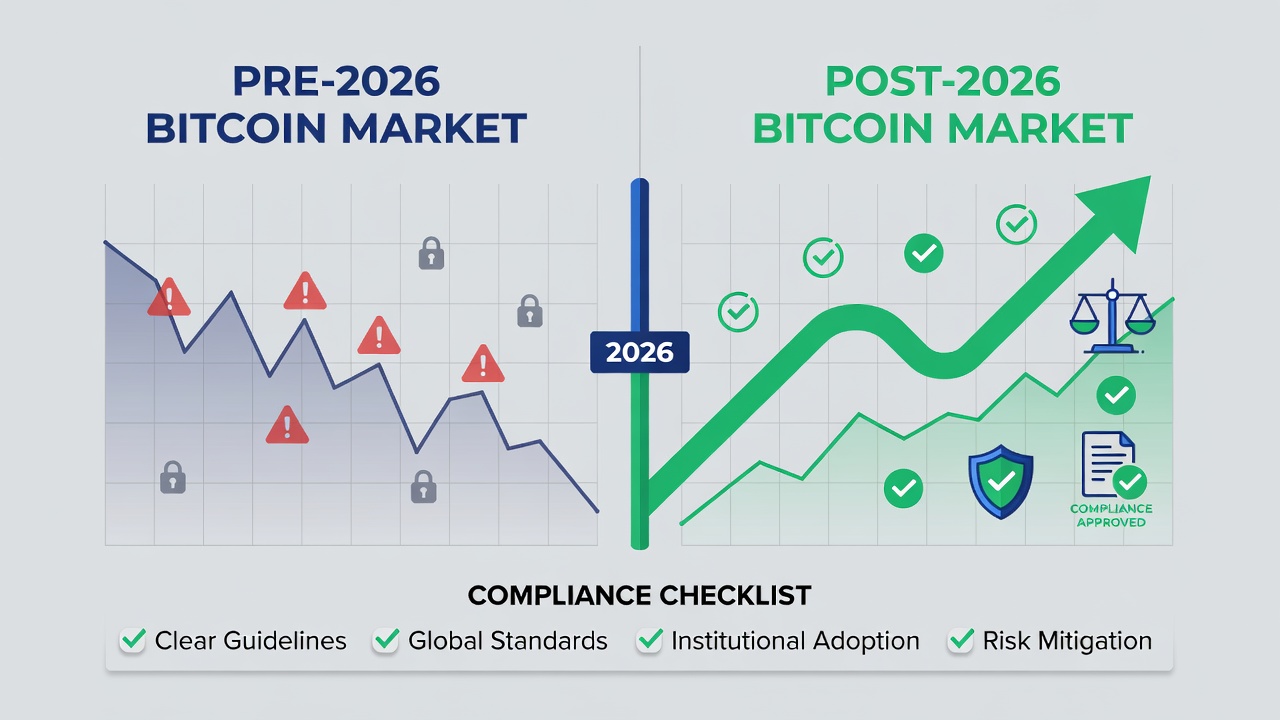
Before the latest 2026 regulatory wave, Bitcoin markets operated with greater flexibility but higher volatility due to inconsistent oversight. Post-regulation scenarios show improved institutional participation and reduced fraud incidents, though spreads have tightened in some regions. Traders report more predictable liquidity patterns in regulated environments, offset by the need for enhanced reporting infrastructure. Key differences include faster settlement times in compliant jurisdictions and greater access to derivatives products under supervised conditions. Institutional investors, for instance, now prefer regulated venues for large positions, leading to more stable order books during volatile periods.
Comparative analysis reveals that pre-regulation environments allowed quicker entry for new trading strategies, whereas post-regulation markets reward those who integrate compliance into their core workflows. This shift encourages longer-term holding patterns among certain investor groups while creating short-term arbitrage opportunities across jurisdictions with differing timelines.
Step-by-Step Guidance for Adjusting BTC Analysis Frameworks
- Map all active regulatory requirements in your primary trading jurisdictions using official government portals and maintain a living document that updates quarterly.
- Incorporate compliance metrics such as reporting deadlines into your existing risk models by assigning weighted scores to potential regulatory events.
- Stress-test strategies against both optimistic and restrictive regulatory outcomes using historical data from similar policy shifts in prior years.
- Integrate real-time alerts for policy announcements into your monitoring routine through API connections to regulatory feeds.
- Rebalance portfolio allocations to favor assets with clearer regulatory status while diversifying exposure to emerging markets still finalizing rules.
- Conduct regular audits of trading bots and algorithms to ensure they automatically flag or pause activity in non-compliant regions.
Practical Examples of Monitoring Tools
- Regulatory tracking dashboards offered by established financial data providers that aggregate global policy updates and send customized notifications based on asset class.
- On-chain analytics platforms that flag unusual transaction patterns potentially linked to compliance issues, allowing traders to adjust positions before broader market reactions occur.
- Automated alert systems connected to official regulatory feeds for immediate notification of new rules, often integrated directly into portfolio management software.
- Community-driven compliance forums moderated by legal experts that provide early interpretations of complex policy language before official clarifications are released.
These tools enable traders to stay ahead of developments without constant manual oversight. For example, combining on-chain alerts with regulatory dashboards has helped many professionals identify jurisdiction-specific risks days before they impact pricing.
Impact on Investor Strategies and Common Pitfalls
Regulatory shifts influence everything from position sizing to the choice of exchanges. Savvy traders now build scenario-based models that factor in potential rule changes, leading to more resilient portfolios. Common pitfalls include ignoring phased implementation dates, which can result in sudden access restrictions, or failing to diversify across compliant and emerging markets. Another frequent mistake is over-relying on a single monitoring tool without cross-verification from primary sources.
Frequently Asked Questions
How do new regulations affect Bitcoin volatility?
Short-term volatility often rises during announcement periods, but longer-term stability tends to improve as clarity increases institutional confidence and reduces speculative trading.
What compliance risks should traders monitor most closely?
Key risks include cross-border transfer reporting, custody rule changes, and evolving tax treatment across jurisdictions, all of which can trigger forced liquidations if overlooked.
Are there safe strategies for adapting analysis frameworks?
Yes—focus on diversified monitoring, scenario planning, and regular reviews of official sources such as the U.S. Securities and Exchange Commission and European Commission websites.
Which tools best support ongoing compliance tracking?
Integrated dashboards that combine regulatory alerts with on-chain data provide the most comprehensive view, helping traders react swiftly to policy developments.
How might regulations evolve beyond 2026?
Expect continued international coordination through organizations like the Bank for International Settlements, potentially leading to more uniform global standards over the coming years.
Conclusion
Bitcoin regulatory shifts in 2026 demand proactive adaptation from traders. By studying jurisdiction-specific changes, comparing scenarios, and implementing structured monitoring processes, market participants can position themselves for sustained success. Continuous learning and tool integration remain vital in this dynamic environment, ensuring strategies stay aligned with both current rules and anticipated future developments.


No comments yet. Be the first!