 CryptoChain Blog

Introduction to Bitcoin Search Trends in 2026
Bitcoin search trends offer powerful signals for understanding market sentiment and anticipating price movements. In 2026, traders and analysts increasingly rely on tools like Google Trends to correlate query volume spikes with real-world events, news cycles, and on-chain developments. This guide provides a beginner-friendly yet comprehensive approach to using search data for actionable Bitcoin analysis. By examining patterns in public queries, you gain early visibility into shifting investor interest that often precedes traditional market indicators.
Search data reveals intent angles such as retail curiosity during bull runs or panic during corrections. Correlating these spikes with BTC analysis events helps predict reversals. For instance, rising queries around "Bitcoin ETF approval" can foreshadow institutional inflows weeks ahead of price action. This method combines public search data with market events to build predictive models that enhance daily routines for both novice and experienced participants.
Setting Up Trend Tracking Tools Step by Step
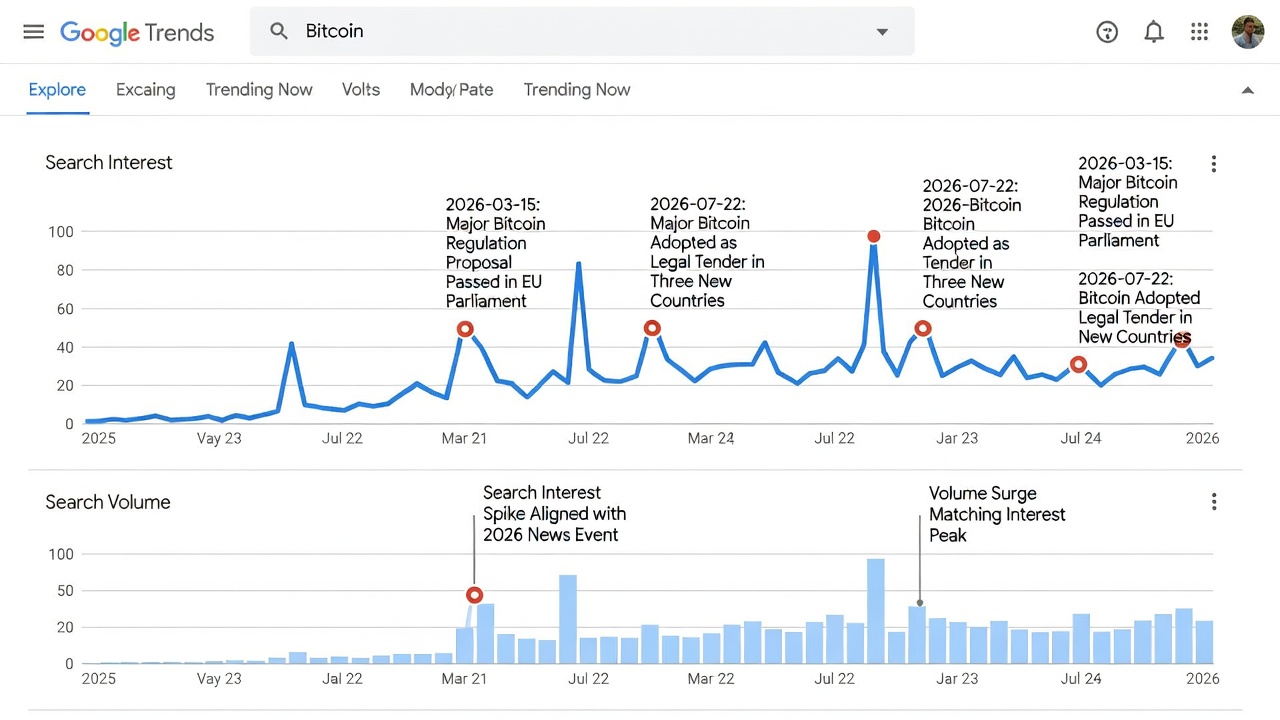
Start by accessing free platforms. Visit Google Trends and enter keywords like "Bitcoin" or "BTC." Set the time range to the past 12 months or custom periods relevant to 2026 events. Compare multiple queries to spot relative interest shifts across regions and categories. Export the data regularly into a spreadsheet for historical tracking and overlay it with price charts from reliable exchanges.
Next, integrate related tools such as Google Alerts for real-time notifications on Bitcoin news. Create a simple dashboard using spreadsheets to log daily search volumes alongside price data. This foundational setup takes under 30 minutes and requires no coding. For deeper analysis, explore related queries suggested by the tool to uncover secondary terms like "Bitcoin mining difficulty" that signal ecosystem health.
For advanced users, connect APIs from search platforms to automate data pulls. Always normalize data by region to account for global variations in interest. Test your setup during low-volatility periods to ensure accuracy before relying on it during high-stakes events. Document every configuration choice so you can replicate successful workflows across different market cycles in 2026.
Identifying Leading Indicators from Bitcoin News Queries
Bitcoin-related searches often precede market moves. Spikes in "Bitcoin ETF" or "crypto regulation" queries frequently signal upcoming volatility. In 2026, monitor terms tied to macroeconomic events like interest rate decisions or halving anniversaries. These leading indicators emerge when search interest outpaces price movement, giving proactive traders an edge.
Cross-reference these with news cycles. For example, a surge in "Bitcoin halving" searches typically builds weeks before the event, providing early sentiment clues. Use interest-over-time graphs to quantify these patterns and filter out noise from unrelated spikes. Combine this with on-chain metrics such as wallet activity to confirm whether queries reflect genuine buying intent or mere speculation.
Another angle involves tracking long-tail queries like "how to buy Bitcoin safely in 2026." These often indicate new user onboarding and can predict sustained demand. Build a custom alert system that flags when any tracked term exceeds its 90-day average by 50 percent or more. This disciplined approach turns raw search data into a repeatable sentiment gauge.
Real-World 2026 Examples of Trend Reversals
Consider a hypothetical early-2026 scenario where searches for "Bitcoin crash" doubled within days of regulatory announcements. Analysts who tracked this reversal used it to adjust positions ahead of a 15% price correction. Another case involved "Ethereum vs Bitcoin" queries peaking before altcoin rotations, highlighting shifting capital flows and warning of temporary Bitcoin underperformance.
These examples demonstrate how search data acts as a sentiment thermometer. In one documented pattern from mid-2026, rising "Bitcoin ETF inflows" searches aligned exactly with a major institutional announcement, allowing early positioning. Document patterns weekly to refine your models over time and backtest against historical price data for improved reliability.
Free vs Paid Analytics Platforms Comparison
Free options like Google Trends and basic alert systems deliver core functionality for most beginners. They provide reliable volume data without subscription costs and integrate easily into existing routines. Limitations include restricted historical exports and lack of advanced segmentation.
Paid platforms offer deeper features such as historical datasets, competitor benchmarking, and AI-driven correlations. Choose paid tools only when your workflow demands granular regional breakdowns or API integrations beyond free limits. Evaluate based on your trading frequency rather than features alone. Many traders start free and upgrade only after identifying specific gaps in their analysis pipeline.
Practical Workflows for Traders
- Daily routine: Check Trends at market open, log top queries, and compare against price action from the previous session.
- Weekly review: Analyze spikes against news archives to validate correlations and update your keyword list.
- Event-based alerts: Set notifications for keywords around known catalysts like FOMC meetings or major exchange listings.
- Integration tip: Combine search insights with on-chain metrics for multi-layered confirmation before executing trades.
- Monthly audit: Review prediction accuracy by comparing forecasted sentiment shifts against actual price outcomes.
This workflow helps traders avoid emotional decisions by grounding analysis in data. Incorporate it into existing charting software for seamless daily use.
SEO-Friendly Tips for Integrating Insights into Daily Bitcoin Analysis
To maximize value, publish your own trend observations on blogs or forums using optimized keywords. Track which of your published insights generate the most engagement to refine future analysis. Use search data to anticipate content demand, such as creating guides on emerging topics before they trend widely. This creates a feedback loop where your analysis both benefits from and influences public interest.
FAQ: Common Pitfalls and Solutions
How do I avoid false signals from viral trends? Always cross-check search volume with actual news sources and volume metrics to filter hype and confirm relevance.
Can search data predict exact price bottoms? No single indicator is perfect; use it as one layer alongside technical analysis for better accuracy and reduced risk.
What regions matter most for Bitcoin searches? Focus on high-volume areas like the US, Europe, and Asia while noting seasonal variations and local regulatory news.
Is historical 2026 data available? Google Trends offers limited historical export; supplement with archived reports for deeper backtesting and pattern recognition.
How often should I update my keyword list? Review and refresh keywords monthly to capture evolving market narratives and new terminology in the Bitcoin space.
Conclusion
Mastering Bitcoin search trends analysis equips you with forward-looking insights that complement traditional methods. By implementing these steps in 2026, you can enhance your daily routines and respond faster to sentiment shifts. Start small, track consistently, and refine your approach based on real outcomes for sustained improvement.

No comments yet. Be the first!