 CryptoChain Blog

Introduction to Carbon Credit Tokenization in 2026
Carbon credit tokenization represents a transformative intersection of blockchain technology and environmental finance. In 2026, this sector continues to evolve rapidly, offering investors and analysts new opportunities to engage with sustainable assets through decentralized networks. Tokenization converts traditional carbon credits into digital tokens on blockchain platforms, enhancing transparency, traceability, and liquidity in markets previously hampered by fragmentation and high entry barriers. This approach allows credits generated from verified emission reduction projects, such as reforestation or renewable energy installations, to be represented as unique digital assets that can be traded, retired, or integrated into broader financial portfolios.
This development aligns with global efforts to combat climate change by making carbon offsets more accessible and verifiable. As regulatory frameworks mature and major energy firms adopt these technologies, understanding the latest trends becomes essential for informed decision-making. The shift also supports corporate sustainability reporting by providing immutable records that reduce the risk of greenwashing accusations.
Market Growth Data and Key Drivers in 2026
The tokenized carbon credit market has seen substantial expansion throughout 2026. Growth stems from increasing corporate commitments to net-zero targets and heightened interest from institutional investors seeking ESG-compliant assets. Blockchain enables fractional ownership, allowing smaller participants to enter the market without traditional barriers. Analysts observe that the volume of tokenized credits has risen steadily due to improved data integration from satellite monitoring and IoT devices that feed real-time environmental metrics into smart contracts.
Key drivers include improved interoperability between chains and integration with real-world data oracles for accurate emissions tracking. Analysts note that adoption rates have accelerated due to successful pilot programs that demonstrate reduced transaction times compared to legacy systems. Additional momentum comes from investor demand for assets that combine financial returns with measurable environmental impact, creating a feedback loop where more projects seek verification to access tokenized markets.
Major Project Launches and Innovations
Several high-profile projects launched in early 2026, focusing on scalable infrastructure for token issuance and trading. These initiatives emphasize security audits and partnerships with verification bodies to build trust. Innovations include automated retirement mechanisms that prevent double-counting of credits and advanced analytics dashboards that help users track the lifecycle of each token from issuance to retirement.
Developers have prioritized user-friendly interfaces, enabling seamless onboarding for energy companies and financial institutions. These launches signal a shift toward mainstream integration, with platforms offering enhanced analytics for portfolio management. Many projects now incorporate governance tokens that allow stakeholders to vote on protocol upgrades, further decentralizing decision-making around carbon market standards.
Regulatory Shifts Impacting Adoption
Regulatory developments in 2026 have provided clearer guidelines for tokenized assets. Jurisdictions are aligning blockchain standards with international climate agreements, fostering cross-border compatibility. This includes recognition of digital tokens as valid instruments for compliance reporting under emerging carbon pricing schemes. Governments are increasingly requiring on-chain proof of retirement for credits used in mandatory offset programs.
However, varying approaches across regions create both opportunities and challenges. Projects that proactively engage with regulators tend to achieve faster market penetration. Investors should monitor updates from bodies like the UNFCCC for ongoing policy changes, as these can directly influence which protocols gain favor in different markets.
Comparing Leading Protocols: Polygon and Stellar
Polygon and Stellar stand out as leading protocols for carbon credit tokenization. Polygon offers robust scalability through its layer-2 solutions, supporting high-volume transactions with low fees and strong developer ecosystems. Its integration with Ethereum ensures broad compatibility for DeFi applications, making it suitable for complex trading strategies involving derivatives or liquidity pools.
Stellar, by contrast, excels in cross-border payments and asset issuance with a focus on simplicity and speed. It provides built-in compliance features that appeal to regulated industries. Energy firms often evaluate both based on specific needs such as transaction throughput versus regulatory alignment. Additional considerations include Polygon’s extensive tooling for custom smart contracts compared to Stellar’s emphasis on native asset management and rapid settlement.
- Polygon advantages: High throughput, extensive tooling, and vibrant community support for rapid prototyping.
- Stellar advantages: Efficient for remittances, native asset management, and lower entry barriers for new issuers entering regulated spaces.
- Trade-offs: Polygon may involve more complex setup and potential congestion during peak periods, while Stellar offers fewer customization options for advanced smart contracts but prioritizes reliability.
The choice depends on project scale and target audience, with many opting for hybrid approaches where feasible to leverage the strengths of each network.
Real-World Case Studies from Energy Firms
Leading energy companies have successfully tokenized carbon credits in 2026, demonstrating practical benefits. One major utility provider used blockchain to track offsets from renewable projects, achieving full auditability from issuance to retirement. This reduced administrative overhead and improved stakeholder confidence through transparent reporting accessible to regulators and investors alike.
Another case involved an oil and gas firm partnering with a Stellar-based platform to issue tokens representing verified forestry credits. The initiative facilitated internal carbon pricing mechanisms and external trading on decentralized exchanges. These examples highlight measurable improvements in efficiency and transparency, serving as models for broader industry adoption. A third project saw a European energy conglomerate integrate Polygon tokens with existing enterprise resource planning systems, allowing automated offsetting of operational emissions while generating additional revenue through secondary market sales. 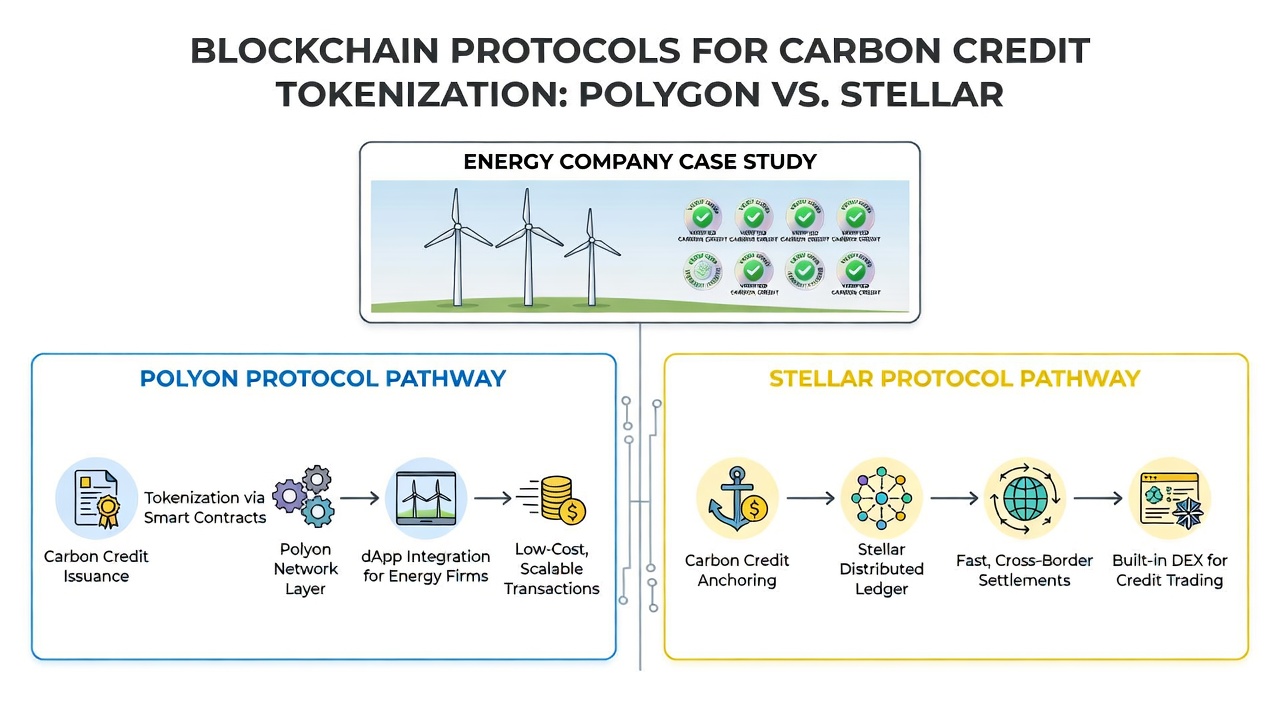
Step-by-Step Overview of Verification Processes
Verification remains critical to maintaining integrity in tokenized carbon markets. The process typically follows these steps:
- Project registration with an accredited standard body to establish baseline emissions data and define the scope of reduction activities.
- Independent third-party audits using satellite imagery and IoT sensors for real-time monitoring, ensuring claims match actual environmental outcomes.
- Token minting on the chosen blockchain after validation, with metadata embedded for traceability including project location, vintage year, and verification methodology.
- Ongoing reporting and periodic re-verification to ensure continued compliance, often triggered automatically by smart contract conditions.
- Retirement of tokens upon use, permanently recorded on-chain to prevent reuse and provide a public audit trail.
This structured approach minimizes risks of fraud and supports claims made by World Bank initiatives on carbon markets, helping participants meet both voluntary and compliance-driven demand.
Practical Steps for Investors and Analysts
Investors seeking to participate can begin by selecting a verified platform that supports their preferred protocol. Next, conduct due diligence on underlying projects by reviewing third-party audit reports and on-chain metadata. Diversification across multiple protocols and credit types reduces exposure to single-point failures. Finally, monitor liquidity pools and secondary markets while staying informed about regulatory updates that could affect token usability.
Examples of Successful Trades and Potential Risks
Successful trades in 2026 often involve institutional buyers acquiring tokenized credits for offsetting operations, with transactions settling in minutes rather than days. Platforms report increased volumes in sectors like aviation and manufacturing, where buyers value the speed and transparency of blockchain settlement. One notable example featured a logistics company purchasing forestry-based tokens to offset fleet emissions, completing the trade and retirement process within a single business day.
Potential risks include smart contract vulnerabilities, oracle failures leading to inaccurate data, and market volatility tied to broader crypto trends. Liquidity can fluctuate, and regulatory uncertainty in certain jurisdictions poses compliance hurdles. Investors mitigate these by diversifying across protocols and conducting thorough due diligence, including stress-testing wallet security and reviewing historical verification records.
Conclusion
Carbon credit tokenization on blockchain networks continues to mature in 2026, blending environmental impact with financial innovation. By examining protocols, case studies, verification processes, and risk management strategies, investors gain practical tools for participation while navigating associated challenges effectively.
FAQ
How does tokenization affect liquidity of carbon credits?
Tokenization significantly boosts liquidity by enabling fractional ownership and 24/7 trading on decentralized platforms, reducing the illiquidity common in traditional over-the-counter markets and allowing smaller investors to participate alongside large institutions.
What compliance considerations apply to tokenized credits?
Compliance requires adherence to both blockchain standards and environmental regulations, including KYC/AML checks and alignment with frameworks from organizations like the IEA for emissions accounting, as well as local securities laws that may classify certain tokens as financial instruments.
Are there risks of double-counting in tokenized systems?
Robust on-chain retirement mechanisms and third-party verification help prevent double-counting, though users must select platforms with proven audit trails and transparent metadata to maintain market integrity over time.

No comments yet. Be the first!