 CryptoChain Blog
2026 Crypto News: Blockchain Voting Systems Explained
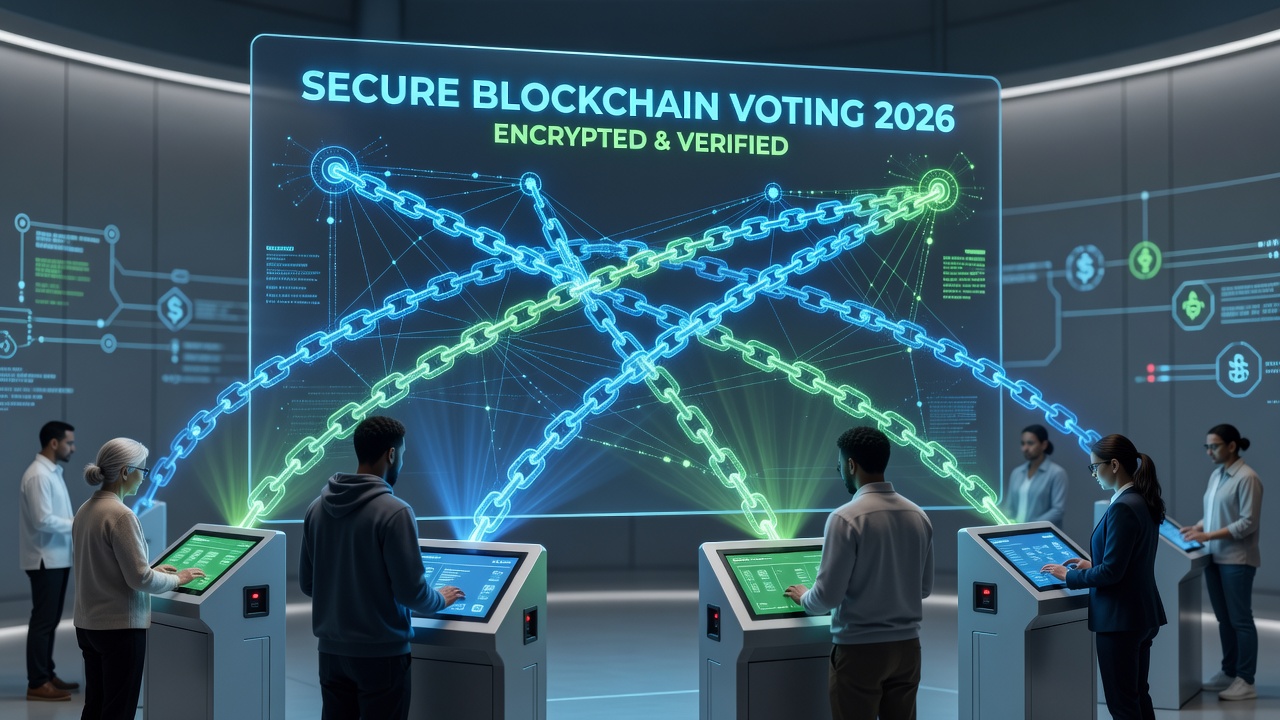
Blockchain technology is transforming how elections are conducted worldwide in 2026 by providing a foundation for secure and transparent voting. As crypto news continues to highlight advancements in distributed ledger systems, many governments and organizations are exploring blockchain-based voting to address long-standing issues of fraud, low turnout, and lack of trust. This beginner-friendly guide delves deeply into the technology, covering real-world implementations, regulatory challenges, and practical barriers to adoption. Readers will gain a thorough understanding of how these systems work and what the future may hold for democratic processes globally.
Understanding Blockchain Voting Basics
At its core, blockchain voting replaces traditional centralized databases with a decentralized network where every vote is recorded as a transaction on an immutable chain. Unlike conventional systems that rely on a single authority to tally results, blockchain distributes copies of the ledger across multiple nodes, making unauthorized changes nearly impossible. Each vote receives a unique cryptographic hash that links it to previous entries, forming an unbreakable sequence. This approach draws directly from cryptocurrency principles but adapts them for civic applications, ensuring that results can be audited by anyone with access to the public chain while maintaining voter privacy through encryption techniques.
The appeal lies in enhanced security and verifiability. Voters can confirm their ballot was counted without revealing their identity, reducing opportunities for manipulation that have plagued paper-based and electronic systems for decades.
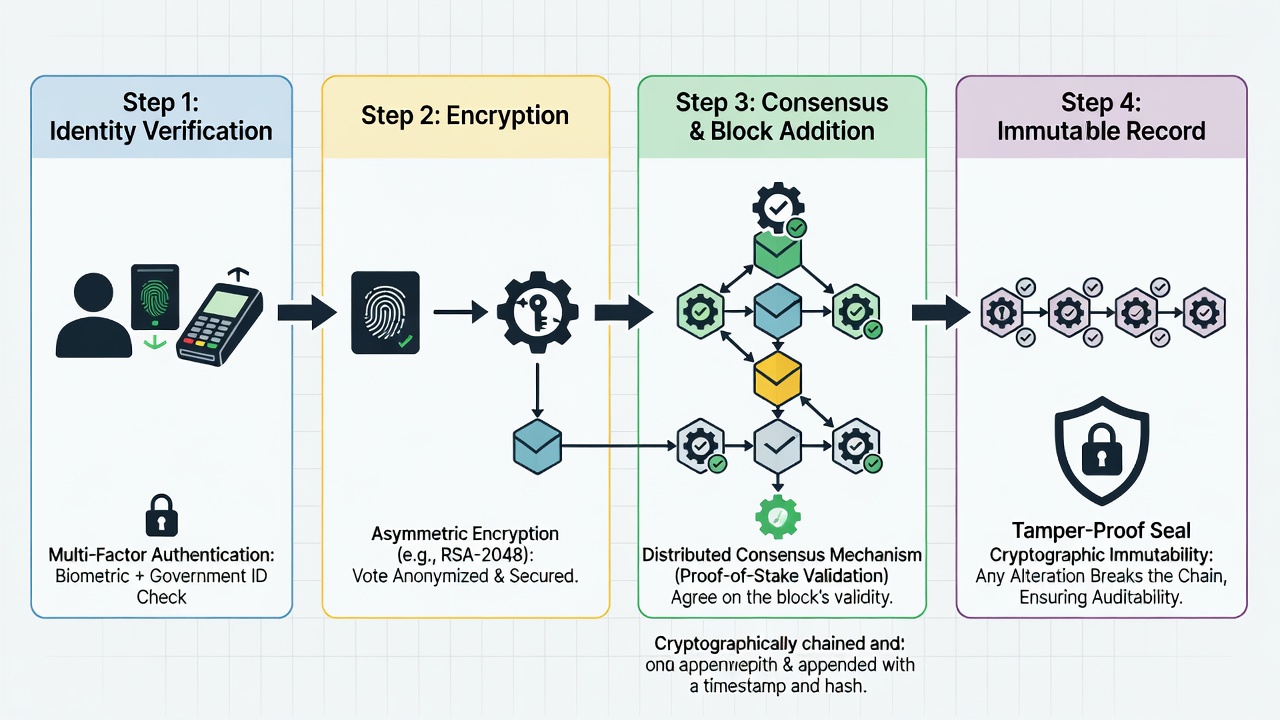
Tamper-Proof Vote Recording Explained Step-by-Step
- Voter authentication occurs through a secure decentralized identity protocol that verifies eligibility without exposing personal details.
- The selected vote is encrypted and converted into a transaction with a timestamp and unique identifier.
- Network nodes validate the transaction using consensus algorithms such as proof-of-stake to confirm its legitimacy.
- Once validated, the transaction is grouped into a new block and added to the existing chain via cryptographic linking.
- Any subsequent attempt to alter a recorded vote would require rewriting all following blocks, which demands control of the majority of the network—an impractical feat in well-designed systems.
This layered process creates multiple safeguards against tampering, offering a level of integrity that centralized servers struggle to match.
Decentralized Identity Verification
Decentralized identity plays a crucial role by letting voters prove their right to participate using self-sovereign identity frameworks. These systems employ zero-knowledge proofs so that eligibility checks happen without disclosing sensitive information like full names or addresses. In practice, a citizen might use a mobile app linked to government-issued credentials stored on a blockchain to receive a verifiable credential. This credential then grants access to the voting platform while keeping data under user control. Integration challenges arise when connecting these digital identities to legacy voter rolls, requiring careful API development and data migration strategies to avoid disenfranchising eligible participants.
Integration with Existing Election Infrastructure
Successful blockchain voting rarely replaces entire legacy systems outright. Instead, it functions as an overlay or audit layer that works alongside traditional databases and paper backups. Election officials can feed results into blockchain nodes for real-time verification while maintaining official tallies through established channels. This hybrid model helps ease transition concerns and satisfies legal requirements in many jurisdictions. Technical teams must address compatibility issues such as data format standardization and network latency during peak voting periods to ensure smooth operations.
Real-World Pilot Programs and Case Studies
Several notable pilots have shaped the landscape heading into 2026. Estonia has continued refining its blockchain-enhanced e-voting platform, allowing citizens to cast ballots remotely with verifiable audit trails. In the United States, municipal experiments in states like Colorado and Virginia have focused on military and overseas voters, demonstrating faster result reporting and reduced logistical costs. European Union member states have run limited trials emphasizing cross-border accessibility for expatriates. These case studies reveal consistent benefits in transparency but also underscore the importance of robust testing for accessibility features and cybersecurity protocols before scaling to national levels.
Comparison to Traditional Voting Methods
- Security: Blockchain creates distributed resistance to single-point attacks, whereas traditional electronic machines and paper ballots remain susceptible to localized tampering or loss.
- Transparency: Publicly auditable ledgers enable independent observers to verify outcomes, contrasting with opaque central counting centers that limit external review.
- Accessibility: Remote blockchain voting can increase participation among disabled or geographically distant voters, though it demands reliable internet access unlike in-person polling stations.
- Scalability and Cost: Legacy systems manage high volumes with established infrastructure, while blockchain implementations often require additional layer-two scaling solutions to handle millions of simultaneous votes efficiently.
- Auditability: Blockchain provides cryptographic proof of every action, reducing disputes compared to manual recounts prone to human error.
Regulatory Hurdles and Adoption Barriers
Navigating regulations remains one of the largest obstacles. Privacy frameworks such as those outlined by NIST demand rigorous encryption standards that blockchain protocols must meet. Data protection laws in regions like Europe require careful handling of voter information, often necessitating hybrid designs. Additional barriers include the digital divide affecting elderly or low-income populations, high initial infrastructure investment, and skepticism from election administrators accustomed to established procedures. Policymakers are increasingly turning to OECD digital governance resources for guidance on balancing innovation with public trust.
Mistakes to Avoid When Considering Blockchain Voting
Organizations exploring these systems should steer clear of rushing implementation without extensive pilot testing. Overlooking voter education can lead to low adoption rates or confusion at the polls. Ignoring accessibility standards risks excluding key demographics, while failing to plan for hybrid backups may create legal vulnerabilities if technical issues arise. Partnering early with cybersecurity experts and conducting third-party audits helps mitigate these common pitfalls.
Emerging Trends and Future Implications for Global Elections
Looking ahead, integration with broader Web3 developments suggests potential for more inclusive international voting experiments. Advances in energy-efficient consensus mechanisms address earlier environmental criticisms. Organizations such as the United Nations are monitoring these trends for their impact on democratic participation worldwide. By the end of the decade, refined blockchain voting could significantly elevate public confidence in election outcomes across diverse political systems.
FAQ
Is blockchain voting completely secure?
While the technology offers strong protection against tampering, overall security depends on secure identity management, user device protection, and ongoing network maintenance to guard against evolving threats.
How does it integrate with current election infrastructure?
Most deployments use blockchain as a supplementary verification layer that runs parallel to official systems, allowing gradual adoption without disrupting established workflows.
What are the main barriers in 2026?
Key challenges include aligning with data privacy regulations, bridging the digital divide, securing sufficient funding for infrastructure, and building widespread public understanding of the technology.
Can blockchain voting increase turnout?
Early evidence from pilots indicates potential gains through remote access options, but success hinges on intuitive interfaces and reliable connectivity for all eligible voters.
Blockchain voting continues to evolve as a powerful tool for enhancing electoral integrity, driven by ongoing crypto innovations and global demands for greater transparency in democratic processes.


No comments yet. Be the first!