 CryptoChain Blog

Introduction to Blockchain in Music Royalties
In 2026, blockchain continues to disrupt traditional music industry structures by offering transparent, efficient royalty management. This technology leverages distributed ledgers to record ownership and automate payments, reducing delays that have long plagued artists and rights holders. The entertainment sector has seen growing adoption as creators seek alternatives to opaque systems that often leave musicians waiting months for compensation. By creating an immutable chain of custody for intellectual property, blockchain empowers independent artists and major labels alike to track usage across streaming platforms, live performances, and licensing deals with unprecedented accuracy. This evolution aligns with broader cryptocurrency news highlighting entertainment industry adoption, where fans and creators interact directly through tokenized ecosystems.
The shift toward decentralized systems addresses core inefficiencies in legacy models where intermediaries often take significant cuts and processing times stretch for months. As global music consumption surges, the need for scalable solutions becomes critical, positioning blockchain as a foundational tool for fairer revenue distribution.
How Distributed Ledgers Transform Royalty Distribution
Distributed ledger technology creates an immutable record of music rights and transactions. Every stream, download, or license generates an entry that is visible to all authorized parties, eliminating disputes over ownership percentages. This transparency extends beyond simple tracking to include metadata verification, ensuring that songwriters, producers, and performers receive credit without relying on centralized databases prone to errors or manipulation.
Platforms built on this foundation enable real-time tracking across global markets, ensuring creators receive compensation proportional to actual usage rather than estimated reports. Integration with existing digital service providers allows seamless data flows, while on-chain analytics provide insights into listener demographics and geographic performance.
Smart Contract Automation in 2026
Smart contracts execute royalty splits automatically once predefined conditions are met. For instance, when a track reaches a certain number of streams, funds transfer instantly to wallets of songwriters, performers, and producers without manual intervention. These self-executing agreements are coded with specific rules that account for varying contribution levels, such as higher percentages for primary artists versus session musicians.
This automation minimizes human error and administrative overhead, allowing smaller independent artists to operate with the same efficiency as major label acts. Developers continue refining contract templates tailored to music, incorporating features like escrow for advance payments and conditional releases tied to milestones.
Direct Artist-to-Fan Payment Platforms
New platforms in 2026 facilitate direct micropayments from fans to artists via cryptocurrency wallets. Supporters can purchase tokens tied to specific releases, granting access to exclusive content while funding creators upfront. These interactions often occur through decentralized applications that reward engagement, such as sharing tracks or attending virtual events.
These models bypass traditional streaming services and their revenue shares, fostering closer artist-fan relationships and more sustainable income streams. Examples include community-driven DAOs where token holders vote on release strategies, further democratizing the creative process.
Blockchain vs Traditional Royalty Systems: Speed and Efficiency
Traditional systems often require 6 to 18 months for full royalty reconciliation due to multiple intermediaries and manual audits. Blockchain-based solutions settle transactions in minutes or hours once data is verified on the ledger. The contrast becomes evident in cross-border scenarios where currency fluctuations and banking delays compound issues in conventional setups.
- Transparency: All parties view the same ledger entries in real time, reducing litigation over unpaid royalties.
- Cost reduction: Fewer middlemen translate to higher net payouts for creators, with fees often limited to minimal network costs.
- Global reach: Cross-border payments occur without currency conversion delays, supporting artists with international audiences.
- Auditability: Every transaction remains permanently recorded, simplifying tax reporting and compliance.
- Scalability: Networks handle thousands of micro-transactions simultaneously, accommodating high-volume streaming data.
Real 2026 Case Studies from Major Labels
Several prominent labels have piloted blockchain integrations this year. One major player implemented smart contracts across its catalog, resulting in faster quarterly distributions and fewer disputes. Another partnered with a decentralized platform to tokenize select releases, allowing fans to own fractional rights and receive a share of future royalties. A third example involves an independent label collective that used ledger technology to manage collaborative albums, automatically allocating earnings based on pre-agreed splits for featured vocalists and beat producers.
These experiments demonstrate measurable improvements in payout velocity and artist satisfaction compared to legacy processes. Industry observers note reduced administrative burdens and enhanced trust between stakeholders.
Ethereum Foundation resources provide foundational explanations of the smart contract technology underpinning many of these pilots.
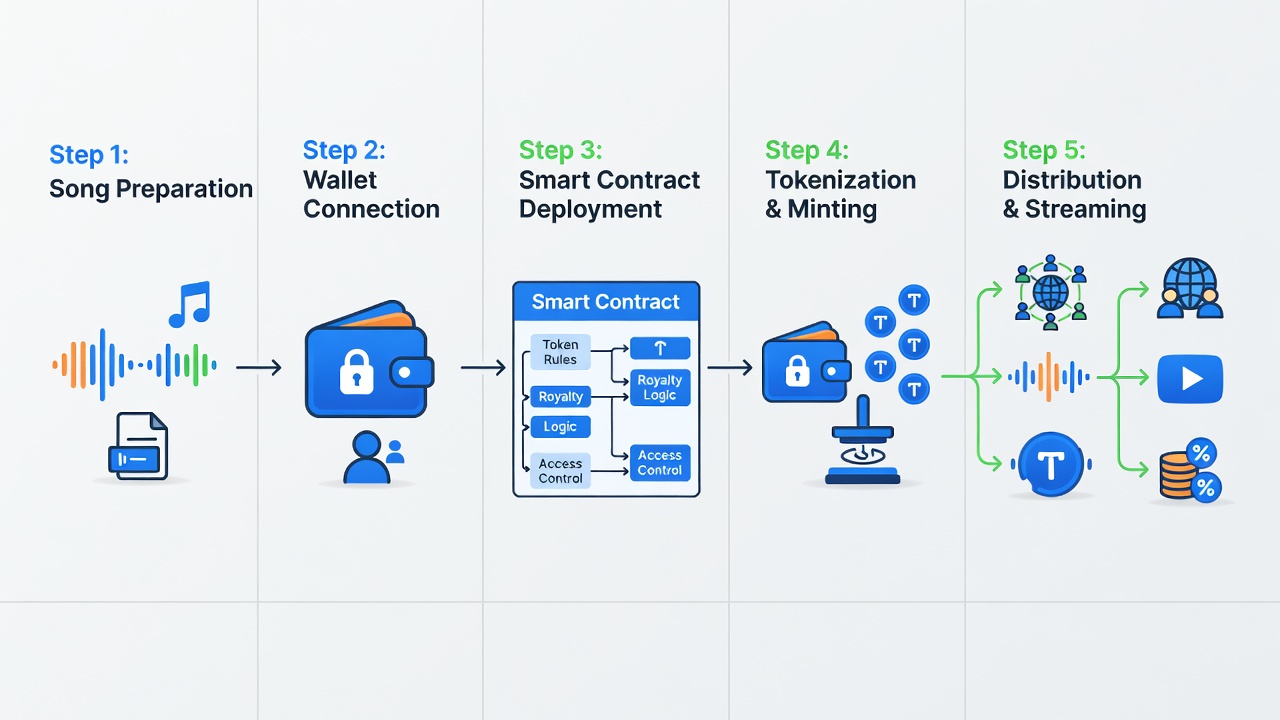
Step-by-Step Guide to Tokenizing a Song Release
Tokenization converts music rights into digital assets on a blockchain. Follow these practical steps to get started, each designed to ensure legal and technical readiness:
- Choose a compatible blockchain network and wallet that supports music-specific tokens. Research networks known for low transaction fees and high throughput to handle frequent royalty updates efficiently.
- Upload metadata including song files, ownership details, and royalty split percentages to a decentralized storage solution. This step creates a permanent, tamper-proof reference that links the digital asset to its real-world rights holders.
- Deploy a smart contract defining distribution rules, such as percentages for each contributor. Test the contract on a staging environment first to verify that automated triggers function correctly under various usage scenarios.
- Mint the token representing the release and list it on a marketplace for fan purchases or licensing. Consider tiered token offerings that provide different access levels, from basic listening rights to premium behind-the-scenes content.
- Monitor on-chain analytics for streams and trigger automatic payments via the contract. Integrate third-party tools for real-time reporting to keep all parties informed without manual reconciliation.
Always consult legal experts familiar with digital assets before launching to ensure compliance with local securities regulations. Documentation and community forums offer additional guidance for navigating initial setup complexities.
Regulatory Hurdles in Global Markets
Despite the benefits, blockchain adoption faces varying regulatory landscapes. Some jurisdictions classify music tokens as securities, requiring registration and disclosures, while others focus on anti-money laundering rules for crypto transactions. In regions with progressive frameworks, labels have accelerated adoption, whereas stricter environments demand extensive compliance documentation.
Navigating these differences demands careful planning, especially for artists targeting international audiences. Ongoing dialogues between industry groups and policymakers aim to create clearer frameworks by late 2026. Harmonization efforts could further streamline cross-border royalty flows.
For intellectual property guidance, refer to WIPO resources on emerging digital rights management.
Common Mistakes to Avoid When Adopting Blockchain for Royalties
Creators new to the space often overlook key pitfalls. Failing to audit smart contracts can lead to irreversible errors in fund distribution. Ignoring tax implications in multiple countries may result in unexpected liabilities. Additionally, selecting platforms without proven security track records exposes artists to potential hacks or data breaches. Thorough due diligence, including reviewing past project outcomes and consulting specialists, mitigates these risks effectively.
Frequently Asked Questions
How quickly do artists receive payments on blockchain platforms?
Payments can settle within hours of verified usage data being recorded, a stark contrast to traditional timelines that span quarters or years. This speed supports better cash flow management for touring and production expenses.
Is tokenization suitable for independent musicians?
Yes, many platforms cater specifically to independents with low entry barriers and user-friendly interfaces. Success stories from solo artists demonstrate viable paths to direct monetization without label involvement.
What risks exist with smart contracts?
Code vulnerabilities or incorrect parameters can lead to unintended distributions, underscoring the need for audited contracts. Regular updates and community reviews help maintain reliability over time.
Do fans truly benefit from owning royalty tokens?
Owners may receive ongoing revenue shares, creating new investment opportunities tied to artist success. This participatory model builds loyalty and provides alternative revenue avenues beyond one-time purchases.
How does blockchain handle disputes over song ownership?
The immutable ledger serves as a definitive record, often resolving conflicts faster than traditional legal channels by providing transparent historical data accessible to all parties.
Conclusion
Blockchain's integration into music royalties represents a pivotal evolution for the entertainment sector in 2026. By combining transparency, automation, and direct engagement, these technologies empower creators while challenging established norms. Artists and industry professionals who understand these tools position themselves for greater control and efficiency in an increasingly digital landscape. Continued innovation promises even broader applications, from live event ticketing tied to royalty shares to collaborative global productions managed entirely on-chain. Embracing this shift thoughtfully ensures sustainable growth for the entire music ecosystem.

No comments yet. Be the first!