 CryptoChain Blog

Introduction to Blockchain in 2026 Trade Finance
The global trade finance sector is undergoing a profound shift in 2026 as blockchain technology delivers measurable efficiency gains. Cryptocurrency news this year highlights fresh platforms and strategic bank partnerships that streamline cross-border transactions while reducing friction points that have long plagued traditional systems. Businesses seeking practical adoption insights will find value in understanding how these developments translate into real-world operational improvements. International trade relies on complex networks of banks, exporters, importers, insurers, and regulators, each exchanging documents such as letters of credit, bills of lading, and invoices. Blockchain addresses longstanding pain points including manual data entry errors, delayed settlements, and limited visibility into transaction status. Forward-looking trends emphasize secure data sharing, automated workflows, and enhanced transparency across international networks. This article examines emerging platforms, institutional collaborations, and actionable guidance without revisiting previously covered areas such as tokenization or supply chain logistics.
Emerging Blockchain Platforms Driving 2026 Efficiency
Several new blockchain platforms have launched or expanded capabilities in 2026, focusing specifically on trade finance use cases. These solutions prioritize interoperability with legacy banking systems and incorporate advanced privacy features suited to regulated environments. Key developments include platforms that enable real-time settlement of letters of credit and automated reconciliation of trade documents. For instance, new protocols now support conditional smart contract triggers that release funds only when predefined compliance checks are met. Financial institutions are increasingly integrating these tools to handle high-volume documentary credits and guarantees. The emphasis remains on reducing processing times from days to hours while maintaining compliance with international standards. Developers have also introduced modular architectures allowing banks to customize modules for specific trade corridors such as Asia-Europe or Americas-Africa routes.
Strategic Bank Partnerships Announced in 2026
Major banks have formed alliances with blockchain providers to pilot and scale trade finance solutions. These partnerships leverage distributed ledger technology to create shared networks where participants can verify transaction details without intermediaries. Notable collaborations involve institutions exploring permissioned chains that balance transparency with confidentiality requirements. Banks in Europe and Asia have announced joint ventures that connect multiple financial entities on a single ledger, enabling simultaneous updates to all parties involved in a trade deal. Such alliances accelerate adoption by combining banking expertise with blockchain innovation. Participants report improved visibility into transaction status and faster dispute resolution through immutable audit trails. Partnerships also focus on regulatory alignment, ensuring platforms meet anti-money laundering and sanctions screening protocols from the outset.
Case Studies from Leading Institutions
Leading global banks have shared outcomes from 2026 pilots. One European bank consortium reduced average settlement times for trade instruments by integrating a specialized blockchain protocol across its network of correspondent banks. Another Asian financial group demonstrated enhanced risk monitoring across multi-party deals using real-time data synchronization, allowing treasury teams to flag potential discrepancies before they escalate. A North American bank reported streamlined document verification processes after deploying a permissioned ledger that integrates directly with existing core banking systems. These examples illustrate how institutions move from proof-of-concept to production environments, delivering tangible benefits in operational resilience. Each case highlights the importance of starting with limited-scope pilots before scaling to full trade portfolios.
Protocol Comparisons for Trade Finance Applications
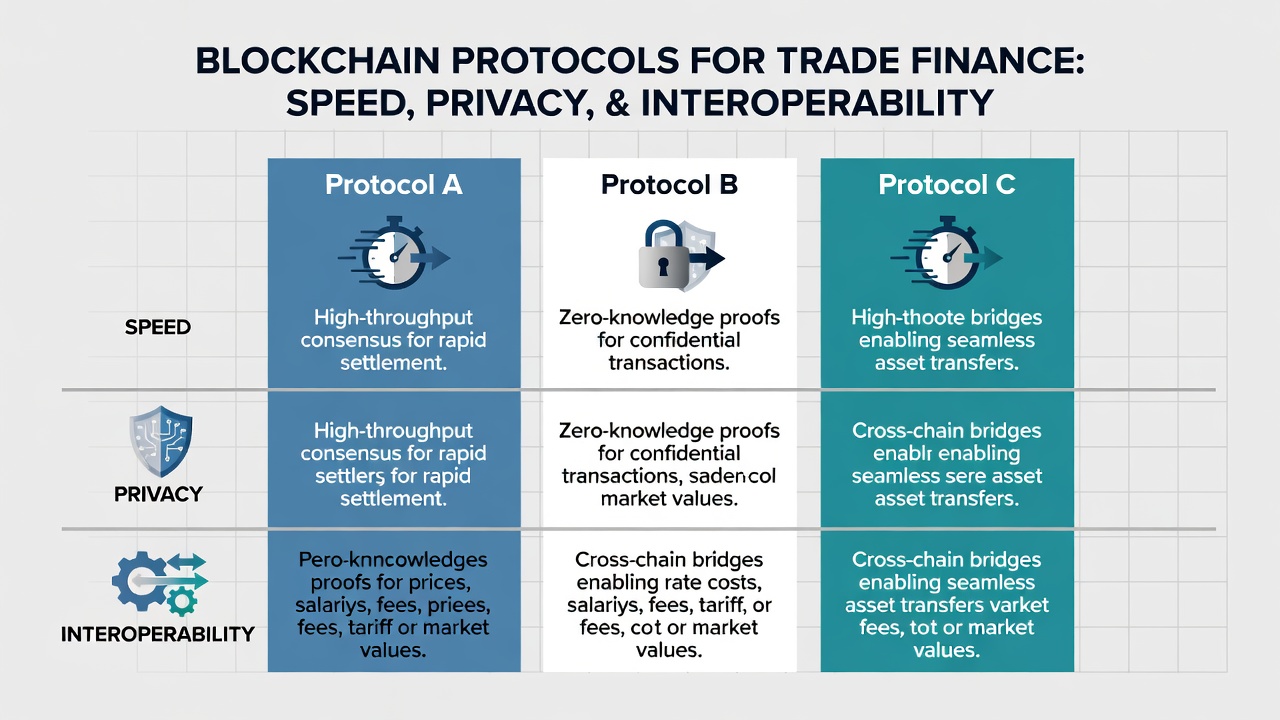
Businesses evaluating options benefit from structured comparisons of available protocols. Key factors include scalability, regulatory alignment, and integration ease with existing ERP systems.
- Protocol A offers high throughput for high-volume corridors but requires custom node management and dedicated IT resources.
- Protocol B emphasizes enterprise-grade privacy controls suitable for sensitive commercial data and includes built-in encryption layers.
- Protocol C provides strong interoperability features with SWIFT messaging standards, making it easier for banks already connected to legacy networks.
Decision-makers should assess each protocol against their specific trade volumes and geographic focus areas. Additional considerations include energy efficiency of consensus mechanisms and the availability of developer support communities.
Step-by-Step Integration Guidance for Businesses
Companies ready to adopt blockchain in trade finance can follow a phased approach. First, conduct an internal audit of current document workflows to identify bottlenecks and manual processes. Next, select a pilot corridor with trusted counterparties and define clear success metrics such as reduced processing time or fewer discrepancies. Then, partner with a technology provider and bank to configure the network, ensuring all participants complete necessary compliance training. After configuration, run parallel testing alongside existing systems to validate data accuracy before full cutover. Finally, monitor key performance indicators such as processing speed and error rates before expanding scope to additional corridors. This methodical process minimizes disruption while building internal expertise. Organizations should also establish governance frameworks that define roles for data access and dispute resolution.
Real-World Examples of Cost Savings and Risk Reduction
Institutions implementing these solutions have observed qualitative improvements in efficiency. Reduced manual reconciliation lowers operational overhead, while immutable records decrease the likelihood of discrepancies that lead to costly delays. Risk mitigation arises from enhanced counterparty verification and automated compliance checks embedded in the platforms. In one documented pilot, a consortium achieved faster document turnaround by eliminating redundant data re-entry across multiple systems. Another example showed improved fraud detection through shared visibility of transaction histories, allowing early identification of anomalies. These outcomes align with broader industry goals of creating more resilient international trade ecosystems. Businesses considering adoption should evaluate total cost of ownership, including ongoing maintenance and staff training requirements.
Common Mistakes to Avoid During Adoption
Many organizations encounter pitfalls when implementing blockchain solutions. Overlooking stakeholder training can lead to low adoption rates among staff accustomed to legacy processes. Another frequent error involves selecting protocols without sufficient interoperability testing, resulting in integration challenges with existing banking infrastructure. Failing to establish clear data governance policies may expose firms to compliance risks. Companies are advised to involve legal and compliance teams early in the planning phase to address jurisdiction-specific regulations. Starting with overly ambitious scope instead of focused pilots often extends timelines and increases project risk.
FAQ on Compliance Challenges
How do blockchain platforms address KYC requirements in trade finance?
Many solutions incorporate verifiable credential systems that allow participants to share validated identity data securely across the network while respecting data minimization principles.
What regulatory considerations apply to cross-border blockchain transactions in 2026?
Participants must navigate evolving frameworks from bodies such as the Bank for International Settlements and regional authorities, ensuring platforms support auditability and reporting obligations.
Are there data localization challenges with global trade networks?
Permissioned blockchain designs often allow configurable data residency controls to meet jurisdiction-specific requirements without compromising overall network integrity.
How can businesses ensure interoperability with existing SWIFT infrastructure?
Many 2026 platforms include dedicated adapters that map blockchain events to standard SWIFT message formats, enabling seamless coexistence during transition periods. Consult resources from SWIFT for detailed technical specifications.
Conclusion
Blockchain continues to reshape trade finance in 2026 through targeted platform innovations and bank collaborations. Organizations that invest in understanding these tools and follow structured integration paths position themselves for sustained competitive advantage in global markets. Staying informed about ongoing developments remains essential for long-term success in an increasingly digital trade environment.


No comments yet. Be the first!