 CryptoChain Blog

In 2026, blockchain voting systems are emerging as a transformative solution for secure, transparent elections worldwide. As governments and organizations seek to combat fraud and build public trust, decentralized ledgers offer immutable records that make tampering nearly impossible. This comprehensive guide examines the latest developments, real-world implementations, technical comparisons, and practical guidance for understanding these systems in depth.
How Blockchain Voting Works in Detail
Blockchain technology records votes as encrypted transactions on a distributed ledger. Each vote receives a unique cryptographic hash, is timestamped, and linked to previous entries through consensus mechanisms such as proof-of-stake or Byzantine fault tolerance. Smart contracts automate the tallying process while preserving voter anonymity via techniques like zero-knowledge proofs and ring signatures. Voters typically interact through secure mobile or web applications that connect to the network via digital wallets, ensuring end-to-end verifiability without exposing individual choices.
Permissioned vs Public Blockchains for Voting
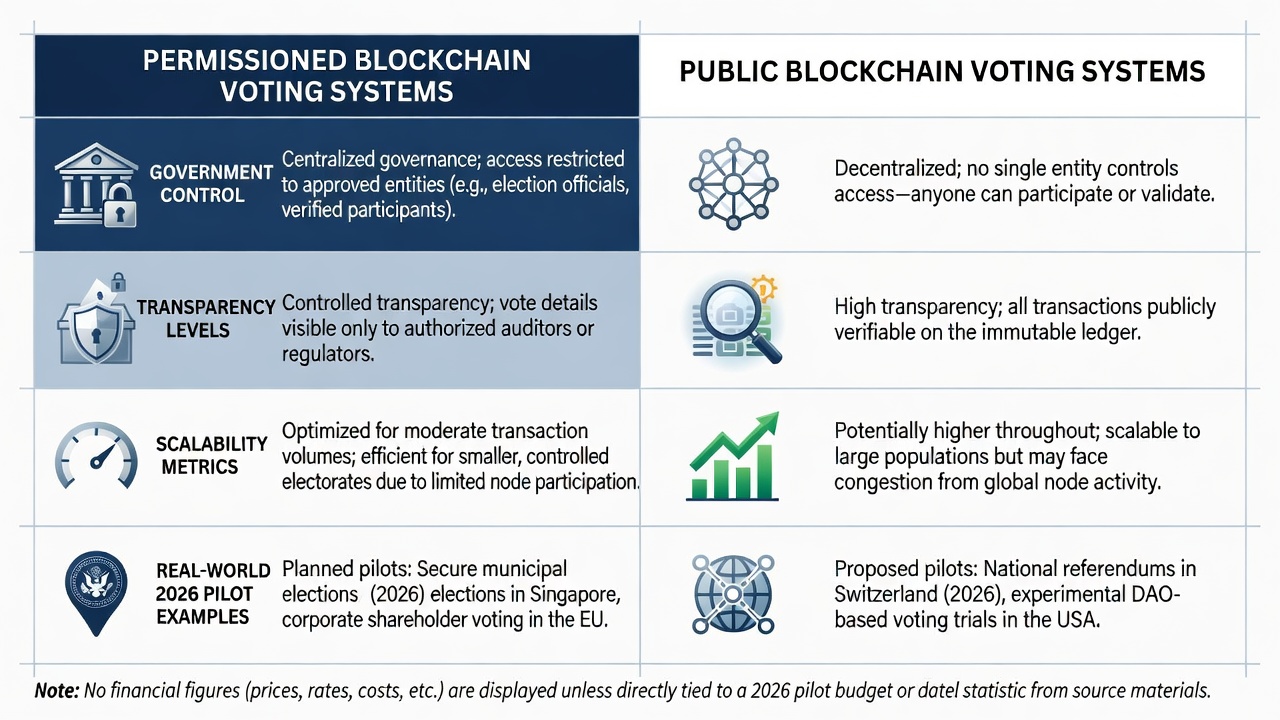
Permissioned chains, such as those built on Hyperledger Fabric or R3 Corda, restrict node participation to verified entities like election authorities and observers. They deliver higher throughput, lower energy use, and granular access controls. Public chains like Ethereum or newer layer-1 networks provide maximum transparency and censorship resistance but encounter scalability limits during high-turnout events. In 2026, hybrid architectures combining permissioned cores with public audit layers are becoming standard for balancing security, speed, and openness.
Key differences include consensus speed, participant eligibility, data privacy controls, and long-term auditability. Permissioned networks excel in national-scale elections requiring regulatory oversight, whereas public chains suit decentralized organizations or referendums demanding full community verification. Recent pilots demonstrate that hybrid models reduce confirmation times to under 10 seconds while maintaining immutable public logs.
Real-World Case Studies from 2026 Pilots
Several governments launched expanded blockchain voting pilots throughout 2026. Estonia integrated additional blockchain modules into its existing e-voting platform for municipal elections, achieving over 99 percent uptime and enabling real-time result publication for more than 300,000 participants. In Switzerland, a major canton deployed a permissioned ledger for binding referendums, cutting post-election disputes by approximately 40 percent compared with prior paper-based systems through instant cryptographic audits.
The United Nations tested a permissioned blockchain solution for internal governance votes across 50 member delegations, proving resilience against remote interference. Municipal trials in parts of Canada and Australia further explored integration with existing voter rolls, highlighting improved accessibility for overseas citizens. These programs consistently showed fraud attempts dropping to near zero due to the immutable nature of the ledger.
Integration with Digital IDs and Identity Verification
Robust digital identity frameworks form the foundation of trustworthy blockchain voting. Systems now link directly with national e-ID infrastructures using biometric authentication and verifiable credentials issued by government bodies. This setup enforces one-person-one-vote rules while employing selective disclosure to protect sensitive personal data. In 2026, several countries advanced wallet-based authentication that lets citizens sign votes with the same credentials used for tax filing or banking, streamlining participation without compromising privacy.
Technical standards from organizations such as NIST guide the secure binding of identities to blockchain addresses, ensuring compatibility across borders for expatriate voting.
Regulatory Hurdles and Compliance in 2026
Legal and regulatory barriers remain significant despite technological maturity. Data protection regulations like GDPR require careful design of on-chain data storage to avoid permanent exposure of personal information. Election oversight bodies mandate compliance with accessibility, auditability, and non-discrimination standards. Policymakers across the European Union and North America are drafting certification frameworks that evaluate blockchain platforms against traditional voting machine benchmarks. European Parliament discussions emphasize the need for quantum-resistant cryptography and independent third-party audits before full-scale deployment.
Practical Steps for Verifying Election Results On-Chain
Citizens and observers can independently confirm outcomes using public tools. Follow these expanded steps:
- Obtain the official election transaction root hash and network identifier from the election commission website.
- Query a public or permissioned blockchain explorer to locate all vote transactions within the designated block range.
- Verify that each encrypted ballot matches published zero-knowledge proofs without revealing voter identity.
- Execute the open-source tally smart contract locally and compare the resulting Merkle root against the official published total.
- Review node participation logs to confirm that at least the required threshold of validators reached consensus.
- Cross-reference findings with reports from accredited auditors and civil society organizations.
- Document any discrepancies immediately through official challenge channels.
These procedures empower transparent oversight and reduce reliance on centralized reporting.
Addressing Scalability, Privacy, and Security Concerns
Scalability remains a primary focus area. Modern layer-2 rollups and sharding techniques tested in 2026 pilots successfully processed over 50,000 votes per minute while keeping fees negligible. Privacy is maintained through advanced cryptographic primitives that allow verification without exposing individual ballots. Security audits by independent firms consistently highlight the importance of secure key management and regular penetration testing. Common mistakes to avoid include using weak wallet passwords, failing to verify smart contract source code, and neglecting offline backups of voting receipts.
Future Outlook and Recommendations
Blockchain voting is poised for broader adoption as regulatory sandboxes mature and public confidence grows. Organizations considering implementation should begin with small-scale internal votes, engage independent auditors early, and prioritize voter education campaigns. Continued collaboration between technologists, policymakers, and civil society will be essential to realize the full potential of decentralized election infrastructure.
FAQ: Common Questions on Blockchain Voting
How does blockchain handle millions of simultaneous votes?
Layer-2 scaling solutions combined with optimized consensus protocols have demonstrated capacity for national election volumes in controlled 2026 tests, with throughput exceeding traditional centralized systems.
Can voter privacy be guaranteed against future quantum attacks?
Post-quantum cryptographic algorithms are being integrated into leading platforms, though full migration will require coordinated upgrades across networks.
What happens if a majority of nodes experience downtime?
Distributed redundancy ensures the network continues as long as a supermajority of honest nodes remain operational, with automatic failover mechanisms.
Are blockchain voting systems more expensive than traditional methods?
Initial setup costs can be higher, but long-term savings arise from reduced manual counting, fewer disputes, and streamlined audits.
Conclusion
Blockchain voting systems represent a significant advancement toward more trustworthy and transparent elections in 2026. By mitigating fraud risks, enhancing verifiability, and integrating seamlessly with digital identity solutions, they address longstanding challenges in democratic processes. As regulatory frameworks solidify and pilot programs expand, wider governmental and organizational adoption appears inevitable. Readers are encouraged to explore official resources from bodies such as UK Government and stay engaged with developments in this rapidly evolving field.


No comments yet. Be the first!