 CryptoChain Blog

Introduction: The Rising Middle East Blockchain Frontier in 2026
The Middle East has emerged as a pivotal hub for blockchain and cryptocurrency activity in 2026, drawing attention from investors seeking alternatives to Asia and Africa markets. Regulatory advancements in the UAE and Saudi Arabia, combined with substantial sovereign wealth fund commitments, are fueling enterprise adoption in energy and finance sectors. This comprehensive guide examines these developments, offering data-driven comparisons, real-world case studies, and actionable advice for international participants. Blockchain technology is transforming traditional industries across the region, with pilots demonstrating efficiency gains in cross-border payments and supply chain management. Readers will gain insights into DeFi expansion rates versus global benchmarks and learn compliance-focused strategies for market entry. The region's strategic location at the crossroads of global trade routes further amplifies its appeal, enabling seamless integration between European, Asian, and African blockchain ecosystems. Young populations with high digital literacy are driving grassroots adoption, while governments position blockchain as a cornerstone of economic diversification strategies beyond hydrocarbons.
Regulatory Shifts Driving 2026 Growth
The UAE continues to refine its virtual asset framework, emphasizing investor protection while fostering innovation. Saudi Arabia has introduced updated guidelines through its Capital Market Authority, aligning with Vision 2030 objectives to diversify the economy beyond oil. These changes create clearer pathways for licensed exchanges and tokenized asset platforms. Key updates include streamlined licensing for crypto service providers and tax incentives for blockchain startups. International firms benefit from sandboxes that allow controlled testing of decentralized applications. Such policies reduce uncertainty and encourage long-term capital inflows compared to more restrictive jurisdictions. Additional measures in Bahrain and Qatar complement these efforts by offering competitive regulatory environments that attract fintech talent and venture capital. Harmonization efforts across Gulf Cooperation Council countries aim to create a unified digital asset market, reducing fragmentation risks for cross-border projects.
Major Sovereign Fund Investments
Sovereign wealth funds in the region are allocating significant resources to blockchain ventures. Entities like Mubadala and the Public Investment Fund have backed projects spanning digital asset custody and enterprise-grade distributed ledger solutions. These investments signal strong governmental confidence in the technology's potential to enhance financial inclusion and operational resilience. Strategic partnerships with global technology providers accelerate knowledge transfer and infrastructure development. Investors monitoring these moves can identify co-investment opportunities in aligned sectors such as fintech and renewable energy tokenization. Funds are also targeting infrastructure supporting Web3 applications, including data centers optimized for high-performance computing needs of blockchain networks. Recent commitments highlight a focus on sustainable blockchain solutions that align with net-zero targets.
Enterprise Pilots in Energy and Finance
Real-world deployments highlight blockchain's value in the energy sector, where immutable records streamline carbon credit trading and renewable energy certificate verification. Financial institutions are piloting blockchain-based settlement systems that cut transaction times from days to minutes. These pilots often involve consortia of banks and energy companies, yielding measurable improvements in transparency and auditability. Participants report reduced reconciliation costs and enhanced trust among counterparties operating across borders. Additional trials in logistics and healthcare demonstrate blockchain's versatility, with supply chain tracking solutions improving traceability of goods from port to end consumer. In finance, tokenized bonds and Islamic-compliant sukuk instruments are undergoing live testing, promising greater liquidity and accessibility for retail investors.
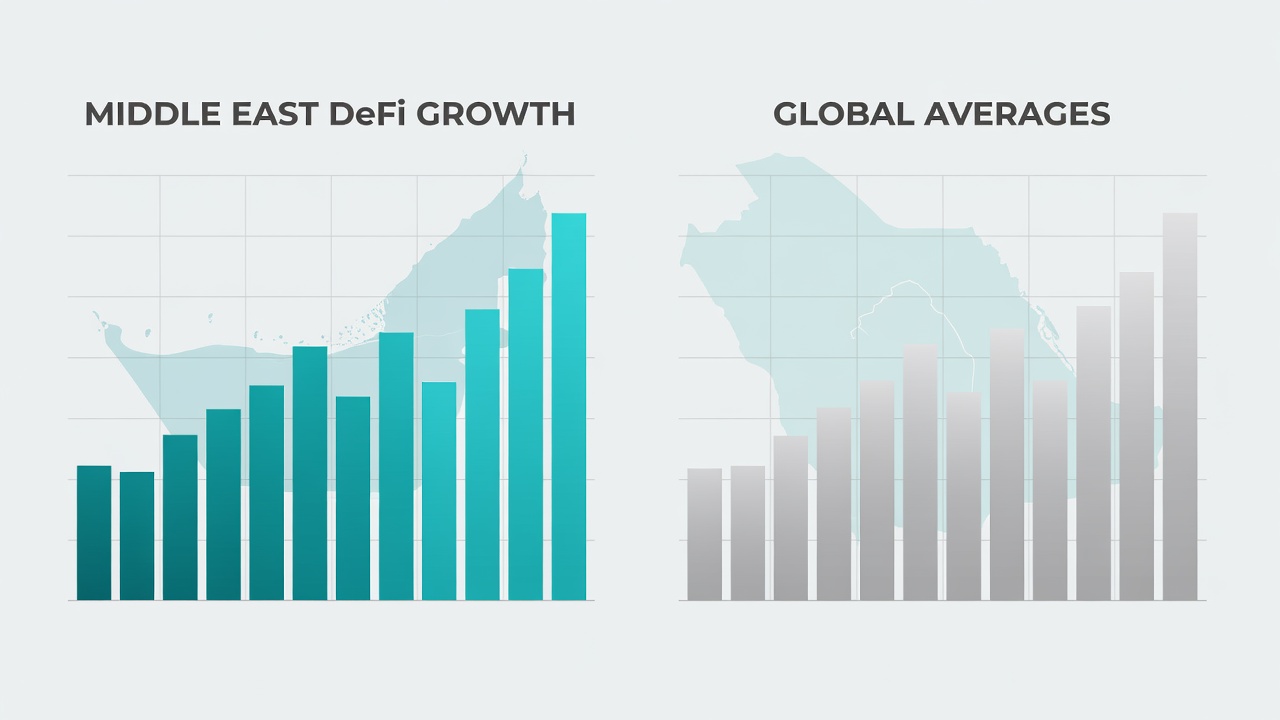
DeFi Growth: Middle East vs Global Averages
Decentralized finance protocols in the Middle East are expanding at rates exceeding global averages, driven by young demographics and high mobile penetration. While worldwide DeFi total value locked has shown moderate growth, regional platforms focused on Sharia-compliant products are attracting distinct user bases. Comparisons reveal stronger adoption in peer-to-peer lending and stablecoin usage for remittances. Factors such as regulatory clarity and integration with traditional banking rails contribute to this momentum. Analysts note that localized solutions addressing cultural preferences are key differentiators from Western-centric DeFi ecosystems. Growth metrics indicate particular strength in yield farming protocols adapted for halal investment principles, alongside rising interest in decentralized insurance products that address regional risks like climate-related disruptions in agriculture.
Case Studies of Successful Projects
One notable example involves a UAE-based platform enabling tokenized real estate investments, which has facilitated fractional ownership for retail participants while complying with local property laws. Another success story from Saudi Arabia features a blockchain solution for trade finance that reduced documentation errors by integrating with existing port systems. These projects demonstrate scalable models that balance innovation with regulatory adherence. Lessons include the importance of hybrid architectures combining public and permissioned chains for optimal performance and oversight. A third case in Oman showcases a blockchain-enabled energy trading marketplace that connects independent producers directly with consumers, cutting intermediaries and lowering costs. Each example underscores the value of public-private collaboration in overcoming initial adoption barriers.
Practical Steps for International Investors
Entering Middle East blockchain markets requires careful preparation. Begin by reviewing jurisdiction-specific licensing requirements through official portals. Next, engage local legal experts familiar with virtual asset regulations to structure compliant entities. Conduct thorough due diligence on counterparties, prioritizing those with established track records in the region. Explore partnership opportunities with sovereign-backed accelerators to gain market access. Implement robust KYC/AML frameworks aligned with FATF recommendations. Monitor evolving tax treatments for digital assets to optimize reporting. Building relationships with regional exchanges and custodians provides operational advantages. Investors should also consider phased entry strategies, starting with pilot allocations before scaling exposure. Additional recommendations include attending regional blockchain summits to network with policymakers and participating in regulatory consultation processes to influence future frameworks.
- Establish local subsidiaries or joint ventures to navigate ownership restrictions effectively.
- Leverage free zone incentives in Dubai or Riyadh for reduced operational overhead.
- Integrate with regional payment gateways that support stablecoin settlements.
Expert Perspectives and Market Outlook
Industry leaders emphasize that sustained growth depends on continued regulatory harmonization and talent development. Partnerships between universities and blockchain firms are expanding to address skill gaps in smart contract development and cybersecurity. The outlook for 2026 remains optimistic, with projections pointing to increased integration of blockchain into national digital economy strategies. Staying informed through authoritative sources helps investors anticipate shifts and capitalize on emerging opportunities. Experts also highlight the role of artificial intelligence combined with blockchain for enhanced fraud detection in financial applications across the region.
Frequently Asked Questions on Compliance
What licensing is required for operating a crypto exchange in the UAE?
Entities must obtain approval from the Securities and Commodities Authority or relevant free zone regulators, depending on operational scope.
How does Saudi Arabia approach Sharia compliance in DeFi products?
Projects undergo review by specialized boards to ensure adherence to Islamic finance principles, avoiding interest-based mechanisms.
Are there tax implications for foreign investors in regional blockchain ventures?
Tax treatment varies by jurisdiction; professional advice is essential to navigate corporate and capital gains considerations.
What data protection standards apply to blockchain storage?
Compliance with GDPR equivalents and local data residency rules is mandatory for platforms handling personal information.
How can investors mitigate risks associated with geopolitical tensions?
Diversification across multiple jurisdictions and engagement with local risk assessment consultants are recommended best practices.
For further reading on global economic contexts, visit the International Monetary Fund, the World Bank, and the OECD.
Conclusion
The Middle East's blockchain landscape in 2026 presents compelling opportunities for informed investors. By understanding regulatory nuances, studying successful implementations, and following structured entry steps, participants can position themselves advantageously amid evolving trends. Continuous monitoring and adaptive strategies will be vital for long-term success in this dynamic region. The convergence of supportive policies, capital availability, and technological innovation positions the Middle East as a model for balanced blockchain adoption worldwide.


No comments yet. Be the first!