 CryptoChain Blog
Introduction to DePIN Node Economics in 2026
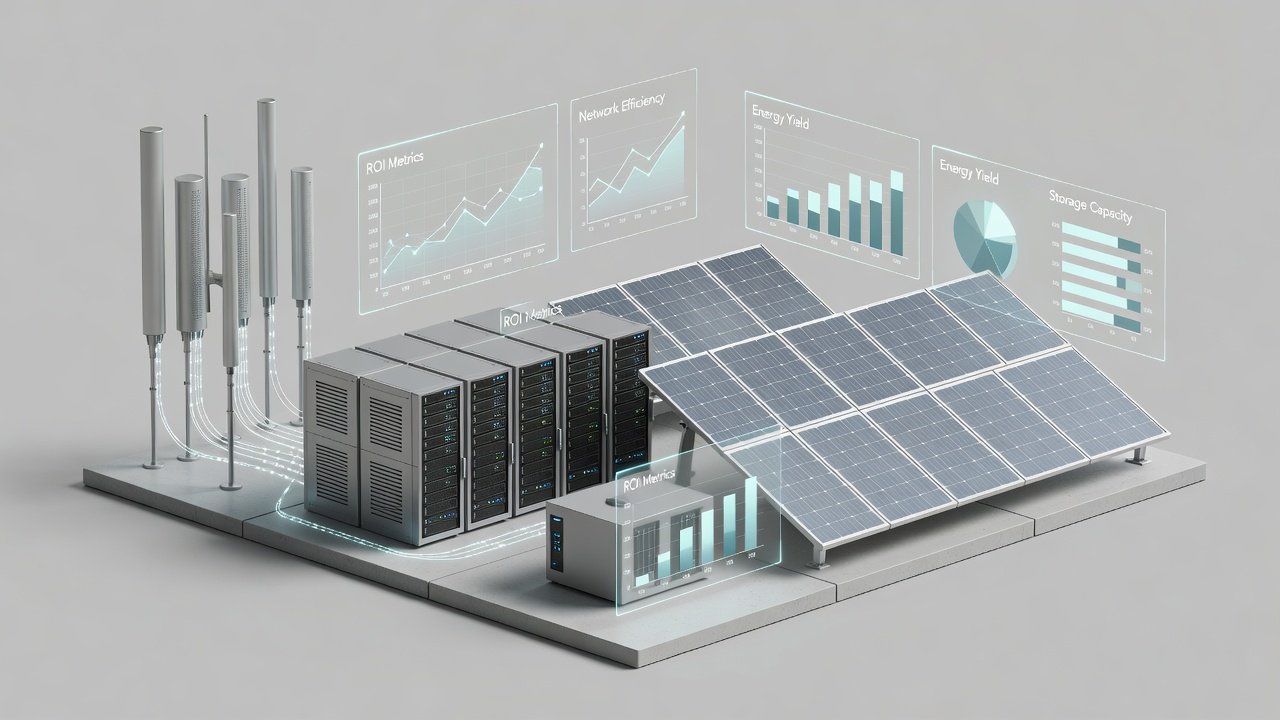
Decentralized Physical Infrastructure Networks (DePIN) have matured into viable investment vehicles by 2026. Investors deploy nodes across wireless, storage, and energy protocols to earn token rewards while contributing real-world infrastructure. This guide provides detailed methods for calculating real-world return on investment (ROI), incorporating hardware costs, energy use, tokenomics, and regulatory considerations with examples from leading projects. DePIN projects continue to expand as more participants recognize the potential for passive income combined with tangible utility in connectivity, data storage, and sustainable energy distribution. Understanding these economics requires breaking down reward structures, variable costs, and external factors. Whether evaluating a Helium hotspot for wireless coverage or a Filecoin storage miner, systematic analysis helps determine viability and long-term profitability. Market maturation has introduced more sophisticated token models that tie rewards directly to measurable contributions, making accurate forecasting essential for anyone considering node deployment.
Key Components of DePIN ROI Calculations
Token Reward Structures
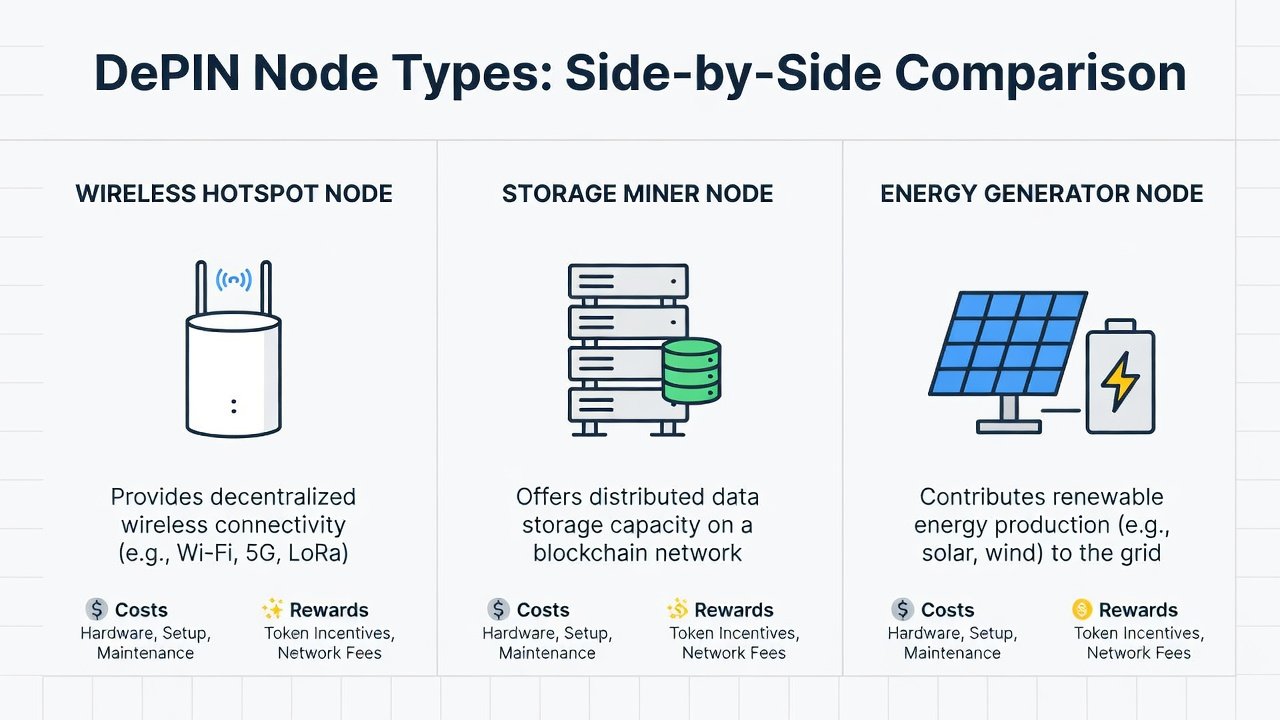
Most DePIN protocols distribute tokens based on contribution metrics such as data relayed, storage provided, or energy generated. Wireless networks often reward based on coverage density and usage, while storage protocols emphasize uptime and retrieval rates. Energy-focused DePIN reward consistent output and grid stability. Always review each protocol's whitepaper for current emission schedules and halving events that impact yields over time. Rewards can fluctuate with network growth, so monitoring on-chain metrics provides better insight than static projections alone.
Hardware and Operational Costs
Initial capital expenditure includes node hardware, antennas, and installation. Ongoing expenses cover electricity, maintenance, and potential upgrades. Factor in depreciation of equipment, typically over three to five years depending on technology. Location plays a major role because urban deployments may incur higher setup fees while rural sites often deliver stronger rewards due to lower competition. Investors should also budget for occasional firmware updates or hardware replacements that become necessary as protocols evolve.
Energy Consumption Factors
Energy use varies dramatically by network type. Wireless nodes typically consume minimal power, often comparable to a standard router, whereas storage nodes require continuous operation of multiple drives and cooling systems. Energy-focused nodes may integrate renewable sources to lower costs and improve sustainability scores. Calculating net ROI demands subtracting these recurring energy expenses from gross token rewards to arrive at realistic profit figures.
Step-by-Step ROI Calculation Method
Follow this structured approach to evaluate any DePIN node opportunity accurately. Begin by gathering historical reward data from protocol explorers or community dashboards to establish baseline earnings. Next, convert projected token rewards into fiat terms using conservative average price assumptions rather than peak values. Subtract all identifiable costs including hardware amortization, electricity, internet fees, and any protocol participation charges. Divide the resulting net profit by the total initial investment to derive the ROI percentage. Finally, run sensitivity analyses that account for reward decay, token price swings, and potential regulatory changes over a three-to-five-year horizon. This method reveals whether a node is likely to deliver acceptable returns or if capital would perform better elsewhere.
Comparison Across Network Types
| Network Type | Example Protocol | Primary Reward Driver | Typical Energy Use | Deployment Complexity |
|---|---|---|---|---|
| Wireless | Helium | Coverage and data transfer | Low | Moderate |
| Storage | Filecoin | Storage capacity and deals | Medium | High |
| Energy | Emerging grids | Power generation uptime | Variable | High |
Concrete Examples from Leading Protocols
Consider a wireless deployment on Helium where rewards accrue from proof-of-coverage and data transfer activity. An investor might install multiple hotspots in underserved areas to maximize earnings while keeping hardware simple. In contrast, a Filecoin storage node requires substantial disk space and reliable bandwidth, often leading to higher upfront costs but potentially steadier long-term demand from enterprise clients. Energy DePIN projects reward participants who feed power back into local grids, frequently favoring sites with existing solar or wind infrastructure. Each example illustrates the need to match node type to available resources and local market conditions before committing capital.
US and EU Regulatory Compliance Checklist
- Register business entity if required for node operations.
- Track all income and expenses for accurate reporting.
- Consult IRS guidelines on cryptocurrency taxation in the United States.
- Review EU VAT and reporting rules via European Commission resources.
- Maintain records for at least seven years.
- Verify local zoning rules for hardware placement.
- Ensure compliance with data privacy regulations when operating storage or wireless nodes.
Risk Mitigation and Optimization Tactics
Diversify across multiple protocols to reduce single-point failures. Monitor network health metrics and token utility. Optimize hardware placement for maximum rewards and minimize downtime through redundant power solutions. Consider staking mechanisms where available to compound returns. Regular performance audits help identify underperforming nodes early, allowing timely relocation or upgrades. Investors should also maintain liquidity reserves to cover unexpected maintenance without forced token sales during unfavorable market conditions.
Tax Implications for DePIN Investors
Token rewards are generally treated as ordinary income at fair market value upon receipt. Capital gains apply upon sale or exchange. Consult local tax professionals, as rules differ between jurisdictions. Resources like Filecoin documentation provide protocol-specific guidance on reporting. Proper categorization of expenses such as electricity and hardware depreciation can significantly reduce taxable income when documented correctly.
Investor Checklist for Protocol Selection
- Assess current network adoption rates and growth trajectory.
- Evaluate hardware requirements against available budget and space.
- Review token utility and long-term emission schedules.
- Confirm regulatory clarity in target operating regions.
- Analyze community support and developer activity levels.
FAQ
What is a typical breakeven timeline for DePIN nodes?
Breakeven periods range from six to eighteen months depending on network adoption and hardware efficiency, though actual results vary with market conditions.
How should investors choose between protocols?
Evaluate reward sustainability, hardware requirements, community strength, and regulatory clarity. Cross-reference official project sites such as Helium for the latest details.
What common mistakes should be avoided?
Overestimating rewards, ignoring energy costs, and neglecting compliance requirements frequently erode expected returns. Always run conservative scenarios before deployment.
Conclusion
Calculating accurate ROI for DePIN nodes in 2026 demands attention to both quantitative metrics and qualitative factors like regulation and network evolution. By applying the frameworks above, investors can make informed decisions and optimize their positions across wireless, storage, and energy sectors for sustainable long-term participation.


No comments yet. Be the first!