 CryptoChain Blog

Introduction to DePIN Node ROI in 2026
Decentralized Physical Infrastructure Networks, or DePIN, continue to grow as a major sector in crypto. Participants deploy hardware nodes to support real-world services like wireless coverage, data storage, and energy distribution. In 2026, evaluating return on investment (ROI) remains essential for beginners looking to enter this space. This guide provides practical methods to calculate potential earnings quickly while accounting for costs, rewards, and risks.
Understanding ROI helps users decide whether setting up a node makes financial sense. Factors such as hardware expenses, token price movements, and network demand all influence outcomes. By following structured calculations, readers can compare opportunities across protocols.
What Are DePIN Networks and Why Focus on Nodes?
DePIN projects incentivize individuals to run physical devices that power decentralized systems. Unlike traditional cloud services, these networks reward operators with native tokens for contributing bandwidth, storage capacity, or energy resources. Popular categories include wireless connectivity, decentralized storage, and distributed energy grids.
Nodes form the backbone of these networks. A well-chosen node can generate steady token rewards, but profitability depends on accurate forecasting. Beginners should start by identifying protocols with transparent reward mechanisms and active communities.
Key Components of DePIN Node ROI Calculations
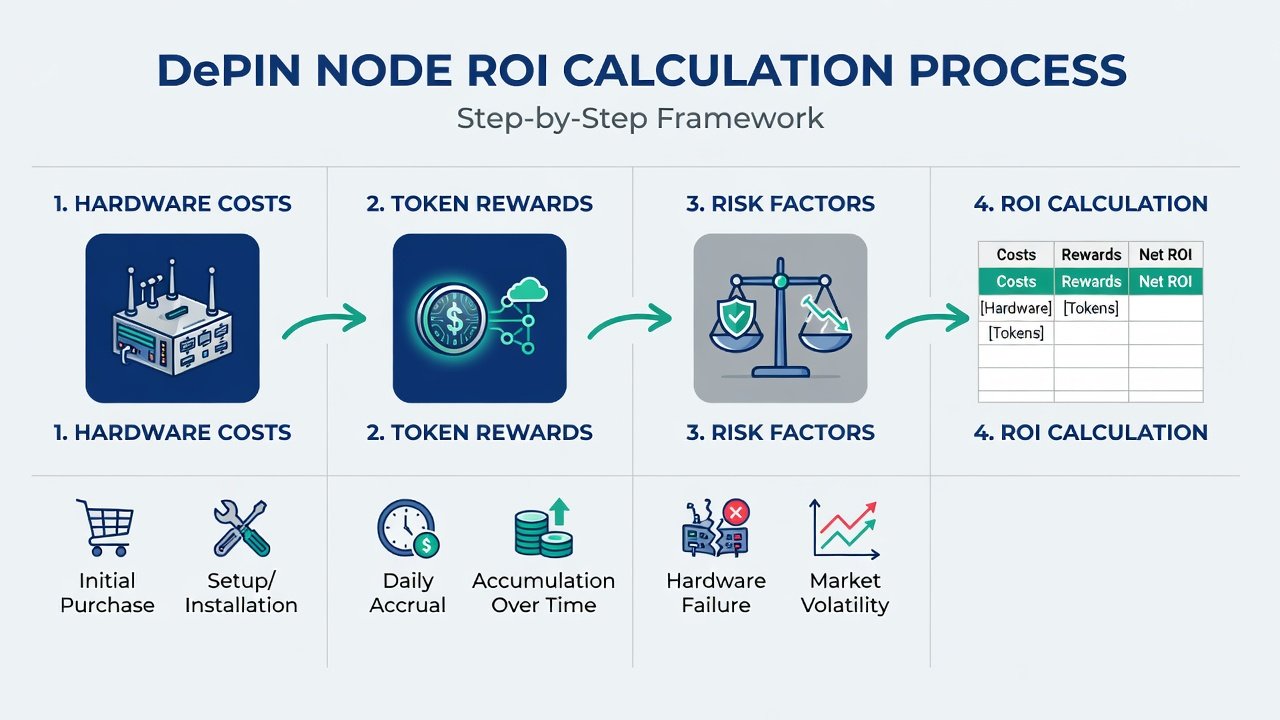
Calculating ROI requires breaking down three main elements: upfront hardware costs, ongoing operational expenses, and expected token rewards. Hardware might include antennas, servers, or specialized sensors. Operational costs cover electricity, internet, and maintenance.
Token rewards typically follow formulas based on contribution metrics such as uptime, data transferred, or energy supplied. Many protocols publish their formulas in public documentation, allowing users to model earnings under different scenarios.
Hardware Costs and Setup Considerations
Entry-level hardware for DePIN nodes varies by network type. Wireless nodes often need antennas and routers, while storage nodes require high-capacity drives and reliable servers. Energy-focused nodes may involve solar panels or battery systems. Buyers should prioritize energy-efficient equipment to keep long-term costs low.
Setup also involves location factors. Urban areas may offer higher demand but face stricter regulations, whereas rural spots provide better coverage incentives in some networks. Always verify compatibility with the chosen protocol before purchasing equipment.
Token Reward Formulas Explained
Most DePIN protocols use algorithmic formulas to distribute rewards. A typical structure multiplies contribution points by a network multiplier and current token emission rate. For example, wireless networks might reward based on proof-of-coverage, while storage networks emphasize data retrieval success rates.
Users can plug these variables into simple spreadsheets to project monthly earnings. Adjusting for token price volatility gives a more realistic picture of net returns over time.
Real-World Examples Across Network Types
Wireless networks such as those inspired by Helium demonstrate how coverage density drives rewards. Operators in underserved areas often see stronger earnings due to higher demand multipliers.
Storage protocols like Filecoin reward consistent uptime and successful deals. Nodes with larger storage allocations and fast retrieval speeds tend to outperform smaller setups.
Energy networks focus on balancing supply and demand. Participants who provide reliable power during peak periods receive premium token allocations, making timing and location critical for ROI.
Step-by-Step ROI Calculation Process
- Estimate total hardware investment including taxes and shipping.
- Calculate monthly operating costs such as power and connectivity.
- Research average daily token rewards using network dashboards or community reports.
- Project annual rewards and subtract operational expenses.
- Divide net profit by initial investment to find the ROI percentage.
- Run sensitivity analysis by varying token prices to understand best- and worst-case outcomes.
Comparing Top DePIN Protocols
Wireless, storage, and energy networks each offer distinct risk-reward profiles. Wireless nodes often require lower upfront costs but face competition from dense deployments. Storage nodes scale with hardware investment yet demand technical maintenance. Energy nodes can deliver stable rewards in regions with grid instability but involve higher regulatory scrutiny.
Reviewing on-chain metrics and community governance activity helps identify protocols with sustainable tokenomics. Cross-comparing reward consistency across networks reveals which options align best with individual risk tolerance.
Risk Factors Including Regulations and Volatility
Regulatory changes represent a major uncertainty. Some jurisdictions have introduced licensing requirements for wireless spectrum or data handling. Monitoring official government sources helps operators stay compliant.
Token price volatility directly impacts ROI. Even strong contribution rewards can lose value during market downturns. Diversifying across multiple protocols and maintaining reserves for operating costs mitigates this risk.
Benchmark Data and Spreadsheet Template Reference
Community-maintained dashboards provide benchmark data on average node performance. These resources typically track metrics such as reward per device type and geographic variations. Users can reference these figures when building custom models.
A simple spreadsheet template includes columns for hardware cost, monthly expenses, projected daily rewards, and sensitivity sliders for token price. Updating the template monthly keeps projections current as network parameters evolve.
FAQs on Scaling Multiple Nodes
How many nodes should a beginner start with?
Most new operators begin with a single node to learn operational requirements before expanding. Scaling becomes practical once consistent positive ROI is confirmed.
What are common mistakes when running multiple nodes?
Overlooking maintenance schedules and underestimating electricity costs frequently reduce overall returns. Centralized management tools can help monitor performance across locations.
Can rewards be reinvested to accelerate growth?
Many protocols allow staking earned tokens to boost future rewards. This compounding approach works best in networks with predictable emission schedules.
Conclusion
Evaluating DePIN node ROI in 2026 requires attention to hardware details, reward formulas, and external risks. By applying the step-by-step methods outlined above, beginners can make informed decisions and optimize setups for better returns. Continuous monitoring and adaptation remain key to long-term success in this evolving sector.

No comments yet. Be the first!